Adaptive cruise control (ACC) has become one of the most common—and most misunderstood—driver-assistance features on new electric vehicles. Unlike old-school cruise control that simply holds a set speed, ACC actively adjusts your vehicle's velocity to maintain a safe following distance from the car ahead. But how does it actually accomplish this, and what are the real-world boundaries buyers need to understand before relying on it?
As an EV analyst who has tested ACC systems across Tesla, Ford, Hyundai, Rivian, and BMW platforms over tens of thousands of highway miles, I'll walk you through the sensor hardware, the software logic, the SAE automation reality, and the true cost of these systems in 2026.
The Sensor Stack: How Adaptive Cruise Control Sees the Road
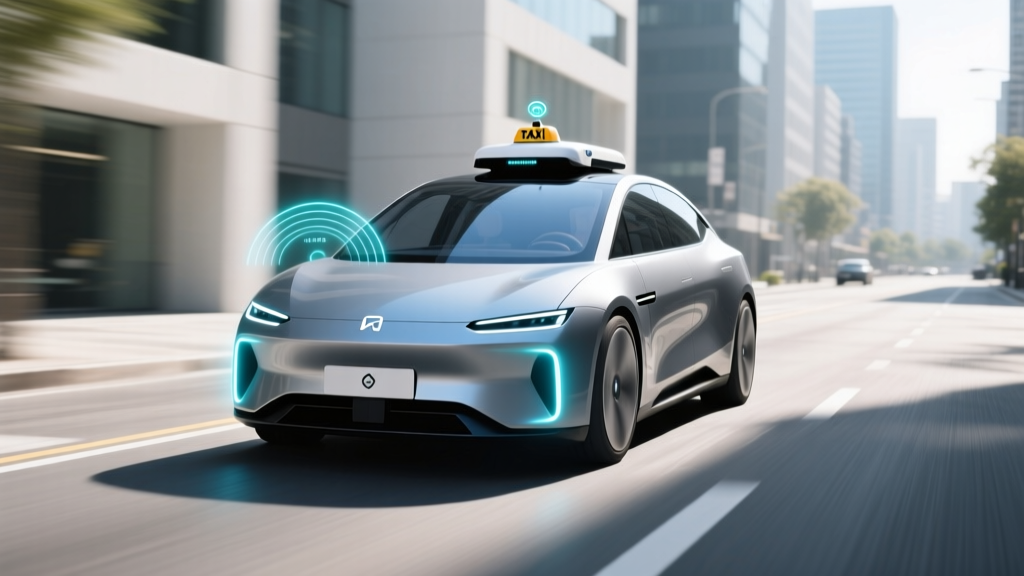
Modern adaptive cruise control relies on a fusion of sensor inputs to detect vehicles, measure distances, and calculate relative speeds. Here's what's typically working behind the fascia of a 2026 EV:
| Sensor Type | Function in ACC | Typical Range | Limitations |
|---|---|---|---|
| Front Radar (77 GHz) | Measures distance and relative speed to lead vehicle | 150–200 meters | Struggles with stationary objects, metal interference |
| Front Camera (mono or stereo) | Lane detection, vehicle classification, brake-light recognition | 80–150 meters | Blinded by heavy rain, fog, direct sun glare, dirty lens |
| Ultrasonic Sensors (short-range) | Low-speed object detection for stop-and-go ACC | 5–10 meters | Only effective at parking/traffic-jam speeds |
| LiDAR (select models) | High-resolution 3D mapping for enhanced object detection | 200+ meters | Cost-prohibitive; found on Mercedes, Lotus, select Chinese EVs |
The radar unit is the workhorse of ACC. It emits millimeter-wave signals that bounce off vehicles ahead, calculating distance via time-of-flight and relative speed via the Doppler effect. The camera adds context: it can tell whether that radar return is a car, a truck, or a guardrail, and it reads lane markings to determine whether the lead vehicle is in your lane or an adjacent one.
Sensor fusion algorithms combine these inputs in real time. When radar and camera agree, the system acts with high confidence. When they disagree—say radar detects an object but the camera sees an empty road—the system typically defaults to caution, either alerting the driver or disengaging. This is why ACC can behave unexpectedly on curves, near overpasses, or in construction zones.
SAE Level 2: What Adaptive Cruise Control Actually Is (and Isn't)
SAE Automation Level: Level 2 (Partial Driving Automation)
Every consumer adaptive cruise control system available in 2026—including Tesla Autopilot, Ford BlueCruise, GM Super Cruise, Hyundai Highway Driving Assist, and BMW Driving Assistant Professional—operates at SAE Level 2. This means the system can control both steering and speed simultaneously, but the driver must remain fully engaged, hands on or near the wheel, eyes on the road, and ready to take over instantly. Per the NHTSA, the human driver is always the responsible party at Level 2.
This is a critical distinction that marketing materials frequently obscure. Adaptive cruise control with lane centering is not self-driving. It is a sophisticated assistive system that reduces driver workload on long highway stretches, but it cannot handle all scenarios. The only systems operating at SAE Level 4 (true driverless capability) in 2026 are geofenced robotaxi services like Waymo in Phoenix, San Francisco, and Los Angeles—not consumer vehicles you can purchase.
Within Level 2, there is meaningful variation in capability:
- Basic ACC: Maintains set speed and following distance. No steering input. Found on base trims of most EVs.
- ACC + Lane Centering: Adds active steering to keep the vehicle centered in its lane. Requires clear lane markings.
- ACC + Lane Centering + Navigation-Linked: System uses map data to anticipate curves, speed limit changes, and highway interchanges. Examples: Tesla Autopilot, Ford BlueCruise 1.4, GM Super Cruise.
- Hands-Free Level 2 (monitored): Allows hands off the wheel on pre-mapped highways while using a driver-monitoring camera to verify eye attention. Examples: GM Super Cruise, Ford BlueCruise, BMW Highway Assistant.
How ACC Works in Practice: The Control Loop
At a technical level, adaptive cruise control operates as a closed-loop feedback system running dozens of calculations per second:
- Detection: Radar identifies the lead vehicle and measures gap distance (e.g., 45 meters) and relative speed (e.g., lead car traveling 2 mph slower).
- Classification: Camera confirms the radar target is a vehicle in your lane, not an adjacent-lane car or roadside object.
- Decision: The ACC controller calculates the required deceleration to maintain the driver-selected following distance (typically adjustable in 3–5 increments from "close" to "far").
- Actuation: In an EV, the system first reduces regenerative braking torque or applies friction brakes to slow down. When the lead vehicle accelerates or changes lanes, the system applies electric motor torque to return to the set speed.
- Monitoring: The loop repeats continuously. If the lead vehicle stops, full stop-and-go ACC brings your EV to a complete halt and can resume within a configurable time window (usually 3 seconds to several minutes, depending on the brand).
Electric vehicles have a distinct advantage here: the electric motor's instantaneous torque response allows smoother acceleration and deceleration than a gas engine with a multi-speed transmission. Regenerative braking also enables more seamless speed modulation, reducing the jarring brake-and-accelerate cycle that plagues some ICE vehicles with ACC.
Brand-by-Brand: ACC System Names, Availability, and Cost
Every automaker brands their ACC system differently, and packaging varies widely. Here's how the major EV players stack up in 2026:
| Brand | ACC System Name | Hands-Free Option? | Availability | Cost (2026) |
|---|---|---|---|---|
| Tesla | Traffic-Aware Cruise Control (part of Autopilot) | No (hands-on required) | Standard on all models | Included; FSD (Supervised) add-on: $8,000 one-time or $99/month |
| Ford | Intelligent Adaptive Cruise Control (BlueCruise) | Yes (BlueCruise 1.4, pre-mapped highways) | Standard on Mach-E, F-150 Lightning mid/high trims | Included on equipped trims; BlueCruise subscription: ~$75/year after trial |
| GM (Chevy/Cadillac) | Super Cruise / Adaptive Cruise | Yes (Super Cruise, 750,000+ mapped miles) | Available on Equinox EV, Blazer EV, Lyriq, Silverado EV | Included on equipped trims; Super Cruise: 3-year trial, then ~$25/month |
| Hyundai/Kia | Highway Driving Assist 2 (HDA2) | No (hands-on required) | Standard on Ioniq 5, Ioniq 6, EV6 mid/high trims | Included in vehicle price |
| BMW | Driving Assistant Professional (Highway Assistant) | Yes (hands-free up to 85 mph on highways) | Optional on i4, i5, i7, iX | ~$1,700–$2,500 option package |
| Rivian | Driver Assistance+ (Highway Assist) | Yes (hands-free on select highways) | Standard on R1S/R1T with ADAS package | Included; ongoing updates via OTA |
| Mercedes-Benz | Active Distance Assist DISTRONIC | Yes (DRIVE PILOT, Level 3 in limited conditions — CA/NV only) | EQE, EQS sedan and SUV | Included on equipped trims; DRIVE PILOT: $2,500 option + $1,000/year subscription |
A few notes on this landscape: Mercedes-Benz's DRIVE PILOT is the only SAE Level 3 system available to US consumers in 2026, approved in Nevada and California for speeds up to 40 mph in heavy traffic on suitable highways. At Level 3, the driver can legally look away from the road (but must be ready to resume control within ~10 seconds when prompted). This is a meaningful step above Level 2 but remains extremely limited in scope. Everything else in the table above is Level 2.
Real-World Limitations: Where Adaptive Cruise Control Falls Short
What ACC Does NOT Do:
- ACC does not reliably detect stationary objects at highway speeds (stopped vehicles, debris, construction barriers). Radar filters out static returns to avoid false positives from bridges and signs.
- ACC does not work in heavy rain, snow, or fog. Camera and radar performance degrade significantly, and systems will typically alert and disengage.
- ACC struggles with aggressive cut-ins. A vehicle merging closely in front of you may not be detected until it is fully in your lane, resulting in late braking.
- ACC can phantom brake—decelerating unexpectedly when radar misinterprets a curve, overpass, or adjacent-lane vehicle as a lead obstacle.
- ACC does not navigate construction zones, temporary lane shifts, or faded/missing lane markings reliably.
- ACC does not handle unprotected left turns, roundabouts, or complex intersections. It is designed for highway and controlled-access road use.
Driver supervision is mandatory at all times. Per IIHS research, drivers using ACC and lane centering can develop overreliance, with reaction times degrading when the system encounters an edge case it cannot handle.
In my own testing across multiple EVs, I've found that ACC performs best on well-marked, divided highways with moderate traffic flow. On a 400-mile Interstate drive in a Hyundai Ioniq 6 with HDA2, the system handled 90%+ of highway miles without intervention. But in construction zones with shifted lanes, it required immediate takeover. In freezing rain on I-70 in Colorado, the system disabled itself within minutes due to sensor obstruction from road salt spray on the radar dome.
Cold weather presents a specific challenge for EV owners: not only does range drop 20–30% in sub-freezing temperatures, but ACC sensors can ice over or become obscured by slush. Tesla, Ford, and GM all include heated camera and radar elements on newer models, but performance still degrades in severe conditions.
The Cost Question: What You Actually Pay for ACC in 2026
The pricing model for adaptive cruise control has fragmented into several tiers:
| Cost Model | Examples | Typical Price | What You Get |
|---|---|---|---|
| Included (standard) | Tesla Autopilot (basic ACC), Hyundai HDA2, Rivian Driver Assistance+ | $0 additional (included in MSRP) | ACC + lane centering, hands-on required |
| Premium package (one-time) | BMW Driving Assistant Pro, Toyota Advanced Drive | $1,000–$3,000 | Enhanced ACC with nav-linked features, hands-free on some |
| Subscription (annual/monthly) | Ford BlueCruise, GM Super Cruise (after trial) | $25–$75/month or $75–$200/year | Continued hands-free access after included trial expires |
| Premium subscription (one-time + monthly) | Tesla FSD (Supervised) | $8,000 purchase or $99/month | |
| Level 3 subscription | Mercedes DRIVE PILOT | $2,500 upfront + ~$1,000/year | Limited-condition hands-off, eyes-off driving (40 mph max, specific highways) |
The trend toward subscriptions is controversial. Ford initially offered BlueCruise with a complimentary trial period on the Mustang Mach-E and F-150 Lightning, then transitioned to paid subscriptions. GM followed a similar path with Super Cruise. For buyers, this means the feature you test-drove may cost extra to keep after 1–3 years. Always verify the trial duration and post-trial cost before purchasing.
Tesla's FSD (Supervised) remains the most expensive option at $8,000 or $99/month. Despite the "Full Self-Driving" branding, it is a Level 2 system requiring full driver engagement. The NHTSA has opened multiple investigations into Autopilot/FSD incidents, and buyers should understand that FSD does not make the vehicle autonomous. It adds features like automatic lane changes, navigation-guided on/off-ramp handling, and traffic light recognition, but the driver is always responsible.
ACC vs. Competing Systems: How They Compare on the Highway
Not all adaptive cruise control implementations are equal. Based on extensive highway testing, here's how the major systems compare across key performance dimensions:
| Criterion | Tesla Autopilot | Ford BlueCruise 1.4 | GM Super Cruise | Hyundai HDA2 |
|---|---|---|---|---|
| Following-distance smoothness | Good (occasional phantom braking) | Very good | Excellent | Very good |
| Cut-in response time | Fast but abrupt | Moderate, smooth | Moderate, smooth | Moderate, smooth |
| Lane centering accuracy | Very good | Excellent | Excellent (LiDAR-mapped) | Good |
| Hands-free availability | No | Yes (mapped highways) | Yes (750,000+ miles mapped) | No |
| Driver monitoring | Torque-based steering | Camera-based eye tracking | Camera-based eye tracking | Torque-based steering |
| Stop-and-go resume | Excellent | Very good | Excellent | Good (may require tap to resume) |
| Construction zone handling | Poor–Fair | Poor | Poor (disengages in unmapped areas) | Fair |
GM's Super Cruise stands out for highway cruising thanks to its pre-mapped LiDAR data, which provides centimeter-accurate road geometry even when lane markings are faded. Ford's BlueCruise 1.4 has closed the gap significantly with improved lane-change assist and camera-based driver monitoring. Tesla's system is capable but has drawn scrutiny from NHTSA for incidents involving stationary emergency vehicles, and its torque-based steering monitor is easier to defeat than camera-based systems—a safety concern.
Frequently Asked Questions
Can adaptive cruise control bring my EV to a complete stop?
Yes. Most 2026 EVs with ACC feature full stop-and-go functionality. The system will brake to a complete stop behind a lead vehicle and, depending on the brand, resume automatically within a few seconds or require a tap on the accelerator or a steering-wheel button to resume after longer stops. Tesla, GM Super Cruise, and Rivian handle stop-and-go seamlessly. Some Hyundai/Kia implementations require a driver confirmation tap after stops longer than ~3 seconds.
Does using adaptive cruise control improve my EV's range?
It can. ACC tends to produce smoother acceleration and deceleration patterns than most human drivers, which can improve efficiency by 3–8% on highway drives according to various real-world tests. By avoiding hard acceleration spikes and anticipating slowdowns earlier (via radar detection of traffic ahead), ACC can help you extract more miles from your battery. However, the benefit varies by driving conditions—in heavy stop-and-go traffic, the efficiency advantage is minimal.
Is adaptive cruise control safe in rain and snow?
Performance degrades significantly in precipitation. Moderate rain may not affect the radar, but heavy rain, snow, and fog can obscure both the camera and radar sensors. Most systems will issue a "sensor blocked" or "system unavailable" warning and disengage ACC. Road salt spray in winter is particularly problematic, coating the front radar dome and camera lens. If you drive frequently in adverse weather, treat ACC as a clear-weather convenience feature, not an all-conditions system.
What's the difference between adaptive cruise control and Tesla's FSD?
Tesla's basic Autopilot includes Traffic-Aware Cruise Control (ACC) and Autosteer (lane centering) at no extra cost—this is a Level 2 system. Full Self-Driving (Supervised), available for $8,000 or $99/month, adds features like automatic lane changes, navigation-guided on/off-ramp transitions, traffic light and stop sign recognition, and enhanced summon. However, FSD remains a Level 2 driver-assist system. The driver must keep hands on the wheel, eyes on the road, and remain prepared to take over at any moment. Despite the name, it is not self-driving.
Do I need to pay a subscription to keep adaptive cruise control?
It depends on the brand. Basic ACC is included in the purchase price of most EVs at no recurring cost. However, hands-free features like Ford BlueCruise and GM Super Cruise typically come with a 1–3 year complimentary trial, after which a subscription ($25–$75/month) is required to continue using the hands-free capability. Tesla's basic Autopilot (ACC + lane centering) has no subscription—only the optional FSD upgrade carries a cost. Always check the specific trial terms and post-trial pricing for your model and trim before buying.
Which EV has the best adaptive cruise control in 2026?
For pure highway cruising with hands-free capability, GM's Super Cruise remains the benchmark thanks to its extensive pre-mapped road network and smooth control inputs. Ford's BlueCruise 1.4 is a close second with broader model availability. If you prefer no subscription fees and accept hands-on operation, Hyundai's HDA2 and Tesla's standard Autopilot offer strong value as included features. For buyers willing to pay for Level 3 capability in limited conditions, Mercedes DRIVE PILOT is the only option, but its $2,500 upfront cost plus ~$1,000/year subscription and 40-mph speed limit make it a niche choice.