From Desert Races to Driverless Rides
If you trace the history of autonomous vehicles back to its true inflection point, you land on a dusty road outside Las Vegas in 2004. The Defense Advanced Research Projects Agency (DARPA) offered a $1 million prize to any team that could guide a vehicle 150 miles across the Mojave Desert without human intervention. Not a single car finished. The furthest traveled just 7.4 miles before catching fire on a rock. A year later, five teams completed the course. Stanford's "Stanley," a modified Volkswagen Touareg, won the 2005 DARPA Grand Challenge and proved that machine vision, LIDAR, and GPS could navigate real terrain.
That lineage — from military-funded desert experiments to the commercial robotaxi services operating in U.S. cities today — defines the modern autonomous vehicle industry. What follows is the technical and commercial history that brought us here, paired with current data on what's actually available, what it costs, and how safe it is.
Defining Autonomy: SAE Levels Explained
Before examining any robotaxi service, it's critical to understand what "self-driving" actually means. The Society of Automotive Engineers (SAE) defines six levels of driving automation. Most consumer confusion stems from conflating Level 2 (driver assist) with Level 4 (driverless in defined conditions).
| SAE Level | Name | Who Drives | Consumer Examples |
|---|---|---|---|
| 0 | No Automation | Human | Any conventional car |
| 1 | Driver Assistance | Human + system assists steering OR speed | Adaptive cruise control |
| 2 | Partial Automation | Human must monitor at all times | Tesla Autopilot, GM Super Cruise, Ford BlueCruise |
| 3 | Conditional Automation | System drives; human must take over on request | Mercedes DRIVE PILOT (limited markets) |
| 4 | High Automation | No human needed within geofence/conditions | Waymo One, Zoox (limited cities) |
| 5 | Full Automation | No human needed, anywhere, any condition | Does not exist commercially |
The services covered in this article — Waymo, Zoox, and Cruise (currently suspended) — operate at SAE Level 4. They do not require a human driver in the vehicle. This is a fundamentally different engineering and regulatory category from Tesla's Full Self-Driving (Supervised), which remains Level 2 regardless of its branding.
The Timeline: Key Milestones in Autonomous Vehicle History
The history of autonomous vehicles didn't begin with DARPA, but the post-2004 era compressed decades of academic research into commercial timelines.
- 1980s–1990s: Carnegie Mellon's Navlab and Mercedes-Benz's Eureka PROMETHEUS Project demonstrated early computer-vision highway driving at speeds up to 60 mph, using bulky onboard computers and lane-marking cameras.
- 2004–2007: DARPA Grand Challenges (2004, 2005) and Urban Challenge (2007) catalyzed modern AV research. The 2007 Urban Challenge required vehicles to navigate a simulated urban environment with traffic rules — the direct precursor to city robotaxi operations.
- 2009: Google launched its self-driving car project (later Waymo), hiring key DARPA alumni including Sebastian Thrun.
- 2015: Tesla released Autopilot, bringing Level 2 highway assist to mass-market consumers and mainstreaming the concept of partial vehicle automation.
- 2018: An Uber test vehicle in autonomous mode struck and killed a pedestrian in Tempe, Arizona — the first fatal crash involving an autonomous vehicle in self-driving mode. The incident halted Uber's AV program and reshaped regulatory scrutiny.
- 2020: Waymo launched Waymo One, the first fully driverless commercial robotaxi service, in Phoenix, Arizona.
- 2023–2024: Cruise suspended operations nationwide after a serious pedestrian incident in San Francisco. Waymo expanded to Los Angeles, San Francisco, and Phoenix. Zoox began limited driverless operations in Las Vegas and Foster City, California.
- 2025–2026: Waymo operates the largest U.S. robotaxi fleet. Zoox begins expanding its purpose-built vehicle. Regulatory frameworks solidify at the state level.
Where Can You Use a Robotaxi Right Now?
Robotaxi availability is geofenced — each service operates within a mapped, approved zone and cannot drive outside it. Here is the current operational footprint as of early 2026:
| Service | Operational Cities (Live) | Vehicle | Hours | Access |
|---|---|---|---|---|
| Waymo One | Phoenix (metro), San Francisco, Los Angeles, Austin (expanding) | Jaguar I-PACE (5th-gen sensor suite) | 24/7 in Phoenix; limited hours in SF/LA | App (waitlist in some zones) |
| Zoox | Las Vegas (Strip corridor), Foster City, CA | Zoox purpose-built bidirectional vehicle | Limited pilot hours | Invite-only / early access |
| Cruise | Suspended nationwide (pending relaunch review) | Chevrolet Bolt EV / Origin (announced) | N/A | N/A |
| Baidu Apollo Go | Wuhan, Beijing, Chongqing (China) | Various (6th-gen Apollo RT6) | 24/7 in Wuhan | App (China only) |
For U.S. riders, Waymo One in Phoenix remains the most accessible and mature service. San Francisco and Los Angeles are live but may require app waitlist approval. Austin service is expanding through 2026.
How Robotaxis Work: Pricing vs. Uber and Lyft
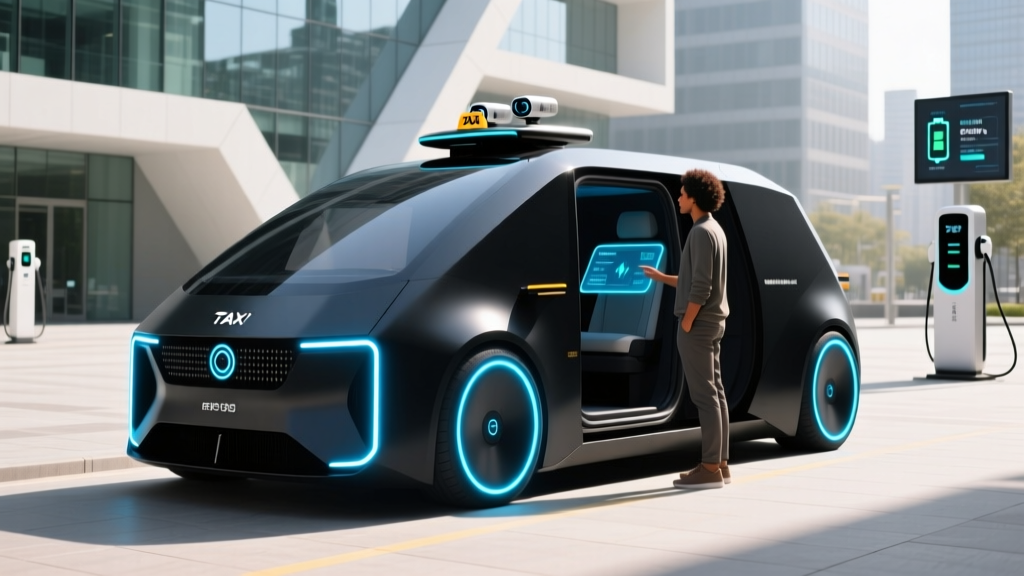
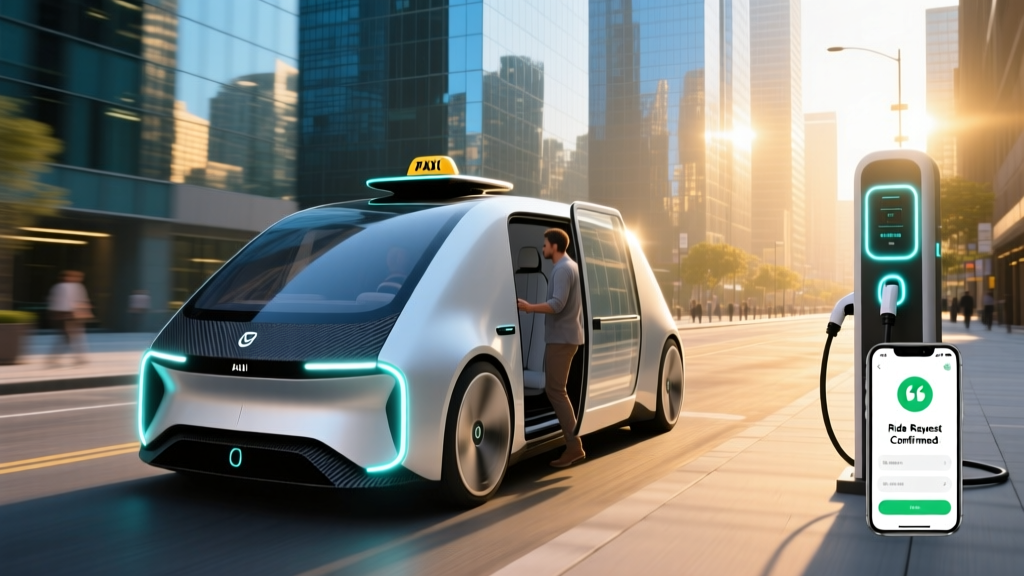
Booking a Waymo One ride mirrors standard rideshare: open the app, enter a destination within the geofence, confirm pickup, and a vehicle arrives — with no one in the driver's seat. The vehicle uses a combination of roof-mounted LIDAR, cameras, and radar to navigate. Riders can see a real-time visualization of the vehicle's perception (detected cars, pedestrians, signals) on interior screens.
| Service | Typical 5-Mile Ride | Surge Pricing | Tip Expected |
|---|---|---|---|
| Waymo One (Phoenix) | $12–$18 | Yes, demand-based | In-app tip available |
| UberX (Phoenix avg.) | $10–$16 | Yes | Expected (15–20%) |
| Lyft (Phoenix avg.) | $10–$15 | Yes | Expected (15–20%) |
Robotaxi pricing is currently competitive with — though rarely cheaper than — traditional rideshare. Waymo has run promotional pricing in new markets to build ridership. Without a human driver to pay, the long-term unit economics favor robotaxis, but current fleet scale and hardware costs (each vehicle carries over $100,000 in sensor and compute equipment) keep prices at parity rather than undercut.
Safety Data: What the Numbers Actually Show
Safety is the most consequential and most debated aspect of autonomous vehicle deployment. Here is what the data indicates:
Waymo Safety Record (through 2025):
- Over 40 million fully driverless miles completed across Phoenix, San Francisco, and Los Angeles.
- Waymo's own analysis, peer-reviewed and submitted to NHTSA, reports a 85% reduction in injury-causing crash involvement compared to human drivers per million miles in comparable geofenced areas.
- Most reported incidents are minor: low-speed contact with stationary objects, other vehicles running into the Waymo vehicle, or precautionary stops.
Cruise Suspension (2023):
- In October 2023, a Cruise vehicle in San Francisco struck a pedestrian who had been thrown into its path by a human-driven vehicle. The Cruise vehicle then dragged the pedestrian approximately 20 feet while attempting to pull over. California DMV suspended Cruise's permit, citing incomplete reporting. Cruise voluntarily suspended all operations nationwide.
Context: Human drivers in the U.S. experience approximately 1.35 fatalities per 100 million vehicle miles (NHTSA). Robotaxi fleets have not recorded a fatality in driverless mode as of early 2026, but total miles driven (tens of millions) are still orders of magnitude below the billions needed for statistical parity with human baselines.
The honest assessment: robotaxis appear to avoid the most common human errors (impairment, distraction, fatigue) but face challenges with edge cases — unusual road configurations, aggressive human drivers, and scenarios outside training data.
Technology Stack: How Robotaxis See the Road
Level 4 robotaxis use a fundamentally different sensor architecture than consumer Level 2 systems:
LIDAR + Camera + Radar (Waymo, Zoox, Cruise)
- LIDAR: Roof-mounted spinning or solid-state units emit laser pulses to build a real-time 3D point cloud of the environment, accurate to centimeters at 200+ meters. This works in darkness and is not fooled by glare.
- Cameras: Multiple high-resolution cameras read traffic signals, signs, lane markings, and classify objects (pedestrian vs. cyclist vs. vehicle).
- Radar: Short- and long-range radar detects velocity of nearby objects and functions in rain or fog where LIDAR performance degrades.
- HD Maps + Geofencing: Vehicles operate within pre-mapped zones with centimeter-accurate base maps. The system knows every curb height, lane width, and signal position before departure.
- Compute: Trunk-mounted servers (often NVIDIA DRIVE-based or custom silicon) process terabytes of sensor data per hour in real time.
Camera-Only (Tesla FSD — Level 2, NOT a robotaxi)
- Tesla removed radar and ultrasonic sensors, relying entirely on cameras and neural networks ("Tesla Vision"). This approach is lower-cost but cannot match LIDAR's depth accuracy in low-light or occlusion scenarios.
- FSD Supervised requires an attentive human driver at all times — it is Level 2, not a competitor to Waymo's Level 4 operations.
Current Limitations: What Robotaxis Cannot Do
Level 4 autonomy is impressive within its operating domain, but the constraints are significant and non-trivial:
- Geofencing: The vehicle will not drive outside its approved, mapped zone. If your destination falls outside the boundary, the service is unavailable — there is no "handoff" to a human driver.
- Weather: Heavy rain, fog, and snow degrade LIDAR and camera performance. Waymo and Zoox limit or suspend operations in severe weather. Phoenix's dry climate is not coincidental.
- Construction zones: Temporary lane shifts, cones, and flaggers require human-like interpretation that remains challenging. Vehicles may stop and wait or request remote assistance.
- Complex intersections: Unsignalized multi-way stops with aggressive human drivers, emergency vehicle encounters, and school zones with unpredictable pedestrian behavior are handled conservatively — often resulting in longer-than-expected routes or cautious stops.
- No highway operations (most markets): Waymo's Phoenix service includes some highway segments, but most urban robotaxi operations avoid limited-access highways. Zoox's Las Vegas service is surface-street only.
- Accessibility: Current vehicles require riders to enter and exit without automated wheelchair ramp assistance, though Waymo has been testing accessible vehicle configurations.
Regulatory Landscape: Who Approves Robotaxi Operations
There is no single federal license for robotaxi operations in the United States. Regulation is split:
- Federal (NHTSA): Sets vehicle safety standards (FMVSS). NHTSA has issued exemptions allowing vehicles like the Zoox and Cruise Origin — which lack steering wheels and pedals — to operate. NHTSA also investigates crashes and can issue recalls.
- State DMVs and PUCs: Each state controls whether driverless testing and commercial deployment are permitted. California (DMV + CPUC), Arizona (minimal regulation), Texas, and Nevada are the most permissive. States like New York still require a safety driver in the vehicle.
- Local (city/county): Cities can restrict hours, zones, and fleet sizes. San Francisco's Board of Supervisors has held contentious hearings on robotaxi expansion, and local fire departments have raised concerns about vehicles blocking emergency apparatus.
The result is a patchwork: a service legal in Phoenix may be illegal across the state line in a jurisdiction with different rules. For the foreseeable future, robotaxi expansion will be city-by-city and state-by-state.
Frequently Asked Questions
Is Tesla Autopilot or FSD a robotaxi?
No. Tesla's Autopilot and Full Self-Driving (Supervised) are SAE Level 2 driver-assistance systems. The driver must remain attentive and is legally responsible for the vehicle at all times. Tesla has discussed a future "robotaxi" service, but as of 2026, no Tesla vehicle operates without a human driver in commercial service.
How much does a Waymo ride cost compared to Uber?
Pricing is comparable. A typical 5-mile Waymo One ride in Phoenix costs $12–$18, similar to UberX or Lyft in the same market. Surge pricing applies during peak demand. The long-term expectation is that removing driver compensation will allow robotaxis to undercut rideshare, but current hardware costs keep prices at parity.
Are robotaxis actually safe?
Available data suggests yes, within their operating domain. Waymo reports significantly lower crash-involvement rates per million miles than human drivers in comparable areas. However, total fleet miles (tens of millions) are far below the billions needed for definitive statistical comparison. The Cruise suspension in 2023 demonstrated that edge-case failures can have serious consequences and trigger regulatory action.
Where are robotaxis available in 2026?
In the U.S., Waymo One operates commercially in Phoenix, San Francisco, Los Angeles, and is expanding in Austin. Zoox runs limited pilot service in Las Vegas and Foster City, California. Cruise remains suspended. Internationally, Baidu Apollo Go operates at scale in multiple Chinese cities, most notably Wuhan.
What happens if a robotaxi gets confused or stuck?
The vehicle will pull over safely and stop. A remote assistance team can review the situation and provide guidance (not direct remote driving, but high-level routing or maneuver approval). Riders can also contact support through the in-app interface. The vehicle will not proceed if it cannot confidently resolve the scenario.
Will robotaxis replace Uber and Lyft drivers?
Eventually, in dense urban markets where the geofence economics work. Rural areas, suburbs with complex unmapped roads, and severe-weather markets will rely on human drivers for years. The transition will be gradual and geographically uneven.
The history of autonomous vehicles is a story of incremental engineering progress compressed into two decades — from a Volkswagen Touareg that couldn't finish a desert race to a fleet of Jaguar I-PACEs completing millions of driverless urban trips. The technology works within its defined domain. The open questions are scale, regulation, and whether the edge cases that remain can be closed fast enough to justify expansion beyond today's handful of permissive cities.