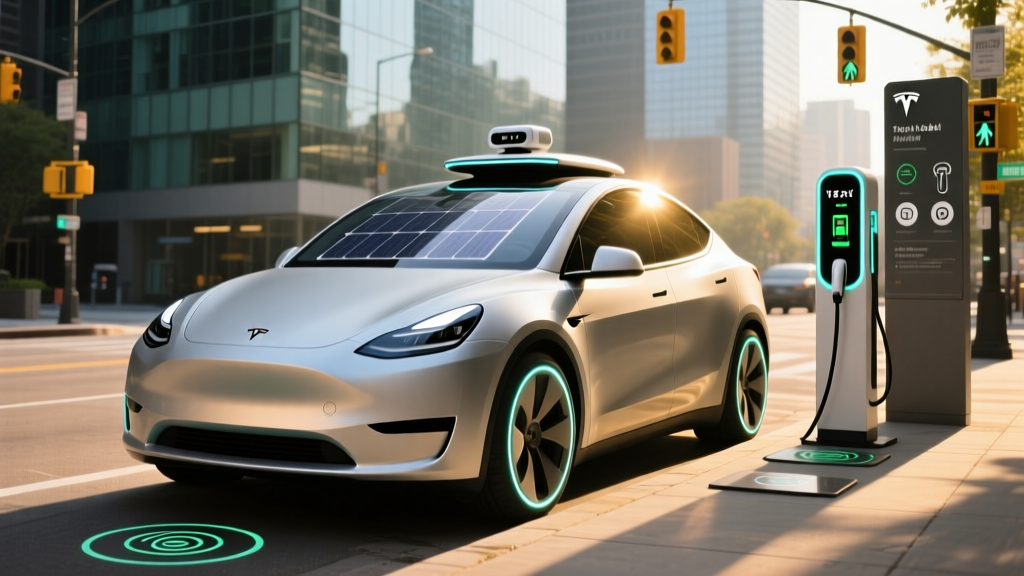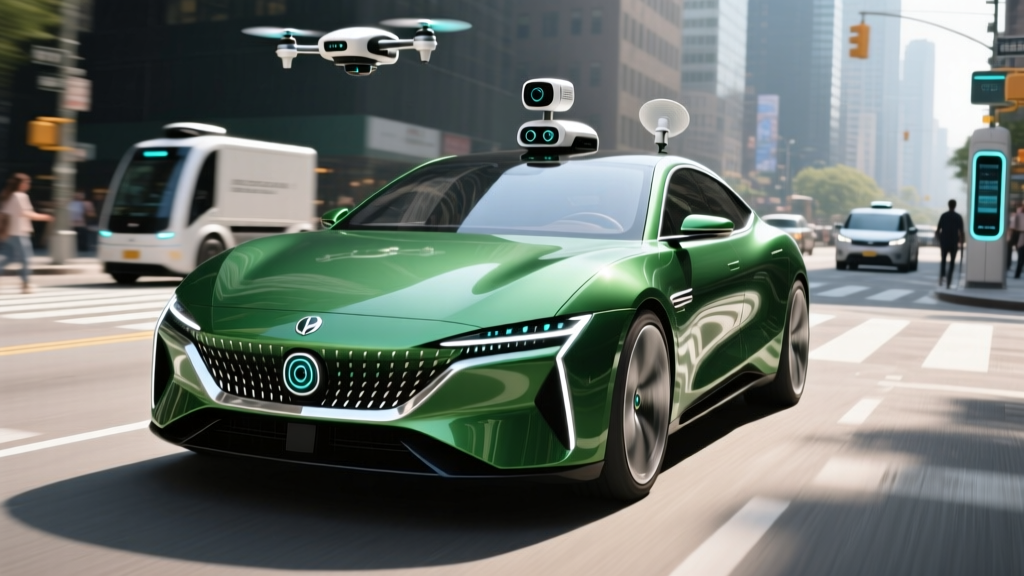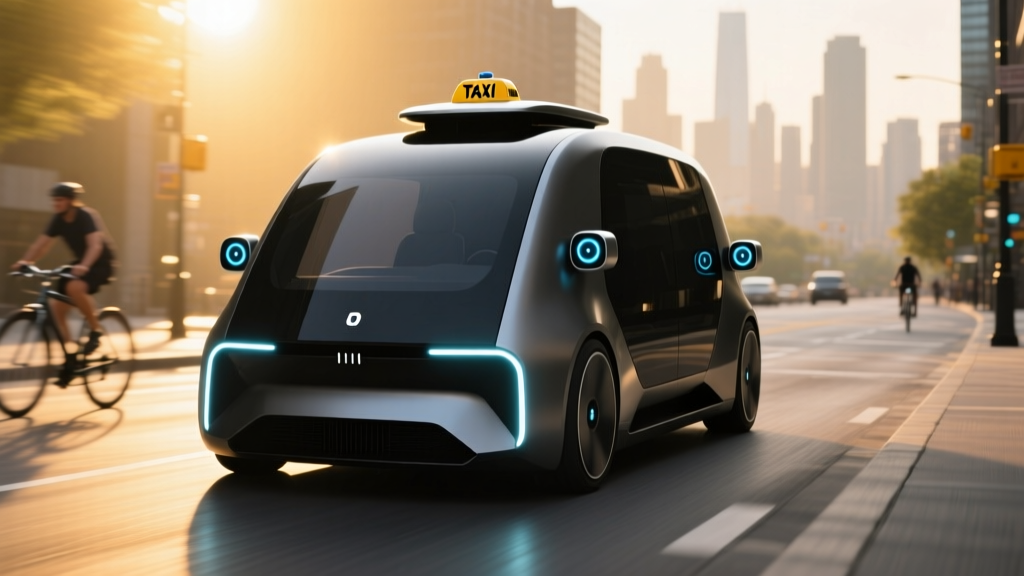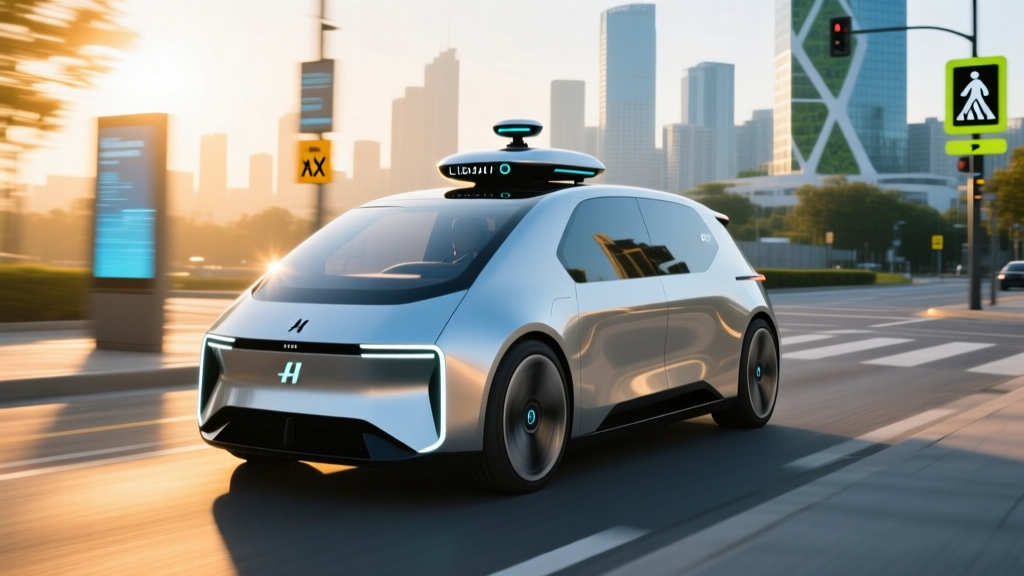
The autonomous vehicle industry has reached a pivotal operational phase. Rather than chasing full self-driving everywhere, the leading robotaxi companies are scaling what works: geofenced, Level 4 driverless services in mapped urban corridors. Now, the logistics of owning, maintaining, and deploying thousands of autonomous vehicles is falling to fleet management specialists. That's where the headline comes in — Hertz expands partnership with Uber to manage autonomous robotaxi fleets, signaling a new business model where rental-car giants become the backbone of driverless mobility.
This article breaks down what the Hertz-Uber fleet arrangement actually means, where robotaxi services operate today, how much they cost, and what the real safety data shows.
What the Hertz-Uber Robotaxi Fleet Partnership Actually Is
Hertz and Uber's expanded arrangement positions Hertz as a fleet logistics partner for autonomous vehicles deployed on the Uber platform. In practical terms, this means Hertz handles vehicle procurement, routine maintenance, cleaning, charging infrastructure coordination, and depot operations for robotaxis that Uber riders can hail through the Uber app.
This is not a new robotaxi technology company. The autonomous driving stack — the sensors, AI, and mapping — comes from dedicated AV developers like Waymo (Alphabet) and Motional (Hyundai/Aptiv joint venture). Hertz's role is operational: keeping vehicles charged, inspected, and on the road. Think of it as the same fleet management Hertz has done for rental cars for a century, adapted for vehicles that drive themselves between rides.
The economics are straightforward. Robotaxi operators need vehicles on the road 18-20 hours per day to be profitable. That requires rapid turnaround cleaning, scheduled sensor calibration checks, high-utilization charging strategies, and regional depot networks — all core competencies of established fleet companies.
SAE Automation Levels: Where Robotaxis Sit
| SAE Level | Name | Driver Role | Example |
|---|---|---|---|
| Level 2 | Driver Assistance | Must supervise at all times | Tesla Autopilot, GM Super Cruise, Ford BlueCruise |
| Level 3 | Conditional Automation | Can disengage in limited conditions; must take over on request | Mercedes Drive Pilot (limited markets) |
| Level 4 | High Automation | No driver needed in defined operational domain | Waymo One, Zoox (geofenced areas) |
| Level 5 | Full Automation | No driver needed anywhere | Does not yet exist commercially |
Key distinction: Robotaxis like Waymo One operate at SAE Level 4 — no human driver is present, but the service is restricted to a pre-mapped geofenced area under specific conditions. Consumer features like Tesla FSD (Supervised) or GM Super Cruise remain Level 2 — the driver must remain attentive and is legally responsible for the vehicle at all times.
Where Can You Use a Robotaxi Right Now?
As of early 2026, fully driverless Level 4 robotaxi services available to the public remain limited to a handful of US metro areas. Here's the current operational map:
| Service | Operator | Live Cities (2026) | Access Model | Hours |
|---|---|---|---|---|
| Waymo One | Waymo (Alphabet) | Phoenix (metro-wide), San Francisco, Los Angeles, Austin | Open to public via Waymo app; Uber integration in select cities | 24/7 in Phoenix & SF |
| Uber + Waymo | Waymo vehicles on Uber platform | Phoenix, Austin | Hail via Uber app when Waymo vehicle is matched | Limited hours, expanding |
| Zoox | Zoox (Amazon) | Las Vegas (limited corridor), Foster City CA (testing) | Invite-only / employee pilot programs | Limited |
| Cruise | Cruise (GM) | Suspended — no commercial service as of 2026 | N/A — operations paused after 2023 SF incident | N/A |
| Motional | Hyundai / Aptiv JV | Las Vegas (Uber/Lyft pilot) | Limited pilot via rideshare apps | Daytime hours |
If you're outside these metros, Level 4 robotaxi service is not yet available to you. Announced expansions (Waymo's planned entries into additional cities) should not be confused with live service. Check the operator's official service-area map before planning a trip around robotaxi availability.
How to Use a Robotaxi and What It Costs
Using a robotaxi through Uber works much like a standard rideshare request, with a few key differences:
- Open the Uber app in a supported city (currently Phoenix and Austin for Waymo vehicles).
- Request a ride as normal. If a Waymo autonomous vehicle is available and your trip falls within its geofenced service area, you may be matched with one. You can also toggle a preference for autonomous vehicles where available.
- Confirm pickup at a designated stop or curb. The app will guide you to the vehicle with a photo and license plate.
- Unlock via app — there's no driver to greet you. Tap "unlock" when you're next to the vehicle.
- Start the ride using the in-seatback screen or app. The vehicle will not move until all passengers are buckled.
Pricing: Robotaxi vs. Standard Rideshare
| Route Example | UberX (Human Driver) | Waymo on Uber | Waymo One (Direct) | Traditional Taxi |
|---|---|---|---|---|
| PHX Airport → Downtown (~5 mi) | $18–$24 | $16–$22 | $15–$20 | $28–$35 |
| SF SoMa → Marina (~4 mi) | $15–$22 | $14–$20 | $13–$19 | $25–$32 |
| LA Santa Monica → LAX (~8 mi) | $22–$30 | $20–$28 | $19–$26 | $35–$45 |
Robotaxi pricing is generally comparable to or slightly below UberX in the same market. Waymo has historically subsidized rides to build adoption, though pricing has moved closer to market rates as the service has matured. Surge pricing applies on the Uber platform, but Waymo's direct app typically does not surge. Tipping is neither expected nor possible in a driverless vehicle.
The Technology Stack: How Robotaxis Actually See the Road
Understanding robotaxi safety requires understanding how these vehicles perceive their environment. The leading Level 4 platforms use a multi-sensor fusion approach — not a single camera system.
Typical Level 4 Robotaxi Sensor Suite (Waymo 6th-Gen Hardware)
- LiDAR: 4+ roof-mounted and bumper-mounted units providing 360° 3D point clouds up to 500+ meters. LiDAR works in darkness and is not blinded by sun glare.
- Cameras: 29+ high-resolution cameras covering overlapping fields of view for object classification, traffic-light state detection, and sign reading.
- Radar: 6+ radar units for velocity detection of moving objects and performance in rain/fog where cameras and LiDAR degrade.
- Audio detection: External microphones to detect emergency vehicle sirens.
- HD Maps: Pre-built centimeter-accuracy maps of the entire service area, updated regularly. The vehicle localizes against these maps in real time.
- Redundant compute: Dual independent computing platforms so a single hardware failure does not disable the vehicle.
This is fundamentally different from camera-only approaches (like Tesla's FSD). Level 4 robotaxis carry $100,000+ in sensor hardware per vehicle — a cost that makes sense for commercial fleet operation but not personal ownership.
All Level 4 robotaxi services operate within a geofence — a digitally defined boundary within which the vehicle has been extensively mapped and tested. If a ride request would take the vehicle outside its geofence, the system will not accept it. Geofences expand over time as operators map and validate new streets.
Safety Data: What the Numbers Actually Show
Safety is the most scrutinized — and most misunderstood — aspect of robotaxi operations. Here is what the verified data shows:
Waymo Safety Record (Verified Data Points)
- Total autonomous miles driven: Over 50 million fully driverless miles as of late 2025 (Waymo Safety Report).
- Injury-causing crash rate: Waymo's fully autonomous vehicles showed a 85% lower rate of injury-causing crashes compared to human benchmarks in the same operating cities, per a study published by the Insurance Institute for Highway Safety (IIHS) and Swiss Re partnership.
- Property-damage crash rate: Approximately 57% lower than human drivers in comparable urban environments.
- Contact incidents: The majority of at-fault incidents involved low-speed (<15 mph) contact with stationary objects or other road users behaving unpredictably — not high-speed collisions.
For context, NHTSA reports that human drivers in US urban environments experience approximately 1.5 injury-causing crashes per million vehicle miles. Waymo's reported rate in its operating cities falls well below this benchmark.
However, robotaxis are not incident-free. Publicly documented issues include:
- Occasional contact with construction-zone cones and temporary barriers not reflected in HD maps.
- Stalling or stopping in travel lanes when encountering ambiguous situations (e.g., a double-parked truck blocking the entire lane), sometimes requiring remote assistance to resolve.
- Difficulty with certain unprotected left turns in dense traffic, leading to extended wait times.
The Cruise suspension in late 2023 — following a pedestrian-dragging incident in San Francisco — remains a cautionary data point about what happens when safety systems and incident-reporting protocols fail. Cruise has not resumed commercial operations as of early 2026.
Regulatory Landscape: Who Approves Robotaxi Operations
Robotaxi deployment in the United States is governed by a patchwork of state and local regulations, not a single federal framework:
- California (CPUC & DMV): The California Public Utilities Commission issues permits for commercial passenger service. The DMV issues testing and deployment permits. Both can suspend operations — as happened with Cruise.
- Arizona: Among the most permissive states. The Arizona Department of Transportation requires a testing permit, but commercial deployment faces fewer regulatory hurdles. This is why Phoenix became Waymo's first open market.
- Texas: Austin has emerged as a robotaxi-friendly market with relatively streamlined local permitting, though state-level autonomous vehicle legislation continues to evolve.
- Nevada: Las Vegas permits limited pilot programs, primarily through the Nevada DMV's autonomous vehicle testing framework.
- Federal (NHTSA): NHTSA sets vehicle safety standards (FMVSS) and investigates safety defects, but does not currently pre-approve or license robotaxi services. NHTSA's Standing General Order requires AV operators to report crashes involving Level 2+ and Level 3-5 systems.
The Hertz-Uber fleet arrangement adds another layer: fleet operators must meet state-specific commercial vehicle maintenance and inspection requirements, even when the vehicles are autonomous.
Current Limitations: Where Robotaxis Fall Short
Level 4 robotaxis are impressive within their operational domain, but that domain has hard boundaries. Current limitations include:
- Weather restrictions: Heavy rain, fog, snow, and ice degrade LiDAR and camera performance. Most services reduce speed or suspend operations in significant precipitation. Waymo in Phoenix rarely faces this; Waymo in San Francisco occasionally pauses service during heavy fog.
- Geofence boundaries: You cannot hail a robotaxi to a destination outside the mapped service area. Suburban and rural coverage remains nonexistent.
- Construction zones: Temporary lane shifts, flaggers, and unmapped detours remain challenging. The vehicle may stop and request remote guidance, adding delay.
- No-go scenarios: Unpaved roads, private driveways, parking garages (in most cases), and school zones with crossing guards may cause the vehicle to refuse a route or pull over.
- Limited cargo and accessibility: Current robotaxi vehicles (primarily Jaguar I-PACE for Waymo) have standard trunk space. Wheelchair-accessible vehicles remain limited in availability.
- No intercity trips: Highway driving at 70+ mph between cities is not within current Level 4 geofenced service capabilities.
- Emergency situations: Passengers cannot ask the vehicle to change destination mid-trip in all cases, and there is no driver to assist with medical emergencies or disputes between passengers.
What the Hertz-Uber Fleet Model Means for the Industry
The Hertz-Uber fleet management partnership reflects an emerging consensus in the AV industry: the technology companies building self-driving software are not the same companies that should manage thousands of physical vehicles. Fleet operations — maintenance scheduling, sensor calibration, charging logistics, cleaning turnaround, insurance processing, and depot real estate — are capital-intensive, operationally complex businesses that rental and leasing companies already know how to run.
For consumers, this model means more vehicles on the road and shorter wait times in served cities. For the industry, it means robotaxi operators can scale without building fleet operations from scratch. Whether this model extends beyond Phoenix and Austin depends on whether Waymo and other Level 4 operators can demonstrate sustained profitability at scale — a milestone the industry has not yet publicly achieved.
The bottom line for riders: robotaxis are real, they're safer than the average human driver in their limited domains, they cost about the same as UberX, and they're slowly expanding. But if you live outside a handful of Sun Belt and coastal metros, you're still waiting.
Frequently Asked Questions
Is this truly self-driving or driver-assist?
Level 4 robotaxis like Waymo One are genuinely driverless — there is no human in the driver's seat, and no remote teleoperator controlling the vehicle in real time (though remote assistance can advise the vehicle when it encounters an ambiguous situation). This is categorically different from Level 2 systems like Tesla FSD (Supervised), GM Super Cruise, or Ford BlueCruise, which require an attentive human driver at all times.
Where can I use a robotaxi service right now?
Fully driverless, publicly available robotaxi service is currently limited to Phoenix, San Francisco, Los Angeles, and Austin via Waymo One. Uber integration with Waymo vehicles is available in Phoenix and Austin. No other US city has open, unrestricted Level 4 robotaxi service as of early 2026.
How much does a robotaxi ride cost compared to Uber or Lyft?
Pricing is generally comparable to or slightly below standard UberX in the same market — typically $14–$28 for common urban routes. Waymo's direct app tends to avoid surge pricing, while rides through the Uber platform may include surge. Neither platform requires tipping.
How safe are robotaxis — is there real data?
Yes. Waymo's published safety data and the IIHS/Swiss Re study show injury-causing crash rates approximately 85% lower than human benchmarks in the same operating environments, across 50+ million driverless miles. However, low-speed contact incidents and edge-case disruptions do occur, and the Cruise suspension in 2023 demonstrated that safety failures can have serious consequences.
What happens if the robotaxi encounters something it can't handle?
The vehicle will typically pull over safely and contact a remote assistance team, which can provide routing guidance (not direct steering control). In rare cases, the vehicle may stop in a travel lane, which has drawn regulatory scrutiny. Passengers can contact support through the in-app or in-vehicle interface at any time.
Can I use a robotaxi in bad weather?
Service may be limited or suspended during heavy rain, snow, fog, or ice. Phoenix-based operations rarely face weather disruptions. San Francisco and Austin services have occasionally paused during significant weather events. Check the app for real-time service status.
Does the Hertz-Uber partnership mean I can rent a robotaxi to drive myself?
No. Hertz's role is fleet management — maintaining, charging, and servicing the autonomous vehicles that operate on the Uber platform. You cannot rent a Level 4 robotaxi for personal use through Hertz. The vehicles are purpose-built for driverless commercial service.