When people search for "Google and self-driving cars," they are almost always looking for Waymo — the Alphabet subsidiary that grew out of Google's self-driving car project launched in 2009. As of 2026, Waymo operates the largest paid driverless ride-hailing service in the United States, completing hundreds of thousands of fully autonomous trips per week with no human behind the wheel. But the gap between marketing headlines and ground-level reality matters enormously if you are considering using the service, investing in the sector, or simply trying to understand where autonomous vehicle technology actually stands.
This guide cuts through the hype with operational data, pricing specifics, safety records, and the hard limitations that still define the robotaxi experience in 2026.
Is Waymo Truly Self-Driving or Just Advanced Driver-Assist?
The single most important distinction in the autonomous vehicle space is the difference between consumer driver-assist systems and true robotaxi operations. Waymo's ride-hailing service operates at SAE Level 4 — meaning the vehicle handles all driving tasks within its defined operational design domain (ODD) with no human intervention expected or possible. There is no steering wheel available to a passenger, no driver seat, and no fallback request to a human.
| Level | Name | Who Drives | Example |
|---|---|---|---|
| Level 0 | No Automation | Human does everything | Traditional car |
| Level 1 | Driver Assistance | Human + one system (steering OR speed) | Adaptive cruise control |
| Level 2 | Partial Automation | Human supervises steering AND speed | Tesla Autopilot, GM Super Cruise, Ford BlueCruise |
| Level 3 | Conditional Automation | System drives; human takes over on request | Mercedes Drive Pilot (limited markets, low speed) |
| Level 4 | High Automation | System drives fully within defined area; no human needed | Waymo One, Zoox (limited zones) |
| Level 5 | Full Automation | System drives everywhere, all conditions | Does not exist commercially |
Source: NHTSA / SAE International
This is categorically different from Tesla's FSD (Supervised), GM's Super Cruise, or Ford's BlueCruise. Those are SAE Level 2 systems: the driver must remain engaged, eyes on the road (or ready to resume), and legally liable for all driving decisions. Calling Level 2 "self-driving" is technically incorrect and potentially dangerous. Waymo's Level 4 service removes the human driver entirely — but only within carefully mapped and approved geofenced zones.
Where Can You Actually Use Waymo Right Now?
Waymo's commercial service, branded Waymo One, is not available everywhere. The company has expanded methodically, prioritizing cities with favorable weather, cooperative regulatory environments, and manageable road complexity. As of early 2026, here is the operational landscape:
| City / Region | Status | Service Area Notes |
|---|---|---|
| Phoenix Metro, AZ | Fully operational (since 2020) | Largest coverage area; ~600+ sq miles including Chandler, Tempe, Mesa, Scottsdale, Phoenix Sky Harbor Airport |
| San Francisco, CA | Fully operational (since 2022) | Most of the city; expanded to include SFO airport trips |
| Los Angeles, CA | Fully operational (since 2024) | Downtown LA, Hollywood, Santa Monica, Westside corridors; expanding |
| Austin, TX | Operational (launched 2025) | Central Austin, downtown, select suburban corridors |
| Atlanta, GA | Early rider / phased launch | Limited zones; partnership with Uber for select rides |
| Mountain View / Silicon Valley, CA | Operational (employee + invited riders) | Headquarters area; limited public access |
Key caveat: Even within "operational" cities, Waymo vehicles will not travel outside their geofence. If your destination falls outside the mapped zone, the app simply will not let you book the ride. Geofence boundaries can also shift based on construction, events, or temporary road changes.
How to Use Waymo One and What It Costs vs Uber and Lyft
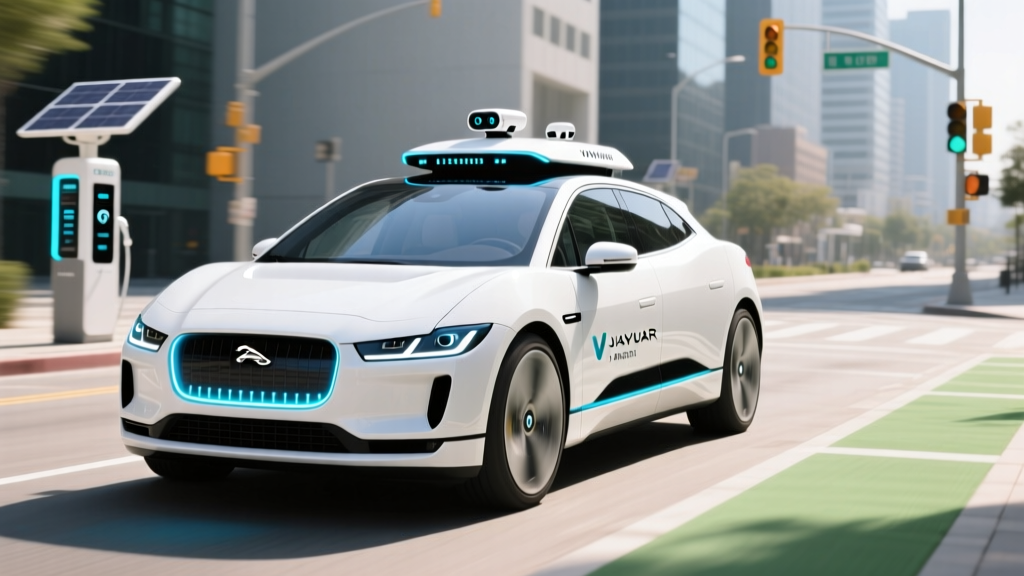
Booking a Waymo is straightforward: download the Waymo One app (available on iOS and Android), create an account, enter your pickup and drop-off within the service area, and request a ride. Wait times typically range from 3 to 10 minutes depending on fleet density and time of day. The vehicle — currently a Jaguar I-PACE EV retrofitted with Waymo's 6th-generation sensor suite, with a newer custom Geely/Zeekr robotaxi platform beginning to enter the fleet — pulls up, unlocks its doors automatically, and you ride without a driver.
| Factor | Waymo One | UberX | Lyft Standard |
|---|---|---|---|
| Base fare (typical) | $3.50–$5.00 | $2.50–$4.00 | $2.00–$3.50 |
| Per-mile rate | $1.25–$1.80 | $1.00–$1.60 | $0.95–$1.50 |
| Per-minute rate | $0.30–$0.45 | $0.20–$0.40 | $0.20–$0.35 |
| 5-mile trip estimate | $12–$18 | $10–$16 | $9–$15 |
| 15-mile trip estimate | $28–$40 | $22–$35 | $20–$32 |
| Surge pricing | Less volatile; capacity-limited | Dynamic surge common | Dynamic surge common |
| Tipping | Not expected (no driver) | Expected ($2–$5+) | Expected ($2–$5+) |
In practice, Waymo pricing is competitive with UberX and Lyft Standard for most trips, and often cheaper once you factor in that no tip is expected. During peak surge periods on conventional rideshare, Waymo can be significantly cheaper because its pricing does not spike as aggressively. However, Waymo's fleet size remains smaller, so wait times during peak hours can be longer, and the app may simply show no availability.
Waymo's Safety Record: What the Data Actually Shows
Safety is the most scrutinized — and most misunderstood — aspect of robotaxi operations. Waymo has published peer-reviewed safety data and regularly reports to the National Highway Traffic Safety Administration (NHTSA). Here is what the numbers show through late 2025 and into 2026:
- Total fully autonomous miles driven: Over 50 million driverless miles as of early 2026 (cumulative since commercial launch)
- Fatalities: Zero fatalities attributed to Waymo's autonomous driving system in driverless commercial operations
- Injury-causing crashes: Waymo reported a 85% reduction in injury-causing crash rates compared to human benchmarks in Phoenix, per their peer-reviewed study published in collaboration with Swiss Re
- Police-contacted incidents: In San Francisco through 2024, Waymo vehicles were involved in approximately 0.4 property-damage-only incidents per 100,000 autonomous miles — lower than the human baseline for the same area
- Contact with first responders: Waymo vehicles are equipped with an external speaker system and a dedicated emergency responder interface so police and firefighters can interact with the vehicle during incidents
Sources: Waymo Safety Reports, NHTSA, Swiss Re collaboration study
Context matters: The high-profile incidents that make news — a Waymo vehicle hitting a pedestrian who darted into traffic in San Francisco, or a vehicle stalling at a construction zone causing a traffic backup — are real and deserve scrutiny. But the data consistently shows that Waymo's crash rate per million miles is lower than the human average for comparable urban driving environments. The vehicle's 360-degree sensor suite does not get distracted, fatigued, or intoxicated.
That said, robotaxi incidents have consequences beyond crash statistics. A stalled vehicle blocking a bus lane or a fire truck creates friction with city infrastructure in ways that human-caused congestion does not. NHTSA has opened investigations into specific incidents, and the California Public Utilities Commission (CPUC) temporarily capped Waymo's San Francisco expansion in 2023 before lifting restrictions as safety data improved.
The Technology Stack: How Waymo Sees and Navigates the World
Waymo's approach to autonomy is fundamentally different from Tesla's camera-centric philosophy. Waymo uses a redundant, multi-sensor stack designed to handle edge cases through hardware diversity rather than neural-network generalization alone.
- LiDAR: Multiple custom-built LiDAR units providing a 360-degree, high-resolution 3D point cloud out to 500+ meters. LiDAR works independently of lighting conditions — critical for night driving and direct-sun glare scenarios.
- Cameras: A surround-camera array with high dynamic range, covering 360 degrees at multiple focal lengths for object classification, traffic-light reading, and signage recognition.
- Radar: Multiple imaging radar units for velocity detection of moving objects and performance in rain, fog, and other conditions where cameras and LiDAR degrade.
- External audio sensors: Microphones that detect emergency vehicle sirens and other auditory cues.
- HD Maps: Waymo pre-maps every inch of its operational domain at centimeter-level precision. The vehicle localizes itself against this map in real time. This is why geofencing is required — the vehicle cannot operate where it has not mapped.
- Compute: Custom Waymo-designed computing platform with redundant processing paths, enabling real-time sensor fusion, prediction, and planning.
The LiDAR vs. camera-only debate remains the defining technical schism in autonomy. Tesla relies exclusively on cameras and neural networks ("Tesla Vision"), arguing that humans drive with eyes alone and cameras should suffice. Waymo's position is that sensor redundancy — LiDAR providing ground-truth distance measurements independent of lighting, radar seeing through weather — is essential for safety-critical systems where failure is not an option. Independent testing and crash data to date have not settled the debate definitively, but Waymo's Level 4 certification required demonstrating safe operation without any human fallback, a bar that camera-only systems have not yet met for driverless deployment.
Regulatory Landscape: Who Approves Robotaxi Operations?
Robotaxi deployment in the United States is governed by a patchwork of state and local authorities — there is no single federal "robotaxi license." Understanding who holds power over operations helps explain why expansion is slow and uneven.
- NHTSA (federal): Sets vehicle safety standards (FMVSS). Currently, vehicles like Waymo's Jaguar I-PACE must meet all standard crash-safety requirements. NHTSA also investigates safety defects and incident reports. However, NHTSA has not issued comprehensive federal regulations specifically for driverless vehicle operations.
- State DMVs and transportation agencies: In California, the DMV issues testing and deployment permits. Companies must report disengagement data, collision reports, and operational metrics. Arizona took a lighter-touch approach, issuing executive orders enabling driverless testing and commercial operations with fewer reporting requirements — which is why Phoenix launched first.
- Public Utilities Commissions: In California, the CPUC regulates robotaxis as "passenger carriers," requiring permits for commercial fare-charging. CPUC proceedings have been contentious, with public hearings where residents raised concerns about vehicle blocking, emergency response interference, and neighborhood disruption.
- Local governments: Cities can impose additional restrictions — designated pickup zones, speed-limit compliance requirements, and coordination with local emergency services.
The regulatory trend in 2025–2026 has been toward more structured oversight with data-driven expansion approvals. States like Texas and Georgia have passed legislation creating frameworks for commercial robotaxi operations, while other states remain effectively closed to driverless ride-hailing.
Current Limitations: Where Robotaxis Still Fall Short
For all of Waymo's progress, Level 4 autonomy in 2026 is not Level 5. The limitations are structural, not merely temporary bugs. Understanding them is essential for setting realistic expectations.
- Geofencing: Waymo cannot drive outside its pre-mapped zones. Suburban sprawl, rural roads, and highways between cities are generally inaccessible. You cannot take a Waymo from San Francisco to Lake Tahoe.
- Weather degradation: Heavy rain, dense fog, and snow reduce sensor effectiveness. Waymo has improved its rain performance significantly with the 6th-gen suite, but severe weather still triggers service suspension or restricted operations. This is why Phoenix — with ~300 sunny days per year — was the launch city.
- Construction zones: While Waymo handles many construction scenarios, complex or rapidly changing construction zones with non-standard signage, flaggers, or lane shifts can cause the vehicle to stop and request remote assistance. This creates the "stalled robotaxi" incidents that frustrate other road users.
- Airport and venue access: Pickup at airports (PHX, SFO, LAX) has been progressively enabled but often requires specific designated zones rather than curbside flexibility. Large event venues with chaotic traffic patterns may not be supported.
- No highway intercity travel: Waymo's current ODD focuses on urban and suburban surface streets. High-speed highway merging and extended freeway driving in some markets remain limited or excluded.
- Fleet availability: With finite vehicles per city, peak-hour availability can be poor. During major events, rainstorms, or rush hour, you may wait 15–20 minutes or find no vehicles available at all.
- Accessibility: Waymo's current Jaguar I-PACE fleet is not wheelchair-accessible. The company has stated that its next-generation vehicle (the Zeekr-built custom robotaxi) is being designed with accessibility in mind, but widespread ADA-compliant fleet deployment is not yet realized.
- No stops or multi-destination trips: Unlike a human Uber driver, you cannot ask a Waymo to "stop at the pharmacy on the way." The ride is point A to point B as routed by the system.
The Bigger Picture: Google's Autonomous Strategy Beyond Waymo
Alphabet's self-driving ambitions extend beyond the Waymo One ride-hailing service. Waymo Via, the company's autonomous trucking and delivery division, has been developing long-haul freight autonomy in partnership with major logistics companies, though commercial deployment has been slower and less public than the passenger service. Waymo also licenses aspects of its perception and mapping technology, and the company's research publications at conferences like CVPR and NeurIPS continue to influence the broader autonomous vehicle field.
Google's mapping infrastructure — Google Maps, Street View, and the underlying HD mapping technology — provides Waymo with a data advantage that no competitor can easily replicate. The integration between Google's cloud AI capabilities (via Google DeepMind) and Waymo's real-world driving data creates a flywheel effect: every mile driven improves the system, and the improved system enables more miles.
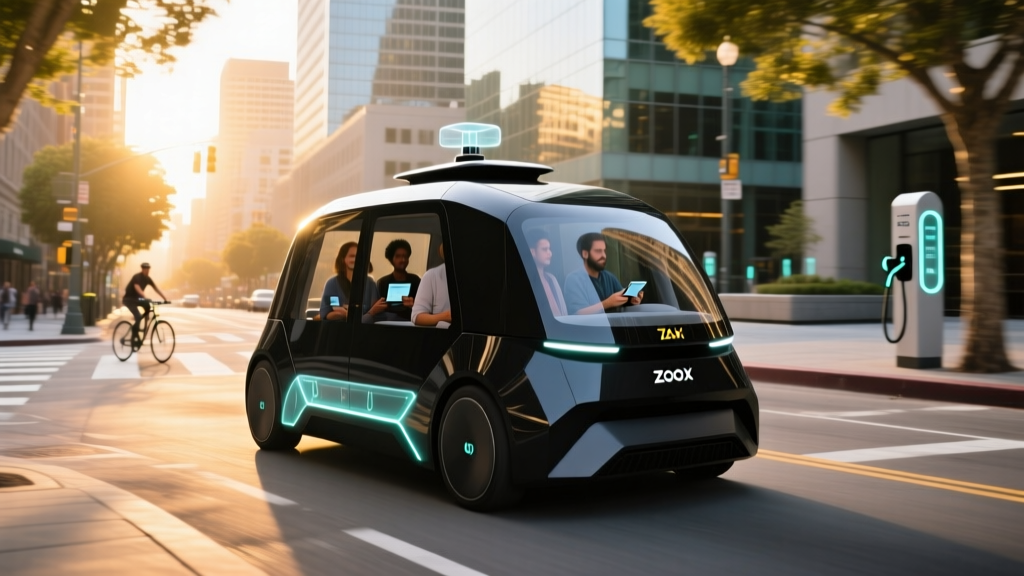
Competitors like Cruise (GM-backed, which suspended operations in late 2023 after a serious pedestrian incident in San Francisco and has been slowly resuming limited operations), Zoox (Amazon-owned, testing its purpose-built bidirectional vehicle), and Aurora (focused on trucking) each pursue different technical and business strategies. But Waymo remains the only company operating a large-scale, paid, fully driverless ride-hailing service across multiple US cities as of 2026.
Frequently Asked Questions
Can I use Waymo if I'm visiting Phoenix or San Francisco?
Yes. Waymo One is open to the public in its operational cities. Download the app, create an account, and request a ride within the geofenced service area. You do not need to be a resident or receive an invitation — the early "invite-only" phase ended years ago in Phoenix and San Francisco.
How does Waymo compare to Tesla's Full Self-Driving?
They are fundamentally different products. Waymo is SAE Level 4: fully driverless within its geofenced zone, with no human in the loop. Tesla FSD (Supervised) is SAE Level 2: a driver-assist system that requires a licensed, attentive driver behind the wheel at all times. Tesla FSD works on virtually any road but places all legal and safety responsibility on the human driver. Waymo works only in mapped zones but removes the human entirely.
What happens if a Waymo vehicle gets confused or encounters an unexpected situation?
The vehicle is designed to execute a "minimal risk condition" — typically pulling over safely or stopping in place — rather than guessing. Waymo also employs remote assistance operators who can provide high-level guidance (e.g., confirming that a construction-zone flagger is signaling the vehicle to proceed) but do not remotely "drive" the vehicle in real time. This remote assistance model is a key distinction from teleoperation.
Is Waymo safe at night?
Yes. Waymo's LiDAR and radar sensors operate independently of ambient light, and the camera system uses high-dynamic-range sensors optimized for low-light conditions. Night operations are routine in Phoenix and San Francisco. The safety data does not show a significant night-vs-day performance gap, unlike human drivers, for whom nighttime driving carries substantially elevated risk.
Will Waymo come to my city soon?
Expansion is deliberate and regulated. Waymo must map the city extensively, obtain state and local permits, build a local fleet and operations infrastructure, and demonstrate safety to regulators before launching. Cities with favorable weather, cooperative regulators, and strong rideshare demand are prioritized. If your city has recently passed autonomous vehicle legislation or if Waymo has been spotted testing there, commercial service may follow within 12–24 months — but announced testing is not the same as announced commercial launch.
How is the Jaguar I-PACE as a passenger experience?
The I-PACE is a premium electric SUV with 84 kWh of usable battery capacity (NMC chemistry), 234 EPA miles of range, and a quiet, spacious cabin. As a robotaxi, it features a partitioned rear cabin with touchscreens showing the route, a "start ride" button, and climate controls. The ride quality is smooth — electric powertrain torque delivery and regenerative braking are calibrated for passenger comfort rather than aggressive efficiency. There is no frunk access for passengers; trunk space is available for luggage on airport runs.