GM's Autonomous Vehicle Landscape: Two Very Different Paths
General Motors operates one of the most bifurcated autonomous-driving strategies in the industry. On one side: Super Cruise and the newer Ultra Cruise, which are Level 2 driver-assistance systems available in production vehicles you can buy today. On the other: Cruise LLC, GM's majority-owned robotaxi subsidiary, which operates (or has operated) Level 4 driverless vehicles in select U.S. cities. Confusing the two is easy — and potentially dangerous — so let's separate them immediately.
SAE Automation Levels: What GM Actually Offers
| Level | Definition | GM Product | Driver Required? |
|---|---|---|---|
| Level 2 | Partial automation — steering + acceleration assisted, driver must monitor | Super Cruise / Ultra Cruise | Yes, always |
| Level 4 | High automation — vehicle handles all driving in defined conditions, no driver needed | Cruise robotaxi (Origin / Bolt EV) | No (within geofence) |
Source: SAE International J3016
This distinction matters because consumers often see "GM autonomous vehicle" in headlines and assume every GM car can drive itself. It cannot. Super Cruise is an excellent hands-off highway system, but your eyes stay on the road and your liability stays with you. Cruise's Level 4 robotaxis are a separate commercial service — and their operational footprint has changed dramatically since late 2023.
Where Can You Use a GM Robotaxi Right Now?
The honest answer is more limited than GM's earlier projections suggested. Following a serious pedestrian incident in San Francisco in October 2023, Cruise underwent a NHTSA review, voluntarily suspended nationwide operations, and has since pursued a phased, city-by-city return to service. As of early 2026, Cruise's operational footprint looks like this:
| City | Status | Service Hours | Vehicle |
|---|---|---|---|
| Phoenix, AZ | Operational (limited area) | Daytime hours, expanding | Chevrolet Bolt EV |
| Dallas, TX | Operational (geofenced core) | Limited hours | Chevrolet Bolt EV |
| Houston, TX | Testing with safety driver | N/A (not public) | Chevrolet Bolt EV |
| San Francisco, CA | Suspended / pending re-approval | N/A | N/A |
| Austin, TX | Testing with safety driver | N/A (not public) | Chevrolet Bolt EV |
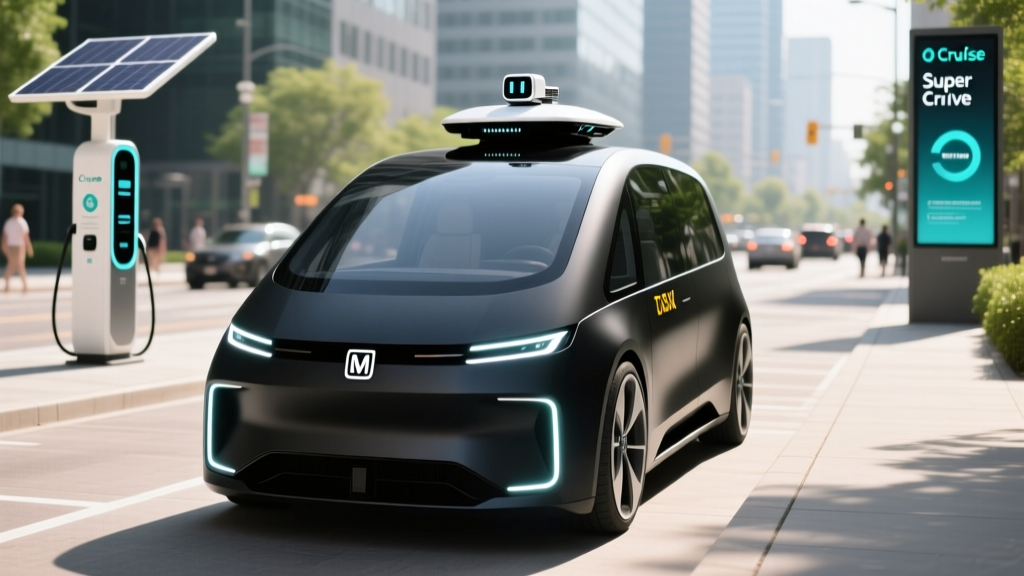
The purpose-built Cruise Origin — the steering-wheel-less, bidirectional shuttle — was initially slated to be the fleet's future. However, GM announced in mid-2024 that it would halt Origin production and refocus on modified Bolt EVs, citing regulatory complexity and the vehicle's inability to meet certain FMVSS standards without manual controls. If you're hoping to hail a driverless GM vehicle today, Phoenix and Dallas are your primary options, and even those operate within tightly drawn geofences.
How to Ride and What It Costs vs. Uber or Lyft
In cities where Cruise has resumed public service, riders use the Cruise app (available on iOS and Android) to request a ride — functionally identical to summoning an Uber or Lyft. You enter a pickup and drop-off point within the geofenced zone, the app confirms availability, and a driverless Bolt EV arrives.
| Metric | Cruise Robotaxi | UberX (Comparable City) | Lyft Standard |
|---|---|---|---|
| Base fare (est.) | $1.50–$2.00 | $2.00–$3.00 | $2.00–$2.75 |
| Per-mile rate | $0.85–$1.15 | $1.10–$1.60 | $1.00–$1.50 |
| Per-minute rate | $0.25–$0.35 | $0.30–$0.45 | $0.28–$0.40 |
| Typical 5-mile trip | $7–$11 | $10–$16 | $9–$15 |
| Surge pricing | None currently | Yes (1.5x–3x+) | Yes (Prime Time) |
| Tipping | Not applicable | Expected ($2–$5) | Expected ($2–$5) |
Cruise has historically subsidized fares to build ridership, so current pricing may not reflect long-term economics. The absence of a human driver removes the largest variable cost in rideshare — driver compensation typically accounts for 60–75% of an Uber fare. Whether Cruise can sustain lower prices once subsidies end and fleet-maintenance costs scale is an open question.
Safety Record: What the Data Actually Shows
Robotaxi safety is the most scrutinized — and most politicized — question in autonomous driving. Here is what we know from publicly available data:
Cruise Safety Data Points
- Millions of driverless miles logged across San Francisco, Phoenix, and Austin prior to the October 2023 suspension.
- October 2023 San Francisco incident: A Cruise vehicle struck and then dragged a pedestrian who had been thrown into its path by a human-driven car. The California DMV subsequently suspended Cruise's deployment permit, citing "unacceptable risk to public safety."
- NHTSA investigation: Opened into Cruise's autonomous driving system following multiple reported incidents involving first-responder vehicles and pedestrians.
- Post-incident response: Cruise grounded its entire fleet nationwide, conducted a full safety review, replaced senior leadership, and implemented revised software protocols before resuming limited operations in 2024–2025.
- California DMV disengagement reports: In its last full year of pre-suspension California operations, Cruise reported disengagement rates (human safety-driver takeovers during testing) comparable to other major AV operators, though direct comparison is complicated by differing test conditions and geofence complexity.
Sources: California DMV Disengagement Reports, NHTSA
For context, Waymo — the only other major U.S. robotaxi operator at comparable scale — has published peer-reviewed research showing a 57% reduction in injury-causing crashes per million miles compared to human benchmarks in its Phoenix and San Francisco operations. Cruise has not published equivalent peer-reviewed crash-rate data, which remains a transparency gap.
The Technology Stack: Sensors, Compute, and Geofencing
Cruise vehicles use a sensor-fusion approach that differs sharply from Tesla's camera-only FSD system. Here is the hardware and software architecture that powers a GM Level 4 robotaxi:
Cruise Robotaxi Sensor & Compute Stack
| Component | Specification / Role |
|---|---|
| LiDAR | Multiple roof-mounted units (typically 5+), providing 360° 3D point-cloud mapping up to ~200m range |
| Cameras | 12+ high-resolution cameras for object classification, traffic-light recognition, lane detection |
| Radar | Multiple short- and long-range radar units for velocity detection and adverse-weather redundancy |
| Ultrasonic sensors | Close-proximity object detection for low-speed maneuvering |
| Compute platform | Custom high-performance computing module (multiple NVIDIA-class GPUs), processing terabytes of sensor data per hour |
| HD mapping | Centimeter-precision pre-mapped routes within geofenced zones, updated continuously |
| Geofencing | GPS + HD map boundary enforcement — vehicle will not operate outside approved zones |
| Connectivity | Cellular (4G/5G) for remote assistance, fleet dispatch, and real-time map updates |
This multi-sensor redundancy is the defining difference between Cruise's Level 4 approach and camera-centric Level 2 systems. LiDAR provides depth perception independent of lighting conditions — critical for nighttime operation and scenarios where camera contrast fails (e.g., a white truck against a bright sky). The trade-off is cost: each Cruise vehicle carries tens of thousands of dollars in sensor hardware, though LiDAR unit costs have fallen significantly since 2020.
By contrast, Super Cruise and Ultra Cruise in consumer GM vehicles rely on a lighter sensor suite — primarily cameras, radar, and GPS-linked HD map data — paired with a driver-monitoring camera on the steering column. These systems work on over 400,000 miles of pre-mapped divided highways in the U.S. and Canada, but they require your attention and cannot navigate surface streets, construction zones, or unmapped routes autonomously.
Regulatory Landscape: Who Approves GM's Autonomous Operations?
Autonomous vehicle regulation in the United States is a patchwork. There is no single federal "robotaxi license." Instead, authority is split:
- NHTSA (federal): Sets vehicle safety standards (FMVSS) and investigates safety defects. NHTSA does not "approve" AV operations but can issue recalls or open defect investigations — which it has done with Cruise.
- State DMVs and PUCs: Most operational authority lives at the state level. California's DMV issues testing and deployment permits; the California Public Utilities Commission (CPUC) regulates commercial passenger service. Arizona takes a permissive approach with minimal permitting requirements. Texas has no statewide AV regulatory framework, leaving oversight largely to municipalities.
- Municipal governments: Cities can impose additional restrictions on where and when robotaxis operate, as San Francisco did prior to Cruise's suspension.
The Cruise Origin's cancellation is partly a regulatory story. Without a steering wheel, pedals, or mirrors, the Origin requires an FMVSS exemption from NHTSA — and the agency has been slow to grant broad exemptions for driverless vehicles. By pivoting back to the Bolt EV platform (which meets all existing FMVSS requirements), Cruise sidestepped this bottleneck at the cost of abandoning its purpose-built design vision.
Current Limitations: Where GM Robotaxis Cannot Go
Operational Constraints of Cruise's Level 4 Service
- Geofence boundaries: Vehicles will not travel outside pre-mapped, approved zones. A trip from downtown Phoenix to a suburb outside the geofence will be rejected by the app.
- Weather restrictions: Heavy rain, snow, ice, and dense fog degrade LiDAR and camera performance. Cruise typically suspends service during severe weather events — unlike a human driver who might proceed cautiously.
- Construction zones: Unmapped lane shifts, temporary barriers, and flaggers create edge cases that may trigger a remote-assistance pause or route recalculation, adding delay.
- No highway operation: Cruise's current deployment is limited to surface streets within urban geofences. Highway-speed autonomous operation in mixed traffic remains outside its operational design domain.
- Accessibility gaps: The Bolt EV platform requires riders to enter and exit a standard vehicle. Wheelchair-accessible options are not currently available in Cruise's fleet.
- Remote assistance latency: When the vehicle encounters an ambiguous scenario, it may stop and request remote human guidance. This can add minutes to a trip and, in dense traffic, create a localized obstruction.
- Limited hours: Post-relaunch operations in Phoenix and Dallas have been restricted to daytime and early evening hours, with no overnight service.
Super Cruise and Ultra Cruise: The GM Autonomous Vehicle You Can Actually Buy
If you're shopping for a GM vehicle with advanced driver assistance — not a robotaxi service, but a car you own — Super Cruise and Ultra Cruise are the relevant products. Both are SAE Level 2 systems, meaning you remain the driver at all times.
| Feature | Super Cruise | Ultra Cruise |
|---|---|---|
| Availability | 2024–2026 Cadillac CT5, Escalade, LYRIQ; Chevrolet Silverado/Tahoe; GMC Sierra/Yukon | 2025–2026 Cadillac LYRIQ (select trims), upcoming CT5 EV |
| Road coverage | 400,000+ miles of pre-mapped divided highways (U.S./Canada) | 95% of driving scenarios (highways + surface streets, where mapped) |
| Hands-off? | Yes (eyes-on, monitored by steering-column camera) | Yes (eyes-on, enhanced monitoring) |
| Lane change | Automatic on command | Automatic + predictive |
| Level | SAE Level 2 | SAE Level 2 |
| Subscription cost | Free for 3 years, then ~$25/month | Free for initial period, pricing TBD |
Ultra Cruise represents a significant expansion of Super Cruise's operational design domain, adding surface-street capability. However, it remains a driver-assist system — not a robotaxi. You cannot nap, read a book, or leave the driver's seat. GM markets these systems aggressively, but the SAE Level 2 classification is firm: the human is the fallback.
Frequently Asked Questions
Is GM's autonomous vehicle technology truly self-driving?
It depends on which product. Cruise robotaxis are SAE Level 4 — truly driverless within their geofenced operational zones, with no human behind the wheel. Super Cruise and Ultra Cruise in GM consumer vehicles are SAE Level 2 — advanced driver-assist systems that require your attention at all times. Calling Level 2 "self-driving" is inaccurate and potentially dangerous.
Why did Cruise stop operating in San Francisco?
Following a October 2023 incident in which a Cruise vehicle struck and dragged a pedestrian (who had been thrown into the vehicle's path by a separate human-driven car), the California DMV suspended Cruise's deployment permit. Cruise voluntarily grounded its entire fleet nationwide. As of early 2026, San Francisco operations have not fully resumed, though testing with safety drivers has occurred.
How does Cruise compare to Waymo?
Waymo (Alphabet) has maintained more consistent operations in Phoenix and San Francisco, with a larger active fleet and published peer-reviewed safety data showing reduced crash rates vs. human drivers. Cruise has a smaller operational footprint post-suspension and has not published equivalent crash-rate research. Both use LiDAR-based sensor fusion, but Waymo's custom "Jaguar I-PACE"-based vehicles carry more advanced sensor generations.
Can I buy a car with Cruise's Level 4 technology?
No. Cruise's Level 4 system is a commercial fleet service — you hail it via an app, like Uber. The technology is not available for consumer purchase. GM's consumer autonomous-driving products (Super Cruise/Ultra Cruise) are Level 2 and require the driver to remain engaged.
What is the GM Cruise Origin and why was it cancelled?
The Cruise Origin was a purpose-built, steering-wheel-less, bidirectional electric shuttle designed for shared robotaxi service. GM halted its production in 2024, citing FMVSS regulatory hurdles (the vehicle did not meet standards requiring manual controls) and a strategic decision to focus on modified Bolt EVs that already comply with existing safety regulations.