Where GM's Autonomous Car Program Stands in 2026
The phrase "GM autonomous car" once conjured images of Cruise Origin robotaxis gliding driverless through San Francisco. That era ended abruptly in December 2024, when General Motors ceased funding Cruise's commercial robotaxi operations, citing unsustainable burn rates exceeding $2 billion annually. Today, GM's autonomy strategy has pivoted hard — away from Level 4 ride-hailing and toward advanced Level 2+ driver-assistance systems deployed across its consumer vehicle lineup.
This guide breaks down exactly where GM's self-driving technology stands right now: what's available to consumers, what was shelved, and what's realistically coming next. We'll cover Super Cruise and the upcoming Ultra Cruise, the regulatory landscape, safety data, and how GM's approach compares to robotaxi operators still running.
SAE Automation Levels: Quick Refresher
| Level | Name | Who Drives? | GM Example |
|---|---|---|---|
| Level 0 | No Automation | Human | Basic cruise control |
| Level 1 | Driver Assistance | Human | Lane-keep assist |
| Level 2 | Partial Automation | Human (supervised) | Super Cruise |
| Level 2+ | Enhanced Partial | Human (supervised) | Ultra Cruise (announced) |
| Level 3 | Conditional Automation | System (limited) | Not offered by GM |
| Level 4 | High Automation | System (geofenced) | Cruise (discontinued) |
| Level 5 | Full Automation | System (everywhere) | Does not exist commercially |
Source: SAE International J3016. GM's current consumer products are Level 2 — the driver must remain attentive at all times.
Super Cruise: GM's Available Level 2 System
Super Cruise is GM's hands-free driver-assistance technology currently available on select 2024–2026 models including the Cadillac CT5, Cadillac Escalade, Chevrolet Silverado 1500, GMC Sierra 1500, and Chevrolet Equinox EV. It operates on over 750,000 miles of compatible divided highways across the United States and Canada — roads that GM has pre-mapped using LiDAR-scanned HD maps.
How Super Cruise Works
Super Cruise combines adaptive cruise control with lane-centering assist, using a combination of cameras, radar sensors, and high-precision GPS matched against GM's HD map database. A driver-facing infrared camera mounted on the steering column monitors eye gaze and head position to ensure the driver remains attentive. If you look away from the road for more than a few seconds, the system escalates warnings — visual, then audible, then haptic — before disengaging and slowing the vehicle.
Key specifications for 2025–2026 Super Cruise-equipped vehicles:
- Hands-free operation: Yes, on mapped divided highways only
- Eyes-free operation: No — driver attention required at all times
- Automatic lane change: Yes (driver-initiated via turn signal on newer models)
- Compatible road coverage: 750,000+ miles (US and Canada)
- Sensor suite: Forward-facing camera, long-range radar, ultrasonic sensors, LiDAR-based HD maps, driver-monitoring IR camera
- Subscription cost: $25/month or $250/year after the initial 3-year complimentary period
Super Cruise Pricing by Vehicle
Super Cruise availability and packaging varies by model and trim:
| Vehicle (2025–2026) | Trim Required | Package Cost | Starting MSRP with SC |
|---|---|---|---|
| Cadillac CT5 | Premium Luxury / Sport | $2,500 (Technology Pkg) | ~$52,000 |
| Cadillac Escalade | Premium Luxury+ | Included | ~$89,000 |
| Chevrolet Silverado 1500 | High Country | Included (w/ $5,000 Tech Pkg on LTZ) | ~$68,000 |
| Chevrolet Equinox EV | RS / Launch Edition | Available as option | ~$43,000 |
| GMC Sierra 1500 | Denali Ultimate | Included | ~$78,000 |
Source: GM Vehicle Configurator. Pricing reflects MSRP before destination charges and any applicable incentives.
Ultra Cruise: The Next-Generation System (Announced)
GM announced Ultra Cruise as the successor to Super Cruise, promising coverage on "95 percent of driving scenarios" including urban streets, rural roads, and residential neighborhoods — not just divided highways. However, as of early 2026, Ultra Cruise has not yet launched on any production vehicle.
What We Know About Ultra Cruise
- Sensor suite: Adds multiple LiDAR units (in addition to cameras and radar) — a significant hardware upgrade over Super Cruise
- Intended coverage: Virtually all paved roads, not just HD-mapped highways
- Compute platform: Qualcomm Snapdragon Ride Platform with enhanced AI processing
- First vehicle: Expected on the Cadillac Celestiq (ultra-luxury, low-volume sedan priced above $300,000)
- Launch timeline: Originally targeted for 2024; now expected no earlier than late 2026 or 2027
- SAE Level: Still Level 2+ — driver supervision required despite expanded operational domain
⚠️ Ultra Cruise Is Not Self-Driving
Despite expanded road coverage and a more capable sensor suite, Ultra Cruise remains an SAE Level 2 system. The driver must remain engaged, monitor the driving environment, and be prepared to take over at any moment. This is fundamentally different from a Level 4 robotaxi like Waymo, where no human driver is present. Do not confuse "more roads" with "no driver needed."
The Cruise Robotaxi Story: Rise, Fall, and Aftermath
Understanding GM's current autonomy posture requires examining what happened with Cruise, the robotaxi subsidiary GM acquired in 2016 and majority-owned until its effective dissolution.
Timeline of Key Events
- 2022–2023: Cruise operated commercial driverless robotaxi service in San Francisco, Phoenix, and Austin using the Chevrolet Bolt EV-based Cruise AV. At peak, the fleet numbered approximately 400 vehicles in San Francisco alone.
- October 2, 2023: A Cruise robotaxi in San Francisco struck a pedestrian who had been thrown into its path by a human-driven vehicle. The robotaxi then dragged the pedestrian approximately 20 feet while attempting to pull over. The incident, and Cruise's initial handling of data disclosure to regulators, triggered a cascade of regulatory actions.
- October 2023: California DMV suspended Cruise's deployment permit. Cruise voluntarily paused nationwide operations.
- 2024: Cruise attempted a phased return to testing with human safety drivers in Phoenix, Dallas, and Houston. GM conducted a thorough safety review and implemented over 400 engineering and process changes.
- December 2024: GM announced it would cease funding Cruise's robotaxi development, citing the path to profitability requiring continued investment of over $2 billion per year. GM consolidated Cruise's engineering talent into its own ADAS teams.
- 2025–2026: The Cruise Origin vehicle (purpose-built robotaxi with no steering wheel) was canceled. GM redirected resources toward Super Cruise and Ultra Cruise consumer products.
Cruise Safety Record: The Numbers
During its operational period (2022–2023), Cruise reported approximately 2.5 million driverless miles completed in San Francisco. Key safety data points:
- Collision rate: Cruise reported a lower rate of police-reportable collisions per million miles than human drivers in San Francisco — but this comparison was contested by researchers who noted robotaxis tend to self-report minor incidents that humans often don't.
- Disengagement rate: California DMV disengagement reports showed Cruise vehicles required remote-assistance interventions approximately every 5,000–8,000 miles during testing phases.
- The October 2023 incident: The pedestrian-dragging event was classified as a serious injury. NHTSA opened an investigation. The incident became a case study in how edge cases (a pedestrian thrown into the vehicle's path by a third party) challenge autonomous perception systems.
Source: NHTSA investigation records and California DMV autonomous vehicle disengagement reports.
How GM's Strategy Compares to Active Robotaxi Operators
With Cruise out of the robotaxi market, the competitive landscape has consolidated significantly. Here's how GM's current approach compares to operators still running commercial driverless services:
| Operator | SAE Level | Vehicle | Active Cities (2026) | Business Model |
|---|---|---|---|---|
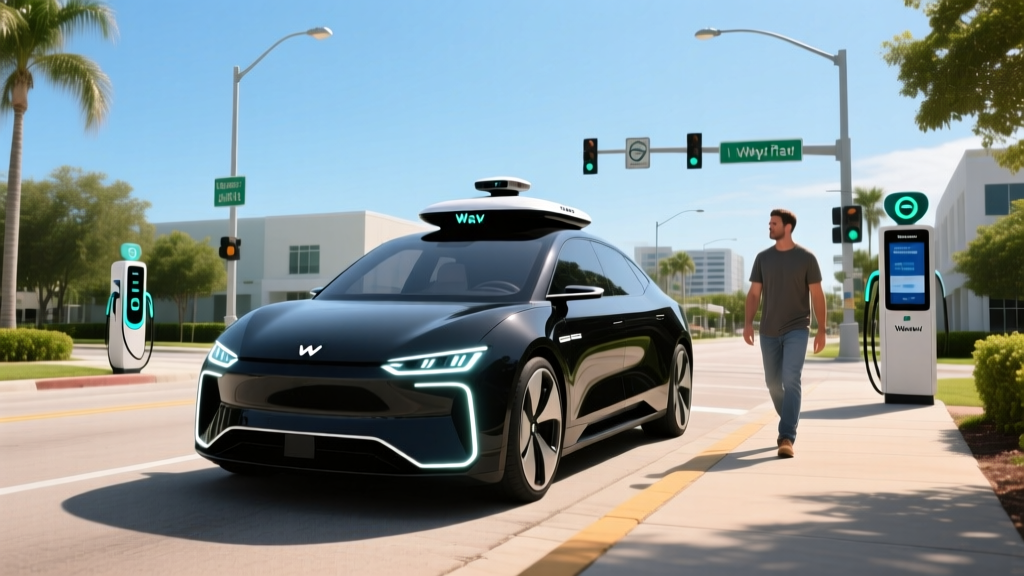
| Waymo (Alphabet) | Level 4 | Jaguar I-PACE / Zeekr RT | Phoenix, San Francisco, Los Angeles, Austin | Commercial ride-hail (via Waymo One app) |
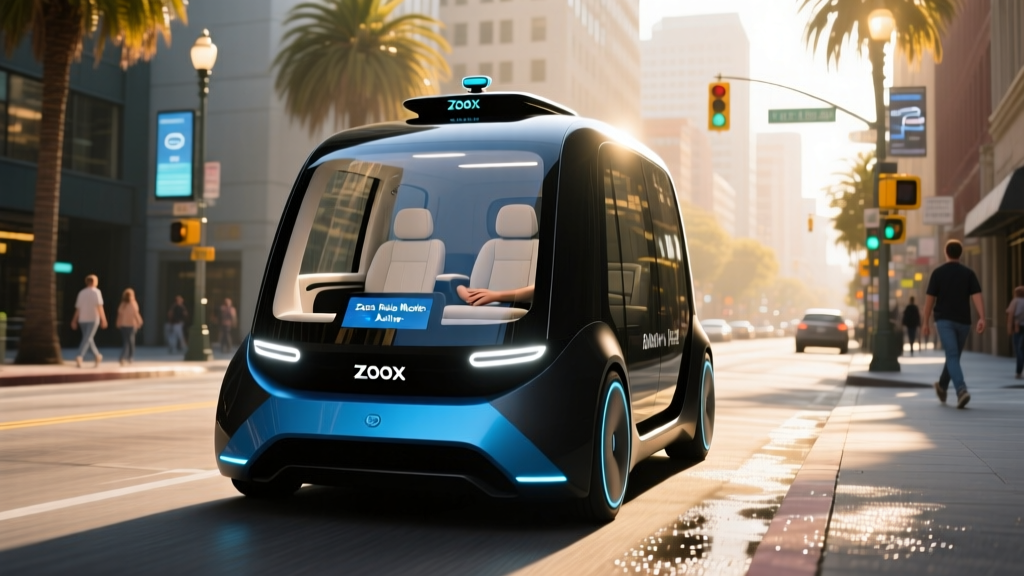
| Zoox (Amazon) | Level 4 | Zoox purpose-built vehicle | Limited: Las Vegas, Foster City (testing) | Pre-commercial testing; no public fare service yet |
| GM (Super Cruise) | Level 2 | Consumer vehicles (Cadillac, Chevy, GMC) | Nationwide (750K+ mi mapped roads) | Consumer vehicle feature / subscription |
| Tesla (FSD Supervised) | Level 2 | Model 3/Y/S/X, Cybertruck | Nationwide (no geofence) | Consumer vehicle software ($8,000 or $99/mo) |
Key Takeaway
GM has effectively exited the Level 4 robotaxi race. Its autonomy investment now flows into making Level 2+ driver-assistance systems more capable and widely available across its consumer fleet — a lower-risk, capital-efficient approach that generates revenue today rather than requiring billions in speculative investment.
Regulatory Landscape for Autonomous Vehicles
The regulatory environment for autonomous vehicles in the US remains fragmented, with authority split between federal and state jurisdictions:
Federal (NHTSA)
- NHTSA regulates vehicle safety standards (FMVSS) but has not yet established specific safety standards for Level 4+ autonomous vehicles.
- NHTSA investigates crashes and defects involving ADAS and autonomous systems.
- As of 2026, no federal framework exists for certifying a fully driverless vehicle for consumer sale.
State Level
- California: Requires permits from both the DMV (testing) and CPUC (commercial deployment). Cruise's permit was revoked; Waymo holds active permits.
- Arizona: Among the most permissive states. Waymo operates commercially with minimal regulatory friction.
- Texas: Allows autonomous vehicle testing and deployment under state transportation code. Cruise had been testing in Austin and Houston before shutdown.
- Nevada: Permits testing; Zoox has conducted operations in Las Vegas.
For GM's consumer products (Super Cruise, Ultra Cruise), the regulatory burden is significantly lower because these are Level 2 systems — the human driver remains legally responsible for vehicle operation at all times. No special state permits are required to sell or use a Level 2 vehicle.
Current Limitations of GM's Autonomous Technology
Super Cruise Limitations (Level 2, Current Production)
- Geofenced to mapped roads: Only operates on GM's pre-mapped divided highways (~750,000 miles). Unmapped roads, construction zones, and recently modified interchanges may not be recognized.
- Weather sensitivity: Heavy rain, snow, fog, or ice on road surfaces can degrade camera and radar performance, triggering system disengagement.
- No hands-free in cities: Urban streets, residential roads, and parking lots are not supported.
- Driver monitoring: The IR camera requires you to face forward. Sunglasses, hats, or looking down at a phone will trigger alerts.
- Lane change limitations: Auto lane changes are driver-initiated (turn signal), not fully autonomous overtaking maneuvers.
- Subscription required: After the free trial period, continued use costs $25/month.
Ultra Cruise Limitations (Level 2+, Announced — Not Yet Available)
- Not yet launched: As of early 2026, no production vehicle offers Ultra Cruise to consumers.
- Still requires supervision: Despite marketing language about "95% of driving scenarios," the driver must remain engaged.
- Hardware cost: The LiDAR-heavy sensor suite will likely limit Ultra Cruise to premium trims and Cadillac models initially.
- Timeline uncertainty: Originally announced for 2024, delays have pushed expected availability to late 2026 or beyond.
Frequently Asked Questions
Where can I use a GM autonomous car right now?
GM does not offer a driverless robotaxi service. Cruise, GM's former robotaxi subsidiary, ceased operations in late 2024. What GM does offer is Super Cruise — a hands-free Level 2 driver-assistance system available on over 750,000 miles of mapped divided highways across the US and Canada. It's available as a factory option on select Cadillac, Chevrolet, and GMC models.
How much does Super Cruise cost compared to Uber or Lyft?
These aren't directly comparable services. Super Cruise is a driver-assistance feature on a car you own or lease — it doesn't provide rides. You still drive (or rather, supervise) your own vehicle. The feature costs $2,500 as a package option or is included on higher trims, plus a $25/month subscription after the initial free period. Uber and Lyft charge per ride. Waymo One (the only major commercial robotaxi still operating) charges fares comparable to Uber/Lyft — typically $1–$2 per mile depending on demand and city.
How safe is Super Cruise?
GM reports that Super Cruise-equipped vehicles have logged over 100 million miles of hands-free driving since the system's 2018 launch. Because the driver remains responsible and must monitor the road, the safety model is fundamentally different from a driverless robotaxi. NHTSA has not issued specific safety recalls against Super Cruise's core functionality, though GM has issued software updates to improve driver-monitoring sensitivity. The system's geofencing to pre-mapped highways is a deliberate safety constraint — it avoids the unpredictable scenarios that challenged Cruise's robotaxi operations.
Is GM still working on self-driving cars?
GM has shifted its autonomy investment from Level 4 robotaxis (the Cruise model) to advanced Level 2+ consumer driver-assistance (Ultra Cruise). The company consolidated Cruise's engineering teams into its internal ADAS division in early 2025. GM CEO Mary Barra stated the company will "revisit" robotaxi opportunities if the economics become viable, but no timeline has been given. For now, GM's autonomy play is making advanced driver-assistance available across millions of consumer vehicles rather than operating a small fleet of driverless taxis.
What happened to the Cruise Origin robotaxi?
The Cruise Origin — a purpose-built, no-steering-wheel shuttle designed for ride-hailing — was canceled when GM shut down Cruise's commercial operations in December 2024. GM had planned to manufacture the Origin at its Factory Zero plant in Detroit. Some Origin prototypes were used in limited testing, but none entered commercial passenger service at scale. The vehicle program was discontinued alongside the broader Cruise robotaxi effort.
Can I buy a car with Ultra Cruise today?
No. Ultra Cruise was announced in 2022 with an initial target of 2024 availability, but the system has been delayed. As of early 2026, no production vehicle ships with Ultra Cruise. The Cadillac Celestiq is expected to be the first vehicle to feature it, potentially in late 2026 or 2027. The Celestiq is a hand-built, ultra-luxury sedan with a starting price above $300,000 — so Ultra Cruise will not be accessible to mainstream buyers for several years after launch.
How does GM's approach compare to Tesla's FSD?
Both GM's Super Cruise and Tesla's Full Self-Driving (Supervised) are SAE Level 2 systems requiring driver attention. The key differences: Super Cruise is geofenced to mapped highways but offers true hands-free operation within that domain. Tesla FSD operates on virtually any road (no geofence) but requires hands on the steering wheel (torque sensing). Super Cruise uses LiDAR-based HD maps plus a driver-facing camera; Tesla FSD uses a camera-only approach with no LiDAR or radar. Neither system is "self-driving" — both require active human supervision.
The Bottom Line on GM's Autonomous Car Ambitions
GM's autonomous car story in 2026 is one of strategic retreat and pragmatic redirection. The Cruise robotaxi experiment demonstrated that Level 4 driverless operations remain extraordinarily capital-intensive, technically brittle in edge cases, and regulatory-sensitive. By pivoting to Super Cruise and the upcoming Ultra Cruise, GM is pursuing a path that generates revenue today, scales across millions of vehicles, and avoids the liability and burn-rate challenges of operating a robotaxi fleet.
For consumers, this means: if you want a GM vehicle with advanced hands-free driving on highways today, Super Cruise on a Cadillac or Chevy is a mature, well-reviewed system with clear limitations. If you're waiting for a true GM driverless car — one where you can nap in the back seat — that's not on any announced timeline. The technology may get there eventually, but GM is no longer the company racing to deliver it first.