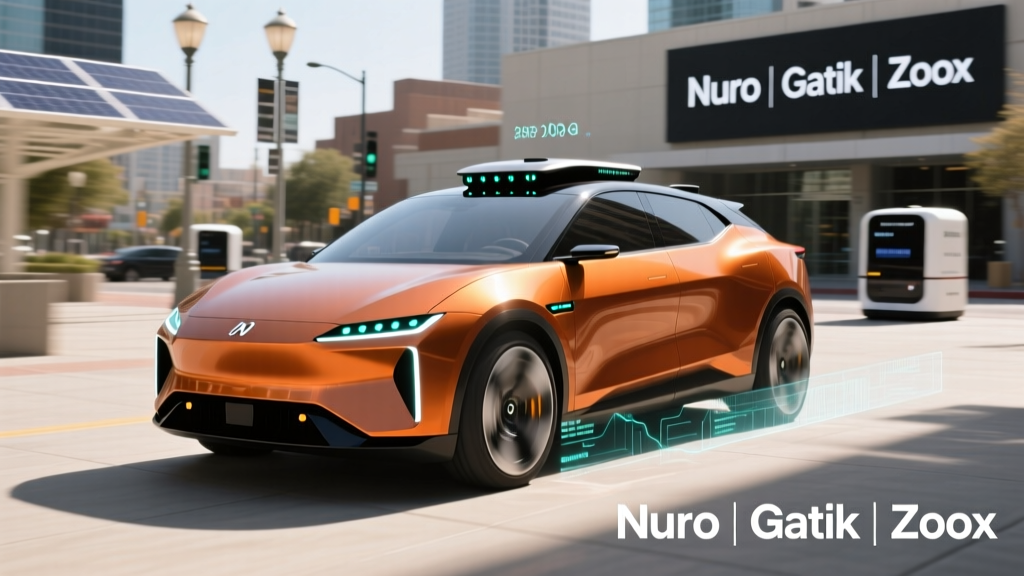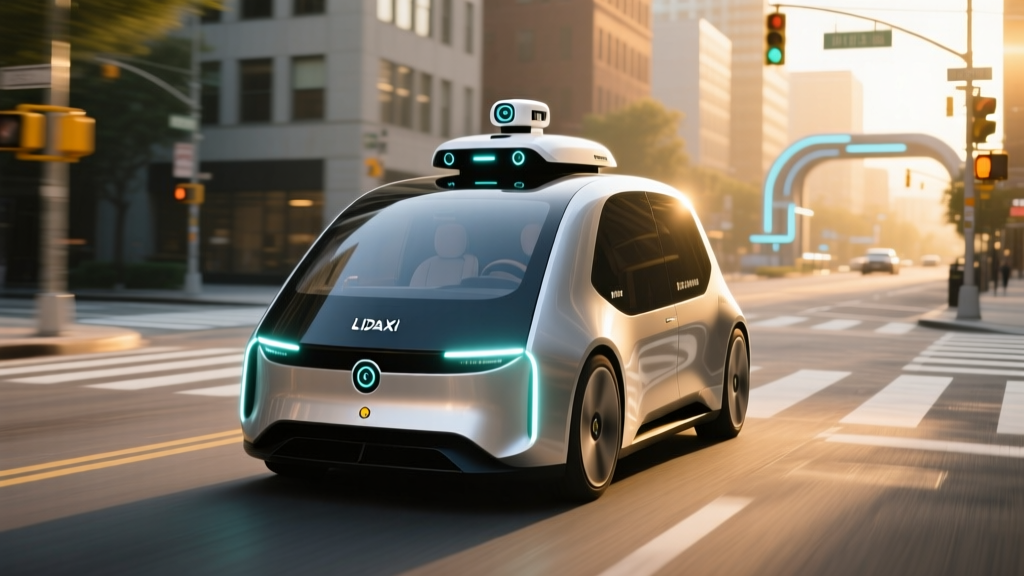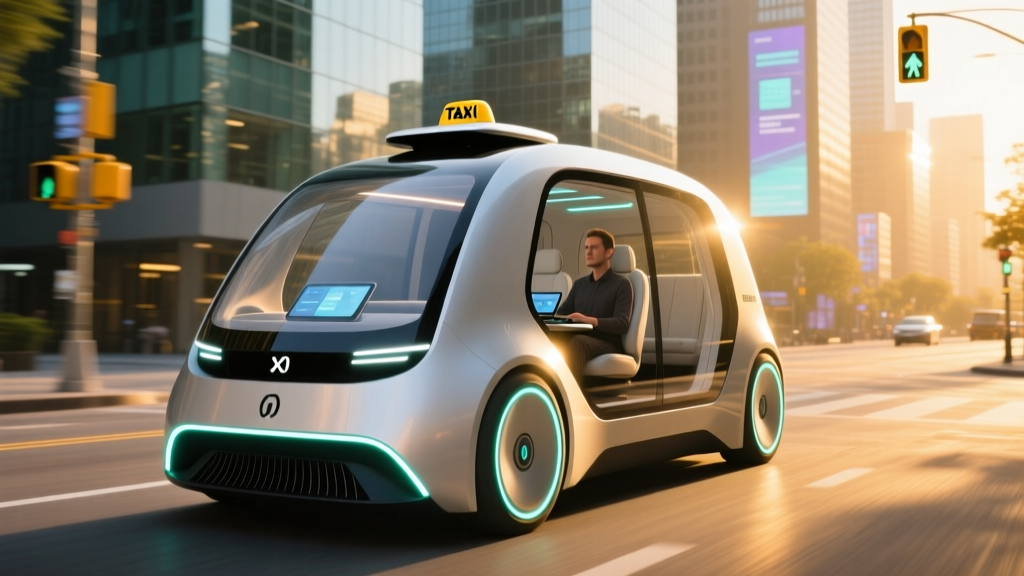
Self-driving cars generate more headlines than almost any other automotive technology, but separating marketing hype from engineering reality requires hard data. Below, we break down 12 fun facts about self-driving cars — grounded in SAE automation levels, real-world safety records, sensor stacks, and the regulatory frameworks that actually govern these vehicles on public roads today.
Whether you're tracking Waymo's expansion, curious about Zoox's purpose-built cabin, or wondering how Tesla's approach differs from lidar-heavy competitors, these facts give you the precise numbers and context you need.
Fact #1: "Self-Driving" Means Very Different Things Depending on the SAE Level
The single most important fact about autonomous vehicles is that the term "self-driving" gets applied to systems that are fundamentally different in capability and legal responsibility. The SAE International J3016 standard defines six levels of driving automation, and the gap between Level 2 and Level 4 is enormous.
| Level | Name | Who Drives? | Example Systems |
|---|---|---|---|
| 0 | No Automation | Human does everything | Conventional vehicles |
| 1 | Driver Assistance | Human + system shares one task (steering OR speed) | Adaptive cruise control, lane-keeping assist |
| 2 | Partial Automation | Human supervises; system handles steering AND speed | Tesla Autopilot, GM Super Cruise, Ford BlueCruise, Toyota Safety Sense |
| 3 | Conditional Automation | System drives in limited conditions; human must take over on request | Mercedes DRIVE PILOT (limited markets/conditions) |
| 4 | High Automation | System drives fully within its operational design domain; no human needed | Waymo One, Zoox (geofenced areas) |
| 5 | Full Automation | System drives everywhere, all conditions | Does not yet exist in production |
Fact #2: Waymo Has Logged Over 50 Million Fully Driverless Miles
Waymo, the Alphabet subsidiary that spun out of Google's self-driving car project, remains the most data-rich robotaxi operator in the world. As of early 2026, Waymo reports having completed over 50 million paid, fully driverless trips across its operational cities, with cumulative autonomous miles exceeding 50 million driverless miles on public roads.
That's not simulation or test-track data — it's real-world, mixed-traffic driving in cities like Phoenix, San Francisco, Los Angeles, and Austin. For context, the average American drives roughly 14,000 miles per year. Waymo's driverless fleet has collectively covered the equivalent of thousands of human lifetimes of driving.
Fact #3: Robotaxis Use Sensor Stacks That Cost More Than Some Cars
One of the most interesting fun facts about self-driving cars is the sheer hardware complexity packed onto the roof and body panels. Here's how the major approaches differ:
Tech Stack Comparison
Waymo (6th-generation "Driver"): LiDAR-dominant approach. Each vehicle carries multiple high-resolution lidar units (providing 360° 3D point clouds), a suite of cameras (visible spectrum), radar units for velocity detection in poor weather, and external microphones to detect emergency vehicle sirens. The sensor suite and onboard compute reportedly add significant cost per vehicle — industry estimates place the hardware at $100,000+ per unit, though Waymo does not publish exact figures.
Zoox: Purpose-built vehicle with a symmetrical, bidirectional design (no steering wheel, no designated "front"). Carries a multi-modal sensor array including lidar, cameras, and radar distributed around the vehicle for full 360° redundancy.
Tesla (FSD Supervised — Level 2): Camera-only approach ("Tesla Vision"). Eight surround cameras plus neural-network-based perception. No lidar, no radar (removed in recent model years). This is a fundamentally different philosophy — software-centric rather than sensor-redundant — and it remains a Level 2 driver-assist system, not a driverless robotaxi.
The lidar vs. camera debate is one of the most consequential engineering disagreements in autonomous driving. Lidar provides precise depth measurement independent of lighting conditions, but at high per-unit cost. Camera-only systems are cheaper and higher-resolution but rely entirely on machine-learning inference for depth perception and can struggle in low-light, glare, or heavy precipitation.
Fact #4: You Can Actually Hail a Robotaxi Right Now — In Specific Cities
Robotaxi service isn't a future promise; it's a present reality, though geography matters enormously. Here's where you can ride in a fully driverless vehicle as of 2026:
| Operator | Cities | Service Type | Hours |
|---|---|---|---|
| Waymo One | Phoenix (metro), San Francisco, Los Angeles, Austin | Fully driverless (Level 4), paid rides via app | 24/7 in most markets |
| Zoox | Las Vegas (limited area), Foster City, CA (testing) | Purpose-built vehicle; limited public service | Limited hours |
| Cruise | Operations suspended/restructuring after 2023 San Francisco incident; gradual return in limited markets | Supervised/limited driverless | Varies |
| Waymo (expansion announced) | Atlanta, Miami — announced/preliminary, not yet live | Planned driverless service | N/A |
How to use Waymo One: Download the Waymo One app (available on iOS and Android), create an account, and request a ride within the service area — similar to Uber or Lyft. The vehicle arrives without a driver, you unlock via the app, and the car navigates to your destination autonomously. You can monitor the route on an in-seat screen.
Fact #5: Robotaxi Pricing Is Competitive With Uber and Lyft
A common assumption is that robotaxi rides carry a premium for the technology. In practice, Waymo has aggressively priced rides to build market share, and in many cases fares are comparable to or slightly below equivalent Uber/Lyft rides.
| Metric | Waymo One | UberX / Lyft |
|---|---|---|
| Base fare | ~$2.50–$3.50 | ~$2.00–$3.00 |
| Per-mile rate | ~$1.10–$1.50 | ~$1.00–$1.75 |
| Per-minute rate | ~$0.25–$0.40 | ~$0.20–$0.40 |
| Typical 5-mile trip | $10–$16 | $11–$20 |
| Surge pricing | Rare; more predictable | Common during peak demand |
| Tipping | Not expected (no driver) | Expected ($2–$5+) |
The no-tip factor is significant. On a $15 rideshare trip, a $3 tip pushes the real cost to $18. A comparable Waymo ride at $14 with no tip saves $4 per trip. Over a year of regular use, that gap adds up.
Fact #6: Geofencing Is Why Robotaxis (Mostly) Don't Get Lost
One of the more underappreciated fun facts about self-driving cars is that Level 4 robotaxis don't drive just anywhere. They operate within geofenced operational design domains (ODDs) — digitally mapped areas where the company has validated that the system can handle the road geometry, traffic patterns, and infrastructure.
Inside the geofence, the vehicle has centimeter-accurate HD maps, known traffic signal configurations, and pre-analyzed edge cases. Outside the geofence, the car simply won't go. If you request a destination beyond the service boundary, the app won't let you book the ride.
This is fundamentally different from a human driver (or a Level 2 system) that can navigate to any address. It's also why "expansion" of robotaxi service is slow and expensive — each new neighborhood requires extensive mapping, testing, and regulatory approval.
Fact #7: The Regulatory Patchwork Is Surprisingly Complex
There is no single federal license to operate a robotaxi in the United States. Instead, autonomous vehicle deployment involves overlapping jurisdiction:
- Federal (NHTSA): Sets vehicle safety standards (FMVSS). Currently, NHTSA does not "approve" robotaxi operations but investigates incidents and can issue recalls. NHTSA's Standing General Order requires manufacturers and operators to report crashes involving Level 2-5 systems.
- State DMVs and Public Utilities Commissions: States like California (via the DMV and CPUC), Arizona, and Texas have created specific permitting frameworks for driverless testing and commercial deployment. California's CPUC, for example, issues permits for commercial robotaxi service and can revoke them — as happened with Cruise in late 2023.
- Local/municipal: Cities often have input on operational boundaries, curb management, and emergency response protocols. San Francisco's Board of Supervisors, for instance, held extensive hearings on robotaxi expansion before the CPUC vote.
The result: a company can operate commercially in Phoenix but face restrictions or suspension in San Francisco, even within the same state framework. This patchwork is one of the biggest non-technical barriers to rapid robotaxi scaling.
Fact #8: Weather and Edge Cases Remain Genuine Limitations
Despite billions of miles of combined testing and operation, Level 4 robotaxis have well-documented limitations that consumers should understand honestly:
Current Robotaxi Limitations
- Heavy rain and fog: Lidar and camera performance degrades in heavy precipitation. Waymo vehicles may pull over or refuse to operate in severe weather. Snow-covered roads remain largely outside the operational domain.
- Construction zones: Unmapped lane changes, temporary barriers, and flaggers can exceed the system's ability to navigate. Vehicles may stop and request remote assistance.
- Unprotected left turns in heavy traffic: Some operators restrict unprotected left turns or handle them conservatively, sometimes choosing longer routes to avoid them.
- Emergency vehicle interaction: While improving, there have been documented incidents of robotaxis stopping in travel lanes when emergency vehicles approach, rather than pulling over cleanly.
- Parking: Most robotaxis stop in the travel lane or a designated pull-over zone rather than navigating into parking lots or garages.
- Geofence boundaries: Service is unavailable outside mapped areas, even if the destination is only a few blocks beyond the boundary.
These aren't minor edge cases — they represent scenarios that human drivers handle routinely but that remain genuinely difficult for machine perception and planning. Progress is steady, but Level 5 autonomy (any road, any weather, no geofence) remains unsolved.
Fact #9: The Vehicle Platforms Themselves Are EVs
It's no coincidence that the leading robotaxi fleets run on electric vehicle platforms. Waymo's 6th-generation system is integrated into the Geely Zeekr 001-derived custom platform (previously, Waymo used the Jaguar I-PACE). Zoox's purpose-built vehicle is battery-electric with bidirectional driving capability. Cruise used the Chevrolet Bolt EV and was developing a purpose-built EV with GM and Honda before restructuring.
The reasons are practical: EVs provide precise drive-by-wire control (acceleration, braking, steering) that's easier for a computer to modulate than an internal-combustion powertrain. The electrical architecture is more amenable to the high compute loads of autonomous driving systems. And for fleet operators, lower per-mile energy costs and reduced maintenance (no oil changes, fewer brake replacements thanks to regenerative braking) improve unit economics.
Fact #10: Remote Human Assistance Still Plays a Role
One of the lesser-known fun facts about self-driving cars is that "driverless" doesn't mean "unassisted." When a Waymo vehicle encounters a scenario it cannot resolve — an unusual construction layout, an accident blocking its route, an ambiguous situation — it can contact a remote assistance operator.
These human operators do not "drive" the car remotely (that would introduce unacceptable latency). Instead, they provide high-level guidance — confirming that the vehicle should proceed around an obstacle, or that a detected object is a plastic bag and not a child. The vehicle's onboard system still executes all driving actions.
The ratio of remote interventions to miles driven has been declining steadily as the software improves, but the remote assistance infrastructure remains a critical safety net. Exact intervention rates vary by operator and geography; Waymo has reported remote-assist rates on the order of fewer than 1 per 1,000 miles in mature markets like Phoenix, though this figure is not independently audited.
Fact #11: Purpose-Built Robotaxis Look Nothing Like Regular Cars
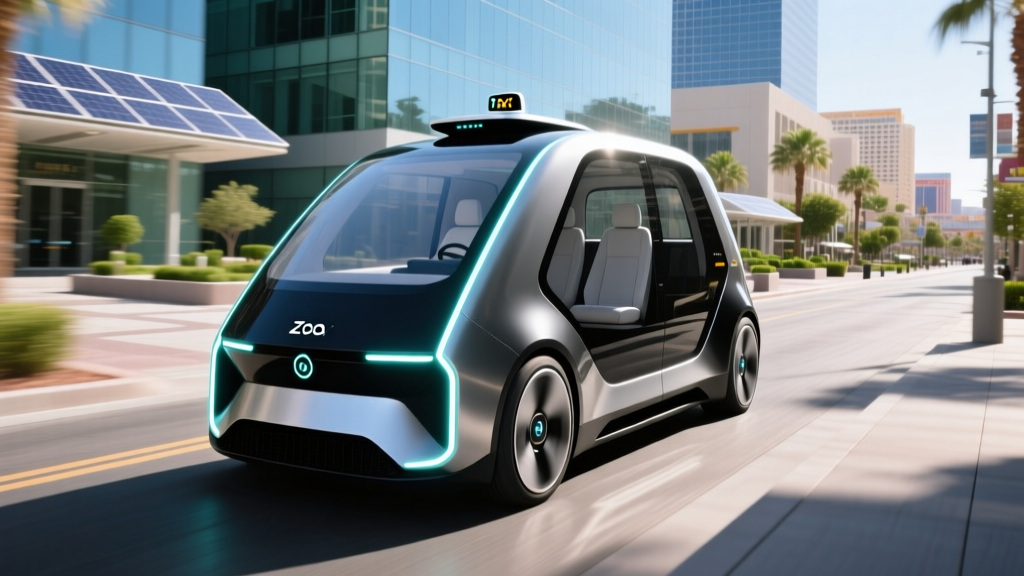
Zoox's production vehicle is one of the most visually distinctive vehicles on any road. It has no steering wheel, no pedals, no designated front or rear — the vehicle is symmetrical and can drive in either direction. Passengers sit facing each other in a four-seat configuration, similar to a small lounge.
Waymo's newer custom platform (developed with Geely/Zeekr) similarly removes traditional driver controls for its dedicated fleet vehicles. The design philosophy is clear: if there's no human driver, there's no need for driver-facing controls, mirrors, or a forward-facing orientation. This frees up interior space and changes the passenger experience fundamentally.
Amazon's Zoox has also emphasized that its vehicle is designed from the ground up for autonomous operation — not a retrofitted production car with sensors bolted on. This "clean-sheet" approach allows sensor placement, compute architecture, and passenger safety systems to be optimized together rather than adapted to an existing vehicle structure.
Fact #12: The Insurance and Liability Model Is Flipping
When a human drives an Uber, the driver carries personal auto insurance (supplemented by Uber's commercial policy during active trips). When a Waymo robotaxi is in an incident, Waymo carries the commercial liability. There is no driver to be at fault.
This represents a fundamental shift in automotive liability — from individual driver responsibility to corporate product and operational liability. It's one reason traditional auto insurers are watching this space closely. If robotaxis scale, the personal auto insurance market could contract significantly in cities where robotaxi adoption reduces private car ownership.
For passengers, this simplifies things considerably: if something goes wrong during your ride, you're covered by the operator's commercial insurance, not debating fault with a gig-economy driver's personal policy.
Frequently Asked Questions
Is Tesla's FSD actually self-driving?
No. Tesla's Full Self-Driving (Supervised) is an SAE Level 2 driver-assistance system. The driver must remain attentive, keep hands available for steering input, and is legally responsible for the vehicle's operation at all times. Despite the "Full Self-Driving" branding, it does not meet Level 3 or Level 4 autonomy. Tesla's planned "Robotaxi" (Cybercab) has been announced but is not yet in commercial driverless service.
How safe are robotaxis compared to human drivers?
Waymo's published data indicates lower crash rates per million miles than human benchmarks in their operating areas — approximately 76% fewer injury-causing crashes. However, these comparisons come with caveats: robotaxis operate in geofenced, mapped areas and tend to avoid the most complex driving scenarios (highway merging at high speed, unmapped rural roads, severe weather). Independent verification by NHTSA and third-party researchers is ongoing. The data is encouraging but not yet definitive across all driving conditions.
Can a robotaxi take me anywhere I want?
No. Current Level 4 robotaxis operate within defined geofences — typically covering specific neighborhoods or corridors within a city. If your destination falls outside the service area, the ride cannot be booked. Expansion to new areas requires extensive mapping, testing, and regulatory approval, which is why growth has been gradual rather than rapid.
What happens if a robotaxi breaks down during my ride?
Operators have protocols for vehicle failures. The vehicle will pull over safely, and the operator's support team is notified. Depending on the situation, you may be transferred to another vehicle, offered a refund, or assisted by a roadside response team. Waymo maintains fleet operations centers that monitor vehicles in real time.
Will robotaxis replace Uber and Lyft drivers?
In the long term, robotaxi operators aim to compete directly with rideshare on cost and availability. However, current geofencing, weather limitations, and regulatory constraints mean robotaxis can only serve a fraction of rideshare demand. Uber has signaled it may partner with robotaxi operators (offering Waymo rides through the Uber app in some markets) rather than fight them. Full displacement of human rideshare drivers is not imminent.