Decoding the FSD Acronym: What 'Full Self-Driving' Actually Means
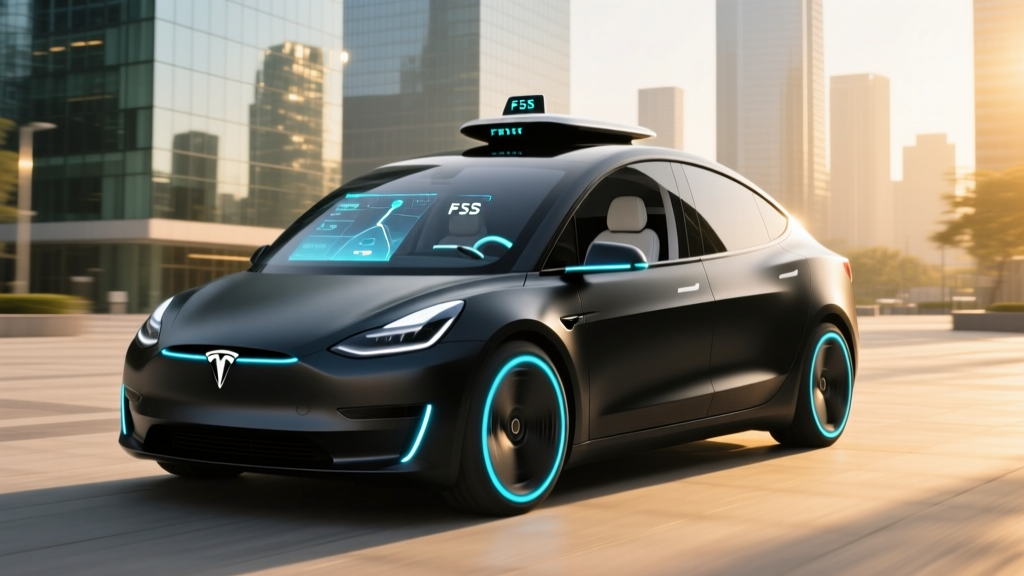
Search forums, Reddit threads, or any Tesla delivery-day conversation and you'll encounter the FSD acronym repeatedly. It stands for Full Self-Driving — Tesla's premium driver-assistance software suite. But the name is aspirational, not descriptive. As of 2026, Tesla officially markets the package as FSD (Supervised), a label the company adopted to clarify that a human driver must remain attentive and ready to intervene at all times.
The FSD acronym has become shorthand for Tesla's highest-tier ADAS (Advanced Driver Assistance System) offering, sitting above the standard Autopilot package that ships on every new Tesla. Understanding what FSD actually delivers — versus what its name implies — is essential before you spend thousands on a purchase or commit to a monthly subscription.
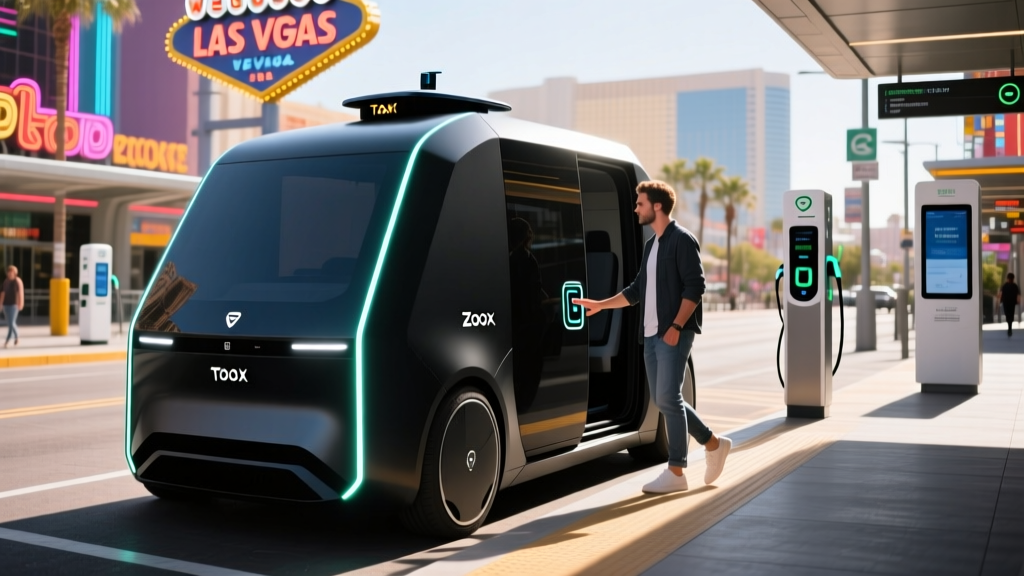
Tesla's FSD (Supervised) is classified as SAE Level 2 automation per the SAE J3016 standard. This means the system can control steering, acceleration, and braking simultaneously, but the driver must continuously supervise the vehicle, keep hands on or near the wheel, and be prepared to take over instantly. True "self-driving" — where you can nap, read, or ignore the road — begins at SAE Level 4 and is currently only available in geofenced robotaxi services like Waymo and Zoox. Tesla's FSD is not that.
What FSD (Supervised) Actually Does: Feature Breakdown
FSD (Supervised) builds on Tesla's baseline Autopilot, which already includes Traffic-Aware Cruise Control and Autosteer (lane-centering on divided highways). FSD adds several layers of functionality designed to extend automation beyond highway lane-keeping into more complex driving scenarios.
| Feature | What It Does | Included in Base Autopilot? |
|---|---|---|
| Traffic-Aware Cruise Control | Matches speed to vehicles ahead, down to a full stop | Yes |
| Autosteer | Lane-centering on clearly marked, divided highways | Yes |
| Navigate on Autopilot | Suggests and executes lane changes, highway interchanges, and exits based on navigation route | No — FSD only |
| Auto Lane Change | Initiates lane changes when turn signal is engaged (or automatically with FSD) | Partial (signal-required) |
| Autopark | Detects parallel or perpendicular spaces and parks the vehicle | No — FSD only |
| Smart Summon | Navigates a parking lot to come to you or a chosen location at low speed | No — FSD only |
| Traffic Light & Stop Sign Control | Identifies lights/signs and slows/stops accordingly (driver confirmation often required) | No — FSD only |
| City Street Driving | Handles turns, intersections, and urban routes following navigation | No — FSD only |
The headline capability is city-street driving — the ability for the car to navigate surface streets, make protected and unprotected turns, and handle intersections. This is where Tesla differentiates from competitors like Ford's BlueCruise and GM's Super Cruise, which restrict hands-free operation to pre-mapped divided highways.
How FSD Works: Vision-Only Architecture
Since late 2022, Tesla has used a Tesla Vision architecture that relies exclusively on cameras — typically eight exterior cameras providing 360-degree coverage. Earlier Tesla vehicles shipped with radar and ultrasonic sensors, but the company removed these in favor of a pure vision approach powered by neural networks running on the in-vehicle Hardware 4 (HW4) computer (also called AI4 in some Tesla communications).
HW4 features higher-resolution cameras and a more powerful inference chip compared to the older HW3. Vehicles built from approximately mid-2023 onward include HW4 as standard. If you're buying a used Tesla with HW3, FSD still functions, but Tesla has indicated that future software improvements may be optimized primarily for HW4 hardware.
The vision-only approach means FSD interprets the world the way a human driver does — through visual data — rather than supplementing with LiDAR point clouds or radar range-finding. This decision is philosophically bold and practically consequential: the system's performance is directly tied to camera visibility.
FSD Cost: Purchase Price and Monthly Subscription
Tesla offers FSD (Supervised) through two pricing models. The numbers have shifted over the years, but as of the 2026 model year, the structure is as follows:
| Option | Cost | Notes |
|---|---|---|
| One-Time Purchase | $8,000 | Transfers to the vehicle, not the owner. Adds to resale value (marginally). Price has fluctuated — was $15,000 in 2022, reduced to $8,000 in April 2024. |
| Monthly Subscription | $99/month | No long-term commitment; cancel anytime. Best for drivers who want to test FSD or only need it seasonally (e.g., road-trip months). |
| Base Autopilot | Included (no extra cost) | TACC + Autosteer. Standard on every new Tesla. |
The break-even math is straightforward: at $99/month, you'd pay $8,000 in roughly 81 months (nearly 7 years). If you plan to keep the vehicle longer than that and use FSD regularly, the purchase makes financial sense. If you're unsure, the subscription removes the risk. Note that FSD purchases do not qualify for the federal §30D EV tax credit — the credit applies to the vehicle itself, not software add-ons.
Which Tesla Models and Trims Include FSD?
FSD (Supervised) is available as an add-on across the entire Tesla lineup. It is not standard on any trim — you must either purchase it outright or subscribe. Here's how it maps to the 2026 fleet:
- Model 3 (all trims — RWD, Long Range, Performance): FSD available. HW4 standard on 2024+ builds.
- Model Y (all trims — RWD, Long Range, Performance): FSD available. HW4 standard on 2024+ builds.
- Model S (Long Range, Plaid): FSD available.
- Model X (Long Range, Plaid): FSD available.
- Cybertruck (AWD, Cyberbeast): FSD available, though Smart Summon and some parking features rolled out later due to the vehicle's unique geometry.
One critical caveat: FSD capability is tied to the vehicle, not the owner. If you buy a used Tesla that has FSD purchased, you get the feature. If you sell a Tesla with FSD, the feature stays with the car. Tesla has occasionally run limited-time FSD transfers to new vehicles for existing owners, but these are promotional exceptions, not policy.
Real-World Capabilities and Limitations
FSD (Supervised) has improved substantially through iterative over-the-air updates, particularly in city-street handling. On well-marked suburban arterials with clear lane lines and predictable traffic, the system navigates turns, stops at lights, and manages right-of-way with growing competence. On highway drives, Navigate on Autopilot handles lane changes and interchange ramps smoothly in most conditions.
But the gap between "impressive demo" and "daily-driver reliable" remains significant. Here's what real-world ownership reveals:
- Weather sensitivity: Heavy rain, fog, snow, and direct sun glare can degrade camera performance. The system may issue a "camera visibility reduced" warning and disengage or limit functionality.
- Faded or missing lane markings: Construction zones, rural roads with worn paint, and temporary lane configurations confuse the system. FSD may follow old markings or drift.
- Unprotected left turns: Judging gaps in oncoming traffic at intersections remains one of FSD's most challenging scenarios. Expect conservative behavior or hesitation that requires driver takeover.
- Complex intersections: Five-way intersections, roundabouts with heavy traffic, and offset lanes can produce unpredictable steering or braking inputs.
- Phantom braking: FSD can brake unexpectedly for shadows, overhead signs, or vehicles in adjacent lanes that it perceives as obstacles. This remains a documented concern reported to NHTSA.
- Driver monitoring: Tesla uses a cabin camera to monitor driver attention. Repeated inattention warnings lead to temporary FSD suspensions (typically one week). You cannot look at your phone or close your eyes.
Bottom line: FSD reduces fatigue on long highway drives and can handle routine surface-street navigation, but it is not a replacement for an attentive driver. Treat it as a highly capable co-pilot, not a chauffeur.
FSD vs. the Competition: Brand Naming and Capability Comparison
The driver-assistance landscape is crowded with branded systems, each with different naming conventions that confuse shoppers. Here's how Tesla's FSD stacks up against the major competitors available in 2026:
| Brand | System Name | SAE Level | Hands-Free? | Where It Works | Cost |
|---|---|---|---|---|---|
| Tesla | FSD (Supervised) | Level 2 | No (hands-on/eyes-on) | Highways + city streets (any road) | $8,000 or $99/mo |
| Tesla | Autopilot (base) | Level 2 | No | Highways (lane-centering + TACC) | Included |
| Ford | BlueCruise | Level 2 | Yes (eyes-on, hands-free on approved roads) | 130,000+ miles of pre-mapped divided highways | $2,100 (2-yr) or $75/mo |
| GM (Chevy/Cadillac) | Super Cruise | Level 2 | Yes (eyes-on, hands-free on approved roads) | 750,000+ miles of pre-mapped roads (US + Canada) | Included for 3 yrs on select trims, then $25/mo |
| Hyundai/Genesis/Kia | Highway Driving Assist 2 (HDA2) | Level 2 | No | Highways | Included on mid/high trims |
| Toyota/Lexus | Toyota Safety Sense 3.0 / Lexus Safety System+ 3.0 | Level 2 | No | Highways (lane tracing + DRCC) | Included (standard) |
| Mercedes-Benz | Drive Pilot | Level 3 (limited) | Yes (eyes-off in approved conditions) | Specific highways in NV and CA, under 40 mph, good weather | $2,500/yr subscription |
The key distinction: Tesla FSD works on virtually any road but requires hands-on supervision. Ford BlueCruise and GM Super Cruise offer genuine hands-free driving but only on pre-mapped divided highways. Mercedes-Benz's Drive Pilot is the only SAE Level 3 system available to US consumers, but it's extremely limited in scope (low-speed highway traffic jams, specific states, specific conditions). Each approach has trade-offs.
According to IIHS research, no Level 2 system has demonstrated a statistically significant reduction in crash rates compared to attentive human driving. The safety case for ADAS remains tied to features like automatic emergency braking and lane-departure prevention — not to full route navigation automation.
Should You Buy or Subscribe to FSD?
Subscribe ($99/month) if:
- You want to evaluate FSD before committing $8,000
- You take occasional long road trips and want highway fatigue reduction
- You plan to sell or trade the vehicle within 3–4 years
- You're curious about city-street automation but don't rely on it daily
Purchase outright ($8,000) if:
- You plan to keep the vehicle 7+ years
- You commute daily in stop-and-go traffic where FSD reduces fatigue
- You believe Tesla's software will continue improving and want lifetime access
Stick with base Autopilot (free) if:
- You primarily need adaptive cruise and lane-centering for highway drives
- You're uncomfortable with the system's current limitations
- You prefer to keep both hands on the wheel regardless
Frequently Asked Questions
What does the FSD acronym stand for?
FSD stands for Full Self-Driving. Tesla currently markets the feature as "FSD (Supervised)" to emphasize that a human driver must remain engaged and supervising at all times. Despite the name, it is not a self-driving system — it is an SAE Level 2 driver-assistance package.
Is Tesla FSD actually self-driving?
No. FSD (Supervised) is SAE Level 2 automation. The driver must monitor the road, keep hands on or near the steering wheel, and be ready to take control at any moment. True self-driving (Level 4) is currently only available through geofenced robotaxi services like Waymo in select cities. Tesla has discussed a future "FSD (Unsupervised)" launch, but as of 2026, no unsupervised consumer version has been released or approved by regulators.
How much does FSD cost in 2026?
FSD (Supervised) costs $8,000 as a one-time purchase or $99 per month as a subscription. Base Autopilot (Traffic-Aware Cruise Control and Autosteer) is included at no extra cost on every new Tesla.
Does FSD work on all roads or just highways?
Unlike Ford BlueCruise or GM Super Cruise, which restrict hands-free operation to pre-mapped highways, Tesla FSD operates on highways and city streets. It can navigate intersections, make turns, and follow navigation routes on surface streets. However, performance varies significantly depending on road markings, traffic complexity, and weather.
Can I transfer FSD to a new Tesla if I buy a new one?
Generally, no. FSD is tied to the vehicle it was purchased on. If you trade in or sell the car, FSD stays with it. Tesla has occasionally offered limited-time transfer promotions for existing owners purchasing new vehicles, but these are exceptions and not guaranteed. The monthly subscription always applies to the current vehicle and does not transfer.
What hardware does my Tesla need for FSD?
All Tesla vehicles built since approximately April 2019 include the necessary hardware (HW3 or later). Vehicles built from mid-2023 onward ship with HW4 (AI4), which offers higher-resolution cameras and faster processing. Both HW3 and HW4 support FSD, but Tesla has indicated future optimizations may favor HW4.
Is FSD safe? What does NHTSA say?
NHTSA has investigated multiple incidents involving Tesla's Autopilot and FSD systems, particularly regarding crashes into stationary emergency vehicles and phantom braking events. Tesla's own Vehicle Safety Report claims lower crash rates with Autopilot engaged, but independent researchers have noted methodological limitations in those self-reported figures. The safest approach: use FSD as a fatigue-reduction tool, not as a replacement for your own driving judgment.