Is There Actually a Free Self-Driving Car in Vegas?
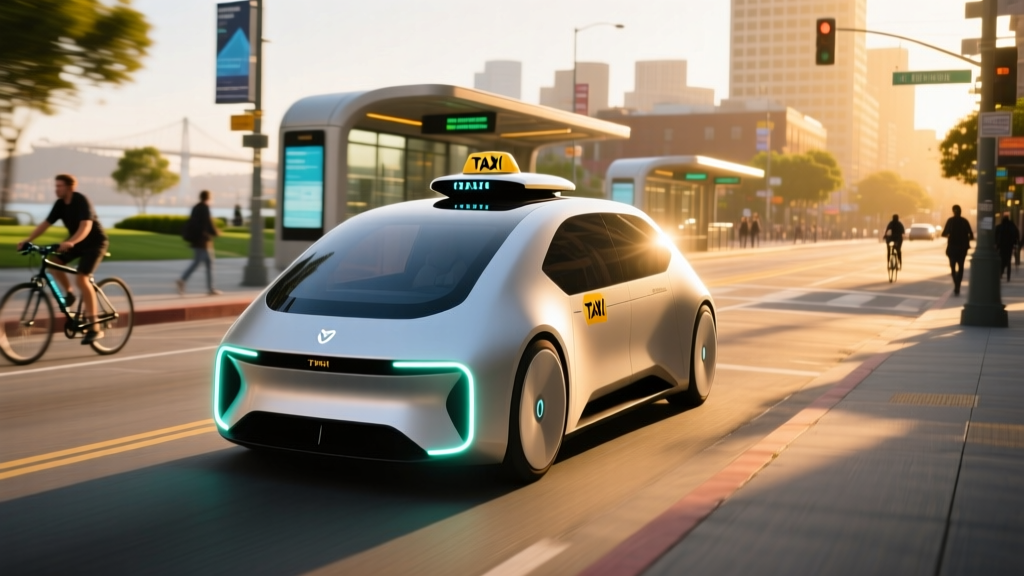
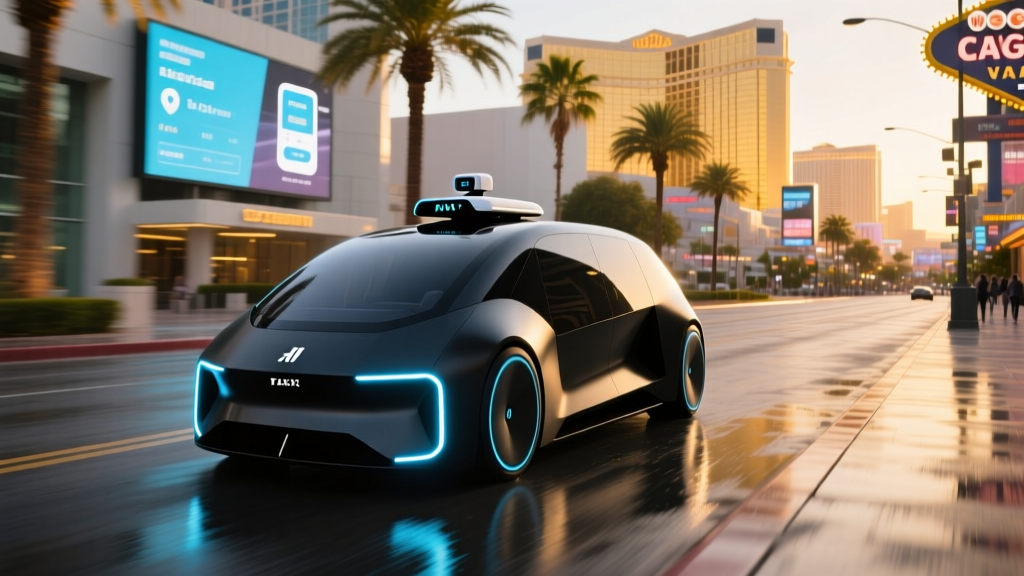
Search for "free self driving car Vegas" and you'll find a mix of outdated promos, clickbait, and wishful thinking. Here's the reality as of 2026: there is no permanently free, unlimited robotaxi service operating on the Las Vegas Strip or surrounding roads. What does exist is a patchwork of limited promotional ride credits, manufacturer-sponsored demo programs, and paid robotaxi services that occasionally waive fares during launch windows.
The closest thing to a free autonomous ride in Las Vegas has historically been short-lived promotional campaigns — Waymo has offered first-ride credits in new markets, and Hyundai/Motional's IONIQ 5 robotaxi ran a limited free-ride pilot on the Strip corridor in prior years. Those programs have ended or scaled back. If you're visiting Vegas and hoping to hail a driverless car without paying, you'll need to check current promo codes or credit offers at the time of your trip.
What you can do right now is use paid robotaxi services operating in specific Las Vegas zones, and in some cases stack promotional credits to reduce your cost to zero for a handful of rides. Let's break down exactly what's available, what it costs, and how the technology actually works.
Understanding Autonomy Levels: What You're Actually Riding In
Before booking any autonomous vehicle, it's critical to understand what level of self-driving you're experiencing. The Society of Automotive Engineers (SAE) defines six levels of driving automation, and the distinction between Level 2 and Level 4 is the difference between "the car helps you drive" and "there is no driver."
| SAE Level | Name | Who Drives? | Example |
|---|---|---|---|
| Level 0 | No Automation | Human does everything | Standard car, no assist |
| Level 1 | Driver Assistance | Human drives; system assists steering OR speed | Adaptive cruise control |
| Level 2 | Partial Automation | Human drives and supervises; system handles steering AND speed | Tesla Autopilot, GM Super Cruise, Ford BlueCruise |
| Level 3 | Conditional Automation | System drives in limited conditions; human must take over when asked | Mercedes DRIVE PILOT (limited markets) |
| Level 4 | High Automation | System drives fully within its operational domain; no human driver needed | Waymo One, Zoox, Motional robotaxis |
| Level 5 | Full Automation | System drives everywhere, all conditions; no steering wheel needed | Does not exist commercially |
The key takeaway: Robotaxis operating in Las Vegas (Waymo, and previously Motional) are SAE Level 4 — meaning no human driver is present in the vehicle, and the system handles all driving tasks within its geofenced service area. This is fundamentally different from Tesla's FSD (Supervised), which is Level 2 and requires an attentive human driver at all times. Never conflate the two.
Where Can You Use a Robotaxi in Las Vegas Right Now?
Las Vegas has been one of the primary proving grounds for autonomous ride-hailing, but availability is not citywide. Services operate within strictly defined geofences — virtual boundaries that limit where the vehicle can travel.
| Service | Operational Zone | Hours | Vehicle | Status |
|---|---|---|---|---|
| Waymo One | Parts of Las Vegas Blvd corridor, downtown, Convention Center area | Limited hours; varies by demand | Jaguar I-PACE (EV, 90 kWh battery) | Active — invitation-only or waitlist in some zones |
| Motional (Hyundai) | Las Vegas Strip corridor, select hotels | Daytime hours primarily | IONIQ 5 robotaxi (77.4 kWh, Level 4) | Limited commercial service; partnerships with Uber/Lyft |
| Zoox | Testing only — no public rides in Vegas as of 2026 | N/A | Zoox purpose-built vehicle (73 kWh, bidirectional) | Testing; public service in select other cities |
The geofenced zones typically cover the high-traffic tourist corridor — think the stretch from Mandalay Bay to the Convention Center, plus parts of downtown near Fremont Street. You cannot hail a robotaxi to the airport, to suburban Henderson, or to Red Rock Canyon. If your destination falls outside the geofence, the app will not allow you to book the ride.
For context, Waymo's primary commercial market remains the Phoenix metro area, where the service operates 24/7 across a much larger zone. Las Vegas operations are smaller and more restricted.
How Much Does a Robotaxi Cost vs. Uber and Lyft?
This is where the "free" myth gets debunked with hard numbers. Robotaxi rides in Las Vegas are priced competitively with Uber and Lyft — not below them, and certainly not at zero on an ongoing basis.
| Service | Short Trip (~2 mi) | Medium Trip (~5 mi) | Surge/Peak Pricing | Promo Credits |
|---|---|---|---|---|
| Waymo One | $8–$12 | $14–$22 | No surge pricing (fixed algorithm) | Occasional first-rider credits ($5–$15) |
| Uber (UberX) | $9–$14 | $15–$25 | 1.5x–3x during events/peak | New-user promos vary |
| Lyft (Standard) | $8–$13 | $14–$24 | Prime Time 1.25x–2.5x | New-user promos vary |
| Motional (via Uber) | $8–$12 | $14–$20 | No surge pricing | Launch promos (ended) |
How to actually ride for free (or close to it):
- Sign up for Waymo One and check for active promo codes in the app — new-market or seasonal credits sometimes bring a single ride to $0.
- If Motional is running a promotional partnership through Uber, select the autonomous vehicle option and apply any available coupon.
- Stack referral credits: both Waymo and rideshare platforms offer referral bonuses that can offset ride costs.
The honest answer: expect to pay roughly the same as an UberX for a robotaxi ride. The value proposition isn't price — it's the experience of riding in a vehicle with no driver, plus the elimination of surge pricing that plagues traditional rideshare during Vegas peak hours.
How Safe Are Robotaxis? The Real Data
Safety is the single most important question for anyone considering a robotaxi ride. Let's look at what the data actually shows, rather than relying on marketing claims or isolated viral videos.
Waymo Safety Record — Key Data Points
- Miles driven autonomously: Over 50 million fully driverless miles completed across all markets as of late 2025 (Waymo Safety Report).
- Injury-causing crash rate: Waymo's autonomous driving system showed an 85% reduction in injury-causing crash rates compared to human benchmarks, per Waymo's peer-reviewed study published in collaboration with insurance data analysis.
- Contact rate: Property-damage-only contact rates approximately 57% lower than human drivers in comparable urban environments.
- NHTSA reporting: All Level 4 operators are required to report crashes to the NHTSA Standing General Order crash-reporting system, providing public transparency.
Important context: Robotaxis have been involved in incidents — including minor collisions with stationary objects, interactions with construction zones, and rare cases of vehicles blocking emergency responders. In 2023-2024, Cruise (GM's robotaxi division, now restructured) had its California permit suspended after a serious pedestrian incident in San Francisco. That event underscored that Level 4 autonomy, while statistically safer in aggregate, is not infallible.
Waymo has maintained continuous operations through this period and has not faced a comparable permit suspension. The Insurance Institute for Highway Safety (IIHS) has noted that robotaxi safety data is still maturing and that direct comparison with human drivers requires careful normalization for environment, speed, and weather conditions.
Under the Hood: The Technology Stack Powering Vegas Robotaxis
The vehicles you'll encounter in Las Vegas use fundamentally different sensor approaches than consumer driver-assist systems. Here's what's actually on the roof and in the bumper.
Waymo 6th-Generation Driver (Jaguar I-PACE Platform)
- LiDAR: Multiple custom-built LiDAR units providing 360° 3D point-cloud mapping up to 500+ meters. LiDAR is the core sensor — it creates a real-time 3D model of the environment regardless of lighting conditions.
- Cameras: High-resolution camera array for object classification, traffic-light state detection, and sign reading. Cameras complement LiDAR but are not the primary perception layer (unlike Tesla's camera-only approach).
- Radar: Imaging radar for velocity detection of moving objects and performance in adverse weather.
- HD Maps: Pre-mapped, centimeter-accurate maps of every road in the geofenced zone, updated continuously. The vehicle always knows exactly where it is relative to lane markings, curbs, and intersections.
- Compute: Custom Waymo Driver processing hardware with redundant compute paths — if one system fails, a backup takes over immediately.
Motional IONIQ 5 Robotaxi
- LiDAR: Roof-mounted and bumper-integrated LiDAR sensors from multiple suppliers.
- Cameras: Surround-view camera system for object detection and classification.
- Radar: Multi-mode radar for adaptive speed control and obstacle detection.
- Platform: Built on Hyundai's E-GMP architecture with a 77.4 kWh NMC battery pack, providing approximately 8+ hours of continuous autonomous operation before recharging.
Why LiDAR matters: The LiDAR-vs-camera debate is central to autonomous driving. Tesla's consumer FSD system uses cameras only (no LiDAR), arguing that neural networks can extract depth information from 2D images. Level 4 robotaxi operators overwhelmingly disagree — they use LiDAR as a redundant, physics-based depth sensor that works independently of lighting conditions. At night on the Strip, surrounded by neon reflections and pedestrian chaos, LiDAR provides a measurement certainty that cameras alone cannot match.
Current Limitations: What Robotaxis Cannot Do
Level 4 autonomy is impressive within its domain, but that domain has hard edges. Here's what you need to know before relying on a robotaxi in Vegas.
- Geofencing: The vehicle will not travel outside its pre-mapped zone. If your hotel or destination is outside the boundary, you cannot book the ride. Period.
- Weather limitations: Heavy rain, flooding, or dust storms can cause the system to pull over safely and end the ride. Las Vegas monsoon-season downpours (July–September) can disrupt service.
- Construction zones: While improving, robotaxis can struggle with unanticipated lane closures, temporary barriers, or flagger-directed traffic. The system may choose to reroute or end the trip rather than navigate complex construction.
- No highway driving (in most zones): Most Vegas robotaxi geofences cover surface streets only. You cannot take a robotaxi on I-15 to the airport or to distant suburbs.
- Wait times: During peak demand (convention nights, weekends, event exits), robotaxi availability is limited by fleet size. Expect longer wait times than Uber/Lyft, which have thousands of human drivers.
- Accessibility: Current robotaxi vehicles (Jaguar I-PACE, IONIQ 5) are standard SUVs — they are not wheelchair-accessible. Zoox's purpose-built vehicle is designed with accessibility in mind but is not yet operating commercially in Vegas.
- No stops or multi-destination trips: You cannot ask the robotaxi to stop at a convenience store or add a second drop-off. It's point A to point B only.
The Regulatory Landscape: Who Approves Robotaxis in Nevada?
Nevada was the first U.S. state to pass legislation enabling autonomous vehicle testing and operation (AB 511, 2011), and it remains one of the more permissive regulatory environments. Here's how the approval chain works:
- State level: The Nevada Department of Motor Vehicles (DMV) issues autonomous vehicle testing and deployment permits. Operators must demonstrate safety cases, carry minimum insurance ($5 million for robotaxis), and comply with data-reporting requirements.
- Federal level: The National Highway Traffic Safety Administration (NHTSA) sets vehicle safety standards but does not currently have a comprehensive federal framework for Level 4 deployment. NHTSA's Standing General Order requires all Level 2+ and Level 4 operators to report crashes.
- Local level: Clark County and the City of Las Vegas have jurisdiction over local road use, permitting for pickup/dropoff zones, and coordination with emergency services.
Nevada's regulatory posture is notably more open than California's, where the DMV and the Public Utilities Commission (CPUC) maintain tighter permitting requirements — as demonstrated by the Cruise permit suspension in 2023. This relative openness is why Las Vegas has attracted multiple robotaxi operators for testing and limited commercial deployment.
How to Actually Book and Ride a Robotaxi in Las Vegas
If you've decided to try it, here's the practical step-by-step:
- Download the app: Waymo One (standalone app) or select the autonomous option within Uber where Motional is partnered.
- Create an account: You'll need a valid payment method even if you have promo credits.
- Set your pickup and dropoff: Both must fall within the active geofence. The app will tell you immediately if your trip is eligible.
- Wait for the vehicle: Wait times vary from 2–15 minutes depending on fleet availability and your location within the zone.
- Unlock and ride: The app unlocks the vehicle when it arrives. There is no driver. You'll find a screen showing your route, and you can start or end the trip via the in-vehicle interface.
- Post-ride: Payment is processed automatically. You can rate the ride and report issues through the app.
Pro tip: If you're visiting during CES (January) or another major convention, robotaxi demand spikes dramatically. Book well in advance or be prepared for extended wait times.
Frequently Asked Questions
Can I ride a self-driving car in Las Vegas for free in 2026?
Not as a standard offering. There is no permanent free robotaxi service in Las Vegas. You may find promotional ride credits ($5–$15 off) through Waymo One or partner apps, which can reduce a short ride to $0, but these are limited-time and limited-quantity. Expect to pay $8–$22 per ride at standard rates.
Is a Waymo robotaxi truly self-driving, or is there a hidden driver?
Waymo One vehicles in Las Vegas are SAE Level 4 — there is no human driver in the vehicle. The car operates autonomously within its geofenced zone. A remote support team can assist if the vehicle encounters a situation it cannot resolve, but they do not "drive" the car in real time.
How does robotaxi safety compare to a human Uber driver?
Waymo's published data shows an approximately 85% reduction in injury-causing crash rates compared to human driving benchmarks, based on over 50 million driverless miles. However, robotaxis operate in geofenced, pre-mapped urban areas at moderate speeds — a simpler driving environment than what human drivers face on highways or rural roads. Direct comparison requires normalization for these factors.
Can a robotaxi take me to Harry Reid International Airport?
As of 2026, no. The current geofenced zones for Las Vegas robotaxi services do not include the airport or the highway segments needed to reach it. Use Uber, Lyft, or a traditional taxi for airport transfers.
What happens if the robotaxi breaks down or gets confused during my ride?
The vehicle is designed to pull over safely and stop. A remote support team monitors the fleet and can provide guidance or dispatch roadside assistance. You can also contact support directly through the in-vehicle screen or the app at any time.
Are robotaxis available 24/7 in Las Vegas?
No. Unlike Phoenix where Waymo operates around the clock, Las Vegas robotaxi services typically run during limited hours — generally daytime through late evening. Hours vary by operator and demand. Check the app for real-time availability.
Is Tesla's FSD the same as a Waymo robotaxi?
No. Tesla's Full Self-Driving (Supervised) is an SAE Level 2 driver-assist system. A human driver must remain attentive, hands available, and ready to take over at any moment. Waymo is SAE Level 4 — no human driver is present. The technology, regulatory approval, and safety validation processes are entirely different.