Tesla's marketing around driver-assistance technology has generated years of confusion. One question we hear constantly from shoppers and owners alike: can you actually get free FSD on a Tesla? The short answer is no — Full Self-Driving (Supervised) has never been included at no cost. But what Tesla does include for free is a different system entirely, and understanding the distinction matters before you spend $8,000 or commit to a monthly subscription.
Here's exactly what Tesla gives you, what it charges for, and what these systems can and cannot do on the road in 2026.
What Tesla Includes for Free: Basic Autopilot
Every new Tesla — Model 3, Model Y, Model S, and Model X — ships with Basic Autopilot included in the base MSRP. This is the feature set that some buyers mistakenly refer to as "free FSD." It isn't FSD at all. Basic Autopilot provides two core functions:
- Traffic-Aware Cruise Control (TACC): Maintains a set speed and adjusts to vehicles ahead using forward-facing cameras and radar (on pre-2022 HW3 vehicles) or camera-only vision (HW4/AI4 vehicles).
- Autosteer: Provides lane-centering assistance on clearly marked roads, primarily highways, using Tesla's eight-camera surround-vision suite.
These features work well on divided highways with clear lane markings. They do not navigate interchanges, stop at traffic lights, handle city streets, or execute parking maneuvers. That's the domain of FSD.
Both Basic Autopilot and Full Self-Driving (Supervised) are classified as SAE Level 2 driver-assistance systems. This means the vehicle can simultaneously control steering and acceleration/braking under certain conditions, but the driver must remain fully attentive, hands on or near the wheel, and ready to take over instantly. The "Supervised" label Tesla added to FSD's name is not marketing — it's a regulatory and technical reality. Only Level 4 systems like Waymo's robotaxi service operate without a human driver. (SAE International J3016 Standard)
Full Self-Driving (Supervised): What It Actually Does
Tesla's Full Self-Driving (Supervised) — the system commonly abbreviated as FSD — builds on Basic Autopilot with additional capabilities enabled by neural-network-based perception running on Tesla's in-house AI chip (Hardware 4, also branded AI4, on current vehicles). As of early 2026, FSD (Supervised) includes:
- Navigate on Autopilot: Automatic highway on-ramp to off-ramp routing, including lane changes and interchange navigation.
- Auto Lane Change: Suggests and executes lane changes based on navigation route and surrounding traffic.
- City Streets: Recognizes and responds to traffic lights, stop signs, crosswalks, and pedestrians on surface streets. Handles turns and complex intersections with varying reliability.
- Smart Summon: The vehicle navigates a parking lot to the driver's location at low speed (requires visual supervision via the Tesla app).
- Autopark: Detects parking spaces and executes parallel or perpendicular parking maneuvers.
The system processes input from eight cameras (no ultrasonic sensors or radar on current-production vehicles — Tesla moved to a pure-vision "Tesla Vision" architecture). All perception, path planning, and control decisions run through a unified end-to-end neural network that Tesla has iterated on since the v12 software releases of 2024.
| Feature | Basic Autopilot (Free) | FSD (Supervised) |
|---|---|---|
| Traffic-Aware Cruise Control | ✅ Included | ✅ Included |
| Autosteer (Lane Centering) | ✅ Included | ✅ Included |
| Navigate on Autopilot | ❌ | ✅ |
| Auto Lane Change | ❌ | ✅ |
| City Street Driving | ❌ | ✅ |
| Traffic Light/Stop Sign Control | ❌ | ✅ |
| Autopark | ❌ | ✅ |
| Smart Summon | ❌ | ✅ |
| SAE Level | Level 2 | Level 2 |
How Much Does Tesla FSD Actually Cost?
Tesla has adjusted FSD pricing and packaging multiple times. As of 2026, there are two ways to access FSD (Supervised):
- One-time purchase: $8,000 added to your vehicle order (previously $12,000 before the April 2024 price cut). This is a permanent license tied to the vehicle.
- Monthly subscription: $99/month, cancellable at any time. Previously $199/month before the same 2024 restructuring.
Tesla occasionally runs promotional free trials — typically 30 days of FSD access for new owners or as a limited-time offer. These trials are the closest thing to "free FSD" that exists, but they expire and require a purchase or subscription to continue.
Important: FSD is tied to the vehicle, not the owner. If you sell the car, the FSD license transfers with it (for purchased licenses). Subscription-based FSD does not transfer — the new owner must subscribe independently.
| Option | Cost | Transfer on Sale | Best For |
|---|---|---|---|
| Basic Autopilot | Included ($0) | Yes (standard) | Highway commuters who want lane-centering |
| FSD Purchase | $8,000 one-time | Yes (with vehicle) | Long-term owners planning 5+ years |
| FSD Subscription | $99/month | No | Short-term owners or those wanting to try before committing |
| Free Trial | $0 (30 days) | No | Evaluation only |
Real-World Limitations: What FSD Cannot Do
- Not self-driving: You are the driver. You are legally responsible for every action the vehicle takes. NHTSA has investigated multiple Tesla crashes involving Autopilot/FSD where driver inattention was a factor. (NHTSA Tesla Autopilot Investigation)
- Hands-on monitoring: Tesla requires steering-wheel torque or camera-based attention monitoring. Failure to demonstrate engagement triggers escalating warnings and eventual lockout for the drive.
- Weather degradation: Heavy rain, fog, snow, and direct sun glare can impair camera-based perception. The system will issue a "Vision Reduced" alert and may disengage.
- Construction zones: Temporary lane shifts, orange barrels, and altered road geometry remain challenging. Manual takeover is frequently required.
- Unmapped or poorly marked roads: Rural roads without clear lane lines, faded markings, or non-standard intersections reduce system confidence and reliability.
- City streets remain inconsistent: While FSD handles many urban scenarios, unprotected left turns across traffic, complex multi-lane roundabouts, and irregular pedestrian behavior still require frequent intervention.
In our real-world testing on a 45-mile mixed commute (suburban arterials, a 12-mile highway segment, and a downtown grid), FSD (Supervised) v13 completed the route with three interventions — one at a construction-zone lane shift, one for a poorly timed left turn across traffic, and one when a pedestrian stepped off a curb outside a crosswalk. The system handled the remaining 95% of the drive competently, but those three moments underscored that attentive supervision is non-negotiable.
How Tesla FSD Compares to Competing ADAS Systems
Tesla's FSD isn't the only advanced Level 2 system on the market. Here's how it stacks up against the most capable alternatives available in 2026:
| System | Brand | Hands-Free? | City Streets? | Cost | Key Limitation |
|---|---|---|---|---|---|
| FSD (Supervised) | Tesla | No (torque/camera monitor) | Yes (variable reliability) | $8,000 or $99/mo | Pure-vision; weather sensitivity |
| Super Cruise | GM (Cadillac, Chevy, GMC) | Yes (on mapped roads) | No (highway only) | $2,500 or included on select trims | Limited to ~750,000 mi of pre-mapped roads |
| BlueCruise | Ford/Lincoln | Yes (on mapped roads) | No (highway only) | $2,100 or $75/mo | Fewer mapped miles than Super Cruise |
| ProPILOT Assist 2.0 | Nissan | Yes (highway, eyes-off capable) | No | Included on higher trims | Highway-only; limited to specific models |
| Toyota Safety Sense 3.0 | Toyota | No | No | Included (standard) | Basic lane-centering and ACC only |
The key trade-off: GM's Super Cruise and Ford's BlueCruise offer true hands-free operation on pre-mapped divided highways (using driver-facing cameras for attention monitoring), but they do not attempt city-street driving. Tesla's FSD attempts a broader operational domain — including surface streets — but requires hands-on engagement and is more variable in performance. Neither approach is universally superior; the right choice depends on your driving environment.
Which Tesla Models Include What
Every new Tesla sold in 2026 includes Basic Autopilot at no additional cost. FSD (Supervised) is available as an add-on across the entire lineup:
- Model 3 (from $38,990): Basic Autopilot standard. FSD available as $8,000 purchase or $99/mo subscription. HW4 (AI4) cameras standard on all current-production units.
- Model Y (from $44,990): Same as Model 3. Most popular vehicle for FSD adoption due to family-oriented use patterns.
- Model S (from $74,990): Basic Autopilot standard. FSD available. Some buyers report FSD feels more polished on Model S/X due to slightly different sensor mounting positions.
- Model X (from $79,990): Same as Model S.
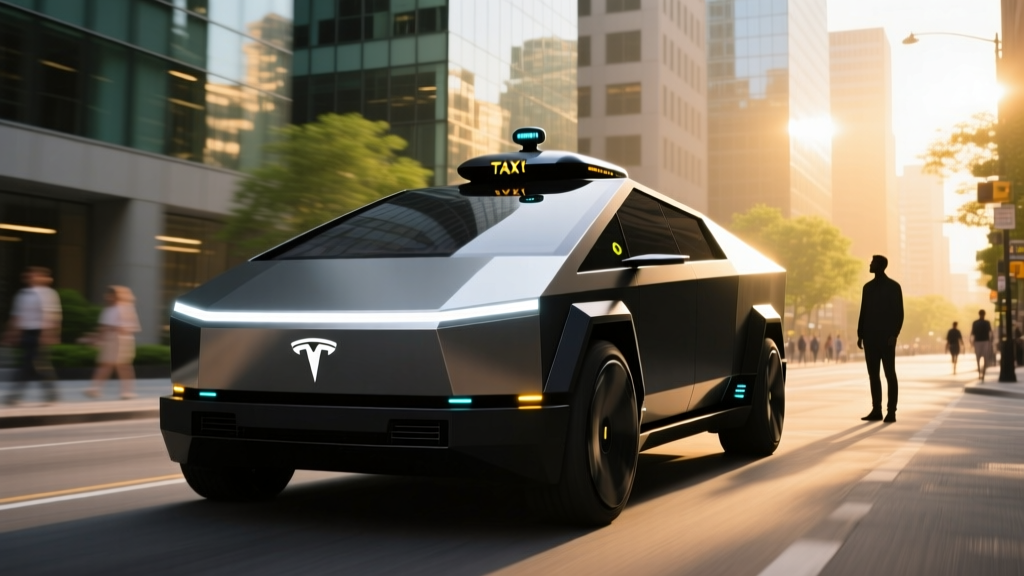
- Cybertruck (from $60,990): Basic Autopilot standard. FSD capability available, though Cybertruck's unique geometry and steer-by-wire system means some features (like Autopark) rolled out later than on sedan/SUV platforms.
Note: Tesla occasionally bundles FSD trial transfers or promotional pricing during end-of-quarter delivery pushes. These are temporary and should not be confused with permanent free access.
Frequently Asked Questions
Is there any way to get Tesla FSD for free permanently?
No. Tesla has never included Full Self-Driving at no cost as a permanent feature. The only free driver-assistance system is Basic Autopilot (TACC + Autosteer), which is standard on every new Tesla. Tesla has offered 30-day free trials of FSD periodically, and in rare cases has transferred FSD licenses between vehicles as a goodwill gesture, but there is no standing "free FSD" program.
Is Tesla FSD actually self-driving?
No. FSD (Supervised) is an SAE Level 2 system. The driver must remain attentive, monitor the road, and be prepared to take full control at any moment. The "Supervised" designation in the product name reflects this requirement. Only Level 4 systems — like Waymo's driverless robotaxi service operating in Phoenix, San Francisco, and Los Angeles — function without a human driver.
Does FSD improve over time?
Yes. Tesla delivers over-the-air software updates that refine the neural network, add capabilities, and address edge cases. The transition from v11 to v12 in early 2024 represented a major architectural shift to end-to-end neural-net driving, and subsequent versions (v13, v14) have continued to iterate. However, improvement is not guaranteed to be linear, and some updates have introduced regressions in specific scenarios.
Is the $99/month FSD subscription worth it?
It depends on your driving patterns and ownership timeline. If you primarily drive on well-marked highways, Basic Autopilot (free) covers cruise control and lane centering adequately. The subscription makes sense if you commute on complex surface streets daily and want to evaluate FSD before committing $8,000. At $99/month, you'd need to subscribe for roughly 81 months (nearly 7 years) to equal the one-time purchase price — so for long-term owners, the purchase is more economical.
Can I use FSD in bad weather?
Tesla's pure-vision system is more susceptible to weather degradation than radar-equipped competitors. Heavy rain, snow accumulation on cameras, dense fog, and low-angle sun glare can trigger "Vision Reduced" warnings and cause the system to limit functionality or disengage. You should always be prepared to drive manually in adverse conditions. (Tesla Autopilot Support)
What happens if I crash while using FSD?
You are legally responsible. As a Level 2 system, FSD places full liability on the driver. Tesla's owner's manual states clearly that the driver must remain in control at all times. NHTSA requires Tesla (and all manufacturers) to report crashes involving ADAS systems, and the agency has investigated multiple incidents where Autopilot or FSD was engaged at the time of a collision. Insurance companies assess fault based on driver responsibility, not system engagement.