If you've been following the autonomous vehicle space for the past decade, you've heard the promises: self-driving cars are always two years away. But in 2026, the question has shifted from "when will the first autonomous vehicle arrive?" to "where can I actually use one?" The answer is more concrete than you might expect — and far more limited than the headlines suggest.
This guide cuts through the hype to tell you exactly which driverless robotaxi services are operational today, how to use them, what they cost, and what the safety data actually shows. No speculation about 2030 timelines. Just what's real, right now.
What "Autonomous" Actually Means: SAE Levels Explained
Before discussing which services qualify as the first autonomous vehicle available to consumers, we need to establish what autonomy level we're talking about. The Society of Automotive Engineers (SAE) defines six levels of driving automation, and the distinction between Level 2 and Level 4 is the single most important thing any EV buyer or rider needs to understand.
| Level | Name | Who Drives? | Real-World Example |
|---|---|---|---|
| 0 | No Automation | Human does everything | Any car without driver-assist |
| 1 | Driver Assistance | Human, with one automated function | Adaptive cruise control OR lane-keeping |
| 2 | Partial Automation | Human supervises at all times | Tesla Autopilot/FSD Supervised, GM Super Cruise, Ford BlueCruise |
| 3 | Conditional Automation | System drives in limited conditions; human must take over when requested | Mercedes DRIVE PILOT (approved in NV and CA, limited to 40 mph on specific highways) |
| 4 | High Automation | System drives without human in defined area; no human needed | Waymo One, Zoox (geofenced service areas) |
| 5 | Full Automation | System drives everywhere, all conditions | Does not exist commercially |
The critical takeaway: Tesla's Full Self-Driving (Supervised), GM's Super Cruise, and Ford's BlueCruise are all Level 2 systems. The driver must remain attentive and is legally responsible for the vehicle at all times. These are not robotaxis. The services that qualify as genuinely driverless — where you sit in the back with no one in the driver's seat — are Level 4, and they operate only within tightly defined geofenced areas.
Where Can I Use a Robotaxi Right Now?
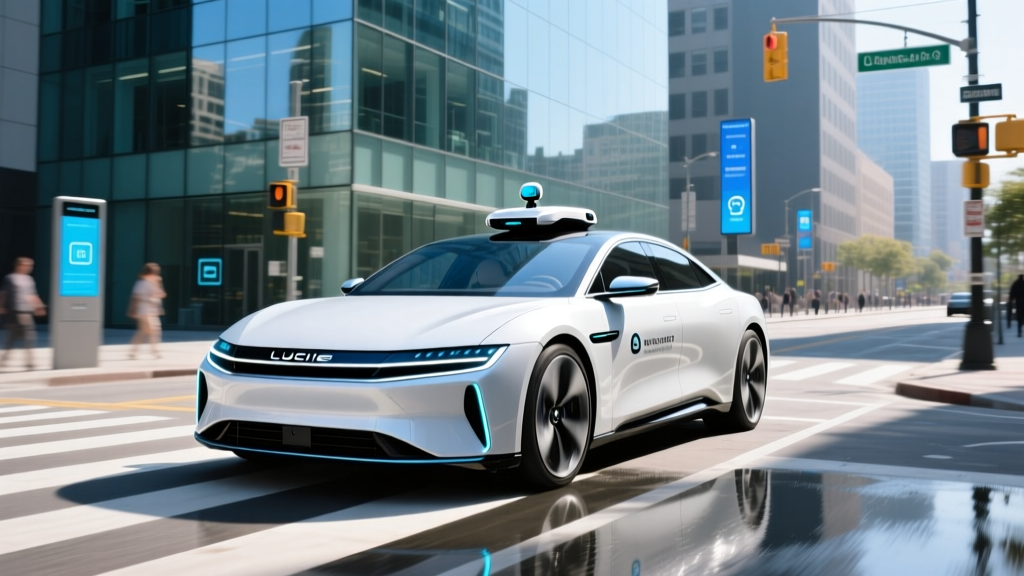
As of early 2026, two companies operate truly driverless robotaxi services that any member of the public can hail in the United States: Waymo (Alphabet/Google) and Zoox (Amazon). Here's where they're actually running — not announced, not testing with safety drivers, but available for paying riders.
| Service | City | Status | Hours | Approximate Service Area |
|---|---|---|---|---|
| Waymo One | Phoenix, AZ (metro) | Fully operational, open to public | 24/7 | ~225 sq mi (Chandler, Tempe, Scottsdale, downtown Phoenix, airport) |
| Waymo One | San Francisco, CA | Fully operational, open to public | 24/7 | ~50 sq mi (most of SF proper) |
| Waymo One | Los Angeles, CA | Operational, expanding zones | Limited hours (expanding) | ~80 sq mi (Santa Monica, Hollywood, downtown, Beverly Hills) |
| Waymo One | Austin, TX | Operational, limited zones | Limited hours | ~45 sq mi (downtown, South Austin corridors) |
| Zoox | Las Vegas, NV | Operational, public rides | Limited hours | ~3 sq mi (Las Vegas Strip corridor, downtown) |
| Zoox | Foster City, CA | Limited public access | Limited hours | Small geofenced zone |
If you live outside these metros, you cannot currently hail a driverless robotaxi. Announced expansion plans — Waymo has signaled interest in additional cities — should not be confused with live service. Always check the Waymo or Zoox app for your exact location before planning around robotaxi availability.
How to Ride: Setup, Pricing, and Cost vs. Uber/Lyft
Using Waymo One
Download the Waymo One app (iOS/Android), create an account, and request a ride. In Phoenix and San Francisco, the service is open to any user — no waitlist. In newer markets like Los Angeles and Austin, you may initially need to join a waitlist or receive an invite. Payment is handled in-app via credit card, similar to Uber or Lyft.
Using Zoox
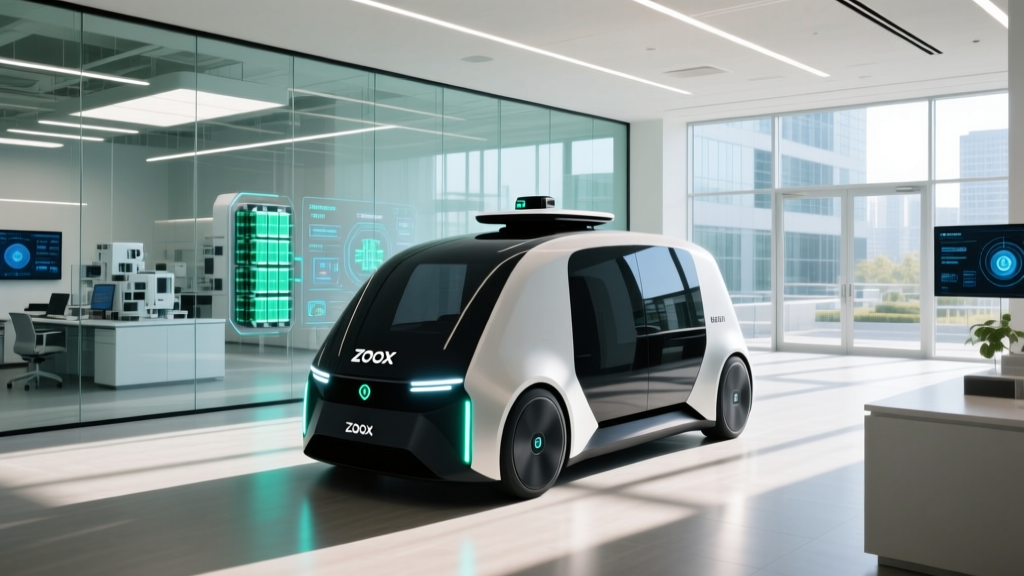
Zoox uses a dedicated app and operates its purpose-built bidirectional vehicle (no steering wheel, no pedals). Access in Las Vegas is available to the public via the app, though service area and hours remain constrained to a small corridor.
| Metric | Waymo One | UberX (same market) | Lyft (same market) |
|---|---|---|---|
| Base fare | ~$5.50 | ~$3.00–$4.00 | ~$3.00–$4.00 |
| Per-mile rate | ~$1.30–$1.60 | ~$1.00–$1.40 | ~$1.00–$1.30 |
| Per-minute rate | ~$0.25–$0.35 | ~$0.20–$0.30 | ~$0.20–$0.25 |
| Typical 5-mile ride (Phoenix) | $13–$18 | $10–$16 | $10–$15 |
| Typical 3-mile ride (SF) | $11–$16 | $12–$20 (surge dependent) | $11–$19 |
| Surge pricing | No surge pricing | Frequent surge (1.5x–3x) | Frequent surge (1.5x–3x) |
| Tipping | Not expected (no driver) | Expected ($2–$5+) | Expected ($2–$5+) |
The bottom line on cost: Waymo's base pricing is competitive with Uber and Lyft, and often cheaper during peak surge periods because robotaxis don't surge-price. For a typical 5-mile urban trip, expect to pay $13–$18 on Waymo versus $10–$20+ on Uber/Lyft depending on demand. Factor in the eliminated tip, and Waymo frequently wins on total cost during busy hours. During off-peak times, traditional rideshare is usually a few dollars cheaper.
The Technology Stack: How Robotaxis Actually See the Road
Understanding what makes the first autonomous vehicle services possible requires a look at the sensor and computing architecture. Waymo and Zoox take different technical approaches, but both are far more complex than the camera-centric systems in consumer vehicles.
Waymo's Sensor Suite (6th-Generation Hardware)
- LiDAR: Multiple roof-mounted and body-integrated LiDAR units generating a real-time 3D point cloud of the environment to 500+ meters. LiDAR is the backbone of Waymo's perception — it works identically in daylight, darkness, and most weather conditions.
- Cameras: High-resolution cameras (8+ units) providing color imagery for traffic light state detection, signage reading, lane marking identification, and object classification.
- Radar: Multiple radar units for velocity detection of moving objects, functioning reliably in rain, fog, and dust where cameras and LiDAR degrade.
- Audio detection: External microphones to detect emergency vehicle sirens and adjust behavior accordingly.
- Compute: Custom-designed onboard computing platform processing sensor fusion, prediction, and planning in real time with redundant systems.
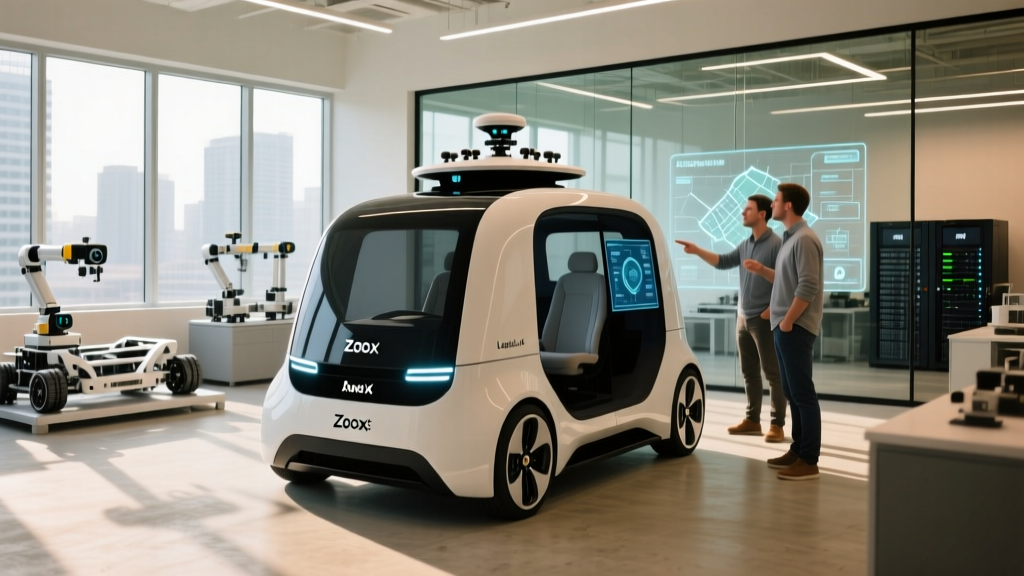
Zoox's Purpose-Built Vehicle
- Sensor array: Zoox designed its vehicle from scratch (not a retrofitted production car) with a symmetric sensor layout providing redundant 360-degree LiDAR, camera, and radar coverage.
- Bidirectional driving: The vehicle has no designated "front" — it can drive equally well in either direction, useful for narrow urban corridors and U-turns.
- No steering wheel or pedals: There is literally no mechanism for a human to take control. This is a pure Level 4 design.
Geofencing: The Invisible Boundary
Both services operate within high-definition mapped areas. The vehicle's software knows every lane, curb, intersection, and speed limit within the geofence to centimeter-level precision. If you request a ride that would take the vehicle outside this mapped zone, the app simply won't allow it. This is why robotaxis can't yet drive you from Phoenix to Tucson — the geofence doesn't extend that far, and the system isn't validated for unmapped highway corridors.
Safety Record: What the Real Data Shows
Safety is the most contested question in the autonomous vehicle debate, and it deserves a data-driven answer rather than anecdotes. Here's what we know from reported figures and regulatory filings.
Waymo Safety Data (through late 2025)
- Total autonomous miles driven: Over 10 million fully driverless miles (no safety driver) across all markets, per Waymo's published safety reports.
- Collision rate vs. human benchmark: Waymo's own analysis, peer-reviewed and published, claims a 76% reduction in injury-causing crashes and an 85% reduction in police-reported crashes compared to human drivers in the same geographies.
- Contact incidents: Minor contact events (e.g., scraping a parked car, low-speed bumper contact) have been reported. Waymo self-reports these to the NHTSA as required.
- No fatalities: As of early 2026, no pedestrian, cyclist, or occupant fatality has been attributed to a Waymo driverless vehicle in autonomous mode.
Zoox Safety Data
- Zoox has logged far fewer public driverless miles than Waymo, and its service area is significantly smaller. Detailed public safety statistics are less extensive.
- No fatalities or serious injuries have been publicly reported in Zoox driverless operations.
Context and Caveats
These numbers are encouraging but require context. Robotaxis operate in favorable conditions — geofenced urban areas, mostly at moderate speeds (25–45 mph), with extensive HD mapping. They are not yet tested against the full spectrum of driving scenarios humans face: rural two-lane roads at 65 mph, unmapped construction zones, extreme weather events, or aggressive highway merging. Comparing robotaxi safety data to human driver data is valid within the operational design domain but should not be extrapolated to all driving conditions.
For comparison, human drivers in the U.S. experience approximately 1.35 fatalities per 100 million vehicle miles traveled (NHTSA FARS data). Waymo's driverless fleet has not reached 100 million miles, so direct statistical comparison at that scale is not yet possible.
Current Limitations: What Robotaxis Cannot Do
Being honest about limitations is essential. The first autonomous vehicle services are impressive within their operational design domain, but they are not general-purpose replacements for personal vehicles or rideshare. Here's what they cannot handle as of 2026:
- Weather constraints: Heavy rain, snow, ice, and dense fog degrade LiDAR and camera performance. Waymo reduces service or suspends operations during severe weather events in affected markets. Phoenix's dry climate is not coincidental — it's one reason Waymo scaled there first.
- Geofence boundaries: You cannot hail a robotaxi to a destination outside the mapped service area. Airport service is available at Phoenix Sky Harbor (PHX) but has been slower to roll out at SFO and LAX due to regulatory complexity.
- No highway intercity travel: These services are designed for urban point-to-point trips, not 70-mph highway cruises between cities. Don't expect a Waymo from San Francisco to Sacramento.
- Edge cases still occur: Unusual road configurations, temporary construction zones, double-parked delivery trucks blocking narrow streets, and erratic human behavior can cause the vehicle to stop and wait (sometimes for extended periods) or request remote human assistance.
- Accessibility gaps: Waymo uses Jaguar I-PACE vehicles, which require passengers to enter a standard SUV cabin. Wheelchair-accessible robotaxis are not yet widely available. Zoox's purpose-built vehicle has a low floor and wider door opening but is deployed in very limited numbers.
- Child seats and pets: Most robotaxi services do not provide child safety seats, and policies on pets vary. Families with young children may find robotaxis impractical.
- No trunk access for large items: You're using these for rides, not moving furniture. Cargo capacity is limited to what fits in the passenger compartment or a small trunk area.
- Wait times: In peak demand periods, wait times can extend to 10–15 minutes depending on fleet density in your specific zone. Phoenix and San Francisco have the shortest average wait times (3–7 minutes).
The Regulatory Landscape: Who Decides Where Robotaxis Can Operate?
Autonomous vehicle deployment in the United States is governed by a patchwork of state and local regulations, with federal oversight primarily covering vehicle safety standards rather than operational approval.
State-Level Approval
- Arizona: Among the most permissive regulatory environments. Waymo has operated commercially in the Phoenix metro since 2020. The state requires minimal permitting and has been broadly supportive of AV testing and deployment.
- California: The most complex regulatory environment. Robotaxi operators need approval from both the California Public Utilities Commission (CPUC) (for commercial ride service) and the California DMV (for autonomous vehicle testing/deployment permits). San Francisco approvals came after contentious public hearings, with local residents raising concerns about traffic disruptions and emergency vehicle interactions.
- Nevada: Zoox has operated under Nevada's AV regulatory framework, which was updated to accommodate purpose-built driverless vehicles without steering controls.
- Texas: Austin represents a newer market with a developing regulatory framework. State law permits AV operation, and Austin has been cooperative with pilot programs.
Federal Oversight
The National Highway Traffic Safety Administration (NHTSA) sets Federal Motor Vehicle Safety Standards (FMVSS), which were originally written assuming a human driver. Vehicles like the Zoox, which lacks a steering wheel and pedals, require exemptions from certain FMVSS requirements. NHTSA also mandates crash and incident reporting for all AV operators through its Standing General Order.
There is currently no comprehensive federal legislation specifically governing robotaxi deployment. This means each state effectively sets its own rules, creating a fragmented landscape that slows expansion but allows states to tailor regulations to local conditions.
Frequently Asked Questions
Is Tesla's FSD considered a robotaxi or the first autonomous vehicle?
No. Tesla's Full Self-Driving (Supervised) is a Level 2 driver-assistance system. The driver must remain fully attentive, keep hands available, and is legally responsible for the vehicle at all times. Tesla has discussed robotaxi plans, but as of 2026, no Tesla vehicle operates as a driverless commercial service. Calling FSD "self-driving" is a marketing term, not a technical classification.
How much does a Waymo ride cost compared to Uber?
For a typical 5-mile urban trip, Waymo charges approximately $13–$18, while UberX ranges from $10–$16 off-peak but can surge to $25+ during peak demand. Waymo does not use surge pricing, making it predictably priced and often cheaper during busy hours. Factor in no tipping, and the total cost is frequently comparable or lower than rideshare.
Can I hail a robotaxi in any city?
No. As of 2026, driverless robotaxi service is available only in Phoenix, San Francisco, Los Angeles, Austin (Waymo), and limited zones in Las Vegas and Foster City (Zoox). If you're outside these areas, you cannot use the service.
Have there been any robotaxi fatalities?
As of early 2026, no fatalities have been publicly reported involving Waymo or Zoox vehicles operating in fully driverless mode. Minor contact incidents (low-speed collisions with stationary objects) have been self-reported to NHTSA as required. It's important to note that these fleets have driven roughly 10+ million combined driverless miles — far fewer than the billions of human-driven miles needed for definitive statistical comparison.
What happens if the robotaxi gets confused or stuck?
The vehicle will pull over safely and stop. It can then connect to a remote human assistance team that can assess the situation and either provide updated routing guidance or dispatch roadside support. The vehicle does not proceed if it cannot confidently resolve the scenario.
Will robotaxis replace my personal car?
Not in their current form. Robotaxis serve urban point-to-point transportation within small geofenced zones. They don't handle road trips, rural driving, cargo hauling, adverse weather, or any trip outside their service area. For urban dwellers who rarely leave their city, robotaxis can supplement transit and reduce rideshare spending. For most Americans, they are a niche option, not a car replacement.
What vehicle does Waymo use?
Waymo's current fleet is built on the Jaguar I-PACE, an all-electric SUV with a 90 kWh battery pack (EPA range of 234 miles when new). Waymo's 6th-generation sensor suite is integrated into the vehicle's body. The company has also announced partnerships with Hyundai and other manufacturers for future fleet vehicles, but the I-PACE remains the primary platform in 2026.