Expanded Full Self-Driving Visualization: Definition and What It Actually Shows
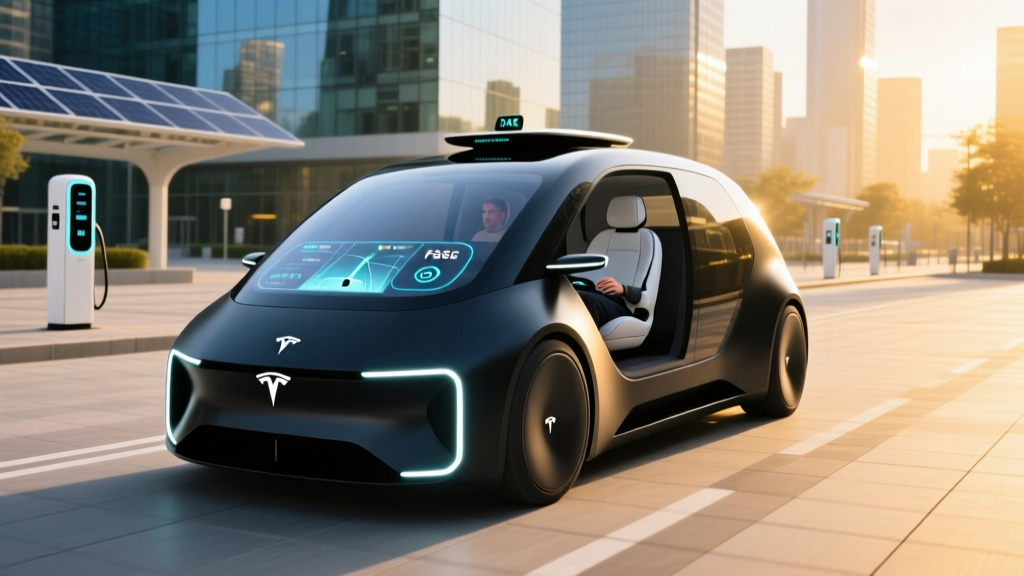
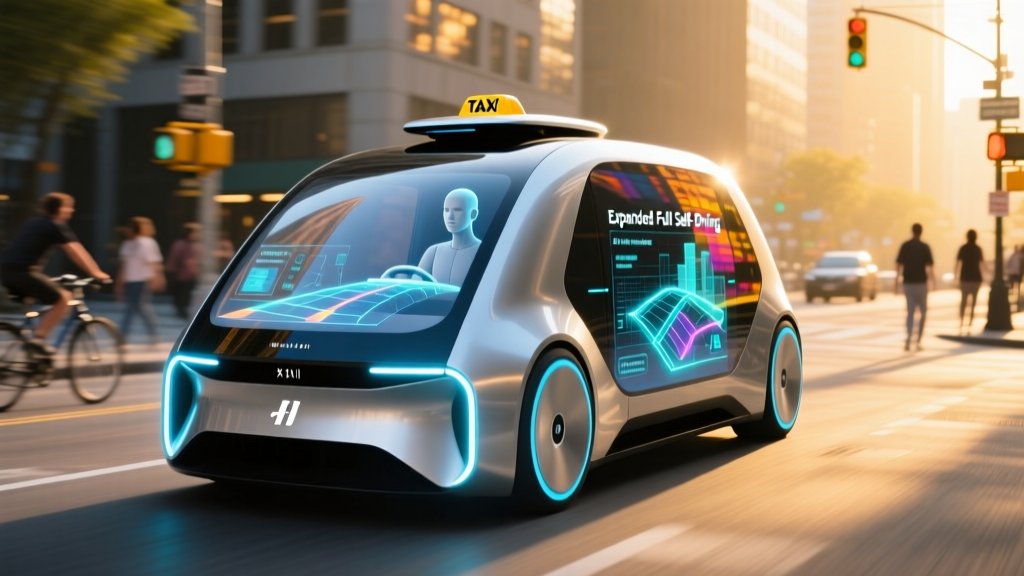
If you've sat behind the wheel of a Tesla running recent FSD (Supervised) software, you've likely noticed the instrument cluster or touchscreen rendering a detailed 3D model of the world around the car — lane markings, curbs, traffic cones, pedestrians, other vehicles, even road debris. That rendering is what Tesla calls expanded Full Self-Driving visualization. It is a real-time graphical representation of the neural network's perception output, projected onto the vehicle's display so the driver can see what the system "sees."
Expanded FSD visualization goes beyond the basic lane-and-vehicle rendering of earlier Autopilot builds. It now includes:
- Dynamic curb and road-edge detection
- Pedestrian and cyclist skeletal models with predicted motion vectors
- Traffic-light state and signage recognition overlays
- Construction-zone cone and barrel mapping
- Estimated drivable-surface shading (distinguishing asphalt from gravel or shoulder)
The purpose is twofold: it builds driver trust by showing system awareness, and it serves as a supervision aid — if the visualization misses something you can see with your eyes, you know to intervene immediately.
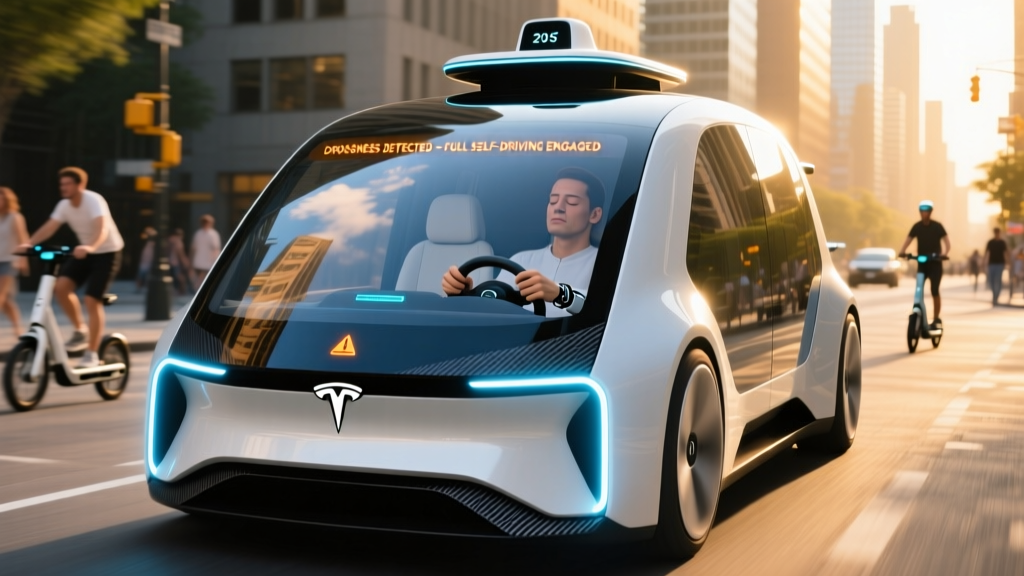
Expanded FSD visualization is a feature of Tesla's FSD (Supervised) software, which remains an SAE Level 2 driver-assistance system per SAE International's J3016 taxonomy. The driver must remain fully engaged, eyes on the road, hands available to take over at any moment. This is fundamentally different from Level 4 robotaxi services (Waymo, Zoox) where no human driver is required. Never treat an FSD-equipped Tesla as a self-driving car.
How the Visualization Technology Stack Works
Tesla's perception pipeline is camera-only — no lidar, no radar (radar was removed from Model 3 and Model Y built from mid-2021 onward, and ultrasonic sensors were phased out in late 2022). The current hardware, Hardware 4 (HW4), includes:
- 7 cameras (front main, front narrow, front wide, left/right repeaters, left/right rear) at up to 5 MP resolution
- 12x compute throughput over HW3 via a dual-chip FSD computer
- End-to-end neural network architecture (introduced in FSD v12.x and refined through v13.x in 2025-2026) that replaces hand-coded rules with learned driving policies trained on billions of miles of fleet video
The expanded visualization is a downstream rendering of the neural net's occupancy network output. Rather than bounding boxes, Tesla uses a voxel-based occupancy grid that estimates the 3D shape and motion of every object in the scene. The car's GPU then translates that voxel data into the smooth 3D rendering you see on-screen.
Tesla FSD (Supervised) vs. Level 4 Robotaxi: Sensor Stack Comparison
| Feature | Tesla FSD (Supervised) — Level 2 | Waymo (6th-Gen Driver) — Level 4 |
|---|---|---|
| Cameras | 7 external cameras | 29+ cameras (short, mid, long range) |
| Lidar | None | 5 lidar units (360° coverage, 500m+ range) |
| Radar | None (removed) | 6 imaging radar units |
| Audio sensors | None | External microphones (sirens, horns) |
| Mapping | No HD map; real-time perception | HD lidar maps of every operational road |
| Driver required | Yes — full supervision at all times | No — fully driverless in geofenced zones |
Where Can You Actually Use a Driverless Robotaxi Right Now?
While Tesla's FSD visualization works anywhere you drive (it's a consumer feature on personal vehicles), true driverless robotaxi services are geofenced to specific cities. As of early 2026, here is where you can hail a ride with no one in the driver's seat:
| Service | City | Area Coverage | Hours |
|---|---|---|---|
| Waymo One | Phoenix metro, AZ | ~315 sq mi (Chandler, Tempe, Gilbert, Scottsdale, parts of Phoenix) | 24/7 |
| Waymo One | San Francisco, CA | ~50 sq mi (most of SF proper, expanding) | 24/7 |
| Waymo One | Los Angeles, CA | ~80 sq mi (Santa Monica, Hollywood, Downtown, Mid-City) | 24/7 |
| Waymo One | Austin, TX | Limited initial deployment (Downtown/South Austin corridors) | Limited hours |
| Zoox | Las Vegas, NV (resort corridor) | ~3 sq mi (Las Vegas Blvd area) | Limited hours |
| Zoox | Foster City, CA | Small pilot zone | Employee/invite-only |
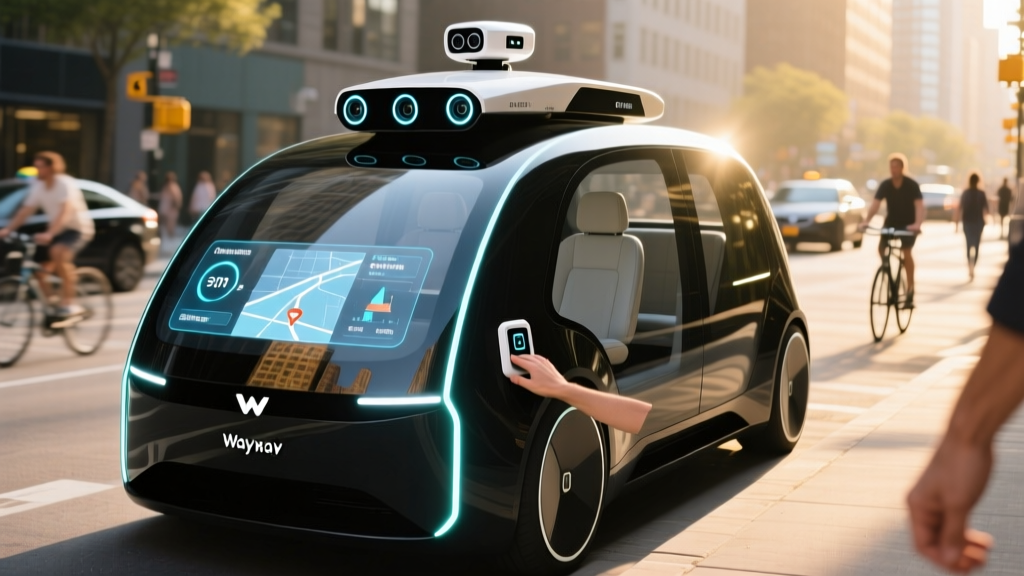
Waymo is the only service offering broad public access at meaningful scale, with over 10 million paid driverless trips completed by late 2025. Cruise, GM's robotaxi arm, remains in a gradual relaunch phase with safety drivers present in limited test zones after its October 2023 suspension.
Robotaxi Pricing: How Does It Compare to Uber and Lyft?
One of the most common questions is cost. Robotaxi pricing varies by market and demand, but here's a representative comparison based on typical rides in Phoenix and San Francisco:
| Ride Type | Typical 5-Mile Ride (Phoenix) | Typical 5-Mile Ride (SF) | Notes |
|---|---|---|---|
| Waymo One | $12–$18 | $16–$25 | No surge pricing; wait times 3–8 min |
| UberX | $10–$16 | $14–$22 | Surge can double or triple price |
| Lyft Standard | $9–$15 | $13–$20 | Surge applies during peak |
| Waymo (promo periods) | $5–$10 | $8–$14 | New-user credits and referral bonuses |
Waymo's pricing is generally competitive with Uber/Lyft at base rates, with the key advantage of no surge pricing. During high-demand events (concerts, airport rushes), UberX and Lyft can spike to 2–3x normal, while Waymo holds flat. The trade-off: Waymo's geofence means you can't always get a ride to your exact destination if it falls outside the operational zone.
Robotaxi Safety Record: What the Data Actually Shows
Safety is the single most scrutinized aspect of autonomous driving. Let's look at concrete, reported data rather than marketing claims.
Waymo Safety Data (as reported to NHTSA and in peer-reviewed analysis)
- 30+ million fully driverless miles completed across Phoenix, SF, and LA by end of 2025
- 85% fewer police-reported injury crashes per million miles compared to human drivers in comparable urban environments (Waymo's 2024 peer-reviewed study, validated against NHTSA crash databases)
- 57% fewer property-damage-only crashes per million miles vs. human baseline
- NHTSA Standing General Order requires all ADS-equipped vehicles to report crashes; Waymo's reported incidents are publicly searchable
- No passenger fatalities in Waymo driverless operations to date
For context, the U.S. human-driver fatality rate is approximately 1.35 deaths per 100 million vehicle miles per IIHS data. Robotaxi services have not yet accumulated enough miles to statistically prove equivalence at the fatality level, but injury-crash data is directionally strong.
Tesla's FSD (Supervised) publishes quarterly safety reports claiming approximately 1 crash per 4–5 million miles driven on FSD, but these figures are self-reported, not independently verified by NHTSA, and the driver remains the responsible party in every incident. For a consumer Level 2 system, that distinction matters enormously.
Current Limitations: Where Both FSD Visualization and Robotaxis Fall Short
No autonomous or driver-assist system is universally capable. Here are the hard limitations you need to understand:
Tesla FSD (Supervised) — Level 2 Limitations
- Driver liability: You are legally responsible for every driving decision. The visualization may show the system "seeing" a pedestrian, but if it doesn't stop, you must.
- Weather degradation: Heavy rain, fog, snow, and direct sun glare can blind cameras. The system will issue a takeover request or disengage — often without much warning.
- Construction zones: While the expanded visualization now renders cones, rapidly changing lane configurations and flaggers remain high-intervention scenarios.
- Unmapped or rural roads: Performance degrades significantly on roads with faded markings, no clear shoulders, or unusual geometry.
- Edge cases: Emergency vehicles, unusual road debris, animals, and non-standard intersections still require frequent human takeover.
Level 4 Robotaxis (Waymo, Zoox) — Current Constraints
- Geofence boundaries: Rides that cross outside the mapped operational area are simply not available.
- Severe weather: Waymo suspends service during heavy fog (common in SF), monsoon-level rain (Phoenix), or snow — conditions where lidar and camera performance degrade.
- No-go scenarios: Unpaved roads, private driveways, parking garages, and drive-throughs are typically not serviced.
- Remote assistance delays: When the vehicle encounters an ambiguous situation (double-parked truck blocking the lane), it may stop and request remote human guidance, adding 2–10 minutes to your trip.
- Limited passenger capacity: Waymo's Jaguar I-PACE fleet seats up to 3 passengers; Zoox's purpose-built vehicle seats 4 — no large-group rides.
Regulatory Landscape: Who Approves Robotaxi Operations?
Robotaxi deployment in the U.S. is governed by a patchwork of state and local regulators, not a single federal permit:
- California (CPUC + DMV): The California Public Utilities Commission issues permits for commercial robotaxi service; the DMV issues testing permits. Waymo holds a CPUC "Driverless Pilot" permit and a full commercial deployment permit for SF and LA.
- Arizona: The state has minimal regulatory barriers — no specific permit required for driverless testing or deployment, which is why Phoenix was Waymo's first commercial market.
- Texas: Austin allows testing and limited deployment under state transportation department oversight.
- Federal (NHTSA): NHTSA does not "approve" autonomous systems but enforces safety standards, mandates crash reporting via Standing General Order, and can issue recalls (as it did for Cruise in 2024).
For Tesla FSD (Supervised), no special state permit is required because it is classified as a Level 2 driver-assist feature — the same regulatory category as adaptive cruise control and lane-keeping assist. The driver, not the system, must comply with all traffic laws.
Is Expanded FSD Visualization a Step Toward Full Autonomy?
The visualization is genuinely useful as a supervision tool — it helps you understand what the neural network is processing and when you should be prepared to intervene. But it is not a pathway to removing the driver. Tesla's FSD (Supervised) remains SAE Level 2, and the company has not received regulatory approval for any Level 3 or Level 4 operation.
Tesla has announced a planned unsupervised FSD launch in Austin, TX, targeted for mid-2025, but as of early 2026, this service has not received the necessary state regulatory approvals for fully driverless commercial operation. Any timeline for "full self-driving" without supervision should be treated as aspirational until regulatory permits are in hand and operational data is public.
Meanwhile, if you want a genuinely driverless ride today, Waymo One in Phoenix, San Francisco, and Los Angeles is the only service operating at meaningful scale with verified safety data. The expanded FSD visualization on your Tesla is an impressive piece of software engineering — but it's a window into a driver-assist system, not a replacement for a human behind the wheel.
Is Tesla's expanded FSD visualization the same as self-driving?
No. Expanded FSD visualization is a graphical display of what Tesla's FSD (Supervised) neural network perceives. The system is SAE Level 2 — you must supervise it at all times and are legally liable for all driving decisions.
Where can I ride in a real driverless robotaxi today?
Waymo One operates fully driverless rides in Phoenix (metro-wide), San Francisco, Los Angeles, and in limited form in Austin, TX. Zoox operates a small pilot in Las Vegas. These are the only public, driverless services at scale as of 2026.
How much does a Waymo ride cost compared to Uber?
Typical 5-mile Waymo rides cost $12–$18 in Phoenix and $16–$25 in San Francisco — comparable to UberX base fares but without surge pricing. Waymo frequently offers new-user promo credits that can bring rides down to $5–$10.
Are robotaxis safe?
Waymo's published, peer-reviewed data shows 85% fewer police-reported injury crashes per million miles compared to human drivers in similar urban environments, across 30+ million driverless miles. No passenger fatalities have been reported. However, robotaxis have not yet accumulated enough miles for statistical parity at the fatality level.
Can FSD visualization detect everything around the car?
No. The camera-only system can struggle in heavy rain, fog, snow, direct sun glare, and unusual edge cases like non-standard construction zones or emergency scenes. The visualization shows what the system currently perceives — if something is missing from the display, that's a signal to take over immediately.
Will Tesla's FSD eventually become truly self-driving?
Tesla has stated ambitions to launch unsupervised FSD, but as of 2026, the system remains Level 2 and requires full driver supervision. Achieving Level 4 or 5 autonomy requires not just software capability but regulatory approval, which is a separate and significant hurdle. Timelines remain uncertain.