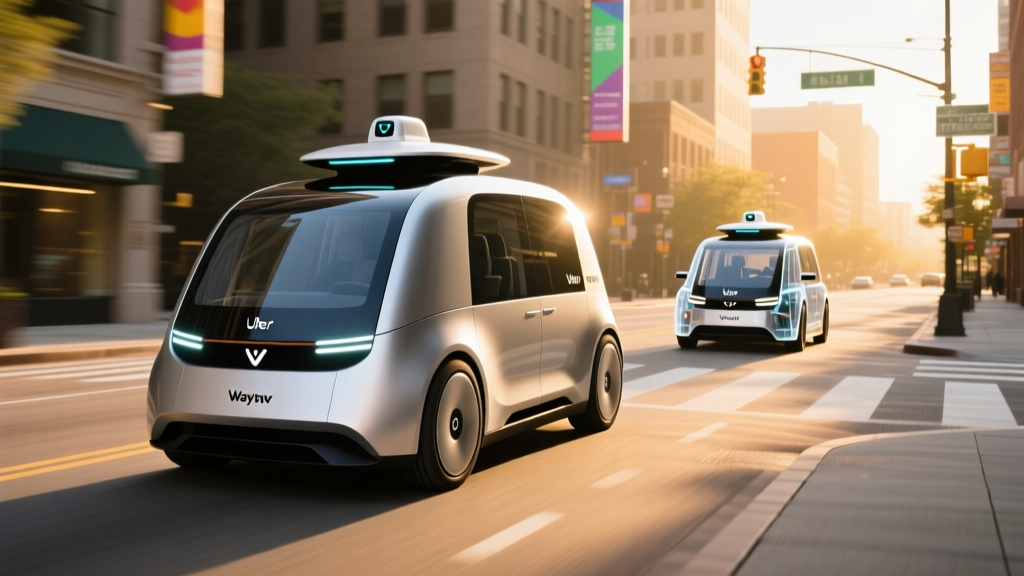
The intersection of electric vehicles and autonomous vehicles has produced the most visible application of self-driving technology to date: the robotaxi. Fully driverless ride-hailing services are no longer theoretical — they are operating on public roads in multiple U.S. cities, carrying paying passengers in purpose-built electric fleets. But the landscape is uneven, heavily regulated, and often misunderstood. This guide breaks down exactly where robotaxis operate in 2026, what they cost, how safe they are, and what the technology can — and cannot — do.
SAE Automation Levels: What "Self-Driving" Actually Means
The biggest source of confusion in autonomous driving is the gap between consumer driver-assist systems and true robotaxis. The Society of Automotive Engineers (SAE) defines six levels of driving automation, and the distinction between Level 2 and Level 4 is everything.
| Level | Name | Who Drives | Examples |
|---|---|---|---|
| 0 | No Automation | Human | Conventional vehicles |
| 1 | Driver Assistance | Human (system assists) | Adaptive cruise control, lane keep |
| 2 | Partial Automation | Human (must supervise) | Tesla Autopilot/FSD Supervised, GM Super Cruise, Ford BlueCruise |
| 3 | Conditional Automation | System (human on standby) | Mercedes DRIVE PILOT (limited conditions) |
| 4 | High Automation | System (in defined ODD) | Waymo, Zoox, Cruise robotaxis |
| 5 | Full Automation | System (all conditions) | Does not exist yet |
Key distinction: Tesla's Full Self-Driving (Supervised) is a Level 2 system. The driver must remain engaged, hands near the wheel, eyes on the road. A Waymo robotaxi operating in Phoenix is Level 4 — no human driver is present, and the system handles all driving tasks within its operational design domain (ODD). These are fundamentally different technologies, regardless of marketing names.
Where Can I Use a Robotaxi Right Now?
Robotaxi availability in 2026 is real but geographically limited. Services operate within tightly defined geofences — mapped zones where the company has validated its system's performance. Outside those zones, the service simply isn't available.
| Service | Vehicle Platform | Live Cities (2026) | Hours | Status |
|---|---|---|---|---|
| Waymo One | Jaguar I-PACE (EV), Zeekr RT (EV, rolling out) | Phoenix metro, San Francisco, Los Angeles, Austin | 24/7 in most zones | Fully driverless, paid service |
| Cruise | Chevrolet Bolt EV, Origin (purpose-built EV) | Phoenix, Houston, Dallas (limited relaunch) | Daytime/limited hours | Phased relaunch with safety driver, transitioning to driverless |
| Zoox | Zoox purpose-built vehicle (bidirectional, no steering wheel) | Las Vegas (public rides), San Francisco (employee/invite) | Limited hours | Early public access, expanding |
| Baidu Apollo Go | Various EV platforms | Wuhan, Beijing, Chongqing (China) | Extended hours | Largest global fleet, not U.S.-available |
How to ride: Waymo One operates like a standard rideshare — download the app, enter your pickup and destination within the service zone, and a driverless vehicle arrives. No waitlist as of early 2026 in Phoenix and San Francisco; Los Angeles and Austin may still have waitlists depending on demand. Cruise's relaunch requires accessing their app in approved cities. Zoox in Las Vegas can be hailed via their app in a limited zone around the Strip and downtown.
Robotaxi Pricing vs. Uber and Lyft
Robotaxi pricing is designed to compete with — and undercut — traditional rideshare. The economics depend on eliminating the driver's share of each fare (typically 55–70% of the ride cost on Uber/Lyft), though robotaxi operators absorb heavy vehicle and sensor costs instead.
| Service | Base Fare | Per Mile | Per Minute | 5-Mile Trip (Est.) |
|---|---|---|---|---|
| Waymo One | $3.50 | $1.25 | $0.35 | $12–$16 |
| UberX (Phoenix) | $2.80 | $1.45 | $0.38 | $13–$18 |
| Lyft Standard (SF) | $3.00 | $1.55 | $0.42 | $14–$20 |
| Baidu Apollo Go (Wuhan) | ¥4 (~$0.55) | ¥1.8/km (~$0.16/mi) | N/A | $2–$4 |
Waymo pricing is broadly comparable to UberX and often slightly cheaper on longer trips within its geofence. Surge pricing exists but tends to be less aggressive than rideshare surges. Waymo also offers a "Waymo One" membership with discounted rates for frequent riders. Tipping is not expected (there's no driver), which effectively saves $2–$5 per ride compared to rideshare norms.
The bigger pricing story is in China: Baidu's Apollo Go offers heavily subsidized rides in Wuhan, with 5-mile trips sometimes costing under $3. This aggressive pricing has disrupted the local rideshare market and drawn regulatory scrutiny.
Robotaxi Safety: What the Data Shows
Safety is the most scrutinized aspect of robotaxi operations, and the data paints a nuanced picture. Robotaxis are not flawless, but they are performing competitively with — and in some metrics better than — human drivers in their operational domains.
- Waymo: Over 50 million fully driverless miles completed as of early 2026. A NHTSA-referenced study by the Swiss Re insurance group found Waymo's collision rate was approximately 85% lower than the human benchmark for injury-causing crashes and 57% lower for property-damage-only crashes, when controlling for exposure in comparable urban environments.
- Cruise: Suffered a serious incident in San Francisco in October 2023, where a pedestrian was dragged after being struck by a human-driven vehicle and then run over by a Cruise robotaxi. This led to a statewide permit suspension by the California DMV. Cruise has since relaunched with safety drivers in select cities and is working back toward driverless operations under increased regulatory oversight.
- Zoox: Has logged over 1 million driverless miles on public roads with no reported at-fault injury collisions as of early 2026. Fleet size remains small (~100 vehicles in public service).
- Disengagement rates: Waymo reports fewer than 0.02 disengagements per 1,000 miles in its Phoenix operations (the most mature market). San Francisco rates are higher due to density and complexity, at approximately 0.05–0.08 per 1,000 miles.
Context matters. Robotaxis operate in geofenced, mapped areas and tend to drive conservatively — lower speeds, wider margins, more cautious intersection behavior. This reduces certain collision types but can create traffic-flow friction. Common complaints from other drivers include robotaxis stopping unexpectedly, hesitating at four-way stops, or taking overly wide turns.
The Cruise incident highlights a specific vulnerability: edge cases involving multi-vehicle interactions and pedestrians in unexpected positions. Post-incident, Cruise implemented software updates to improve post-collision behavior (specifically, pulling to the curb rather than stopping in the travel lane) and accepted new operational restrictions.
Technology Stack: How Robotaxis See the Road
Robotaxi technology stacks differ significantly between operators, reflecting competing philosophies about sensor redundancy and AI training approaches.
Waymo (6th-Generation Driver)
Waymo's sensor suite is the most hardware-dense in the industry:
- LiDAR: 5+ units providing 360° 3D point clouds, detecting objects at 500+ meters
- Cameras: 29+ high-resolution cameras for lane markings, traffic signals, text recognition
- Radar: 6 external radar units for velocity detection and all-weather performance
- Compute: Custom-designed autonomous driving computer with redundant failover
- HD Maps: Centimeter-precision maps of every operational zone, updated continuously
Vehicle platform: Jaguar I-PACE (90 kWh NMC battery, EPA range 234 miles) with the Zeekr RT expected to supplement the fleet through 2026–2027.
Zoox (Purpose-Built Vehicle)
- LiDAR: 4 roof-mounted units, 360° coverage
- Cameras: Multiple high-resolution units with overlapping fields of view
- Radar: Integrated for redundancy
- Vehicle: Symmetrical, bidirectional design with no steering wheel or pedals. 75 kWh battery. Four-wheel steering. Seats 4 passengers facing each other.
- Maps: HD-mapped geofenced zones
Tesla FSD (Supervised) — Level 2, NOT a Robotaxi
For contrast, Tesla's approach uses cameras only (no LiDAR, no radar in current hardware) and relies on neural-network-based perception trained on billions of miles of fleet data. Tesla has announced a robotaxi service but has not launched one. FSD Supervised remains a Level 2 driver-assist system requiring active human supervision. The distinction is critical: no Tesla vehicle currently operates without a driver.
Geofencing and Operational Design Domains
Every Level 4 robotaxi operates within an Operational Design Domain (ODD) — a defined set of conditions under which the system is validated. This includes:
- Geographic boundaries: Mapped zones (e.g., Waymo's Phoenix coverage area spans approximately 225 square miles)
- Speed limits: Typically capped at 45–65 mph depending on the zone
- Weather conditions: Most services restrict or pause operations in heavy rain, fog, or snow
- Time of day: Some operators limit nighttime operations in newer markets
The Regulatory Landscape
Robotaxi operations in the United States are governed by a patchwork of state and local regulations, with no comprehensive federal framework for autonomous ride-hailing.
- California: The California Public Utilities Commission (CPUC) issues permits for passenger service. The DMV issues testing and deployment permits. Both agencies can suspend operations — as happened with Cruise in October 2023. Operators must submit regular safety data, disengagement reports, and incident documentation.
- Arizona: The most permissive regulatory environment. Waymo has operated commercially in Phoenix since 2020. The state requires a vehicle registration for autonomous vehicles but does not impose the same permitting layers as California.
- Texas: Austin allows autonomous vehicle testing and limited commercial operations under local ordinances. Houston has approved Cruise's phased relaunch.
- Nevada: Has an autonomous vehicle testing framework. Zoox operates in Las Vegas under state authorization.
- Federal (NHTSA): The National Highway Traffic Safety Administration sets vehicle safety standards but does not currently have a specific regulatory framework for autonomous ride-hailing. NHTSA has issued Standing General Orders requiring crash reporting from ADS-equipped vehicles, which has improved data transparency.
The regulatory trend is toward more structured oversight following the Cruise incident, with several states considering legislation that would require real-time fleet monitoring, minimum insurance thresholds ($5–$10 million per vehicle in California), and public incident-reporting databases.
Current Limitations: What Robotaxis Cannot Do
- Weather: Heavy rain, snow, fog, and ice degrade sensor performance. Most services pause or restrict operations. Waymo has improved rain performance in Phoenix but still avoids severe weather.
- Geofencing: You cannot hail a robotaxi outside its mapped zone. If your trip crosses the boundary, the service won't accept the ride.
- Construction zones: Dynamic road changes (lane closures, temporary signals, flaggers) remain challenging. Robotaxis may reroute or pull over and request remote assistance.
- Complex intersections: Unprotected left turns in heavy traffic, multi-lane roundabouts, and poorly marked roads can cause delays or overly conservative behavior.
- Emergency vehicles: While robotaxis are programmed to yield, real-world performance is inconsistent. Several incidents have been documented where robotaxis failed to pull over promptly for approaching emergency vehicles.
- Pickup/dropoff precision: Robotaxis may stop across the street, in a loading zone rather than the curb, or in a location that requires the passenger to cross a busy road.
- No human assistance: There is no driver to help with luggage, child seats, wheelchair access, or route disputes. Zoox's purpose-built vehicle is designed for wheelchair accessibility, but most robotaxis use standard EV platforms.
- Passenger capacity: Most robotaxis seat 2–3 passengers (the front passenger seat is often blocked off or occupied by sensor equipment). Not suitable for groups of 4+ in most cases.
- Highway driving: Limited to lower-speed corridors in most markets. Waymo operates on some highway segments in Phoenix and LA, but this is not universally available.
Electric Vehicles Powering the Robotaxi Fleet
Robotaxis are overwhelmingly electric — for good reason. Electric vehicles offer lower per-mile energy costs, fewer moving parts (reducing maintenance downtime for fleets running 16–20 hours daily), and the precise torque control that benefits autonomous driving algorithms.
| Vehicle | Battery | EPA Range | DC Fast Charge | Operator |
|---|---|---|---|---|
| Jaguar I-PACE | 90 kWh (NMC) | 234 mi | 100 kW peak, 10–80% in ~45 min | Waymo |
| Chevrolet Bolt EV | 65 kWh (NMC) | 259 mi | 55 kW peak, 10–80% in ~55 min | Cruise |
| Cruise Origin | ~80 kWh (NMC, est.) | ~200 mi (est.) | DC capable, specs TBD | Cruise |
| Zoox Vehicle | 75 kWh (NMC) | Not EPA-rated (not sold retail) | Fleet depot charging | Zoox |
| Zeekr RT (announced) | ~100 kWh (NMC, est.) | TBD | Expected 200+ kW | Waymo (rolling out) |
Real-world fleet reality: Robotaxi vehicles typically run 16–20 hours per day, covering 100–200 miles daily before returning to a depot for charging. The Jaguar I-PACE's 100 kW peak charge rate is a bottleneck — Waymo manages this by rotating vehicles through depot chargers during low-demand periods. The upcoming Zeekr RT platform, designed from the ground up for autonomous fleet use, is expected to feature significantly faster charging to reduce downtime.
None of these vehicles qualify for the federal §30D clean vehicle tax credit as personal purchases, since they are fleet-owned and not available for retail sale (with the exception of the Jaguar I-PACE and Chevrolet Bolt EV, which are consumer vehicles — but the robotaxi-equipped versions are not sold to individuals).
Frequently Asked Questions
Is this truly self-driving or just driver-assist?
Robotaxis from Waymo, Zoox, and (in driverless mode) Cruise are SAE Level 4 — truly self-driving within their geofenced operational areas. No human driver is present. This is fundamentally different from Tesla Autopilot, Ford BlueCruise, or GM Super Cruise, which are Level 2 driver-assist systems requiring constant human supervision. If there's a steering wheel and a person in the driver's seat, it's not a robotaxi.
How much does a robotaxi ride cost compared to Uber or Lyft?
Waymo One pricing is comparable to UberX, typically $12–$16 for a 5-mile urban trip. You save on tips (not expected), and surge pricing tends to be less aggressive. In China, Baidu Apollo Go offers dramatically cheaper rides ($2–$4 for equivalent distances) due to heavy subsidies. Cruise's relaunched service is pricing competitively with Waymo.
How safe are robotaxis in real-world operation?
Waymo has completed over 50 million driverless miles with collision rates significantly below human benchmarks in comparable urban environments, per third-party insurance analysis. Cruise experienced a serious incident in 2023 that led to permit suspension and a phased relaunch under stricter oversight. Zoox has logged over 1 million driverless miles with no at-fault injury collisions. Robotaxis drive conservatively, which reduces severe crashes but can cause traffic friction.
What happens if the robotaxi encounters a situation it can't handle?
The vehicle will pull over safely (or attempt to) and can connect to a remote assistance operator who provides guidance — not remote driving, but high-level direction (e.g., "proceed past the cone" or "take the alternate route"). If the situation cannot be resolved, the ride may be terminated and the passenger asked to exit at a safe location.
Can I use a robotaxi in any city?
No. As of 2026, fully driverless paid robotaxi service in the U.S. is available only in Phoenix, San Francisco, Los Angeles, Austin, and limited zones in Las Vegas. Expansion to additional cities is ongoing but slow, requiring regulatory approval, HD mapping, and extensive local testing. Most U.S. cities have no robotaxi service.
Will robotaxis replace Uber and Lyft?
Not in the near term. Robotaxis are limited to specific geofenced zones in a handful of cities, cannot operate in severe weather, and require massive capital investment per vehicle (sensor suites cost $50,000–$150,000+ per vehicle). They will likely coexist with human-driven rideshare for years, competing most effectively in dense urban cores with high ride volume.