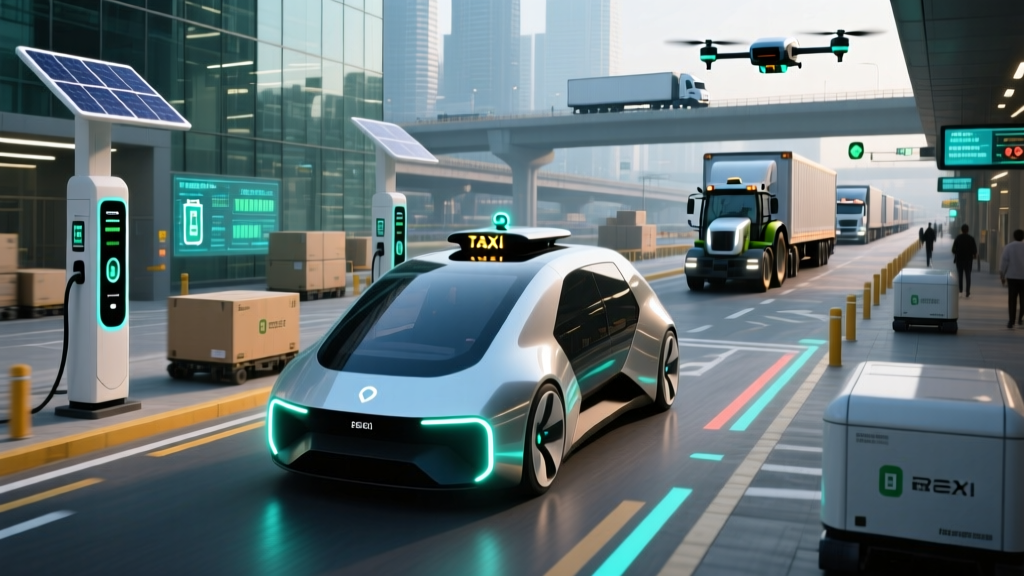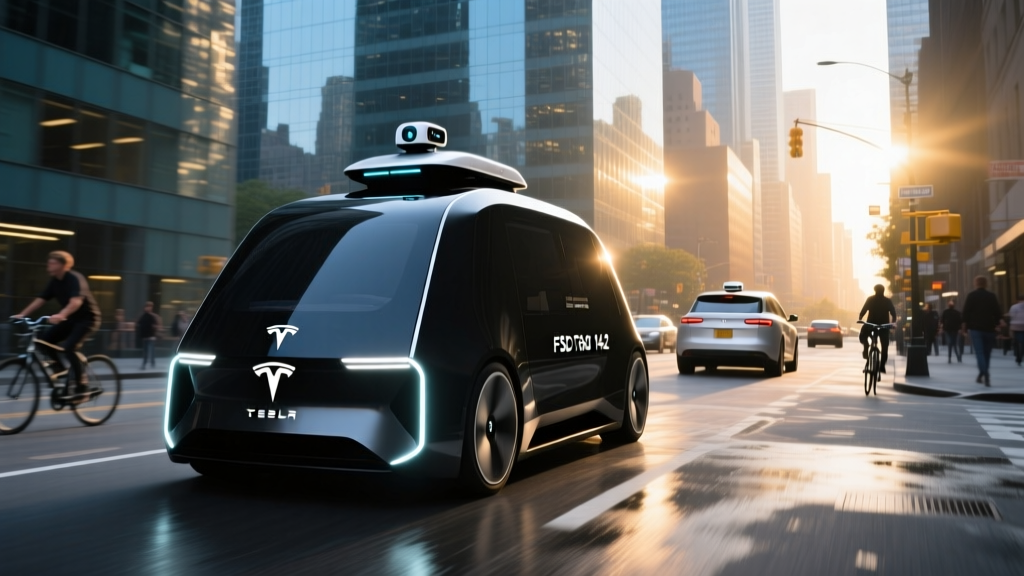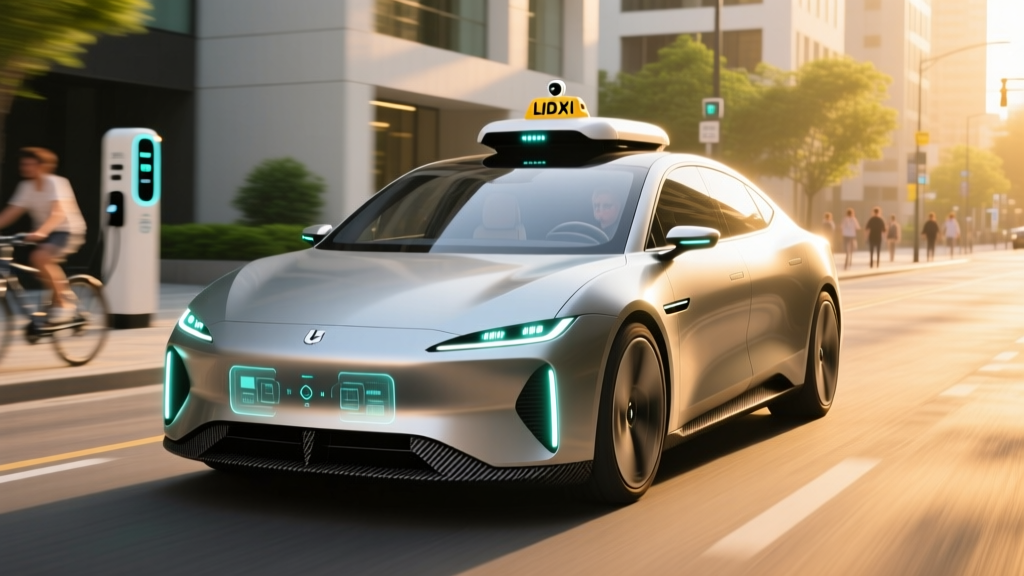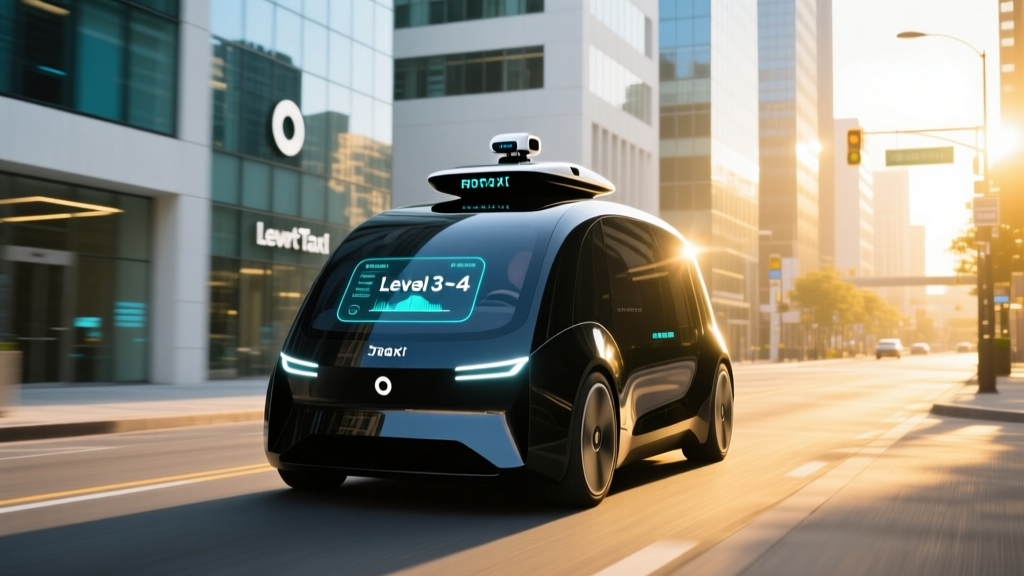
The short answer to "can you get a DUI in a self-driving car" is almost always yes — but the legal reasoning depends entirely on which type of self-driving system you're using. A Tesla running FSD (Supervised) and a Waymo robotaxi with no steering wheel sit on opposite ends of the SAE automation spectrum, and DUI statutes treat them very differently. Here's what the data, the law, and the technology actually say in 2026.
The Core Legal Principle: Who Is the Driver?
Every U.S. DUI statute is built on a single premise: a human was in "actual physical control" of a vehicle while impaired. That phrase — actual physical control — is what prosecutors lean on, and courts have interpreted it broadly. You can be convicted of a DUI while parked with the engine running in many states if the circumstances suggest you could have driven.
When you introduce automation, the question shifts: Is the human still the driver, or is the system? The answer hinges on the SAE automation level of the vehicle you're in.
SAE Automation Levels — The Critical Distinction
| Level | Name | Who Drives? | Example (2026) | DUI Risk |
|---|---|---|---|---|
| Level 0 | No Automation | Human 100% | Base-trim gas cars | Full DUI |
| Level 1 | Driver Assistance | Human | Adaptive cruise, lane-keep | Full DUI |
| Level 2 | Partial Automation | Human (must supervise) | Tesla Autopilot/FSD, GM Super Cruise, Ford BlueCruise | Full DUI |
| Level 3 | Conditional Automation | System (human on standby) | Mercedes Drive Pilot (limited) | Gray area — likely DUI |
| Level 4 | High Automation | System (no human needed) | Waymo, Zoox, Cruise (limited cities) | No DUI for passenger |
| Level 5 | Full Automation | System (all conditions) | Does not exist commercially | N/A |
Source: SAE International J3016 standard. Only Level 4+ removes the human from the driver role.
Level 2 Systems (Tesla FSD, Super Cruise, BlueCruise): Yes, Full DUI
This is where most consumer confusion lives. Tesla's Full Self-Driving (Supervised), GM's Super Cruise, Ford's BlueCruise, and similar systems are all SAE Level 2. Despite marketing names that suggest autonomy, the human driver is legally and functionally responsible for the vehicle at all times.
Tesla's own FSD user manual states plainly: "You must remain attentive and keep your hands on the steering wheel." The system can navigate highways, handle intersections, and park — but it requires continuous supervision. If you're intoxicated behind the wheel of a Tesla running FSD, you are the driver under the law. Period.
Courts in multiple states have already prosecuted DUI cases involving Tesla Autopilot and FSD. In several high-profile cases, defendants argued the car was "driving itself." Those defenses have consistently failed because Level 2 systems do not assume legal responsibility for vehicle operation.
⚠️ Critical Warning
Sleeping, intoxicated, or inattentive operation of any Level 2 vehicle is a DUI offense in all 50 states. Features like Autopilot, FSD (Supervised), Super Cruise, and BlueCruise do not change your legal status as the driver. NHTSA has issued multiple enforcement actions and recalls related to driver-monitoring failures in these systems.
Level 3 (Mercedes Drive Pilot): A Narrow Gray Zone
Mercedes-Benz's Drive Pilot is the first and currently only SAE Level 3 system available to U.S. consumers, limited to specific highway conditions in Nevada and California as of 2026. At Level 3, the system assumes driving responsibility under strict conditions: speeds under 40 mph, divided highways, clear weather, and good lane markings.
When Drive Pilot is actively engaged and conditions are met, Mercedes accepts liability for the driving task. The driver may legally look away from the road (though not sleep). This creates a theoretical DUI gray area — but it's narrower than it appears:
- Engagement conditions are strict: The system won't activate if conditions aren't met, and it hands control back with ~10 seconds of warning.
- The driver must be ready to resume: Being too impaired to take over when requested could still constitute "actual physical control" while impaired.
- Geographic limits: Drive Pilot only operates on pre-mapped highway segments. Outside those zones, you're back to Level 2 responsibility.
- No state has explicitly exempted Level 3 drivers from DUI statutes.
Bottom line: a Level 3 DUI defense is untested and risky. Expect prosecutors to argue you were still in physical control of a vehicle that could require your intervention at any moment.
Level 4 Robotaxis (Waymo, Zoox): No DUI — Because You're Not the Driver
This is the one scenario where the answer to "can you get a DUI in a self-driving car" is genuinely no. In a Waymo or Zoox robotaxi, there is no human driver. The vehicle operates at SAE Level 4 within its geofenced service area, with no steering wheel, pedals, or expectation of human intervention.
You are a passenger — legally equivalent to riding in a taxi, Uber, or bus. An intoxicated person in the back seat of a Waymo vehicle is no more guilty of DUI than an intoxicated person in the back of a Lyft.
Where Can I Use a Robotaxi Right Now?
| Service | Operational Cities (2026) | Hours | Vehicle |
|---|---|---|---|
| Waymo One | Phoenix, AZ (metro-wide); San Francisco, CA; Los Angeles, CA (expanding zones); Austin, TX | 24/7 in Phoenix & SF; limited hours elsewhere | Jaguar I-PACE, Hyundai Ioniq 5 (custom) |
| Zoox | Las Vegas, NV (limited corridor); Foster City, CA (testing) | Limited hours, invitation-only in some areas | Zoox purpose-built vehicle (no steering wheel) |
| Cruise | Operations suspended in most cities post-2023 incident; limited Phoenix testing with safety drivers | N/A | Chevrolet Bolt EV / Origin |
Service areas are geofenced and may expand. Check each operator's app for real-time availability. Source: operator announcements, NHTSA AV reporting.
How Robotaxi Pricing Compares to Uber & Lyft
| Metric | Waymo One | UberX (same market) | Lyft (same market) |
|---|---|---|---|
| Base fare (Phoenix, 5-mi trip) | ~$8–$12 | ~$10–$16 | ~$9–$15 |
| Surge pricing | No dynamic surge | 1.5x–3x during peak | 1.3x–2.5x during peak |
| Tip expected | No (no driver) | 15–20% customary | 15–20% customary |
| Effective per-mile cost | ~$1.50–$2.20/mi | ~$1.80–$3.00/mi | ~$1.70–$2.80/mi |
Robotaxi fares are broadly competitive with rideshare — and often cheaper once you factor in no tip and no surge. Waymo has introduced subscription passes in some markets. The economic advantage widens during high-demand periods when Uber/Lyft surge.
Robotaxi Safety: What the Data Actually Shows
Safety Record by the Numbers
- Waymo: Over 40 million fully driverless miles completed as of early 2026. A study by the Insurance Institute for Highway Safety (IIHS) found Waymo vehicles had approximately 76% fewer property damage liability claims and 100% fewer bodily injury claims compared to human-driven vehicles in the same markets.
- Cruise: Suspended statewide operations in California in October 2023 after a pedestrian-dragging incident in San Francisco. The company has since restructured and resumed limited testing with safety drivers under enhanced oversight.
- Human baseline: ~1.35 fatalities per 100 million vehicle miles traveled nationally (NHTSA FARS data). Robotaxi fleets have not recorded a fatality in driverless operation as of early 2026, though sample sizes remain smaller than the national driving population.
Technology Stack: How Robotaxis See the Road
Level 4 robotaxis use a sensor-fusion approach that differs fundamentally from consumer Level 2 systems:
- LiDAR: Roof-mounted and corner-mounted LiDAR units (typically 5–8 per vehicle) create a real-time 3D point cloud of the environment to ~200 meters. Waymo uses custom 5th-generation LiDAR; Zoox uses a proprietary array.
- Cameras: 8–12 cameras covering 360° with overlapping fields of view for redundancy, object classification, and traffic-signal recognition.
- Radar: 4–6 radar units for velocity detection and performance in rain/fog where LiDAR and cameras degrade.
- HD Maps + Geofencing: Every operational zone is pre-mapped at centimeter-level resolution. The vehicle will not operate outside its geofence, and map data includes curb heights, signal positions, and construction-zone updates.
- Remote assistance: If a vehicle encounters an unresolvable edge case (e.g., an unusual road closure), it pulls over safely and contacts a remote human operator for guidance — not to drive the car, but to authorize a path or wait for conditions to clear.
This is a fundamentally different architecture from Tesla's camera-only FSD, which operates without LiDAR or HD maps and relies on neural-network inference from vision alone.
Current Limitations: Where Robotaxis Still Fall Short
Operational Constraints You Should Expect
- Geofencing: Service is limited to pre-mapped zones. You cannot hail a Waymo from Phoenix to Tucson — the vehicle will not leave its operational area.
- Weather: Heavy rain, fog, snow, and dust storms degrade LiDAR and camera performance. Waymo reduces or suspends service during severe weather events. Phoenix and LA are favorable markets partly because of dry climates.
- Construction zones: Temporary lane shifts and unmapped road changes require remote-assistance intervention, which can add 5–15 minutes to a trip.
- Pickup/dropoff precision: Vehicles can only stop at legal, pre-approved locations. You may need to walk a short distance to your exact destination.
- No highway driving (mostly): Waymo operates on surface streets and some limited-access roads, but full Interstate highway operation at 70+ mph remains limited or absent in most markets.
- Accessibility: Current fleets use modified passenger vehicles. Wheelchair-accessible options remain limited, though Zoox's purpose-built vehicle addresses some of these gaps.
The Regulatory Landscape: Who Decides What's Legal?
Autonomous vehicle regulation in the U.S. is a patchwork:
- Federal (NHTSA): Sets vehicle safety standards (FMVSS) and requires crash reporting for ADS-equipped vehicles. NHTSA does not currently "approve" robotaxi operations — it regulates the vehicle, not the service.
- State DMVs and PUCs: California's CPUC and DMV issue permits for testing and commercial deployment. Arizona has minimal regulatory requirements, which is why Phoenix was Waymo's first commercial market. Nevada, Texas, and other states have their own frameworks.
- DUI statutes: Written at the state level, these laws were drafted before any automation existed. Most define "driver" as the person in physical control of the vehicle — which, for Level 2, is unambiguously the human. For Level 4, there is no human in physical control, so DUI doesn't apply to passengers.
No federal law currently addresses the DUI question for Level 3 or transitional systems. Until state legislatures update impaired-driving statutes to account for conditional automation, courts will continue to apply existing "actual physical control" doctrine.
Practical Decision Framework: What Should You Do?
If you're drinking and need a ride:
- You own a Tesla, Ford, GM, or any consumer vehicle with driver-assist: You are the driver. Do not get behind the wheel impaired. Use Uber, Lyft, Waymo (if available), or a designated driver. Autopilot/FSD/Super Cruise is not a legal or safe alternative.
- You're in a Waymo or Zoox service area: Hail the robotaxi. You are a passenger. No DUI risk. This is the only scenario where "self-driving" genuinely removes you from the driver's seat.
- You're in a Mercedes with Drive Pilot: Do not rely on Level 3 as a DUI defense. The system's operational limits are narrow, you must be ready to take over, and no court has validated this defense.
Frequently Asked Questions
Can I sleep in my Tesla while FSD drives me home drunk?
No. This is a DUI in every U.S. state. Tesla FSD (Supervised) is a Level 2 system that requires your continuous attention and hands-on-wheel readiness. You are the legal driver regardless of whether the system is steering. Multiple defendants have been convicted under these exact circumstances.
Has anyone actually been convicted of a DUI in a "self-driving" car?
Yes. Several cases in California, Texas, and other states have resulted in DUI convictions where the defendant was using Tesla Autopilot or FSD at the time of arrest. Courts have consistently held that Level 2 automation does not absolve the human of driver responsibility.
Can I drink in a Waymo robotaxi?
Open-container laws still apply inside vehicles in most jurisdictions, even robotaxis. While you cannot be charged with DUI as a passenger, you could face open-container citations depending on local law. Waymo's rider policies also prohibit consuming alcohol inside the vehicle.
Will laws change to allow impaired passengers in Level 3+ vehicles?
Possibly, but slowly. As Level 3 and Level 4 systems become more common, state legislatures may update impaired-driving statutes. However, the trend so far has been to expand driver responsibility for semi-autonomous systems, not narrow it. Don't count on legal changes to protect you in Level 2 or Level 3 vehicles.
What if I'm in the back seat of my own car with FSD on?
Still a DUI. Courts have convicted people of impaired driving from the back seat, passenger seat, and even outside the vehicle with the engine running. "Actual physical control" is interpreted broadly. If you set the destination and activated the system while impaired, you're the driver.