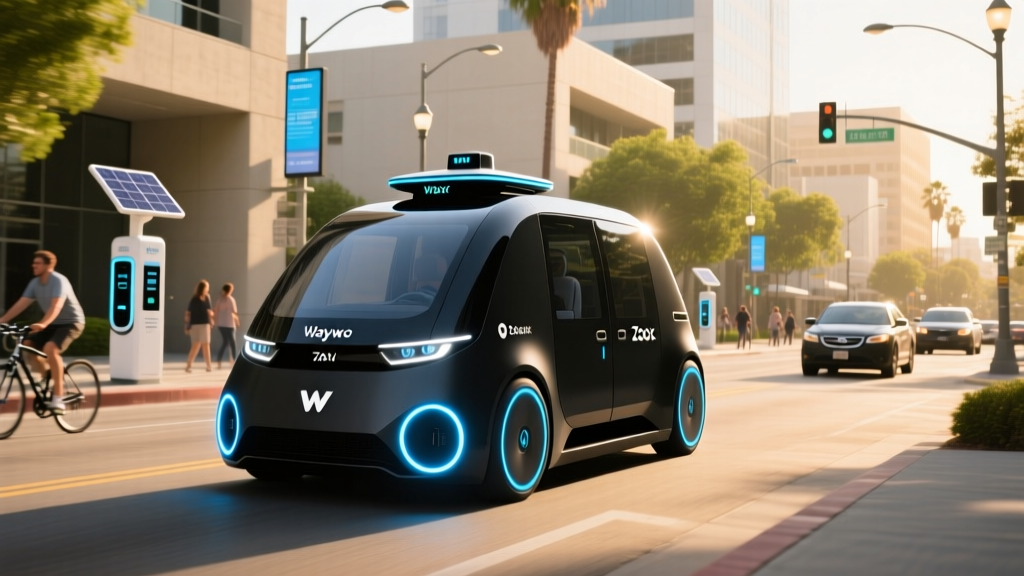
San Jose sits at the heart of Silicon Valley, making it one of the most closely watched cities for autonomous vehicle deployment. If you've searched for driverless taxis in San Jose, you've likely encountered a confusing mix of headlines, pilot-program announcements, and marketing claims. This guide cuts through the noise with current operational data, pricing realities, and safety records so you know exactly what's available — and what isn't — when you step onto a San Jose curb in 2026.
SAE Automation Levels: What "Driverless" Actually Means
Before evaluating any robotaxi service, you need to understand the SAE International automation scale. The distinction between consumer driver-assist and a true robotaxi is not marketing — it's engineering and liability.
| Level | Name | Who Drives? | Examples |
|---|---|---|---|
| 0–1 | No Automation / Driver Assist | Human, full-time | Cruise control, lane-keep |
| 2 | Partial Automation | Human, must supervise | Tesla Autopilot, FSD Supervised, GM Super Cruise, Ford BlueCruise |
| 3 | Conditional Automation | System in limited conditions; human on standby | Mercedes DRIVE PILOT (limited markets) |
| 4 | High Automation | System, no human needed — within geofence | Waymo One, Zoox (robotaxi service) |
| 5 | Full Automation | System, everywhere, all conditions | Does not exist commercially |
Key takeaway: Robotaxis operating in San Jose are SAE Level 4. They drive themselves without a human behind the wheel, but only within a defined geographic zone and under certain conditions. Consumer features like Tesla FSD Supervised remain Level 2 — the driver is legally and operationally responsible at all times.
Where Can You Hail a Driverless Taxi in San Jose Right Now?
As of early 2026, two major operators run commercial (or near-commercial) robotaxi services that cover portions of San Jose and the broader South Bay:
| Operator | Vehicle | San Jose Coverage | Hours | Status |
|---|---|---|---|---|
| Waymo One | Jaguar I-PACE (custom 5th-gen sensor suite) | Downtown San Jose, Santana Row, SJC Airport perimeter, parts of Sunnyvale & Mountain View | 24/7 | Commercial — open to public via app |
| Zoox | Zoox purpose-built bidirectional vehicle (no steering wheel) | Limited pilot zones in Foster City with select San Jose corridor testing | Limited hours | Employee/invite-only pilot — not open public rides in San Jose |
| Cruise | Chevrolet Bolt EV / Origin | Suspended — no active San Jose service | N/A | Operations paused since late 2023 incident; gradual re-entry in select cities only |
Practical reality: If you open a rideshare app in San Jose today, Waymo One is the service you can actually book. Waymo's San Jose geofence has expanded incrementally since its initial South Bay launch, now covering roughly 80+ square miles across San Jose, Sunnyvale, and Mountain View — including runs to and from the San Jose Mineta International Airport (SJC) designated pickup zones. Zoox remains in a controlled pilot phase; its distinctive carriage-style vehicle is visible on Foster City and select San Jose streets but is not yet bookable by the general public.
Geofence boundaries matter. A Waymo vehicle will not drive outside its approved operational design domain (ODD). If your destination falls outside the mapped zone — for example, a trip to Santa Cruz over Highway 17 — the app will not let you book the ride. Always confirm your origin and destination in the app before requesting.
How Much Does a Robotaxi Cost vs. Uber or Lyft?
Pricing is the question riders ask most. Waymo One uses a pricing model similar to traditional rideshare — base fare, per-mile rate, and per-minute rate — but without surge pricing driven by driver supply.
| Service | Base Fare | Per Mile | Per Minute | Est. Total (5 mi / 15 min) |
|---|---|---|---|---|
| Waymo One | ~$3.50 | ~$1.25 | ~$0.35 | $14–$17 |
| UberX | ~$2.80 | ~$1.10 | ~$0.30 | $12–$15 |
| Lyft Standard | ~$2.50 | ~$1.05 | ~$0.28 | $11–$14 |
| UberX (surge 1.8×) | — | — | — | $20–$27 |
What this means in practice: For a standard, non-surge trip, Waymo One is typically within $1–$3 of an UberX or Lyft. During high-demand periods — weekday rush hour, concert nights at the SAP Center, or airport runs during holiday travel — Waymo's lack of surge pricing can make it the cheaper option. Wait times average 4–8 minutes within the core San Jose zone, competitive with rideshare.
To use Waymo One, download the Waymo app (iOS/Android), create an account, enter your destination, and confirm. The app shows the estimated fare upfront, just like Uber. Payment is handled in-app via credit card or linked payment method. No tipping is expected — there's no driver.
The Technology Stack: Lidar, Cameras, and HD Maps
Understanding how Waymo and Zoox vehicles perceive the world helps explain both their capabilities and their limitations.
Waymo 5th-Generation Sensor Suite (Jaguar I-PACE)
- Lidar: Custom-built spinning rooftop unit plus short-range lidars — generates a real-time 3D point cloud up to ~500 meters, works in darkness
- Cameras: 29+ cameras providing 360° visual coverage for lane markings, traffic signals, signage, and object classification
- Radar: 6 radar units for velocity detection and performance in rain/fog where lidar and cameras degrade
- HD Maps: Centimeter-precision pre-mapped routes; the vehicle localizes itself within the map in real time
- Compute: Custom AI inference hardware mounted in the vehicle trunk area, processing terabytes of sensor data per hour
Zoox Purpose-Built Vehicle
- Symmetric sensor layout: Identical sensor pods on all four corners — each containing lidar, camera, and radar
- Bidirectional driving: No designated "front" — the vehicle can drive equally well in either direction (useful for narrow streets and U-turns)
- No steering wheel or pedals: True Level 4 design with no fallback to human control
- Dual-redundant systems: Backup compute, braking, steering, and power for every critical system
Lidar vs. camera-only: Waymo and Zoox both rely on lidar as a primary depth sensor, unlike Tesla's camera-only approach for its consumer FSD system. Lidar provides direct distance measurement independent of lighting conditions — a significant advantage for driverless operations at night or in shadow-heavy urban canyons like downtown San Jose. The trade-off is cost: a Waymo sensor suite is estimated at $100,000–$150,000 per vehicle, though costs are decreasing with each generation.
Safety Record: What the Data Actually Shows
Safety is the most scrutinized — and most politicized — aspect of robotaxi operations. Here's what the verified data says.
Waymo Safety Data (as reported through 2025)
- Total autonomous miles driven: 40+ million miles across all markets (Phoenix, San Francisco, Los Angeles, South Bay/San Jose)
- Fatalities: 0 fatalities in fully driverless (no safety operator) operations as of latest NHTSA Standing General Order reporting
- Injury crash rate: Waymo's published analysis claims an 85% reduction in injury-causing crashes per million miles compared to human benchmarks in comparable urban environments
- Contact incidents: Minor low-speed contacts (typically under 5 mph) with stationary objects, cyclists, or pedestrians have been reported — most during complex construction-zone rerouting or unusual road configurations
Context: The Cruise Suspension
In October 2023, a Cruise robotaxi in San Francisco struck a pedestrian who had been thrown into its path by a human-driven vehicle, then dragged the person ~20 feet. The incident — and Cruise's delayed disclosure of the dragging to regulators — led California's DMV to suspend Cruise's deployment permit. Cruise subsequently paused all nationwide driverless operations. This event underscores that Level 4 autonomy, while statistically strong, still faces edge-case failures that regulators take seriously.
How to interpret this: Robotaxi safety data is still limited by sample size. 40 million autonomous miles is substantial but small compared to the ~3 trillion miles driven annually by US humans. The IIHS notes that robotaxis eliminate drunk, distracted, and drowsy driving — the leading causes of human crashes — but may struggle with novel scenarios that experienced humans handle intuitively. The honest assessment: robotaxis are demonstrably safer in routine urban driving within their geofence, but the technology is not infallible.
Current Limitations: Where Robotaxis Can't Go (Yet)
Level 4 autonomy is powerful but bounded. Here are the real constraints you'll encounter with driverless taxis in San Jose:
- 🌧 Weather: Heavy rain and dense fog degrade lidar and camera performance. Waymo may reduce service area or pause operations during significant weather events. San Jose's mild climate means fewer weather disruptions than, say, Chicago — but atmospheric river events can still trigger pullbacks.
- 🚧 Construction zones: Rapidly changing lane configurations, temporary signals, and flaggers directing traffic remain challenging. Waymo handles many construction scenarios but will sometimes pull over and request remote assistance, adding minutes to your trip.
- 🗺 Geofence boundaries: You cannot ride from San Jose to San Francisco, Santa Cruz, or the East Bay in a Waymo. The vehicle operates strictly within its mapped and regulator-approved zone.
- 🚗 Unusual road configurations: Private driveways, parking garages, gated communities, and unpaved roads are outside the operational domain. Pickups and drop-offs happen at public street locations only.
- 👥 Accessibility: Waymo's Jaguar I-PACE vehicles are standard SUVs — wheelchair-accessible vehicle (WAV) options remain limited. Waymo has announced WAV pilot programs, but availability in San Jose is not yet widespread.
- 🧳 Airport logistics: SJC airport pickups operate from designated zones, not the standard rideshare curbside in all terminals. Check the Waymo app for exact pickup instructions before booking an airport trip.
Regulatory Landscape: Who Permits Robotaxis in California?
California has one of the most structured — and most contested — regulatory frameworks for autonomous vehicles in the United States. Three agencies share oversight:
- California DMV: Issues deployment permits for testing and commercial operations. Companies must submit disengagement reports, safety data, and insurance documentation. The DMV suspended Cruise's permit in 2023, demonstrating it has enforcement teeth.
- California Public Utilities Commission (CPUC): Regulates commercial passenger service — the "taxi" side. Waymo received CPUC approval for commercial fare-charging service in San Francisco and has since expanded its approved service area to include South Bay operations.
- NHTSA (Federal): Oversees vehicle safety standards. Current Standing General Order requires all ADS-equipped vehicles to report crashes within 24 hours. NHTSA does not "approve" robotaxi services but can issue recalls or investigations — as it has done for Tesla's Autopilot/FSD and Cruise's vehicles.
For San Jose specifically, the city government does not independently permit robotaxi operations — that authority rests with the state (DMV) and CPUC. However, the City of San Jose has engaged with operators on pickup/drop-off zone design, curb management, and emergency-response protocols. San Jose's Department of Transportation has expressed support for expanded AV service as part of its Vision Zero traffic-safety goals, provided safety data continues to support deployment.
Should You Ride? A Practical Decision Framework
Choose a Waymo driverless taxi if:
- Your trip is within the San Jose/Sunnyvale/Mountain View geofence
- You want a consistent, surge-free fare during peak hours
- You're curious about Level 4 autonomy and want a real-world experience
- You prefer not to interact with a driver (privacy, late-night trips)
Stick with Uber/Lyft if:
- Your destination is outside the Waymo geofence (East Bay, SF, Santa Cruz)
- You need a wheelchair-accessible vehicle or child car seat
- You're traveling during heavy rain or dense fog
- You need to stop at multiple locations along the route
Frequently Asked Questions
Is Waymo truly self-driving, or is there a remote human controlling it?
Waymo's vehicles are fully autonomous within their operational domain — there is no human driver in the vehicle and no remote joystick control. However, Waymo employs a remote-assistance team that can provide high-level guidance when the vehicle encounters an ambiguous situation (e.g., an unusual construction detour). The remote assistant does not steer or brake the car; they confirm a path or approve a maneuver the vehicle has already proposed. This is a key distinction from Level 2 systems where a human must actively drive.
Can I use a Waymo robotaxi to get to San Jose Airport (SJC)?
Yes. Waymo's San Jose geofence includes SJC airport pickup and drop-off zones. The Waymo app will guide you to the designated autonomous-vehicle pickup area, which may differ from the standard rideshare pickup. Confirm the exact location in-app before walking to the curb.
What happens if the Waymo vehicle gets confused or breaks down mid-trip?
The vehicle is programmed to pull over safely and contact Waymo's roadside-assistance team. In most cases, the issue is resolved remotely within minutes and the trip resumes. If the vehicle cannot continue, Waymo dispatches a human support vehicle. You are not charged for the portion of the trip that could not be completed.
Are robotaxis safe at night?
Waymo's lidar-based perception system operates identically in darkness and daylight — lidar does not rely on ambient light. Night operations in San Jose are routine and 24/7 service is available. The primary night-specific challenge is dealing with impaired pedestrians or erratic human drivers, scenarios the system is trained to handle conservatively (more following distance, slower approach speeds).
Will robotaxi service expand to more of San Jose and the South Bay?
Waymo has been incrementally expanding its South Bay geofence since initial launch. Expansion requires both mapping new areas and receiving regulatory approval from the CPUC and DMV. Based on current trajectory, expect continued gradual expansion through 2026 — but not a sudden city-wide blanket. Zoox's public service timeline for San Jose remains unannounced as of early 2026.
How does robotaxi insurance work if there's a crash?
Because there is no human driver, liability falls on the robotaxi operator. Waymo carries commercial insurance covering passengers, other road users, and property damage. As a rider, you do not need to provide insurance or worry about fault determination — that is handled between Waymo's insurers and any other parties involved.