Las Vegas Robotaxis: What's Actually Available in 2026
Las Vegas has become one of the most active testing and deployment grounds for autonomous ride-hailing in the United States. If you've searched for driverless taxis in Las Vegas, you've likely seen headlines about Waymo, Zoox, and various pilot programs. But what can you actually hail right now, how much does it cost, and how safe is the technology? This guide breaks down the current state of robotaxi services on the Strip and surrounding areas with real data, not marketing promises.
Understanding Autonomy Levels: Why It Matters
Before evaluating any robotaxi service, you need to understand the SAE J3016 automation levels:
| SAE Level | Name | Who Drives? | Example |
|---|---|---|---|
| Level 2 | Driver Assistance | Human (always) | Tesla Autopilot, GM Super Cruise, Ford BlueCruise |
| Level 3 | Conditional Automation | System in limited conditions; human on standby | Mercedes Drive Pilot (select markets) |
| Level 4 | High Automation | System (no human driver needed in geofenced area) | Waymo One, Zoox |
| Level 5 | Full Automation | System everywhere, all conditions | Does not yet exist commercially |
Critical distinction: Robotaxis operating in Las Vegas are SAE Level 4. They have no human driver and operate within defined geofenced zones. Consumer vehicles with Autopilot, FSD (Supervised), or Super Cruise are Level 2 — the driver must remain attentive at all times. Never conflate the two.
Where Can You Use Driverless Taxis in Las Vegas Right Now?
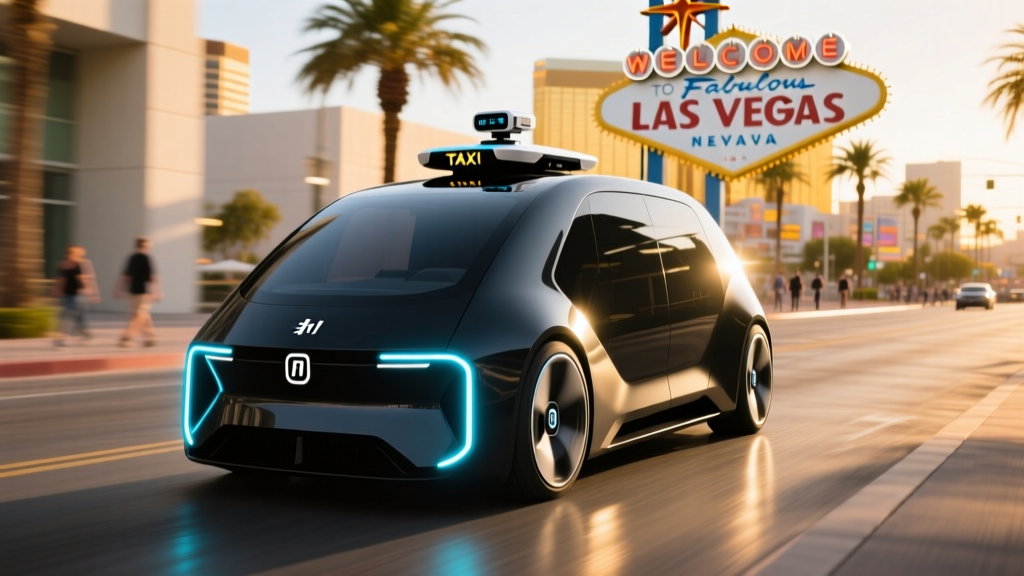
As of early 2026, two primary robotaxi operators run commercial or near-commercial services in the Las Vegas valley. Availability has expanded significantly since initial pilot programs, but coverage remains geofenced — you cannot summon a robotaxi to every address in the metro area.
| Operator | Service Name | Status (2026) | Coverage Area | Hours |
|---|---|---|---|---|
| Waymo | Waymo One | Commercial (open to public) | Las Vegas Strip corridor, downtown, Harry Reid International Airport (select routes), portions of Henderson | 24/7 in core zones |
| Zoox | Zoox Ride | Limited commercial / invite-based expansion | Downtown Las Vegas, Fremont Street area, limited Strip access | Daytime and evening hours (not overnight) |
| Motional (Hyundai/Aptiv) | Pilot via Uber/Lyft | Safety-driver pilot (not fully driverless) | Strip corridor | Limited hours |
Waymo One is the most accessible option for visitors and residents. After initially launching in Phoenix and San Francisco, Waymo expanded its Las Vegas service area throughout 2025, and by 2026 covers the major tourist corridor from Mandalay Bay north to downtown, including the Las Vegas Convention Center. Airport pickups are available at designated zones at Harry Reid International (LAS), though coverage may not extend to all terminals or rideshare lots — check the app for exact pin locations.
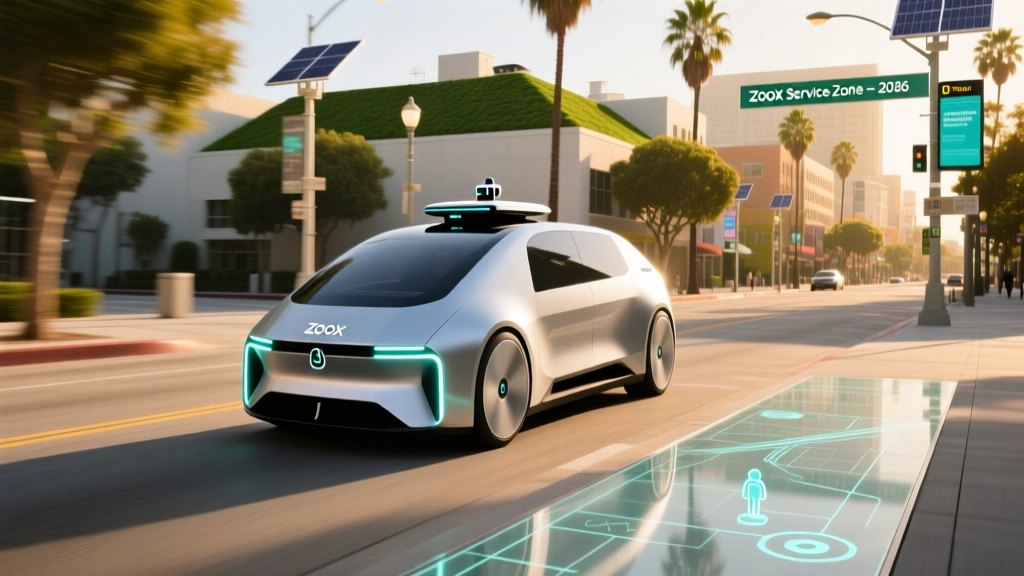
Zoox, the Amazon-owned autonomous vehicle company, operates its purpose-built bidirectional vehicle (no steering wheel, facing seats) in a more limited zone centered on downtown. Access has gradually opened beyond early-adopter invite lists, but capacity remains constrained compared to Waymo.
Motional (a joint venture between Hyundai and Aptiv) has run safety-driver-equipped Ioniq 5 robotaxis through Uber and Lyft in Las Vegas since 2022. As of 2026, these vehicles still carry a safety operator and are not fully driverless — they represent Level 4 testing with a human fallback, not a pure robotaxi experience.
How to Hail a Robotaxi and What It Costs vs. Uber and Lyft
Using a driverless taxi in Las Vegas is functionally similar to ordering an Uber or Lyft, with a few key differences.
How to Use Waymo One in Las Vegas
- Download the Waymo One app (iOS/Android).
- Create an account and add a payment method.
- Enter your pickup and drop-off locations — the app will confirm whether both are within the service geofence.
- Request a ride. Wait times in the Strip corridor typically range from 3–8 minutes during non-peak hours.
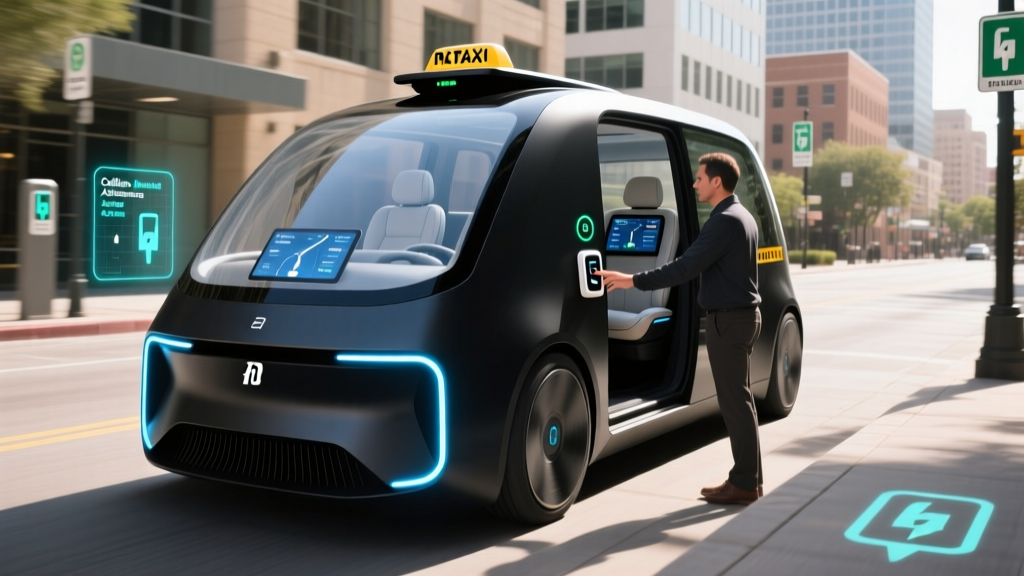
- When the vehicle arrives, confirm the ride by tapping the start button on the rear passenger-side screen or through the app.
- The vehicle is completely driverless. You can adjust climate and music via the seatback screen.
How to Use Zoox
Zoox currently operates through its own app with limited availability. Request a ride within the downtown geofence, and the purpose-built Zoox vehicle will arrive. The bidirectional design means the vehicle can exit tight spaces without reversing — a practical advantage in congested urban areas.
| Service | Typical Fare (Strip to Downtown, ~4 mi) | Per-Mile Rate (approx.) | Surge Pricing? | Tipping |
|---|---|---|---|---|
| Waymo One | $12–$18 | $1.50–$2.25/mi | Rare (introductory pricing in many markets) | Optional via app |
| Zoox | $10–$15 (promotional rates) | Below market (subsidized) | No | Optional via app |
| UberX | $14–$24 | $1.80–$3.00/mi | Yes (frequent on Strip) | Expected (15–20%) |
| Lyft | $13–$22 | $1.70–$2.80/mi | Yes | Expected (15–20%) |
Key takeaway: Robotaxi fares in Las Vegas are currently competitive with or slightly below Uber/Lyft, largely because Waymo and Zoox are subsidizing rides to build market share and collect operational data. Expect pricing to normalize upward as services mature. Waymo has historically avoided aggressive surge pricing, which can make it significantly cheaper during peak convention or event periods when Uber/Lyft fares spike 2–3x.
Robotaxi Safety Record: What the Data Actually Shows
Safety is the most scrutinized aspect of driverless taxis. Let's look at concrete numbers rather than vague assurances.
Waymo Safety Data (as reported 2024–2025)
- Total autonomous miles driven: Over 40 million fully driverless miles across all markets (Phoenix, San Francisco, Los Angeles, Las Vegas) as of late 2025.
- Injury-causing crash rate: Waymo's fully autonomous vehicles showed an 85% reduction in injury-causing crash rates compared to human-driven benchmarks, according to a study published by the Insurance Institute for Highway Safety (IIHS) and Waymo's own safety data reports.
- Police-reported crash rate: Approximately 6x lower than human drivers in comparable urban environments per million miles.
- Contactless at-fault incidents: Extremely rare; the majority of reported incidents involve other human drivers rear-ending or sideswiping the robotaxi.
Source: NHTSA Automated Vehicle Safety Data, Waymo Safety Reports, IIHS research publications.
Context matters: Robotaxis operate under conservative driving profiles. They obey speed limits strictly, maintain large following distances, and execute cautious maneuvers. This means they are occasionally rear-ended by human drivers who are following too closely — a pattern visible in NHTSA's Standing General Order crash data for Level 4 vehicles. The robotaxi is rarely the at-fault party in these collisions.
Known incidents in Las Vegas: As of early 2026, no fatal crashes involving a fully driverless Waymo or Zoox vehicle have been reported in the Las Vegas market. Minor contact incidents (scrapes, low-speed bumps in parking areas) have occurred, consistent with urban deployment anywhere. The NHTSA Standing General Order requires all ADS-equipped vehicles to report crashes, providing a public record that does not exist for conventional rideshare.
Zoox safety record: With significantly fewer miles on public roads compared to Waymo, Zoox's statistical sample is smaller. The company has reported no serious injuries in its commercial operations. Its purpose-built vehicle includes a symmetric crash structure and rear-facing seats, which Zoox argues provides better occupant protection in frontal collisions.
How Robotaxis Work: The Technology Stack Explained
Sensor Suite: Lidar, Cameras, and Radar
Unlike Tesla's camera-only approach for consumer FSD, commercial robotaxis use a multi-sensor fusion stack:
| Sensor Type | Function | Used By |
|---|---|---|
| Lidar (Light Detection and Ranging) | Creates a real-time 3D point cloud of surroundings; accurate depth perception to 200+ meters; works in darkness | Waymo (custom 6th-gen), Zoox, Motional |
| Cameras (multi-spectrum) | Reads traffic lights, signs, lane markings; detects colors and text; object classification | All operators |
| Radar | Measures velocity of moving objects; works in rain and fog where lidar degrades | Waymo, Zoox, Motional |
| Audio sensors | Detects emergency vehicle sirens for yielding behavior | Waymo, Zoox |
| HD Maps + GPS/IMU | Centimeter-level localization within pre-mapped geofenced area | All operators |
Geofencing and HD Mapping
Level 4 robotaxis operate within geofenced Operational Design Domains (ODDs). Before a robotaxi can drive a single mile autonomously in a new zone, the operator must:
- Create high-definition maps of every lane, intersection, crosswalk, and traffic signal in the area.
- Test routes extensively with safety drivers and then with remote-assisted autonomous runs.
- Obtain regulatory approval for that specific zone.
This is why you cannot hail a Waymo to a suburb that hasn't been mapped and approved. The geofence is a hard boundary — the vehicle will not operate outside it.
Remote Assistance (Not Remote Driving)
When a robotaxi encounters an ambiguous situation — a construction zone with conflicting signage, an unusual road closure, a pedestrian behaving unpredictably — it can request remote guidance from a human operations center. Critically, the remote operator does not steer the vehicle in real time. Instead, they provide high-level routing decisions (e.g., "take the next right" or "wait for the flagger to wave you through"), and the vehicle's autonomous system executes the maneuver. This distinction matters: the vehicle remains self-driving, with human oversight for edge cases.
Regulatory Landscape: Who Approves Robotaxi Operations?
Autonomous vehicle deployment in the United States involves a patchwork of federal and state oversight.
Federal Level
- NHTSA (National Highway Traffic Safety Administration) sets vehicle safety standards and requires crash reporting under the Standing General Order for all ADS-equipped vehicles. NHTSA does not currently "approve" robotaxi services but can investigate and issue recalls for autonomous driving systems.
- FMVSS (Federal Motor Vehicle Safety Standards) still assume a human driver in many requirements (steering wheels, mirrors). Zoox received a limited FMVSS exemption for its purpose-built vehicle, which has no steering wheel or traditional controls.
Nevada State Level
Nevada was one of the first states to pass autonomous vehicle legislation (AB 511, 2011, updated subsequently). The Nevada Department of Motor Vehicles (DMV) issues autonomous vehicle testing and deployment permits. Key requirements include:
- Proof of insurance ($5 million minimum liability for driverless operations).
- Submission of a safety self-assessment and operational design domain description.
- Compliance with NHTSA crash-reporting requirements.
- Local jurisdiction coordination (Clark County, City of Las Vegas, City of Henderson each have input on road access).
Nevada's regulatory environment has been relatively permissive compared to states like California, where the DMV and CPUC (Public Utilities Commission) both exert oversight and where permits have been suspended following incidents (as happened with Cruise in San Francisco in late 2023). Las Vegas has not experienced a comparable regulatory rollback.
Current Limitations of Driverless Taxis in Las Vegas
What Robotaxis Cannot Do (Yet)
- Geofence boundaries: You cannot travel outside the approved service area. A trip from the Strip to Red Rock Canyon or Lake Mead? Not available. Suburban residential neighborhoods outside the mapped zone are inaccessible.
- Extreme weather: While Las Vegas is largely dry, heavy monsoon rain (July–September) and flash-flood conditions can cause service suspensions. Lidar performance degrades in heavy precipitation, and flooded roads are outside the ODD.
- Construction zones: Major roadwork with temporary lane shifts, missing lane markings, or flaggers can cause the vehicle to pull over and request remote assistance, adding delay. Las Vegas's constant Strip-area construction is a frequent edge case.
- Large events and extreme congestion: During events like CES, EDC, or major boxing matches, pedestrian density and irregular traffic patterns can overwhelm the system. Waymo has occasionally paused service in specific zones during peak event congestion.
- Multi-stop trips: Current robotaxi services are point-A to point-B only. You cannot add a stop (e.g., "wait while I grab something") as you can with Uber.
- Accessibility: Waymo's Jaguar I-PACE fleet includes wheelchair-accessible options in some markets, but availability in Las Vegas is limited. Zoox's vehicle is designed with a low floor for easier entry but may not accommodate all mobility devices. Confirm in-app before relying on accessibility features.
- Children and pets: Unaccompanied minors cannot ride. Pets are generally not permitted unless in carriers, and policies vary by operator.
- Highway driving: While Waymo's Las Vegas service includes some limited-access road segments, most robotaxi routes are surface streets. Extended highway trips at 70+ mph are generally outside the current Las Vegas ODD.
Is This Truly Self-Driving or Just Advanced Driver-Assist?
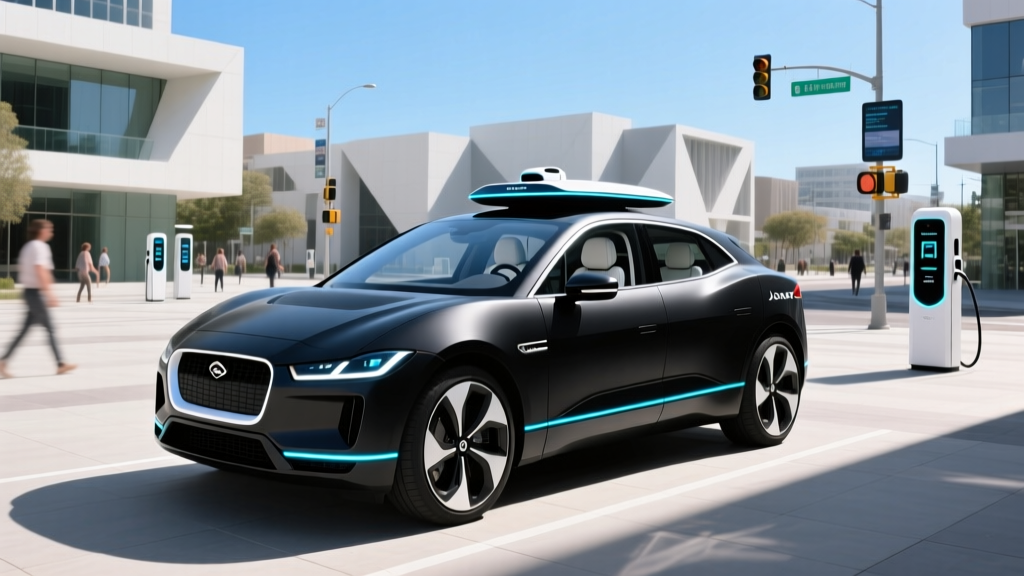
This is the most important question for anyone evaluating robotaxi technology, and the answer is unambiguous: Waymo One and Zoox in Las Vegas are SAE Level 4 — fully driverless within their geofenced zones. There is no human behind the wheel. There is no steering wheel (in the Zoox vehicle) or the steering wheel is not operated by a human (in Waymo's Jaguar I-PACE).
This stands in direct contrast to consumer vehicles like Teslas running FSD (Supervised), which are Level 2 systems requiring continuous driver attention. If you've seen a Tesla navigating Las Vegas traffic on "Full Self-Driving," that vehicle has a licensed, attentive driver who is legally responsible for every action the car takes. A Waymo or Zoox robotaxi has no such driver — the company itself assumes liability for the vehicle's operation.
The distinction matters for safety accountability, insurance, and your expectations as a rider. In a Level 4 robotaxi, you are a passenger, not a driver. You can read your phone, look out the window, or close your eyes. The system handles all driving tasks within its approved domain.
Frequently Asked Questions
Can tourists use Waymo One in Las Vegas, or is it residents only?
Anyone can use Waymo One. Download the app, create an account with a valid payment method, and request a ride within the service geofence. There is no residency requirement. Tourists make up a significant share of Las Vegas robotaxi ridership.
How much does a robotaxi ride cost compared to Uber or Lyft on the Strip?
Robotaxi fares are currently competitive with or slightly below standard Uber/Lyft rates. A typical Strip-to-downtown trip (roughly 4 miles) costs $12–$18 on Waymo One vs. $14–$24 on UberX. The advantage widens during surge periods, as Waymo does not typically apply surge multipliers.
Are driverless taxis in Las Vegas safe?
Available data indicates that Level 4 robotaxis have lower injury-causing crash rates than human drivers in comparable urban environments. Waymo has logged over 40 million driverless miles with an approximately 85% reduction in injury-causing crash rates vs. human benchmarks (per IIHS and Waymo safety data). No fatal crashes involving driverless Waymo or Zoox vehicles have been reported in Las Vegas as of early 2026. That said, the sample size in Las Vegas specifically is smaller than in Phoenix or San Francisco.
Can a robotaxi take me from the Las Vegas Strip to the airport?
Yes, Waymo One offers service to and from Harry Reid International Airport (LAS) at designated pickup/drop-off zones. Check the app for the exact pin location, as it may differ from the standard rideshare lots. Zoox service does not currently extend to the airport.
What happens if the robotaxi encounters a situation it can't handle?
The vehicle will pull over safely and request remote guidance from a human operations center. The remote operator provides routing decisions (not real-time steering), and the vehicle resumes autonomous driving once the situation is resolved. In rare cases, the ride may be ended early and you'll be charged only for the distance covered.
Will robotaxi service expand to more of Las Vegas?
Both Waymo and Zoox have indicated plans to expand their Las Vegas geofences throughout 2026. Waymo's expansion typically follows a pattern of mapping new areas, testing with safety drivers, then opening to the public. Suburban areas like Summerlin and Green Valley are likely candidates for future expansion, but no confirmed timelines have been published. Always check the app for the current service boundary.
Do I need to tip a robotaxi?
Tipping is optional and available through the app. There is no human driver to tip directly. Most riders do not tip, but the option exists if you want to support the service.