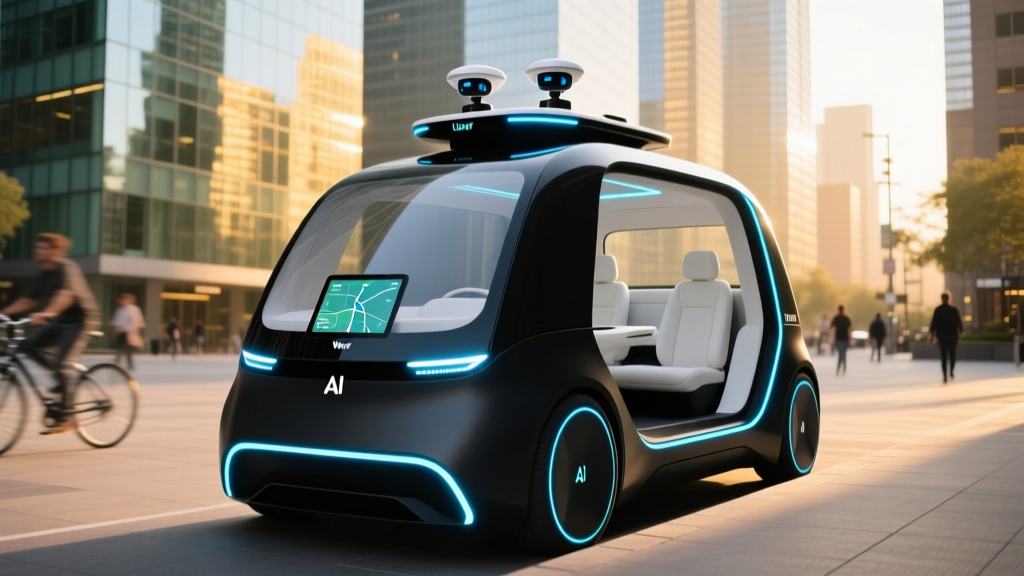
South Florida has become one of the most closely watched battlegrounds for autonomous vehicle deployment, and residents searching for driverless taxis in Fort Lauderdale are asking the right questions: Is the service actually live, how does it compare to Uber or Lyft, and is the technology safe enough to trust without a human behind the wheel?
As of early 2026, the robotaxi landscape in the Fort Lauderdale / Miami metro area is defined primarily by Waymo (Alphabet's autonomous driving subsidiary) and Cruise (backed by General Motors), both of which have been expanding their commercial footprints beyond early launch cities like Phoenix and San Francisco. But availability is not uniform across all neighborhoods, and understanding what "driverless" actually means — in regulatory, technical, and practical terms — is essential before you summon your first ride.
SAE Automation Levels: What "Driverless" Actually Means
The phrase "self-driving" gets thrown around loosely, but the Society of Automotive Engineers (SAE) defines six levels of driving automation, and the distinction matters enormously when you're deciding whether to get into a vehicle with no one in the driver's seat.
| Level | Name | Who Drives? | Example |
|---|---|---|---|
| 0 | No Automation | Human | Conventional car |
| 1 | Driver Assistance | Human (system assists steering OR speed) | Adaptive cruise control |
| 2 | Partial Automation | Human (must supervise at all times) | Tesla Autopilot, GM Super Cruise, Ford BlueCruise |
| 3 | Conditional Automation | System (in limited conditions; human must take over on request) | Mercedes DRIVE PILOT (approved in NV, CA) |
| 4 | High Automation | System (within geofenced area; no human needed) | Waymo One, Cruise, Zoox |
| 5 | Full Automation | System (everywhere, all conditions) | Does not yet exist commercially |
Consumer vehicles you can buy today — including those equipped with Tesla's Full Self-Driving (Supervised), GM's Super Cruise, or Ford's BlueCruise — are SAE Level 2 systems. The driver must remain attentive and is legally responsible for the vehicle at all times. These are driver-assist features, not autonomous vehicles.
Robotaxis like Waymo One operate at SAE Level 4: the vehicle handles all driving tasks within a defined operational design domain (a geofenced service area under certain conditions) with no human driver present or required. This is the critical distinction. When you hail a Waymo in a live service area, there is genuinely no one in the driver's seat.
Where Can You Use Driverless Taxis Near Fort Lauderdale?
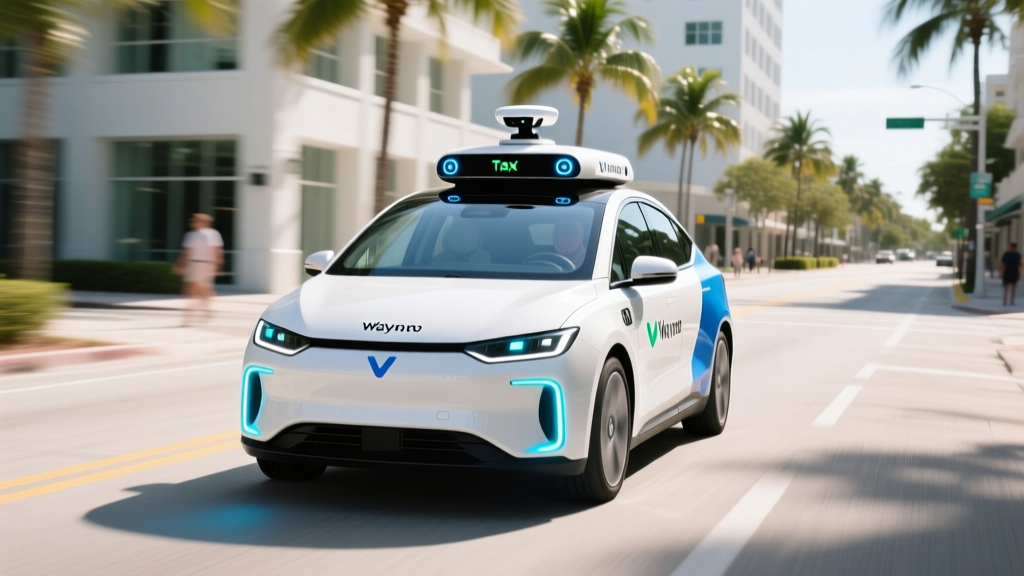
Waymo announced its expansion into the greater Miami metropolitan area — which encompasses Fort Lauderdale, Hollywood, and surrounding Broward County communities — as part of its multi-city rollout strategy. However, robotaxi service areas are defined by precise geofences, and availability does not blanket an entire metro the way Uber or Lyft does.
| Operator | Primary Launch Cities | South Florida Status (Early 2026) | Service Area Notes |
|---|---|---|---|
| Waymo One | Phoenix, San Francisco, Los Angeles, Austin | Miami metro expansion active; Fort Lauderdale coverage limited to initial zones | Geofenced; check Waymo app for exact boundary |
| Cruise | Phoenix, San Francisco (relaunch), Dallas, Houston | Miami-Fort Lauderdale corridor in phased rollout | Post-2024 safety reset; gradual city-by-city re-entry |
| Zoox (Amazon) | Las Vegas, Foster City CA | Not yet available in South Florida | Purpose-built vehicle; no steering wheel |
| Motional (Hyundai/Aptiv) | Las Vegas (limited) | Not available in South Florida | Ioniq 5-based platform; primarily ride-hail partnerships |
Practical reality for Fort Lauderdale residents: Waymo's initial South Florida geofence is expected to cover high-density commercial corridors and major arterials — think Las Olas Boulevard, the downtown Fort Lauderdale core, Fort Lauderdale-Hollywood International Airport (FLL) approaches, and key connectors toward Miami. Suburban residential streets in western Broward County, construction zones, and unmapped private roads will likely fall outside the service boundary during the initial deployment phase.
To check whether your exact pickup or drop-off location is within the current service area, open the Waymo app and enter your destination. The app will confirm availability in real time. If you're outside the geofence, the ride simply cannot be requested — there is no manual override.
How to Use a Robotaxi and What It Costs vs. Uber
Using a robotaxi is functionally similar to calling an Uber or Lyft, with a few important differences in the experience:
- Download the app — Waymo One is available on iOS and Android. You'll need to create an account, add a payment method, and agree to the rider terms.
- Enter pickup and drop-off — Both must be within the active geofence. The app will show you a walking path to the nearest approved pickup point if your exact location isn't accessible (e.g., inside a parking garage).
- Confirm and wait — Wait times in established markets like Phoenix average 5-8 minutes. Newer markets may see longer waits during initial rollout.
- Board the vehicle — The Waymo app lets you unlock the doors when the vehicle arrives. You'll see the vehicle's make (Jaguar I-PACE EV or newer Hyundai IONIQ 5-based platform), license plate, and a photo to confirm it's your ride.
- Start the ride — Once seated and belted, tap "Start Ride" on the rear-seat screen. The vehicle departs autonomously.
Pricing Comparison: Waymo vs. Rideshare
| Factor | Waymo One | UberX | Lyft Standard |
|---|---|---|---|
| Base fare | Comparable to UberX | Market rate | Market rate |
| Per-mile rate | ~$1.10–$1.50/mi | ~$1.00–$1.40/mi | ~$0.95–$1.35/mi |
| Surge pricing | Dynamic pricing applies, but generally less volatile than Uber surge | Can spike 2-4x during peak | Prime Time pricing |
| Tips | Not expected (no driver) | Expected (~15-20%) | Expected (~15-20%) |
| Estimated 5-mile trip (Fort Lauderdale) | $12–$18 | $14–$22 (before tip) | $13–$20 (before tip) |
| Airport trip (FLL to Las Olas, ~6 mi) | $15–$22 | $18–$28 + tip | $16–$25 + tip |
Bottom line on cost: Waymo's pricing is designed to be competitive with UberX and Lyft Standard — and when you factor in that no tip is expected, the total out-of-pocket cost for a robotaxi ride is often slightly lower than a comparable rideshare trip. However, robotaxis do not offer shared/carpool options, so for budget riders who would normally choose Uber Pool or Lyft Shared, the robotaxi may be more expensive.
Robotaxi Safety Record: What the Data Shows
Safety is the single most important question for prospective robotaxi riders, and the data — while still evolving — provides a clearer picture than marketing claims alone.
- Total autonomous miles driven: Over 40 million fully driverless miles across all markets (as reported by Waymo and tracked by NHTSA and state DMVs)
- Injury-causing crash rate: Waymo's published analysis claims a ~85% reduction in injury-causing crash rates compared to human benchmarks in comparable urban environments
- Contact rate: Waymo reports a ~57% reduction in any-contact crash rate vs. human drivers in the same operational areas
- Disengagement data: California DMV disengagement reports (required for testing permits) show improving miles-per-intervention year over year, though these reports cover testing, not commercial operations
Context matters. Waymo's safety comparison uses human-driver benchmarks from the same cities and road types where Waymo operates. Critics note that robotaxis currently operate in geofenced, relatively well-mapped urban areas and avoid the most dangerous scenarios (unpaved roads, extreme weather, highway-speed merges in some markets). The comparison is not apples-to-apples with the full spectrum of human driving, which includes rural highways, construction zones, and severe weather.
The Cruise incident in San Francisco in late 2023 — where a pedestrian was struck by a human-driven vehicle and then dragged under a Cruise robotaxi — led to a statewide suspension and a fundamental reset of Cruise's operations. Cruise has since relaunched with human safety drivers in select cities before transitioning back to driverless service, a process that continues into 2026. This incident underscores that robotaxi safety is not a solved problem; it is a continuously managed one.
For the most current safety and incident data, consult the NHTSA Automated Vehicles page and your state's DMV disengagement reports (California, Arizona, and others publish these annually).
Technology Stack: How Waymo and Cruise Actually See the Road
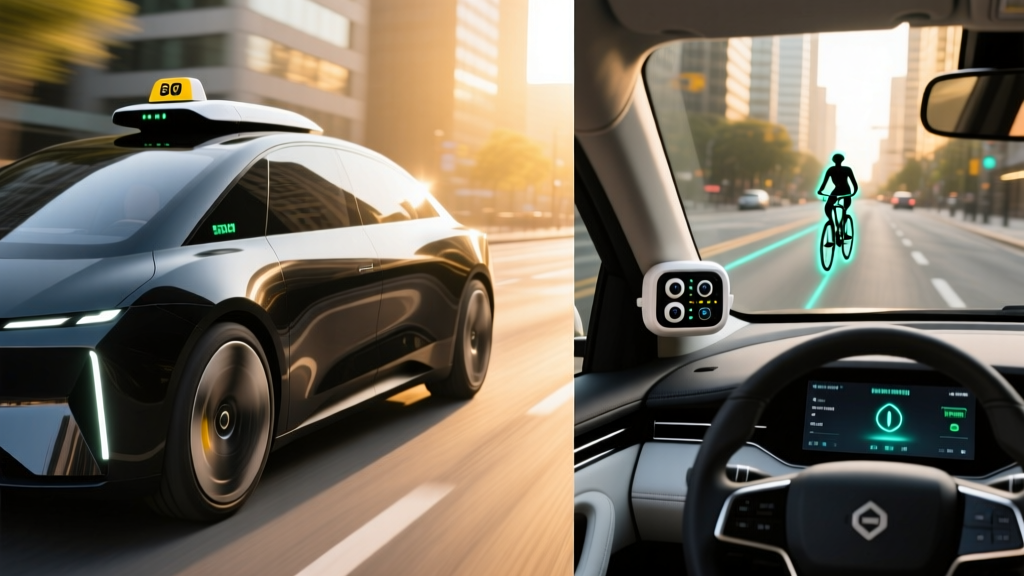
Understanding what's on the roof and under the hood of a robotaxi helps explain both its capabilities and its limitations.
| Sensor Type | Function | Specs / Notes |
|---|---|---|
| LiDAR (custom) | 3D point-cloud mapping of surroundings; object detection and distance measurement | Multiple units; ~200m+ range; operates in darkness |
| Cameras | Visual object classification, traffic-light state detection, lane markings, signage | High-resolution; multiple focal lengths; 360° coverage |
| Radar | Velocity measurement of moving objects; redundancy in poor visibility | Works through rain, fog, dust better than LiDAR/camera |
| HD Maps | Pre-mapped centimeter-accurate road geometry, lane topology, traffic rules | Requires pre-mapping of every route within geofence |
| Compute | Real-time sensor fusion, path planning, prediction of other agents' behavior | Custom hardware; redundant systems |
Waymo uses a multi-sensor approach — LiDAR, cameras, and radar working in concert — which provides redundancy. If one sensor type is degraded (e.g., cameras blinded by direct sun glare), LiDAR and radar continue to function. This is fundamentally different from Tesla's camera-only ("Tesla Vision") approach used in its consumer FSD system.
Geofencing is the other half of the equation. Waymo does not attempt to drive everywhere. Every road within its service area is pre-mapped at centimeter-level precision, and the system knows the speed limits, lane configurations, traffic signal locations, and construction-zone updates before it ever navigates them. If a road is not in the HD map, the vehicle will not drive on it. This is why you cannot request a Waymo ride to an unmapped suburban cul-de-sac — it simply isn't in the operational design domain.
Regulatory Landscape: Who Approves Robotaxi Operations?
Autonomous vehicle regulation in the United States is a patchwork of federal, state, and local authority, and understanding who permits robotaxi service in Fort Lauderdale requires navigating all three layers.
Federal (NHTSA / DOT): The National Highway Traffic Safety Administration sets vehicle safety standards (FMVSS) but has not yet issued comprehensive federal regulations specifically for Level 4 robotaxis. NHTSA does require crash reporting for ADS-equipped vehicles via its Standing General Order, which mandates that operators report certain crashes within 24 hours. You can review these reports at nhtsa.gov.
State (Florida): Florida is one of the most permissive states for autonomous vehicle testing and deployment. Florida Statute § 316.86 authorizes the operation of fully autonomous vehicles on public roads without a human driver present, provided the vehicle is properly registered and insured. Unlike California (where the CPUC and DMV both regulate commercial robotaxi service), Florida's framework is comparatively streamlined, which is one reason operators are prioritizing South Florida for expansion.
Local (Broward County / City of Fort Lauderdale): Municipalities may impose additional requirements around pickup/drop-off zones, airport access (FLL is governed by Broward County Aviation Department rules), and traffic management. Airport access for robotaxis typically requires separate agreements with the aviation authority, which can delay availability at terminals even when street-level service is live.
Current Limitations: Where Robotaxis Cannot (Yet) Go
- Heavy rain and tropical storms: South Florida's frequent downpours degrade LiDAR and camera performance. Waymo vehicles may pull over, refuse to start a ride, or limit speed during heavy precipitation.
- Unmapped areas: If a road is outside the HD-mapped geofence, the service is unavailable — period. This includes new construction zones, recently modified intersections, and private roads.
- Highway driving (in some markets): While Waymo has begun highway-capable operations in Phoenix (I-10 freeway segments), not all markets support highway-speed autonomous driving. Check local capabilities.
- Complex unprompted stops: Asking the vehicle to "stop at the drive-through" or "pull into that gas station" is not supported. Pickups and drop-offs must occur at pre-approved locations.
- Pets and unaccompanied minors: Waymo requires riders to be 18+. Unaccompanied minors and loose pets are not permitted (service animals are allowed).
- Multi-stop trips: Current Waymo One service is point-A to point-B only. Adding a stop mid-route is not supported.
- Accessibility gaps: While Waymo vehicles include wheelchair-accessible features in some markets, availability of WAV (wheelchair-accessible vehicle) robotaxis is limited and not guaranteed at all times.
Fort Lauderdale's unique environment introduces specific challenges. The city's dense network of canals, drawbridges (which change road topology when open), seasonal tourist congestion, and frequent road construction along corridors like Federal Highway (US-1) all create edge cases that autonomous systems must handle conservatively. In practice, this means the Waymo may take a longer, more predictable route rather than the shortcut a human driver would choose.
Is This Truly Self-Driving or Just Advanced Driver-Assist?
This is the question that generates the most confusion, and the answer depends entirely on which vehicle you're talking about.
Waymo One and Cruise robotaxis are genuinely driverless (SAE Level 4) within their geofenced service areas. There is no human in the driver's seat, no steering wheel accessible to the passenger, and no expectation that you will take over driving. A remote support team monitors the fleet and can provide high-level guidance (e.g., rerouting around a blocked road), but the vehicle executes all driving maneuvers autonomously.
Tesla FSD (Supervised), GM Super Cruise, Ford BlueCruise, and similar consumer systems are SAE Level 2 driver-assist. They can handle steering, acceleration, and braking on highways and in some city streets, but a licensed driver must be in the driver's seat, must remain attentive (eyes on the road or hands on the wheel, depending on the system), and is legally responsible for the vehicle's operation at all times. Calling these systems "self-driving" is inaccurate and potentially dangerous.
If you are riding in a Waymo in Fort Lauderdale and there is no one in the driver's seat, you are in a Level 4 autonomous vehicle. If you are in your own Tesla with FSD engaged, you are driving a car with Level 2 assistance — and you are still the driver.
Frequently Asked Questions
Can I hail a driverless taxi from Fort Lauderdale-Hollywood International Airport (FLL)?
Airport access depends on agreements between the robotaxi operator and Broward County Aviation. In established markets like Phoenix Sky Harbor, Waymo has airport pickup/drop-off capability, but new markets often lag behind street-level service availability. Check the Waymo app for FLL availability — if it's not yet enabled, you'll need to take a rideshare or taxi to a location within the geofence.
How much does a Waymo ride cost compared to Uber in Fort Lauderdale?
Based on pricing in established markets, a typical 5-mile Waymo trip costs $12–$18, which is comparable to or slightly less than UberX ($14–$22 before tip). The absence of a tip expectation often makes Waymo the cheaper option for equivalent trips, though surge/dynamic pricing can narrow the gap during peak demand.
Are robotaxis safe in heavy South Florida rain?
Heavy rain degrades sensor performance across LiDAR, cameras, and radar to varying degrees. Waymo's system is designed to handle light to moderate rain, but during severe downpours or tropical storm conditions, the vehicle may reduce speed, delay departure, or refuse to initiate a ride. This is a conservative safety measure, not a malfunction.
What happens if a robotaxi gets into an accident?
Waymo vehicles carry commercial insurance, and the company assumes liability for incidents caused by its autonomous system. In the event of a collision, the vehicle is designed to pull over safely, contact emergency services if needed, and connect riders with Waymo support. Crash data is reported to NHTSA under the Standing General Order for ADS-equipped vehicles.
Can I use a robotaxi outside the Fort Lauderdale geofence, like driving to West Palm Beach?
No. Robotaxi service is limited to the pre-mapped geofence. If your destination falls outside the service area boundary, the app will not allow you to request the ride. Inter-city trips beyond the current operational zone are not possible.
Do Waymo vehicles use electric powertrains?
Yes. Waymo's current fleet primarily uses the Jaguar I-PACE, a fully electric SUV with a 90 kWh battery and an EPA-estimated 234 miles of range. Newer deployments are incorporating the Hyundai IONIQ 5 platform, which offers up to 303 miles of EPA range (Long Range RWD) and supports DC fast charging at up to 240 kW (10–80% in approximately 18 minutes on a capable charger). Both platforms produce zero tailpipe emissions during operation.