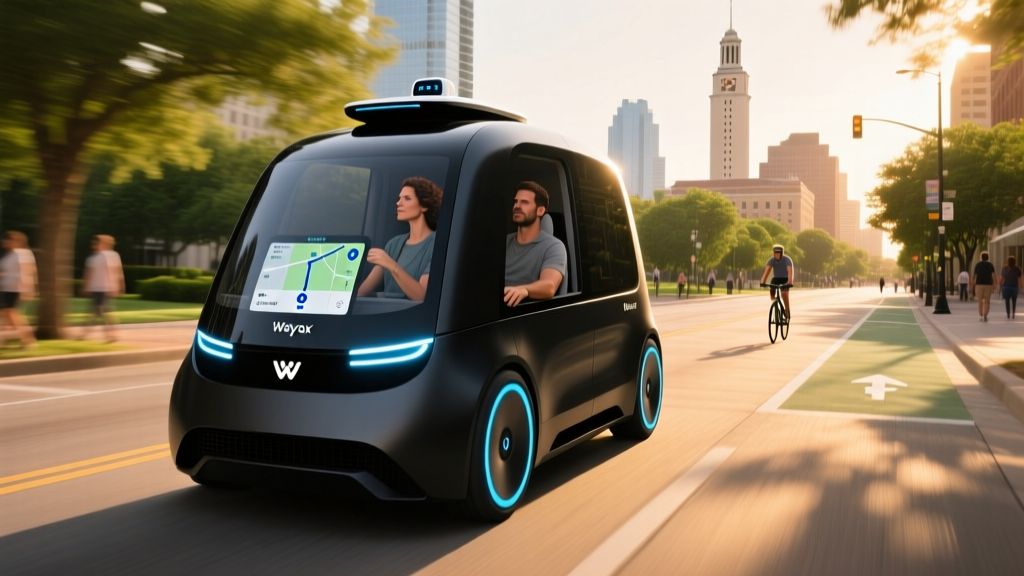
Robotaxis have moved past the pilot phase. As of early 2026, a handful of companies operate fully driverless commercial ride-hail services—no human behind the wheel, no safety driver in the front seat—across select U.S. metro areas. But the map of where you can actually summon one is far smaller than the headlines suggest, and the technology has hard boundaries that matter if you're considering replacing your next Uber with an autonomous ride.
This guide breaks down every current fully driverless robotaxi service available to the public in 2026, with real operational boundaries, pricing data, safety records, and the regulatory framework that determines whether a driverless car can legally pick you up in your city.
SAE Automation Levels: Why "Self-Driving" Needs a Precise Label
The single most important distinction in autonomous vehicles is the gap between SAE Level 2 driver-assistance and SAE Level 4 driverless operation. Consumer vehicles like those equipped with Tesla Autopilot, Ford BlueCruise, or GM Super Cruise are Level 2 systems: they can steer, accelerate, and brake under certain conditions, but the human driver must remain engaged and ready to take over at any moment. Calling these "self-driving" is technically incorrect and practically dangerous.
Robotaxis from Waymo, Zoox, and Baidu Apollo operate at SAE Level 4—high automation within a defined operational design domain (ODD). There is no human driver. The system handles all driving tasks within its geofenced service area, and if it encounters a situation it cannot handle, it performs a minimal-risk maneuver (pulling over safely) rather than handing control to a passenger.
| SAE Level | Who Drives? | Examples | Geofenced? |
|---|---|---|---|
| Level 2 | Human (system assists) | Tesla Autopilot/FSD Supervised, BlueCruise, Super Cruise | No — but driver must monitor |
| Level 3 | System (in narrow conditions, human on standby) | Mercedes Drive Pilot (limited markets, ≤40 mph) | Yes — specific highways only |
| Level 4 | System (no human driver needed) | Waymo, Zoox, Baidu Apollo, Pony.ai (select markets) | Yes — mapped service areas |
| Level 5 | System (everywhere, all conditions) | None in commercial operation | No |
No Level 5 system exists in commercial service anywhere in the world. Every operational robotaxi is Level 4, meaning it works within a carefully mapped and monitored zone under defined conditions. Leave that zone, and the ride cannot start.
Where Can I Use a Driverless Robotaxi Right Now?
The footprint of driverless service is expanding but remains concentrated in a handful of Sun Belt and West Coast metros. Below is the operational map as of Q1 2026, based on publicly confirmed commercial service areas.
| Service | Live Driverless Cities (2026) | Operating Hours | Approximate Service Area |
|---|---|---|---|
| Waymo One | Phoenix (metro), San Francisco, Los Angeles, Austin (ramp-up) | 24/7 in Phoenix & SF; limited overnight in LA | Hundreds of sq mi per metro, expanding |
| Zoox | Las Vegas (Strip corridor + surrounding), Foster City, CA (limited) | Daytime/early evening | Tightly geofenced corridors |
| Baidu Apollo (Apollo Go) | Wuhan, Beijing, Chongqing, Shenzhen (China) | Varies by city | Large urban zones |
| Pony.ai | Beijing (Yizhuang), Guangzhou, Shenzhen (select zones) | Varies | District-level geofences |
Key takeaway: In the United States, Waymo One is the only service operating fully driverless rides at meaningful scale across multiple major metros. Zoox has a narrower footprint. If you live outside Phoenix, San Francisco, Los Angeles, or Austin, you cannot currently hail a driverless robotaxi in the U.S.
Several companies—Cruise (under GM), Motional (Hyundai/Aptiv joint venture), and Aurora—have announced plans to resume or launch driverless service, but as of early 2026, none offer fully driverless commercial rides to the general public. Cruise suspended operations in late 2023 following a serious pedestrian incident in San Francisco and has been slowly returning to roads with safety drivers before pursuing driverless re-launch.
Pricing: Robotaxi vs. Uber and Lyft
Robotaxi pricing is designed to compete directly with conventional rideshare, and in some markets, introductory subsidies make it cheaper. Here's how the economics stack up based on publicly reported fare data and rider reports through 2025-2026.
| Metric | Waymo One | UberX (same market avg.) | Lyft (same market avg.) |
|---|---|---|---|
| Base fare (5-mile trip, non-surge) | $10–$15 | $12–$18 | $11–$17 |
| Per-mile rate | $1.10–$1.50 | $1.00–$1.40 | $0.95–$1.35 |
| Surge pricing? | Dynamic pricing exists but less volatile | Frequent surge multipliers | Prime Time surges common |
| Tipping | Not expected (no driver) | Expected ($2–$5+) | Expected ($2–$5+) |
| Average total (5-mi trip, non-surge) | $15–$20 | $16–$24 (with tip) | $15–$22 (with tip) |
Waymo has offered promotional pricing and credits in newer markets to build ridership. Once subsidies recede, the expectation is that robotaxi fares will track closely with rideshare—but without the tip, the effective cost to the rider can be lower. Over time, the unit economics of driverless operation (no driver pay, which represents roughly 60-70% of a rideshare fare) could push prices down, though fleet maintenance, remote-assistance staffing, and sensor costs offset some of that advantage.
Zoox's pricing model has been less transparent, as its initial deployments have been invitation-based or promotional. The purpose-built Zoox vehicle (a carriage-style, bidirectional pod with no steering wheel) is not yet deployed at scale for general public hailing.
Safety Data: What the Numbers Actually Show
Safety is the most scrutinized—and most politicized—aspect of robotaxi operations. Here's what the verifiable data shows, sourced from regulatory filings and company disclosures.
Waymo Safety Record (through late 2025)
- Total autonomous miles driven: Over 30 million fully driverless miles (cumulative, all markets)
- Contact rate: Waymo's own analysis, validated by third-party researchers, claims a 57% reduction in police-reported crash rates compared to human benchmarks in comparable urban environments
- Serious incidents: Minor contact incidents (scrapes, low-speed bumps) have occurred; no confirmed driverless-at-fault pedestrian fatalities as of early 2026
- Regulatory actions: NHTSA opened investigations into certain Waymo incidents but has not issued an operational suspension
For context, the Cruise suspension in October 2023 stemmed from a specific incident in San Francisco where a Cruise vehicle struck and then dragged a pedestrian who had been thrown into its path by a human-driven car. The issue was not the initial collision (which any vehicle would have struggled to avoid) but the post-impact behavior—the vehicle pulled over but did not detect the pedestrian beneath it. That incident illustrates the edge-case challenge: robotaxis handle the vast majority of normal driving scenarios well, but rare, complex situations remain the frontier of development.
The National Highway Traffic Safety Administration (NHTSA) maintains standing general orders requiring crash reporting for all Level 2+ and Level 3-5 equipped vehicles. This data is the most reliable public source for comparing autonomous vs. human crash involvement, though it requires careful interpretation—robotaxis drive in dense urban environments where low-speed contact is more common, while human drivers rack up highway fatalities at vastly higher rates.
Per mile driven, Level 4 robotaxis in their operational zones show lower rates of serious injury crashes than the human average in the same urban environments. But the sample size—tens of millions of miles—is still small compared to the trillions of miles humans drive annually, and robotaxis have not been tested at scale in severe weather, rural roads, or construction-heavy detour scenarios.
How Robotaxis Actually Work: The Technology Stack
Understanding what's on the roof and under the hood of a robotaxi helps explain both its capabilities and its limitations.
Sensor Suite (Waymo 6th-Generation Driver)
- LiDAR: Multiple roof- and body-mounted units providing 360° 3D point-cloud mapping to ~500 meters. LiDAR works independently of ambient light and is critical for precise distance measurement.
- Cameras: High-resolution array covering 360° for object classification (pedestrian vs. cyclist vs. cone), traffic-light state detection, and lane marking recognition.
- Radar: Forward- and side-facing units for velocity detection of moving objects, particularly in rain or fog where camera and LiDAR performance degrade.
- Audio sensors: External microphones to detect sirens from emergency vehicles.
Camera-Only vs. Multi-Sensor: Why It Matters
Tesla's consumer FSD (Supervised) system uses a camera-only ("Tesla Vision") approach—no LiDAR, no radar. This is a fundamentally different engineering bet. Every current commercial driverless robotaxi (Waymo, Zoox, Baidu, Pony.ai) uses a multi-sensor stack with LiDAR as a core component. The redundancy of independent sensor modalities is considered essential for Level 4 unmanned operation by every company currently operating without a safety driver.
Geofencing and HD Maps
Robotaxis do not navigate using consumer GPS alone. They rely on centimeter-precision HD maps that encode lane geometry, curb heights, traffic signal positions, speed limits, and known construction zones. The vehicle localizes itself within this map using LiDAR and inertial measurement. If the map is outdated (new construction, road closure), the vehicle may refuse to proceed or route around the discrepancy. This is why robotaxis cannot simply be deployed to a new city overnight—each square mile must be mapped, validated, and approved.
Regulatory Landscape: Who Decides Where Robotaxis Can Drive?
Robotaxi deployment in the U.S. is governed by a patchwork of state and local regulations, not a single federal framework.
- State-level approval: States like California (via the California Public Utilities Commission (CPUC) and DMV), Arizona, and Texas have created permitting frameworks for driverless commercial service. Other states have no framework, effectively blocking deployment.
- Local coordination: Even with state approval, cities negotiate operational terms—service hours, geographic boundaries, data-sharing requirements, and first-responder protocols.
- Federal role: NHTSA sets vehicle safety standards (FMVSS) but has not yet created a comprehensive regulatory framework for driverless vehicles at the federal level. The agency can investigate and order recalls but does not "approve" robotaxi services—that's a state function.
- Vehicle certification: Purpose-built robotaxis like the Zoox vehicle have received limited FMVSS exemptions from NHTSA because they lack traditional controls (steering wheel, pedals, mirrors). Standard vehicles retrofitted for autonomy (like Waymo's Jaguar I-PACE fleet) meet existing FMVSS as production vehicles.
This state-by-state approach means a service legal in Phoenix may have no pathway to operate in, say, Boston or Chicago under current law. Expansion is as much a regulatory challenge as a technical one.
Current Limitations: What Robotaxis Cannot Do
For all the miles logged, Level 4 robotaxis have well-defined boundaries. These are not edge cases—they're daily realities that determine whether the service is useful for your specific trip.
- Geofence boundaries: You cannot hail a Waymo to a destination outside the mapped service area. Airport service, where available, was added incrementally and requires specific mapping and regulatory approval.
- Weather constraints: Heavy rain, fog, snow, and ice degrade sensor performance. Waymo operates in Phoenix (dry heat) and San Francisco (fog, mild rain) but has limited or no capability in snow or severe thunderstorm conditions. No robotaxi service currently operates in a city with regular winter snowfall at Level 4.
- Construction zones: Unmapped lane shifts, temporary barriers, and flaggers directing traffic are among the hardest scenarios for autonomous systems. Vehicles may reroute or, in some cases, pause and request remote assistance.
- Unusual road users: Horses, oversized loads, funeral processions, protest marches—any scenario outside the training distribution can cause the system to stop and wait. This is safe but can mean long trip delays.
- Passenger assistance: There is no driver to help with luggage, child seats, wheelchair loading, or navigation of a confusing drop-off point. Accessibility remains a significant gap, though Waymo has begun ADA-compliant vehicle pilots.
- Remote assistance: When the vehicle encounters an ambiguous situation, a remote human operator can provide guidance (not remote driving, but high-level directional input). This introduces latency and is not a substitute for an in-vehicle driver in truly dynamic scenarios.
How to Actually Hail a Robotaxi: Step-by-Step
- Download the app: Waymo One is available on iOS and Android. You must be in a supported metro area.
- Create an account: Requires a valid payment method and phone number. Some markets initially required an invitation code, but Waymo One is now open to the general public in Phoenix, San Francisco, and Los Angeles.
- Enter your pickup and drop-off: Both must fall within the geofenced service area. The app will tell you immediately if either address is outside the zone.
- Confirm and wait: Typical wait times are 3-8 minutes in well-covered areas, comparable to Uber/Lyft. The vehicle arrives without a driver.
- Board: Unlock the doors via the app (or by tapping a button on the vehicle's exterior screen). Fasten your seatbelt—the ride will not begin until all passengers are buckled.
- Ride: An in-vehicle screen shows the route and provides a "pull over" or "contact support" button. You can share your trip with a contact in real time.
- Exit: The vehicle will stop at a safe drop-off point (not always the exact address if the curb is obstructed). Check for belongings—there's no driver to check the back seat after you leave.
Frequently Asked Questions
Is this truly self-driving or just driver-assist?
Waymo, Zoox, and Baidu Apollo robotaxis are SAE Level 4—fully driverless within their geofenced zones. There is no human in the vehicle. This is fundamentally different from Tesla FSD (Supervised), Ford BlueCruise, or GM Super Cruise, which are SAE Level 2 driver-assist systems requiring an engaged human driver at all times.
How much does a robotaxi ride cost compared to Uber or Lyft?
For a typical 5-mile urban trip without surge pricing, Waymo One fares run $15–$20, which is competitive with or slightly below UberX/Lyft in the same market once you factor in that no tip is expected. During peak rideshare surge events, robotaxi pricing has been more stable, though Waymo does use dynamic pricing of its own.
Where can I use a driverless robotaxi service right now?
In the U.S.: Phoenix, San Francisco, Los Angeles (Waymo One), and Las Vegas (Zoox, limited corridor). Austin is in early ramp-up with Waymo. In China: Wuhan, Beijing, Shenzhen, Chongqing, and Guangzhou have Baidu Apollo Go or Pony.ai services. No other U.S. cities have confirmed, publicly available fully driverless service as of early 2026.
How safe are robotaxis—what does the real data show?
Waymo reports over 30 million fully driverless miles with lower police-reported crash rates than human benchmarks in comparable urban environments, per NHTSA standing general order data and company disclosures. However, the sample size is still small relative to total human driving, and robotaxis have not been tested at scale in severe weather or complex rural scenarios. The Cruise pedestrian incident in 2023 showed that edge cases—particularly post-collision behavior—remain a development frontier.
What are the current limitations of robotaxi service?
Geofenced service areas (you can't go outside the zone), weather restrictions (no snow or heavy-rain operation), construction-zone handling challenges, no passenger assistance (luggage, wheelchairs, child seats), and reliance on HD maps that must be continuously updated. These are not theoretical—they determine whether the service is practical for your daily needs.
Can I use a robotaxi to get to the airport?
It depends on the market. Waymo has added airport service to Phoenix Sky Harbor and San Francisco International (SFO) after specific mapping and regulatory approvals. Not all airports in robotaxi metros are covered. Check the app for your specific airport before planning a trip.
Will robotaxis come to my city soon?
Expansion depends on three factors: HD mapping of the service area, state/local regulatory approval, and fleet deployment. Cities with favorable regulatory environments (Arizona, Texas) have seen faster rollout. Cities without autonomous vehicle frameworks may be years away. No company has announced a nationwide deployment timeline.
The robotaxi reality in 2026 is one of genuine but geographically constrained progress. If you live in Phoenix or San Francisco, a driverless ride is a mundane, daily-available option that costs about the same as an Uber. If you live almost anywhere else, it remains a technology you can read about but not yet use. The pace of expansion will be determined less by sensor breakthroughs and more by regulatory decisions, city-by-city mapping efforts, and the industry's ability to demonstrate safety at increasingly larger scale.