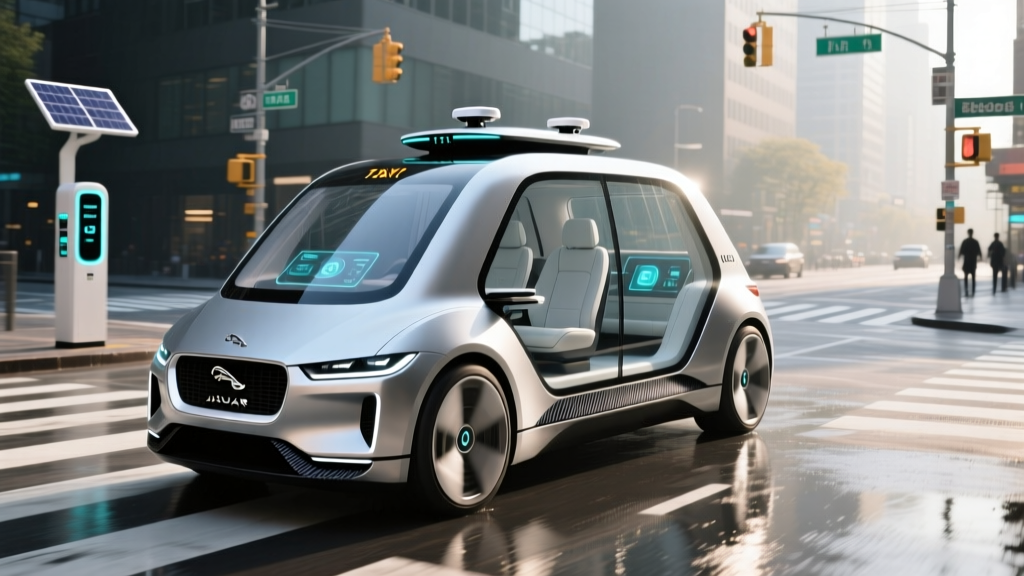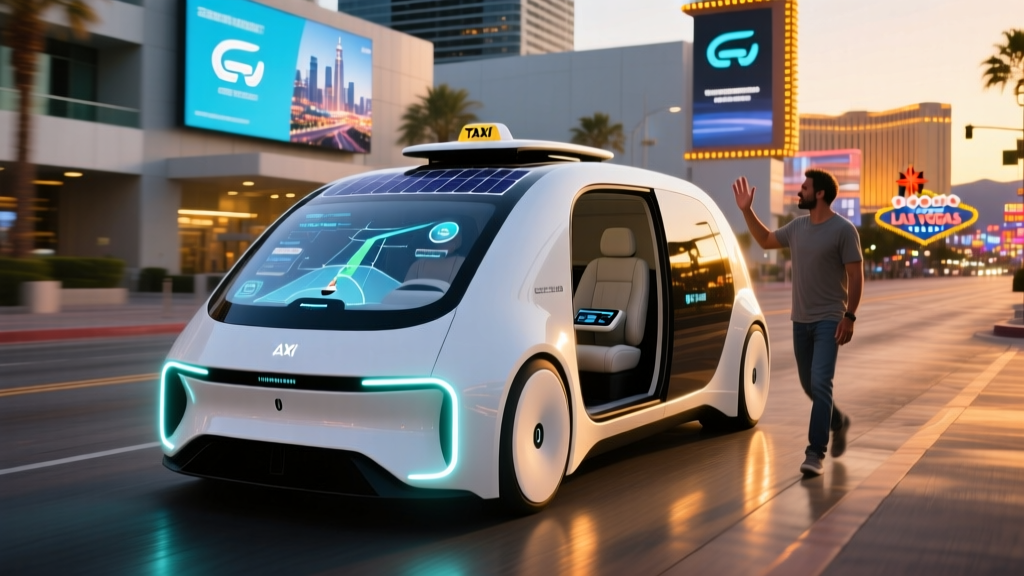
Las Vegas has become one of the most important proving grounds for autonomous mobility in the United States. With its wide boulevards, predictable grid layout, and massive tourist demand, the city now hosts multiple Level 4 robotaxi operators. If you've been searching for a driverless car in Vegas, you have real options — but the services are geofenced, priced differently than Uber, and carry important limitations you should understand before hailing a ride.
This guide breaks down exactly which driverless services operate in Las Vegas right now, how to use them, what they cost versus traditional rideshare, and what the safety and technology data actually shows.
What Level of Autonomy Are Vegas Robotaxis?
Before we map out the services, it's critical to distinguish between the driver-assist features in your personal EV and the robotaxis operating on the Strip and surrounding areas. They are fundamentally different categories of automation.
| SAE Level | Name | Who Drives? | Example |
|---|---|---|---|
| Level 0 | No Automation | Human does everything | Basic cruise control |
| Level 1 | Driver Assistance | Human + one assist feature (steering OR speed) | Adaptive cruise control |
| Level 2 | Partial Automation | Human supervises; system handles steering AND speed | Tesla Autopilot, GM Super Cruise, Ford BlueCruise |
| Level 3 | Conditional Automation | System drives in specific conditions; human must take over on request | Mercedes Drive Pilot (limited markets) |
| Level 4 | High Automation | System drives fully within its operational design domain; no human needed | Waymo One, Zoox |
| Level 5 | Full Automation | System drives everywhere, all conditions | Does not exist commercially |
Where Can I Ride a Driverless Car in Vegas Right Now?
As of early 2026, two major robotaxi services operate in the Las Vegas area, each with distinct service zones and vehicle platforms.
| Operator | Vehicle | Service Zone | Hours | How to Hail |
|---|---|---|---|---|
| Waymo One | Jaguar I-PACE (5th-gen sensor suite) | Las Vegas Strip corridor, Harry Reid Airport, downtown Las Vegas, parts of Henderson | 24/7 | Waymo app (iOS/Android) |
| Zoox | Zoox purpose-built vehicle (no steering wheel) | Las Vegas Strip, select resort areas, initial suburban zones expanding | Limited hours (typically 8 AM–midnight) | Zoox app (invite/waitlist in some zones) |
Waymo One launched its Las Vegas commercial service after an extensive testing period and now covers the highest-demand areas including the Strip from Mandalay Bay to the Strat, the convention center district, and Harry Reid International Airport (Waymo service areas). The service operates around the clock, which is a significant advantage for late-night airport runs or early-morning flights.
Zoox, the Amazon-backed autonomous vehicle company, runs its distinctive bidirectional, steering-wheel-free vehicle on and around the Strip. Zoox's Las Vegas presence has grown from a pilot program into a broader commercial service, though availability may still require app access through a waitlist in some zones. Zoox's purpose-built vehicle is notable because it was designed from the ground up as a robotaxi — not a modified consumer car.
How to Hail a Driverless Car: Step by Step
The process is nearly identical to calling an Uber or Lyft, with a few autonomous-specific differences:
- Download the app — Waymo One or Zoox, depending on which service covers your pickup location.
- Enter your destination — The app will confirm whether both your pickup and drop-off fall within the geofenced service area. If either point is outside the zone, the ride cannot be completed.
- Confirm your ride — You'll see an estimated fare upfront (Waymo) or confirm a free/promotional ride (Zoox, depending on current pricing phase).
- Meet the vehicle — The app shows the car's location in real time. When it arrives, you'll confirm the vehicle by matching the license plate or a code displayed on the vehicle's exterior screen.
- Start the ride — Once you're buckled, tap "Start Ride" in the app. The vehicle pulls away with no one in the driver's seat.
- In-ride controls — Both Waymo and Zoox provide in-vehicle screens showing the route, plus options to adjust music, climate, and make stops. A "pull over" or "help" button is always accessible.
Robotaxi Pricing vs. Uber and Lyft in Las Vegas
One of the most common questions from first-time robotaxi riders: how does the cost compare to traditional rideshare? Here's a realistic pricing breakdown for common Vegas routes based on observed fares.
| Route | Distance | Waymo One | UberX | Lyft Standard |
|---|---|---|---|---|
| Harry Reid Airport → Bellagio | ~3.5 mi | $14–$19 | $15–$22 | $14–$20 |
| Mandalay Bay → Convention Center | ~2.8 mi | $11–$16 | $12–$18 | $11–$17 |
| The Strat → Downtown (Fremont St) | ~3.0 mi | $12–$17 | $13–$19 | $12–$18 |
| Wynn → Henderson (Green Valley) | ~12 mi | $28–$38 | $30–$42 | $28–$40 |
Key takeaways on pricing:
- Waymo One pricing is generally competitive with or slightly below UberX and Lyft Standard for equivalent routes, particularly during non-surge periods.
- Waymo does not implement surge pricing in the same aggressive manner as Uber/Lyft. During peak demand, Waymo may extend wait times rather than spike fares dramatically.
- Zoox has historically offered free or heavily subsidized rides during its commercial rollout phases. Check the Zoox app for current pricing in your area — this may change as the service matures.
- Neither Waymo nor Zoox charges a separate "autonomous vehicle fee." The fare you see is the fare you pay.
- Tipping is available in-app but not expected in the same way as human-driven rideshare.
How Safe Are Driverless Cars in Vegas? The Real Data
Safety is the number-one concern for prospective robotaxi riders, and it deserves a data-driven answer rather than marketing reassurance. Here's what we know from public filings and regulatory reports.
- Total autonomous miles driven: Over 30 million fully driverless miles (cumulative, all markets)
- Injury-causing crash rate: Approximately 85% lower than human benchmark in comparable urban driving, per NHTSA-aligned analysis published by Waymo and independent researchers
- Contactless disengagements: Waymo vehicles are designed to pull over safely (a "minimal risk condition") if the system encounters a scenario it cannot handle — not to swerve or stop abruptly in traffic
- Property-damage-only incidents: Occasional low-speed contact events, typically in parking lots or during complex construction-zone navigation
Context matters. Robotaxis in Las Vegas operate primarily on well-mapped, wide, multi-lane roads with clear lane markings — conditions that play to the strengths of current autonomous driving technology. The Strip's predictable grid and heavy pedestrian infrastructure (crosswalks, signals) create a more structured environment than, say, a rural mountain road.
However, robotaxis are not infallible. Publicly reported incidents across the industry have included:
- Vehicles stopping unexpectedly in travel lanes when encountering unmapped construction zones
- Difficulty navigating around double-parked vehicles or emergency vehicles with non-standard light patterns
- Occasional curb contact during complex pull-over maneuvers
The National Highway Traffic Safety Administration (NHTSA) requires all ADS-equipped vehicles involved in crashes to be reported under Standing General Order 2021-01. This data is publicly accessible and is the most reliable source for tracking robotaxi safety trends over time.
The Technology Under the Hood: How Vegas Robotaxis See the Road
The two dominant robotaxi platforms in Las Vegas use different but overlapping technology approaches. Understanding the sensor stack helps explain both their capabilities and their limitations.
- LiDAR: Custom-built "Laser Bear Honeycomb" units with 360° coverage and ~500-meter range, providing precise 3D point-cloud mapping
- Cameras: 29 high-resolution cameras covering 360° for object classification, traffic-light reading, and lane detection
- Radar: 6 radar units for velocity detection and performance in rain/fog where cameras and LiDAR degrade
- External audio receivers: Detect sirens from emergency vehicles before they're visible
- HD maps: Pre-built centimeter-accurate maps of every road in the service zone, updated continuously
- LiDAR, cameras, and radar with redundant fields of view — every critical zone is covered by at least two sensor types
- Symmetric vehicle design: The vehicle can drive equally well in either direction, eliminating blind spots from a traditional "front-facing" layout
- Four-wheel steering: Enables tighter turns and crab-like lateral movements for complex urban navigation
- No steering wheel or pedals: The vehicle was designed exclusively for Level 4 operation — there is no manual override
LiDAR vs. camera-only debate: Both Waymo and Zoox rely on LiDAR as a core sensor, unlike Tesla's camera-only approach for its consumer FSD system. LiDAR provides direct depth measurement independent of lighting conditions, which is particularly valuable at night on the Strip where neon signs, LED billboards, and variable lighting create challenging visual environments for cameras alone. The redundancy of LiDAR + camera + radar is considered industry best practice for Level 4 driverless operations.
Who Regulates Driverless Cars in Las Vegas?
Autonomous vehicle operations in Nevada sit under a layered regulatory framework:
- Federal (NHTSA): Sets vehicle safety standards (FMVSS). NHTSA can issue exemptions for vehicles without steering wheels (as it has for the Zoox vehicle) and mandates crash reporting for all ADS-equipped vehicles.
- State of Nevada (Nevada DMV / Nevada Legislative Counsel Bureau): Nevada was one of the first states to authorize autonomous vehicle testing (AB 511, 2011) and has since expanded to commercial deployment. Operators must obtain a state-issued autonomous vehicle license, carry minimum insurance ($5 million for commercial robotaxi operations), and submit annual safety reports.
- Local (City of Las Vegas / Clark County): Local jurisdictions control permitting for curb pickup/drop-off zones, traffic-signal integration, and coordination with first responders. Las Vegas has been notably accommodating to robotaxi operators given the tourism-economy incentive.
The Nevada DMV maintains the list of licensed autonomous vehicle operators. Both Waymo and Zoox hold active commercial deployment licenses in the state.
Current Limitations: What Driverless Cars in Vegas Cannot Do
Robotaxis are impressive within their operational design domain (ODD), but they have real, specific limitations that riders should understand before booking.
- Geofence boundaries: You cannot hail a ride to areas outside the mapped service zone. Red Rock Canyon, Lake Mead, and most suburban residential areas remain unserved.
- Heavy rain and dust storms: While Waymo's sensor suite handles light rain, severe monsoon conditions and haboobs (dust storms common in summer) can degrade LiDAR and camera performance. Services may pause operations during these events.
- Construction zones: Major, unmapped road construction can cause the vehicle to stop and request remote assistance. Expect longer trip times or rerouting in active construction areas.
- Highway driving: Most Vegas robotaxi geofences include limited highway segments (e.g., portions of I-15 near the Strip), but extended highway trips to other cities are not available.
- Accessibility: Waymo's Jaguar I-PACE requires riders to enter a standard SUV-height vehicle. Zoox's purpose-built vehicle offers a lower floor, but wheelchair-accessible variants may not be available in all zones.
- No stops at drive-throughs, banks, or private property: Robotaxis navigate to public street addresses and designated pickup zones only.
- Unaccompanied minors: Riders must typically be 18+ (or accompanied by an adult, depending on operator policy).
- Pets: Service animals are accommodated; pet policies vary by operator.
Frequently Asked Questions
Can I ride a driverless car on the entire Las Vegas Strip?
Yes, Waymo One covers the full Strip corridor from Mandalay Bay in the south to the Strat in the north, including major resorts and the convention center. Zoox also operates along the Strip, though its exact pickup points may vary. Both services include side streets and adjacent areas within their geofences.
Is there a human driver anywhere in the vehicle?
No. Waymo One vehicles in Las Vegas operate fully driverless — the driver's seat is empty. Zoox's vehicle has no steering wheel or pedals at all. Remote operators can monitor rides and provide guidance if the vehicle encounters an unusual scenario, but they do not "drive" the car in real time.
How much does a Waymo ride cost compared to an Uber from the airport?
A Waymo One ride from Harry Reid International Airport to a mid-Strip resort like Bellagio typically costs $14–$19, comparable to or slightly less than UberX for the same route ($15–$22). Waymo's pricing tends to be more stable during peak hours since it avoids aggressive surge multipliers.
What happens if the robotaxi encounters a situation it can't handle?
Both Waymo and Zoox vehicles are programmed to reach a "minimal risk condition" — typically pulling over to the side of the road or stopping safely in place — rather than attempting a maneuver the system is uncertain about. A remote support team can then assess the situation and either guide the vehicle or dispatch roadside assistance.
Are Vegas robotaxis safe at night?
Waymo One operates 24/7 in Las Vegas, and its LiDAR-based sensor suite is not dependent on visible light, meaning nighttime driving capability is comparable to daytime within the geofenced zone. The Strip is heavily lit, which further supports camera performance. Safety data does not show a significant night-vs-day performance gap for Level 4 operations in well-mapped urban environments.
Can I use a robotaxi to get to the Grand Canyon or Hoover Dam?
No. Current robotaxi services in Las Vegas are geofenced to the metropolitan area. Trips to the Grand Canyon (~270 miles), Hoover Dam (~35 miles), or Red Rock Canyon (~17 miles) are outside all operational zones. You'll need a rental car, tour bus, or traditional rideshare for these destinations.
Is Tesla's Full Self-Driving the same thing as a Waymo robotaxi?
No. Tesla FSD (Supervised) is an SAE Level 2 driver-assistance system that requires an attentive human driver behind the wheel at all times. Waymo and Zoox operate SAE Level 4 driverless vehicles with no human driver present. The technology, regulatory oversight, insurance framework, and safety validation processes are entirely different. Tesla FSD is not available as a ride-hailing service.