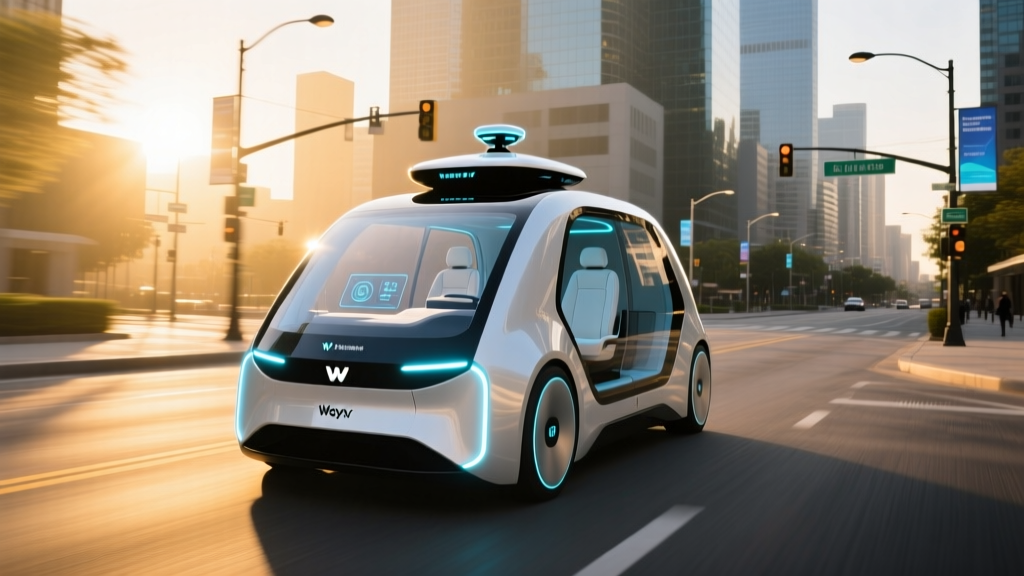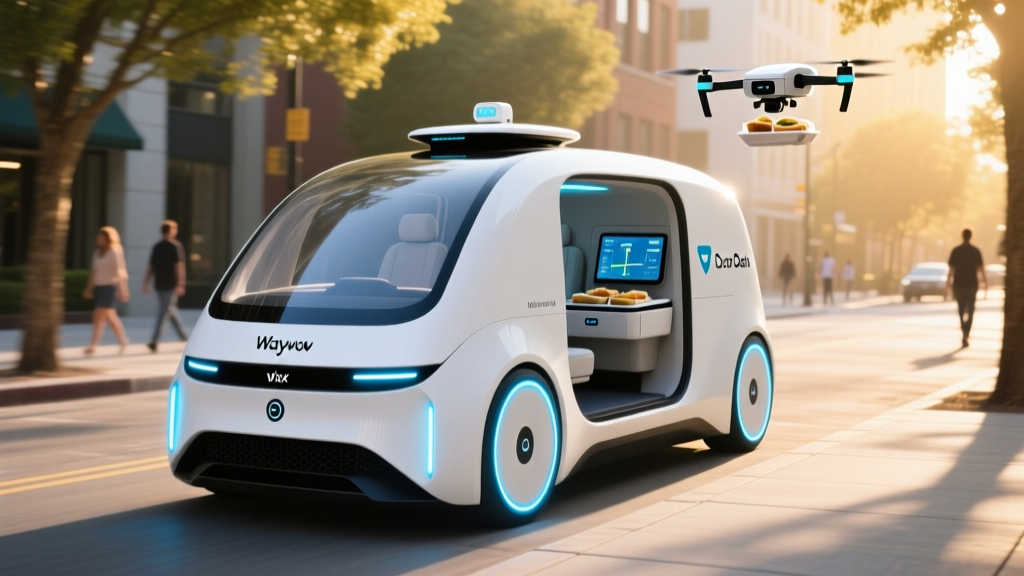
The DoorDash Waymo partnership represents one of the most visible real-world deployments of Level 4 autonomous vehicles in a commercial delivery context. What began as a 2023 pilot in Phoenix has expanded into a multi-city operation where Waymo's driverless fleet fulfills restaurant orders placed through the DoorDash app. For EV enthusiasts and autonomous-vehicle watchers alike, this collaboration answers a practical question: can a self-driving car reliably replace a human delivery driver at scale?
Below, we break down exactly how the partnership operates in 2026, which cities have live service, the technology powering the Jaguar I-PACE-based fleet, verified safety data, and the limitations you should understand before placing your first robot-delivered order.
What the DoorDash Waymo Partnership Actually Is
In late 2022, Waymo and DoorDash announced a commercial partnership allowing Waymo's autonomous vehicles to complete DoorDash food orders. The integration works like this: when a customer orders from a participating restaurant within the Waymo geofenced service area, the system may assign a Waymo vehicle for last-mile delivery. The restaurant staff loads sealed food bags into the vehicle's cargo area via a tablet-guided interface, the vehicle navigates autonomously to the customer's address, and the customer unlocks the cargo compartment through the DoorDash app to retrieve their order.
This is not a concept or a limited demo. As of 2026, the partnership has processed hundreds of thousands of autonomous deliveries across multiple metropolitan areas, making it the highest-volume robotaxi-to-delivery pipeline in the United States.
Waymo's delivery vehicles operate at SAE Level 4 — meaning they drive entirely without a human driver within a defined Operational Design Domain (ODD). There is no one behind the wheel, no steering wheel, and no expectation of human takeover. This is fundamentally different from Level 2 systems like Tesla Autopilot or GM Super Cruise, which require an attentive, licensed driver at all times. Waymo's system handles all driving tasks within its geofenced service area, and if it encounters a situation it cannot resolve, it pulls over safely and contacts remote assistance rather than handing control to a non-existent driver.
Where Can I Use DoorDash Waymo Autonomous Delivery Right Now?
Service availability depends on two overlapping geofences: Waymo's approved autonomous-driving zone and DoorDash's participating restaurant network within that zone. Both must align for a robotaxi delivery to be dispatched.
| City | Service Area Coverage | Status | Approximate Coverage Area |
|---|---|---|---|
| Phoenix, AZ (Metro) | Chandler, Tempe, Gilbert, Mesa, N Phoenix | Live — fully driverless | ~315 sq mi |
| San Francisco, CA | Select neighborhoods | Live — fully driverless | ~50 sq mi (expanding) |
| Los Angeles, CA | Downtown, Hollywood, Santa Monica zones | Live — fully driverless | ~80 sq mi |
| Austin, TX | Central and South Austin | Live — fully driverless | ~90 sq mi |
Phoenix remains the largest and most mature deployment. The metro area's wide roads, predictable grid layout, and generally favorable weather make it an ideal operational environment. San Francisco and Los Angeles present denser, more complex urban environments, and service areas there have expanded incrementally as Waymo validates performance in tighter traffic scenarios.
Important caveat: Even within a live city, your specific delivery address must fall inside Waymo's approved geofence. If you order from a restaurant inside the zone but live outside it, DoorDash will dispatch a conventional human driver instead. The app does not always make this distinction obvious before checkout.
How to Order and What It Costs vs. Standard Delivery
Ordering through the DoorDash Waymo partnership requires no special app or account. You use the standard DoorDash app or website as you normally would. If your delivery address and the restaurant fall within Waymo's service area, the system may automatically assign a Waymo vehicle. You'll see a notification that your order is being delivered by a Waymo autonomous vehicle, along with real-time tracking.
When the vehicle arrives, you receive a push notification with a PIN code. You walk to the vehicle, enter the PIN on the exterior screen or in the app, and the cargo compartment unlocks. You retrieve your food, close the hatch, and the vehicle departs.
| Cost Component | Waymo Autonomous Delivery | Standard Human Delivery |
|---|---|---|
| Delivery fee | $0.00 – $2.99 (often waived during promo periods) | $1.99 – $7.99 |
| Service fee | ~10% of subtotal | ~10-15% of subtotal |
| Driver tip | Not applicable (no driver) | Expected ($2–$8 typical) |
| Estimated total (on $30 order) | ~$33–$35 | ~$39–$47 |
| Average delivery time | 30–45 min (geofence-dependent) | 25–50 min (traffic-dependent) |
The cost advantage of Waymo delivery primarily comes from the elimination of the tip expectation. During 2025–2026, DoorDash has also run promotional periods with reduced or waived delivery fees for Waymo-dispatched orders to encourage adoption. However, Waymo deliveries can sometimes take slightly longer than a human driver on a short-distance order, because the vehicle follows conservative, pre-mapped routes and may not take the same shortcuts a local driver would.
Waymo's Technology Stack: Sensors, Compute, and the Jaguar I-PACE Platform
The Waymo delivery fleet is built on the Jaguar I-PACE, a battery-electric SUV chosen for its low center of gravity, quiet operation, and adequate cargo volume (25.3 cu ft behind rear seats, 51.0 cu ft with seats folded — though Waymo's custom cargo module uses a portion of this). Here are the vehicle's baseline EV specifications:
| Specification | Value |
|---|---|
| Battery capacity | 90 kWh (NMC lithium-ion) |
| EPA range (stock I-PACE) | 246 miles (real-world with sensor drag/compute load: ~180–200 mi) |
| Powertrain | Dual motor AWD, 394 hp, 512 lb-ft torque |
| 0–60 mph | 4.5 seconds |
| DC fast charge (peak) | 100 kW (10–80% in ~45 min) |
| Level 2 AC charge | 11 kW onboard charger |
Waymo's custom 6th-generation autonomous driving hardware suite is mounted on and integrated into each vehicle. The technology stack is sensor-fusion-based — meaning it does not rely on cameras alone (unlike Tesla's vision-only FSD approach). Here is a breakdown:
- LiDAR: Multiple proprietary LiDAR units providing a 360° high-resolution 3D point cloud with range exceeding 500 meters. LiDAR works independently of lighting conditions, giving the system reliable depth perception at night, in glare, and in shadow.
- Cameras: High-resolution surround cameras covering 360° with improved dynamic range over previous generations, used for object classification, traffic-light state detection, and lane-marking recognition.
- Radar: Imaging radar units for velocity detection of moving objects and redundancy in precipitation where camera/LiDAR performance degrades.
- External audio sensors: Microphones capable of detecting emergency-vehicle sirens and triggering appropriate yield behavior.
- Compute: Custom Waymo-designed computing platform processing sensor data in real time, capable of handling the increased data throughput of the 6th-gen suite.
Geofencing and HD Mapping: Every mile of Waymo's service area is pre-mapped at centimeter-level resolution. The vehicle constantly compares its real-time sensor data against this HD map for localization and route planning. If the vehicle leaves its approved ODD boundary, it will not operate.
The sensor-fusion approach is more expensive per vehicle than a camera-only system but provides redundancy that regulators and safety researchers generally consider necessary for true driverless operation in mixed urban environments.
Safety Record: What the Data Actually Shows
Waymo publishes safety data more transparently than most autonomous-vehicle operators. As of early 2026, Waymo's combined fleet (ride-hailing + delivery) has accumulated over 40 million fully driverless miles across Phoenix, San Francisco, Los Angeles, and Austin.
- Total fully driverless miles: 40+ million
- Fatalities: 0 (zero pedestrian, cyclist, occupant, or other-party fatalities attributed to Waymo driverless operations)
- Police-reported crashes: Waymo's published data indicates its vehicles are involved in police-reported crashes at a rate roughly 57% lower per million miles than a human-driver benchmark, based on a Southwest Research Institute analysis commissioned by Waymo.
- Property-damage-only incidents: The majority of Waymo-involved incidents are low-speed, property-damage-only contacts (e.g., a vehicle being rear-ended at a stop, or a minor sideswipe in a construction zone). Waymo's own transparency reports detail these events.
- Contact rate trend: Waymo has reported declining at-fault contact rates year-over-year as the 6th-gen hardware and updated software stack have been deployed.
Sources: NHTSA Standing General Order crash reporting, Waymo transparency reports, and peer-reviewed analysis. For detailed incident-level data, see NHTSA's ADS crash data portal.
It's essential to contextualize these numbers. Waymo operates primarily in geofenced, mapped urban areas at moderate speeds. The comparison benchmark — human drivers in the same cities — includes distracted, impaired, and fatigued driving, which inflates human crash rates. Waymo's safety advantage is real but partially a function of its constrained operating environment. A Level 4 robotaxi that only drives in well-mapped, 25–45 mph urban corridors faces a fundamentally different risk profile than a human navigating an unmapped rural highway at night.
Regulatory Landscape: Who Approves Robotaxi Delivery Operations?
Autonomous vehicle deployment in the United States is governed by a patchwork of state and federal regulations. There is no single federal "robotaxi license." Here's how the regulatory framework applies to the DoorDash Waymo partnership:
- Federal (NHTSA): The National Highway Traffic Safety Administration sets vehicle safety standards (FMVSS) and requires crash reporting via Standing General Order for all ADS-equipped vehicles. NHTSA does not "approve" autonomous driving operations but can issue recalls or investigations. Waymo has received an FMVSS exemption for its custom-built vehicles that lack traditional controls (steering wheel, pedals, mirrors).
- Arizona: The most permissive regulatory environment. Arizona requires a simple registration with the state Department of Transportation and proof of insurance. No special permit or testing mandate beyond federal requirements. This is why Phoenix was Waymo's first commercial launch city.
- California (CPUC + DMV): The most stringent. Waymo holds both a DMV autonomous vehicle deployment permit and a CPUC (California Public Utilities Commission) passenger-service permit. Each expansion of service area within California requires regulatory notification and, in some cases, approval. The CPUC tracks incident data and can impose operational restrictions — as it did with Cruise in late 2023 following a pedestrian-dragging incident in San Francisco.
- Texas: Austin operates under a state framework that allows driverless deployment with registration and insurance requirements. Local municipalities can impose additional conditions.
For the DoorDash delivery use case specifically, the regulatory path is somewhat simpler than passenger transport. No passengers means fewer liability and insurance requirements per trip, though the vehicle still must meet all ADS operational standards in each jurisdiction.
Current Limitations: What Waymo Delivery Cannot Do
Despite impressive capabilities, the DoorDash Waymo partnership has significant constraints that affect real-world usability:
- Weather restrictions: Waymo vehicles reduce operations or pull over during heavy rain, fog, or any snowfall. Phoenix's dry climate is ideal; San Francisco fog and Los Angeles rain events can trigger service interruptions. If your order is dispatched to a Waymo vehicle and weather degrades mid-delivery, the system reroutes to a human driver or pauses the order.
- Geofence boundaries: Service is only available within pre-mapped zones. Delivery to addresses even a few blocks outside the boundary is impossible — the vehicle physically will not navigate outside its ODD.
- No apartment/complex delivery: The vehicle parks at the curb and the customer must come to the vehicle. It cannot navigate parking garages, gated communities, apartment lobbies, or private driveways with complex access. If you live on the 14th floor of a condo building, you're walking down to the curb.
- Order size limits: The cargo compartment has finite volume. Very large orders (catering, multiple large pizzas, bulk grocery) may exceed capacity and default to human delivery.
- No alcohol or age-restricted items: Delivery of alcohol, tobacco, or any item requiring ID verification cannot be completed by an autonomous vehicle, as there is no human to check identification.
- Construction zones and road closures: While Waymo's system handles many construction scenarios, prolonged or complex detours outside its mapped routes can cause delays or cancellations.
- Limited hours in some markets: While Waymo's ride-hailing service in Phoenix operates 24/7, delivery hours may be restricted to peak demand windows (lunch and dinner) depending on the market.
These limitations are not unique to Waymo — they apply to all Level 4 autonomous delivery operations currently deployed. The technology is mature enough for routine urban deliveries in favorable conditions but is not a universal replacement for human delivery drivers across all scenarios.
Is This Truly Self-Driving or Just Driver-Assist?
This distinction is critical, and the answer is unambiguous: Waymo's delivery vehicles are genuinely self-driving within their operational domain. There is no human driver in the vehicle, no remote teleoperator "driving" the car in real time via joystick (a common misconception), and no Level 2 or Level 3 system requiring human supervision.
Waymo's remote-assistance team monitors fleet operations and can provide high-level guidance to a vehicle that encounters an ambiguous situation (e.g., confirming whether a police officer is directing traffic or standing idle). But the vehicle itself performs all steering, braking, acceleration, lane changes, and navigation decisions. Remote assistance provides situational context — it does not take direct control of the vehicle's actuators.
Contrast this with Tesla's Full Self-Driving (Supervised), which despite its name is an SAE Level 2 system requiring a fully attentive, licensed driver ready to intervene at any moment. The "Supervised" qualifier in Tesla's branding exists specifically because the system is not autonomous. Waymo's system requires no supervision because it operates only within conditions it has been extensively validated to handle.
The Fleet's EV Reality: Charging, Range, and Uptime
Operating an autonomous EV delivery fleet introduces unique energy-management challenges. The Jaguar I-PACE's 90 kWh NMC battery provides a stock EPA range of 246 miles, but Waymo's vehicles face additional energy demands:
- Compute load: The autonomous driving computer and sensor suite draw continuous power, estimated at 1–2 kW of additional load beyond normal vehicle operation.
- Sensor aerodynamic drag: The roof-mounted LiDAR and sensor housing add drag, reducing highway efficiency.
- HVAC for cargo and compute: The cargo area and compute hardware require thermal management, adding to energy consumption.
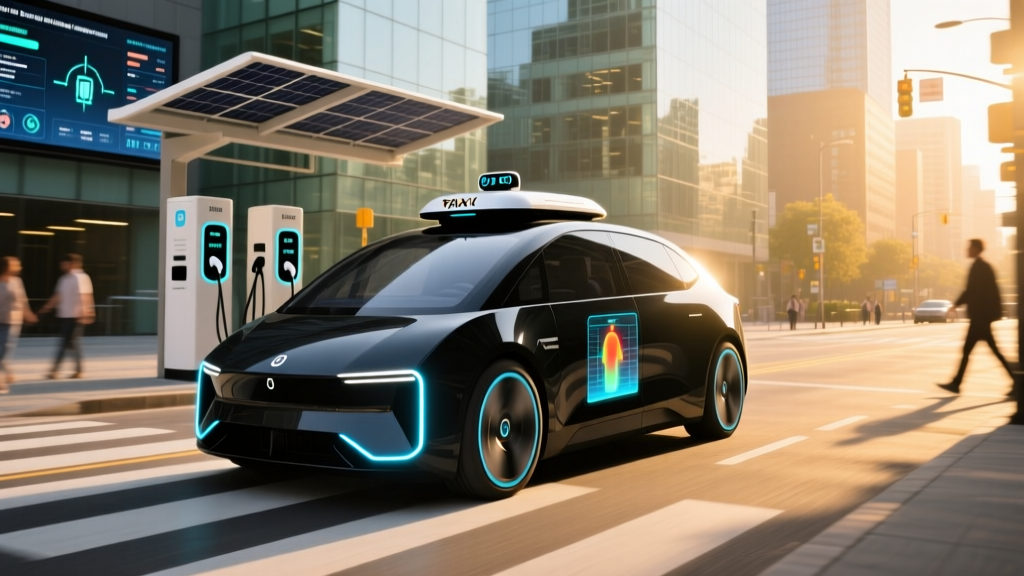
The practical result is a real-world operational range of approximately 180–200 miles per charge, which is sufficient for a full delivery shift (typically 8–12 hours of mixed driving and idle time) before requiring a charge session. Waymo manages fleet charging at dedicated depot facilities using a combination of Level 2 AC charging (overnight) and DC fast charging during shift changes. At the I-PACE's peak 100 kW DC rate, a 10–80% charge takes roughly 45 minutes — longer than some newer 800V-architecture EVs, but manageable for fleet operations with planned downtime.
The fleet's battery degradation is monitored continuously. Waymo has not publicly disclosed battery replacement timelines, but NMC batteries in commercial fleet use with frequent DC fast charging typically see 10–15% capacity loss over 150,000–200,000 miles, which translates to roughly 3–5 years of delivery service depending on utilization.
Frequently Asked Questions
Can I specifically request a Waymo delivery on DoorDash?
Not directly. The system assigns Waymo vehicles automatically based on your delivery address, the restaurant location, current fleet availability, and weather conditions. If both endpoints are within the geofence and a Waymo vehicle is available, you'll likely receive one. You'll see a notification in the app confirming autonomous delivery.
What happens if the Waymo vehicle gets stuck or can't find my address?
Waymo's system will attempt to resolve the situation autonomously (e.g., re-routing, pulling over to wait for a temporary obstruction to clear). If it cannot resolve the issue, it contacts remote assistance for guidance. In a worst case, the vehicle pulls over safely and DoorDash dispatches a human driver to complete the delivery or issues a refund.
Is my food safe and temperature-controlled during Waymo delivery?
The cargo compartment is sealed and climate-managed. Food is placed in insulated bags by restaurant staff, just as with conventional DoorDash orders. Because Waymo vehicles follow conservative driving patterns (smooth acceleration, no aggressive lane changes), food typically arrives in comparable or better condition than with a human driver navigating aggressively.
Does Waymo deliver groceries or just restaurant food?
As of 2026, the DoorDash partnership primarily covers restaurant food delivery. Waymo has separate partnerships for grocery and retail delivery (e.g., with Walmart in Phoenix), but these operate under different commercial agreements and may have different service areas and hours.
How does Waymo compare to other autonomous delivery services?
Waymo's DoorDash partnership is the largest vehicle-based autonomous food delivery operation in the US. Competitors like Nuro (which uses smaller, purpose-built sidewalk/neighborhood delivery pods rather than full-size vehicles) and Starship Technologies (sidewalk robots) serve different niches. Amazon's Scout sidewalk robot program was paused in 2023. For full-size vehicle delivery at urban scale, Waymo currently has no direct competitor in the food-delivery segment.
Will autonomous delivery replace DoorDash human drivers?
Not in the foreseeable future. Waymo's geofenced service areas cover a small fraction of DoorDash's total delivery geography. Human drivers remain essential for suburban, rural, apartment-complex, and weather-affected deliveries. The Waymo partnership supplements capacity in dense urban cores during peak hours rather than replacing the human fleet wholesale.