The DoorDash Waymo Partnership: What It Actually Is
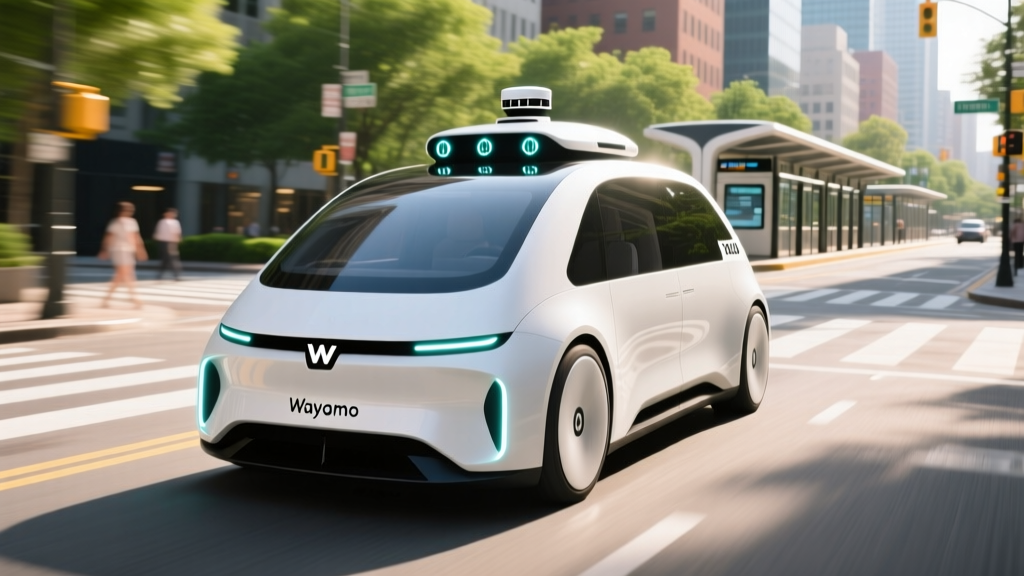
The DoorDash Waymo collaboration represents one of the most visible deployments of Level 4 autonomous vehicles in a commercial consumer application. Unlike Tesla's Full Self-Driving (Supervised) or GM's Super Cruise — both of which are Level 2 driver-assist systems requiring active human supervision — Waymo's robotaxi fleet operates with no human driver behind the wheel. The partnership extends this driverless capability from passenger rides into food delivery, using Waymo's autonomous Jaguar I-PACE vehicles to fulfill select DoorDash orders in specific metro areas.
As of 2026, the service remains geographically limited and carefully controlled. It is not a nationwide rollout. Understanding exactly where it operates, how it works, what it costs, and what the safety record shows is critical before you place an order or assume this technology is coming to your zip code.
SAE Automation Level: Level 4 (High Automation)
Waymo's robotaxi fleet operates at SAE Level 4 — the vehicle performs all driving tasks within a defined operational design domain (geofenced area, specific weather conditions) with no human driver required. This is fundamentally different from Level 2 systems (Tesla Autopilot/FSD, BlueCruise, Super Cruise) where a human must remain engaged and ready to take over at any moment. Level 4 means the car handles everything within its service area, including edge cases, or pulls over safely if it encounters a scenario it cannot handle.
Where Can I Use DoorDash Waymo Delivery Right Now?
The DoorDash Waymo autonomous delivery service is not available everywhere. Waymo's commercial operations are tightly geofenced, and the food delivery partnership only functions within those approved zones.
| Metro Area | Status (2026) | Service Zone Notes |
|---|---|---|
| Phoenix, AZ (East Valley) | Live — fully driverless | Chandler, Tempe, Mesa, Gilbert; expanded footprint since 2020 launch |
| San Francisco, CA | Live — fully driverless | Most of SF proper; some restricted corridors near highways |
| Los Angeles, CA | Live — limited zones | Santa Monica, Beverly Hills, select Westside corridors |
| Austin, TX | Testing / limited commercial | Not yet broadly available for DoorDash orders |
Key restriction: Even within these cities, you must be inside Waymo's approved geofence for both the restaurant origin and your delivery address. If either endpoint falls outside the zone, your order routes to a human DoorDash driver as normal. You cannot currently summon a Waymo delivery to an arbitrary address outside the service area.
Waymo has announced plans to expand to additional cities, but announced expansion is not live service. Until vehicles are actively completing driverless trips in a new metro, treat it as unavailable.
How the DoorDash Waymo Delivery Experience Works
Ordering through the DoorDash Waymo integration is nearly identical to a standard DoorDash order, with a few autonomous-specific differences:
- Open the DoorDash app and enter your delivery address. If you're within a Waymo service zone, eligible restaurants will display a "Waymo" badge or autonomous delivery indicator.
- Place your order normally. Pricing, menu options, and restaurant selection function the same as human-driven delivery.
- Track the vehicle in real time. Instead of tracking a human driver's car on the map, you'll see the Waymo Jaguar I-PACE's position, including its sensor-detected surroundings rendered in the app.
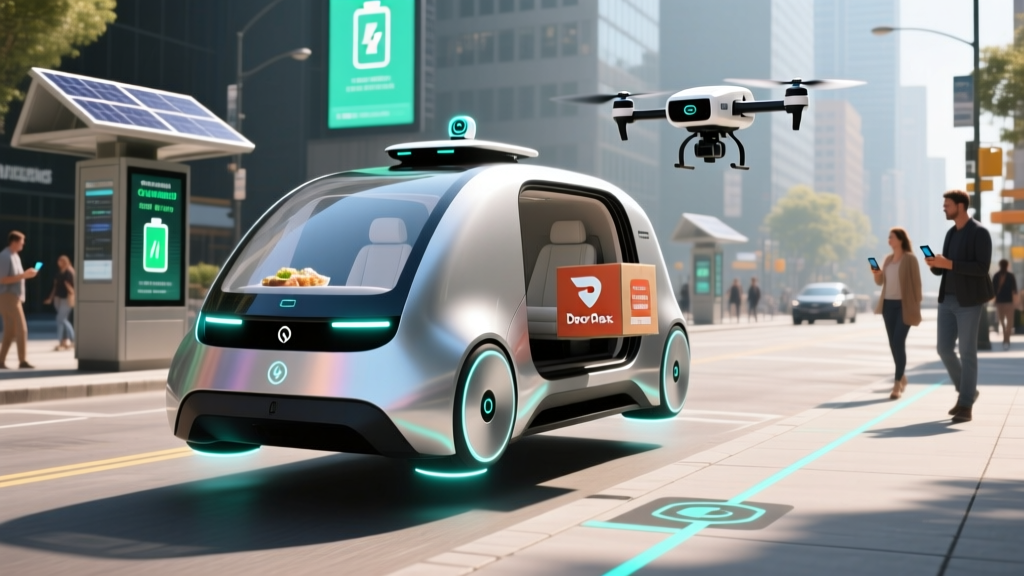
- Meet the vehicle at the curb. The Waymo vehicle pulls up, unlocks its trunk remotely, and you retrieve your order. The vehicle does not walk food to your door. You must go to the curb.
- The vehicle departs. Once you close the trunk, the car moves on to its next task.
This curbside-only model is a significant limitation for apartment dwellers, people with mobility challenges, or anyone who expects food brought to their door. Waymo vehicles cannot navigate private driveways, parking garages, or gated communities.
DoorDash Waymo Pricing vs. Uber/Lyft and Human Delivery
One of the most common questions is whether autonomous delivery costs more or less than traditional options. Here's how pricing breaks down in practice:
| Cost Factor | DoorDash Waymo | DoorDash (Human Driver) | Uber Eats |
|---|---|---|---|
| Delivery fee (typical 2-3 mi) | $2.99–$5.99 | $2.99–$7.99 | $3.99–$8.99 |
| Service fee | ~10–15% of subtotal | ~10–15% of subtotal | ~10–15% of subtotal |
| Dasher tip expected | No (no human driver) | $2–$5+ typical | $2–$5+ typical |
| Surge/dynamic pricing | Less volatile (fleet-managed) | Common during peak hours | Common during peak hours |
| Estimated total (25 meal, 2.5 mi) | ~$30–$34 | ~$32–$40 | ~$33–$42 |
The primary savings come from eliminating the driver tip, which typically adds $2–$5+ per order on human-delivered food. Delivery fees themselves are comparable because Waymo's operational costs (vehicle hardware, remote fleet monitoring, insurance, mapping) remain significant. This is not yet a dramatically cheaper option — it's roughly on par with human delivery once you factor in that no tip is expected.
For passenger rides (Waymo One, separate from DoorDash), pricing in Phoenix and San Francisco has generally tracked closely with Uber/Lyft, typically $0.80–$1.20 per mile depending on demand, without surge multipliers that can 2x–3x human rideshare during peak times.
Safety Record: What the Data Actually Shows
Safety is the most scrutinized aspect of any driverless service. Waymo has accumulated tens of millions of fully autonomous miles, and the data tells a specific, measurable story — not a marketing claim.
Waymo Safety Data (Through 2025)
- Autonomous miles driven: Over 50 million fully driverless miles across Phoenix, San Francisco, and Los Angeles (Waymo Safety Report)
- Injury-causing crash rate: Approximately 85% lower than human benchmarks in comparable urban environments, per Waymo's published insurance claim data
- Property-damage-only crashes: Roughly 57% lower than human reference rates
- Most common incident type: Low-speed contact while stopped or maneuvering in tight spaces — not high-speed collisions
- NHTSA standing: Waymo operates under state-issued autonomous vehicle deployment permits (California DMV, Arizona DOT); no federal blanket approval exists for driverless operations nationwide
Source: Waymo Safety Transparency Reports, NHTSA AV Safety Resources
Context matters: Waymo's vehicles operate in geofenced, well-mapped urban environments at moderate speeds, often in favorable weather. They do not drive on rural highways or in heavy snow. Comparing their crash rate to all human driving (including rural interstates, drunk driving, and extreme weather) overstates the advantage. A fairer comparison is urban driving in similar conditions, where the data still shows a meaningful safety improvement — but not perfection.
Incidents that have drawn public attention (a Waymo vehicle striking a pedestrian who ran into traffic in San Francisco, a collision with a tow truck in Phoenix) were investigated and, in most cases, found to involve scenarios where even a human driver would have struggled to react in time. The vehicles are not infallible, but the data supports that they are safer than average human drivers in equivalent conditions.
Technology Stack: How Waymo's Autonomous Vehicles See the World
Waymo's approach to autonomy differs sharply from Tesla's camera-only strategy. The Waymo Driver uses a redundant, multi-sensor suite:
Waymo 6th-Generation Sensor Suite (2024–Present)
- LiDAR: Multiple roof- and body-mounted units providing 360° 3D point clouds; effective range exceeding 500 meters; critical for precise distance measurement independent of lighting
- Cameras: High-resolution surround cameras (improved low-light performance over prior generations) for lane detection, traffic light state, signage, and object classification
- Radar: Imaging radar for velocity detection of moving objects and performance in rain/fog where LiDAR and cameras degrade
- Audio detection: External microphones to detect emergency vehicle sirens
- HD maps: Pre-scanned centimeter-accurate maps of every service area; the vehicle localizes itself within this map in real time
- Compute: Custom Waymo-designed processing hardware running perception, prediction, and planning models simultaneously
The LiDAR + camera + radar fusion approach provides redundancy that camera-only systems lack. If heavy sun glare washes out a camera, LiDAR still sees the stopped truck ahead. If fog scatters LiDAR returns, radar penetrates through. This sensor redundancy is a core reason regulators have approved fully driverless operations for Waymo but remain cautious about vision-only systems.
The tradeoff: Waymo's sensor suite costs significantly more per vehicle than a camera-only approach, which is one reason the fleet uses the Jaguar I-PACE — a premium EV with sufficient electrical architecture and physical packaging to house the hardware. The Jaguar I-PACE itself offers an EPA-estimated 246 miles of range from its 90 kWh battery pack, with 394 horsepower and a 0–60 mph time of approximately 4.5 seconds — more than adequate for urban delivery routes.
Current Limitations: What Waymo Cannot Do
Autonomous delivery sounds seamless until you hit an edge case. Here are the real-world limitations that affect the DoorDash Waymo experience today:
- Geofence boundaries: The vehicle cannot leave its approved zone. If a restaurant is 200 feet outside the geofence, your order goes to a human driver.
- Weather restrictions: Heavy rain, fog, and any snow/ice will cause Waymo to suspend operations. Phoenix's clear skies are a major reason it was the launch city. San Francisco fog occasionally triggers service pauses.
- Curbside-only delivery: No walk-up to your apartment door, no gate codes, no lobby drop-off. You must meet the car at the street.
- No alcohol or age-restricted items: Without a human to check ID, autonomous delivery cannot fulfill orders requiring age verification.
- Construction zones: Unexpected road closures or lane shifts that differ from the HD map can cause the vehicle to reroute, delay, or pull over and request remote assistance.
- Limited operating hours: While Waymo operates 24/7 for rides in some cities, DoorDash delivery availability may be restricted to specific windows depending on local agreements.
- No multi-stop or complex routing: The vehicle handles one delivery at a time in a straightforward point-to-point pattern.
These limitations are not bugs — they are the boundaries of what current Level 4 autonomy can reliably handle. The system is designed to recognize its own limitations and either reroute, wait, or request remote human assistance rather than guess.
Regulatory Landscape: Who Approves Robotaxi Operations
There is no single federal license that allows a company to operate driverless vehicles nationwide. Instead, autonomous vehicle deployment is governed by a patchwork of state and local regulations:
- California: The California DMV issues autonomous vehicle testing and deployment permits. The California Public Utilities Commission (CPUC) regulates commercial passenger service. Waymo holds both. (California DMV AV Program)
- Arizona: The state has taken a permissive approach since 2015, requiring only a self-driving vehicle testing license from the Arizona Department of Transportation. No special passenger-service permit is required beyond standard commercial insurance.
- Texas: Austin and other cities have local ordinances governing AV testing. State law (Texas Transportation Code Chapter 545) permits autonomous operation with specific equipment and insurance requirements.
- Federal (NHTSA): The National Highway Traffic Safety Administration sets vehicle safety standards (FMVSS) but has not issued a comprehensive regulatory framework for driverless commercial deployment. Waymo has received limited FMVSS exemptions for vehicles without steering wheels (relevant to future Zoox-style vehicles, not the current Jaguar I-PACE fleet).
This regulatory fragmentation means expansion is slow and city-by-city. Each new metro requires engagement with local regulators, first-responder coordination, and permitting — not simply flipping a software switch.
Is This Truly Self-Driving or Just Driver-Assist?
This is the most important distinction in autonomous vehicles, and the answer for Waymo is unambiguous:
Waymo's robotaxi fleet is genuinely self-driving (Level 4) within its operational domain. There is no human in the driver's seat. There is no human monitoring a screen ready to take over. The vehicle handles all aspects of driving — lane changes, unprotected left turns, pedestrian detection, traffic light interpretation, construction-zone navigation — on its own. Remote assistance exists for exceptional situations (an unusual road closure, a stuck vehicle), but the remote operator does not "drive" the car in real time; they provide high-level guidance (e.g., "the lane is clear, proceed") and the vehicle executes the maneuver.
This stands in stark contrast to:
- Tesla FSD (Supervised): Level 2. A human driver must remain attentive and ready to intervene at all times.
- GM Super Cruise / Ford BlueCruise: Level 2. Hands-off on approved highways, but eyes-on and full driver responsibility.
- Mercedes Drive Pilot: Level 3 (in very limited conditions in Germany and Nevada). The car drives itself in traffic jams under 40 mph on approved highways, and the driver can disengage — but must be ready to resume when prompted.
Waymo is not "almost" self-driving. Within its geofenced service area, it is fully driverless. The limitation is the geofence, not the autonomy level.
Frequently Asked Questions
Can I request a Waymo delivery to any address in Phoenix or San Francisco?
No. Both the restaurant and your delivery address must be within Waymo's approved geofence. The DoorDash app will show you whether autonomous delivery is available for your specific order. If it's not, a human Dasher will handle it normally.
Is DoorDash Waymo delivery cheaper than regular DoorDash?
Roughly comparable, with the main savings being no driver tip. Delivery fees and service fees are similar. For a typical $25 meal order, expect to pay $2–$6 less than you would with a human driver once you remove the tip.
What happens if the Waymo vehicle gets stuck or confused during my delivery?
The vehicle will pull over safely and connect with Waymo's remote assistance team. If the issue resolves quickly, it continues. If not, DoorDash may dispatch a human driver to retrieve and complete the delivery. Your food won't be stranded.
Does Waymo delivery work in the rain?
Light rain in Phoenix or Los Angeles is generally handled. Heavy rain, fog, or any snow/ice will trigger service suspension. San Francisco's dense fog has occasionally paused operations. Check the app — if Waymo delivery isn't showing, conditions likely triggered a pause.
What vehicle does Waymo use for DoorDash deliveries?
The Waymo fleet currently uses the Jaguar I-PACE, a fully electric SUV with a 90 kWh battery (EPA-estimated 246 miles of range), 394 horsepower, and 5th/6th-generation Waymo Driver sensor hardware. The vehicle's trunk compartment is used for food delivery.
How does Waymo's safety record compare to Uber or Lyft drivers?
Waymo's published data shows injury-causing crash rates approximately 85% lower than human benchmarks in comparable urban environments. However, Waymo operates in favorable, well-mapped conditions at moderate speeds. A direct comparison to all Uber/Lyft trips (including highway, rural, and adverse weather) is not apples-to-apples. Within equivalent urban conditions, the data favors Waymo.
Will DoorDash Waymo expand to my city?
Waymo has announced expansion plans for additional metros, but timelines are long and regulatory approval is required city by city. Phoenix, San Francisco, and Los Angeles are live. Austin is in testing. Other cities remain announced or unannounced. Do not expect service in a new metro until Waymo confirms live commercial operations there.