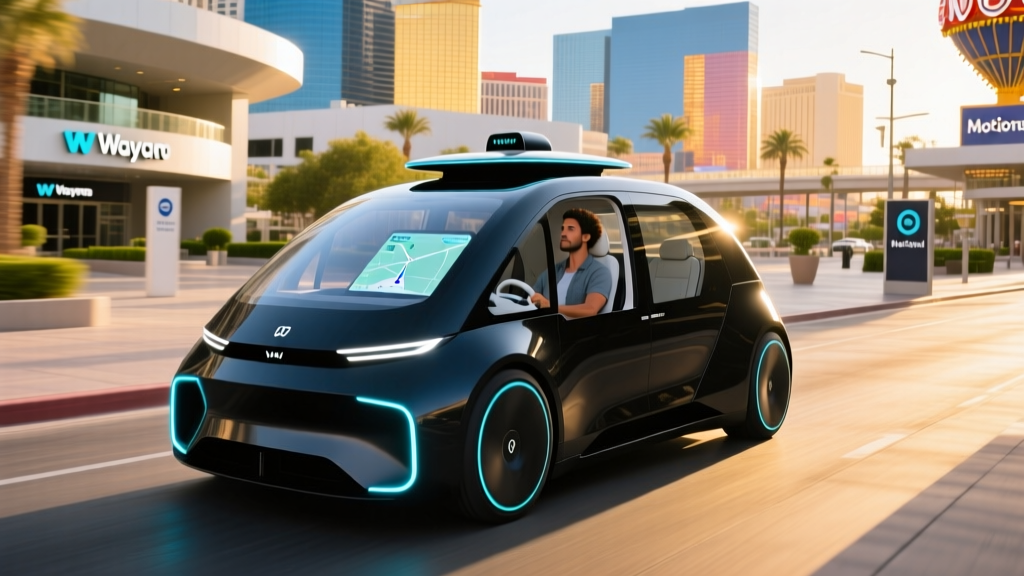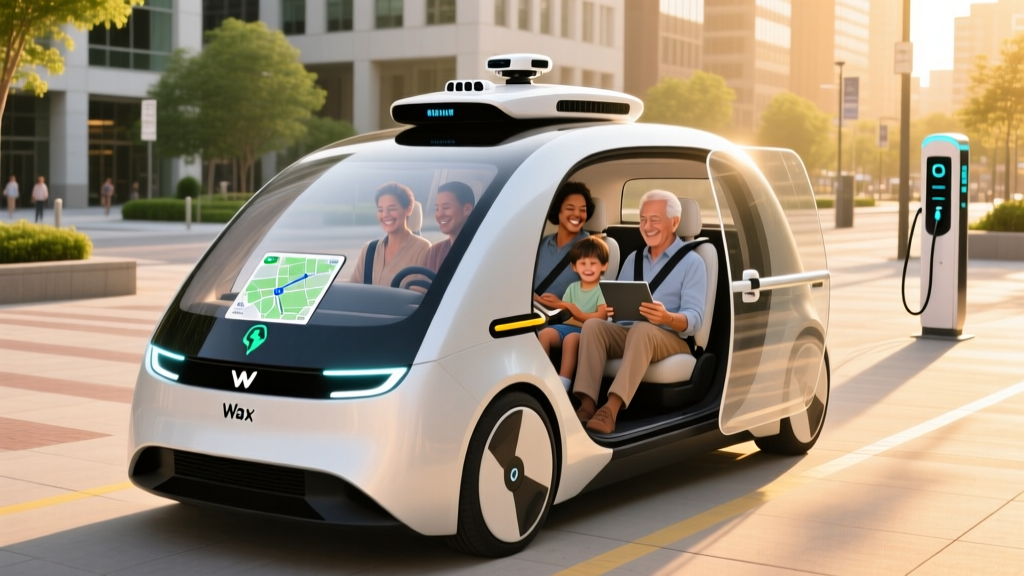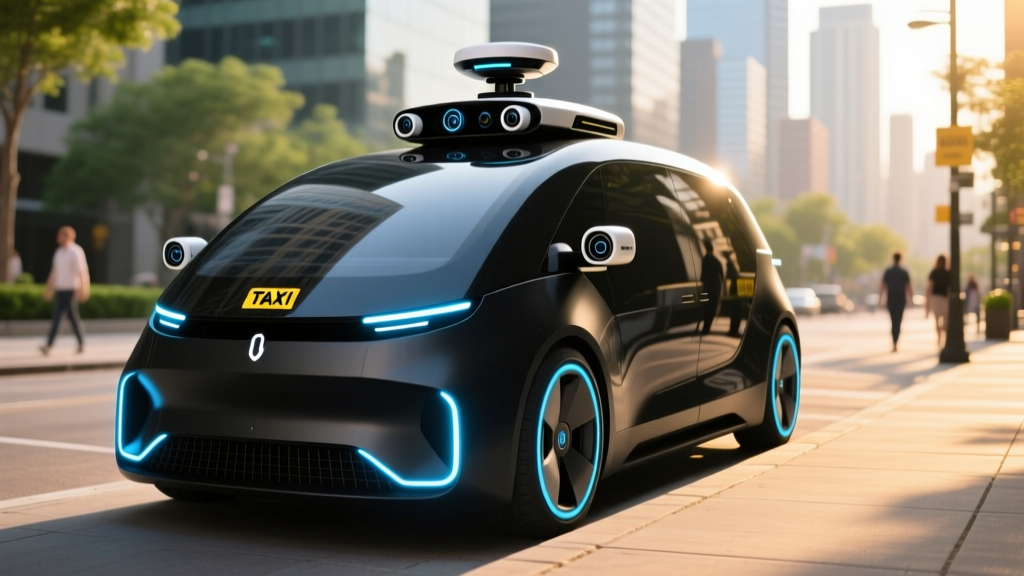
If you've watched a Waymo One vehicle navigate a busy downtown intersection with no one behind the wheel, you've probably wondered: how does it actually see the world? And more specifically, does Waymo use lidar?
The short answer is yes — lidar is foundational to Waymo's perception system. But the full picture is a multi-sensor fusion stack that combines lidar, cameras, radar, and external audio receivers into what Waymo calls its "Driver." Understanding this technology matters because it's the core reason Waymo operates at a fundamentally different autonomy level than consumer vehicles like Tesla's FSD Supervised or GM's Super Cruise.
This guide breaks down Waymo's sensor architecture, where the service operates in 2026, what it costs, its safety record, and the real limitations you should know before summoning your first driverless ride.
SAE Automation Level: Where Waymo Actually Sits
This means the vehicle handles all driving tasks within its defined operational design domain (ODD) — specific geofenced areas under defined conditions — with zero human intervention required. There is no driver. The steering wheel may be present, but no human is expected to take over.
This is categorically different from SAE Level 2 systems like Tesla Autopilot, FSD (Supervised), Ford BlueCruise, or GM Super Cruise, which require continuous driver attention and hands-on or eyes-on engagement at all times. Level 2 is driver-assist. Level 4 is driverless.
| Level | Name | Who Drives? | Examples |
|---|---|---|---|
| Level 2 | Partial Automation | Human (always) | Tesla FSD Supervised, BlueCruise, Super Cruise |
| Level 3 | Conditional Automation | System (limited), human on standby | Mercedes Drive Pilot (approved in NV/CA, limited conditions) |
| Level 4 | High Automation | System (no human needed in ODD) | Waymo One, Zoox |
| Level 5 | Full Automation | System (everywhere, all conditions) | Does not yet exist commercially |
Does Waymo Use Lidar? The 6th-Generation Sensor Stack
Yes. Waymo has used lidar since its earliest prototypes under the Google Self-Driving Car Project, and the technology remains a pillar of its 6th-generation "Waymo Driver" hardware suite deployed on the Jaguar I-PACE and the purpose-built Zeekr robotaxi vehicle entering service.
Waymo 6th-Gen Driver — Sensor Breakdown
- Lidar: Multiple units providing 360° high-resolution 3D point clouds. The 6th-gen system uses improved range (up to ~500 meters) and higher resolution than prior generations, enabling detection of small objects at distance in all lighting conditions.
- Cameras: A surround camera array with improved dynamic range and resolution for color perception, traffic-light state detection, signage reading, and lane-marking identification. Cameras provide texture and semantic context that lidar alone cannot.
- Radar: Imaging radar units for velocity measurement of moving objects, performance in heavy rain and fog where lidar and cameras degrade, and redundancy.
- External Audio Receivers: Microphones that detect emergency-vehicle sirens, enabling the system to pull over for ambulances and fire trucks — a detail that illustrates the depth of sensor fusion.
- IMU + GPS + HD Maps: Inertial measurement units, high-precision GNSS, and pre-built high-definition maps provide localization accuracy within centimeters.
Why Lidar Matters: The Camera-Only Debate
Tesla famously removed lidar and radar from its vehicles, relying solely on a camera-and-neural-network approach it calls "Tesla Vision." Waymo takes the opposite position: lidar provides a physics-based distance measurement that doesn't depend on learned inference. A lidar pulse measures the time-of-flight of laser light bouncing off an object — it tells you exactly how far away something is, regardless of whether the neural network has seen that object shape before.
This distinction matters for edge cases. An overturned truck with an unusual trailer profile, a mattress fallen in a highway lane, or a pedestrian partially occluded behind a bush — lidar sees the physical geometry whether or not the AI has been trained on that specific scenario. Waymo's position is that redundant sensing modalities reduce the probability of a single-point failure taking down the entire perception pipeline.
The trade-off is cost and complexity. A Waymo vehicle's sensor suite is estimated to add tens of thousands of dollars to the vehicle cost, which is viable for a fleet-operated robotaxi but not (yet) for a consumer car you'd park in your garage.
Where Can You Ride a Waymo Robotaxi Right Now?
As of early 2026, Waymo One — the company's commercial ride-hailing service — operates in several major U.S. metropolitan areas. Service areas are geofenced, meaning the car will only drive within approved zones that have been extensively mapped and validated.
| City | Status | Coverage Notes |
|---|---|---|
| Phoenix, AZ (metro) | Fully operational | Largest service area; covers Phoenix, Scottsdale, Tempe, Mesa, and airport (PHX) service |
| San Francisco, CA | Fully operational | Citywide coverage; expanded to include SFO airport trips |
| Los Angeles, CA | Operational (expanding) | Downtown, Hollywood, Santa Monica, Westside; gradual geographic expansion |
| Austin, TX | Operational | Central Austin service area; launched commercially after employee/testing phase |
| Atlanta, GA | Announced / early rollout | Partnership with Uber for initial availability; phased geographic rollout |
Key detail: Waymo's geofencing means you cannot summon a ride from outside the approved zone, and the vehicle will not drive into unmapped territory. If your trip endpoint falls outside the geofence, the app will notify you before confirming the ride.
Pricing: Waymo vs. Uber and Lyft
Waymo One pricing is designed to be competitive with traditional rideshare, though it varies by city, distance, and demand. In most markets, Waymo rides are priced comparably to UberX or Lyft standard rides — sometimes slightly higher, sometimes lower depending on the route.
| Service | Estimated Fare | Notes |
|---|---|---|
| Waymo One | $12–$18 | No surge pricing in the traditional sense; pricing is upfront and locked at confirmation |
| UberX | $10–$22 | Varies significantly with surge/demand multipliers |
| Lyft Standard | $10–$20 | Subject to Prime Time pricing during high demand |
| Waymo (via Uber app) | $12–$20 | Available in select cities; bookable directly within Uber app |
How to book: Download the Waymo One app (available on iOS and Android), create an account, enter your pickup and drop-off, and confirm. In cities where Waymo has partnered with Uber, you can also request a Waymo vehicle directly within the Uber app — the vehicle that arrives will be a driverless Waymo.
One pricing advantage: Waymo does not apply traditional surge multipliers. The price you see at confirmation is the price you pay. For frequent riders in peak-demand areas, this can mean meaningful savings versus rideshare during rush hours or events.
Safety Record: What the Data Actually Shows
Safety is the most scrutinized aspect of robotaxi operations, and Waymo publishes more transparency data than any other Level 4 operator. As of late 2025, Waymo reported exceeding 50 million fully driverless miles across its fleet.
Waymo Safety Data — Key Figures
- Total driverless miles: 50+ million (as reported by Waymo, late 2025)
- Injury-causing crash rate: Waymo's published analysis found its vehicles were involved in injury-causing crashes at a rate approximately 85% lower than the human benchmark in comparable urban driving environments
- Police-reported crash rate: Approximately 57% fewer police-reported crashes per million miles compared to human drivers in the same operating areas
- Fatalities: Zero passenger or pedestrian fatalities in driverless operations as of early 2026
Source: Waymo Safety Reports and peer-reviewed analysis. Crash-rate comparisons use benchmarks from the National Highway Traffic Safety Administration (NHTSA) data for human-driven vehicles in similar urban environments.
Context Matters: What the Numbers Don't Say
Waymo's safety data is strong, but it requires context. Waymo operates in geofenced, mapped urban areas with favorable conditions — primarily fair weather, well-marked roads, and moderate speeds. The comparison to human drivers is valid within that operational domain but does not imply Waymo would outperform humans in every conceivable driving scenario (rural roads, unmapped areas, severe weather).
Notable incidents have occurred. In early 2024, a Waymo vehicle in San Francisco struck a pedestrian who had been pushed into the vehicle's path by another car — the Waymo made contact but reduced speed significantly before impact, and the pedestrian's injuries were attributed primarily to the initial human-driven collision. In Phoenix, a Waymo struck a parked vehicle in a construction zone; no injuries were reported. These incidents are investigated by NHTSA and state regulators, and Waymo has issued software updates in response.
For comparison context, the Insurance Institute for Highway Safety (IIHS) and NHTSA data show that human drivers cause approximately 1.35 fatalities per 100 million vehicle miles nationally. Waymo's zero-fatality record across 50+ million miles is statistically notable but not yet conclusive at that sample size.
Current Limitations: What Waymo Cannot Do
Level 4 autonomy is powerful within its domain, but the boundaries of that domain are real and consequential. Here are the current operational limitations:
Waymo Operational Limitations (2026)
- Geofencing: Waymo will not drive outside its mapped and approved service area. If you need to go beyond the geofence, the ride cannot be booked.
- Heavy weather degradation: In heavy rain, fog, or dust storms, Waymo may reduce service availability or pause operations entirely. Lidar scatters in heavy precipitation, cameras lose visibility, and the system conservatively pulls over or avoids dispatch.
- No highway-only trips in all markets: While Waymo does operate on some highways (including freeway segments in Phoenix and LA), highway operation is not universal across all service areas and is limited to mapped, approved routes.
- Construction zones: Major construction with shifted lanes, temporary barriers, or flaggers can cause the vehicle to stop, reroute, or request remote assistance. Waymo has improved here but complex construction remains an edge case.
- Unusual road configurations: Unmapped driveways, private roads, parking garages, and drive-throughs are not supported. Pickup and drop-off occur at public-road locations.
- No rural or unmapped roads: Waymo requires centimeter-accurate HD maps. Roads that haven't been mapped and validated are simply not accessible.
- Emergency detours: If an unexpected full-road closure occurs, the vehicle may stop and wait for remote guidance rather than improvise an unmapped detour.
These limitations are the reason Waymo is Level 4, not Level 5. Level 5 — full automation everywhere in all conditions — does not exist commercially today and remains years away for any operator. Waymo's approach is to expand its ODD incrementally: add new cities, map new roads, validate performance in rain, then widen the geofence.
Regulatory Landscape: Who Approves Robotaxi Operations?
Robotaxi operations in the United States are governed by a patchwork of state and local regulations — there is no single federal license to operate a driverless fleet nationwide.
- California: The California Public Utilities Commission (CPUC) issues permits for driverless passenger service. The California DMV issues testing and deployment permits. Waymo holds both. San Francisco operations required approval from both agencies, and the CPUC can impose restrictions or revoke permits — as it temporarily did for Cruise (GM's robotaxi subsidiary) after a 2023 incident.
- Arizona: Arizona has been the most permissive regulatory environment for autonomous vehicles. Waymo's Phoenix operations benefit from a lighter-touch state framework, though the vehicle must still comply with all traffic laws and report incidents.
- Texas: Austin operations required coordination with local authorities. Texas passed autonomous-vehicle legislation enabling driverless operation with a licensed (or permitted) operator.
- Federal (NHTSA): The National Highway Traffic Safety Administration retains authority over vehicle safety standards and investigates crashes involving automated driving systems. NHTSA's Standing General Order requires ADS-equipped vehicles to report crashes promptly.
This state-by-state framework means Waymo cannot simply "turn on" service in a new city — each market requires regulatory engagement, local mapping, and compliance with that jurisdiction's specific requirements. This is a significant factor in why expansion has been methodical rather than rapid.
Waymo vs. the Competition: How Other Robotaxi Operators Compare
Waymo is not the only Level 4 robotaxi operator, but it is the most commercially scaled in the United States. Here's how the landscape compares:
- Zoox (Amazon): Purpose-built bidirectional vehicle with no steering wheel. Operating a limited commercial service in Las Vegas and testing in several other cities. Also uses lidar as a core sensor.
- Cruise (GM): Suspended operations in late 2023 after a San Francisco incident where a pedestrian was dragged under the vehicle. Has been gradually resuming testing with reduced fleet sizes. Previously used lidar + cameras.
- Baidu Apollo Go (China): Operates large-scale robotaxi services in Wuhan, Beijing, and other Chinese cities. Uses lidar. Far larger fleet numbers than any U.S. operator but in a different regulatory environment.
- Tesla (announced): Tesla has announced a "Cybercab" robotaxi concept using a camera-only approach (no lidar). As of early 2026, Tesla has not launched a commercial driverless ride-hailing service. Any future operation would face the same regulatory approval process.
Frequently Asked Questions
Does Waymo use lidar on all its vehicles?
Yes. Every Waymo vehicle in the current fleet — the Jaguar I-PACE and the newer Zeekr purpose-built robotaxi — is equipped with multiple lidar sensors as part of the 6th-generation Waymo Driver suite. Lidar has been part of Waymo's sensor stack since the project's inception.
Is Waymo truly self-driving, or is there a remote human driver?
Waymo vehicles are fully autonomous within their geofenced service area — there is no human in the car, and no remote human "joysticking" the vehicle in real time. Waymo does use remote assistance in rare edge cases: if the vehicle encounters an unmapped obstacle or ambiguous situation, it can request guidance from a remote operator who may confirm a path or suggest a reroute. But the remote operator does not steer or control the vehicle directly — the AI executes all driving actions.
How much does a Waymo ride cost compared to Uber?
Waymo One fares are generally comparable to UberX or Lyft standard pricing in the same city, typically ranging from $12–$20 for a 5-mile urban trip. Unlike Uber and Lyft, Waymo does not apply surge pricing — the confirmed fare is the final fare. In select cities, you can also request a Waymo through the Uber app at similar pricing.
Is Waymo safe? What do the crash statistics show?
Waymo has published data showing its driverless vehicles experience injury-causing crashes at approximately 85% lower rates and police-reported crashes at approximately 57% lower rates than human drivers in comparable urban environments. Across 50+ million driverless miles, Waymo has reported zero passenger or pedestrian fatalities. These numbers are strong but should be understood within the context of geofenced, predominantly fair-weather urban driving. Source: Waymo Safety Reports and NHTSA benchmarks.
Can I use Waymo if I'm in a wheelchair or need accessibility accommodations?
Waymo has been developing and testing wheelchair-accessible vehicles (WAV) in its fleet. Availability varies by city and is currently limited. The Waymo One app allows you to request a WAV where available, but wait times may be longer due to smaller fleet numbers. Waymo has stated it is working to expand accessible vehicle availability.
What happens if a Waymo vehicle gets into an accident?
The vehicle is programmed to stop safely, contact emergency services if needed, and notify Waymo's operations center. NHTSA's Standing General Order requires prompt reporting of crashes involving automated driving systems. Waymo's insurance covers passengers and third parties. Passengers can contact Waymo support directly through the in-vehicle screen or the app.
Will Waymo come to my city?
Waymo has announced plans to expand to additional U.S. cities, but each new market requires regulatory approval, HD mapping, and local validation. Expansion has been deliberate — typically one or two new cities per year. Check the Waymo website for the latest service-area announcements.
The Bottom Line
Waymo uses lidar as a core component of its multi-sensor perception stack — and that architectural choice is central to how the company achieves SAE Level 4 driverless operation. The combination of lidar's physics-based distance measurement, cameras for semantic understanding, radar for velocity and weather resilience, and HD maps for localization creates a redundant system designed so that no single sensor failure compromises safety.
For riders, the practical result is a service that operates safely within well-defined boundaries: geofenced urban areas, fair to moderate weather, mapped roads. The pricing is competitive with UberX, the experience is genuinely driverless, and the safety data — while still accumulating — is encouraging relative to human-driven baselines.
The limitations are real but transparent: no rural roads, no heavy weather operation, no trips outside the geofence. If your daily transportation needs fall within a Waymo service zone, it represents the most mature Level 4 autonomy experience available to consumers today. If you need to drive anywhere, in any condition, on any road — that's still Level 5 territory, and no one has gotten there yet.