The Real Question Behind Waymo's Bottom Line
Waymo has logged over 40 million fully driverless miles across multiple U.S. cities, making it the most deployed Level 4 robotaxi service on the planet. But scale does not equal profitability. The question — does Waymo make money? — sits at the center of a broader debate about whether autonomous ride-hailing can ever be a sustainable business or whether it remains an expensive moonshot subsidized by Alphabet's deep pockets.
This analysis breaks down what Waymo charges riders, what it costs to operate each vehicle, where the service actually runs today, and what the safety and regulatory data tell us about its long-term viability. No hype, no doom — just the numbers and the operational reality as of early 2026.
SAE Automation Level: What Waymo Actually Is
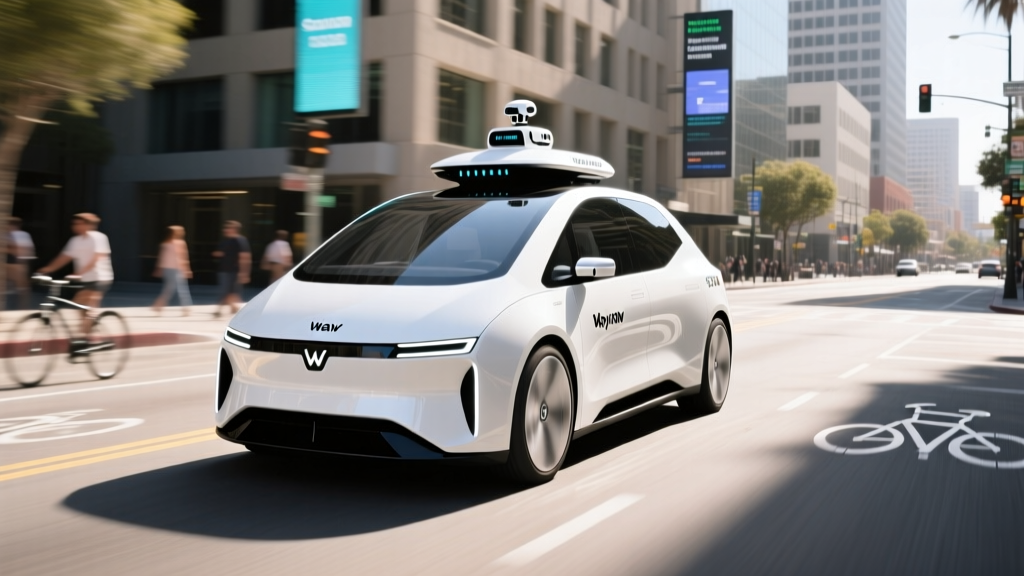
Waymo operates at SAE Level 4 — high automation within a defined Operational Design Domain (ODD). The vehicle handles all driving tasks without a human behind the wheel, but only within geofenced areas under specific conditions. This is fundamentally different from SAE Level 2 systems like Tesla Autopilot or GM Super Cruise, which require an attentive human driver at all times. Waymo vehicles have no steering wheel accessible to passengers and no expectation that a rider will intervene.
Where You Can Actually Ride a Waymo Right Now
Waymo's commercial service, branded Waymo One, is not a nationwide rollout. It operates in specific geofenced zones within approved cities, and expansion is measured in square miles, not states.
| City | Status | Approximate Service Area | Hours | Notes |
|---|---|---|---|---|
| Phoenix, AZ (Metro) | Fully commercial | ~315 sq mi (expanded from initial 225 sq mi) | 24/7 | Longest-running market; includes airport service to PHX |
| San Francisco, CA | Fully commercial | ~50 sq mi (city-wide coverage) | 24/7 | Dense urban core; freeway trips enabled on select routes |
| Los Angeles, CA | Fully commercial | ~80 sq mi (Santa Monica, Hollywood, Downtown, Beverly Hills) | Extended hours | Launched commercially mid-2024; expanding zones |
| Austin, TX | Commercial launch phase | ~45 sq mi (initial geofence) | Limited hours initially | Announced expansion; Uber integration for ride requests |
Phoenix remains Waymo's proving ground — the flat grid, wide roads, and dry climate make it the most permissive operating environment. San Francisco and Los Angeles are the real commercial tests: dense, chaotic, weather-variable urban cores where the unit economics must eventually work at scale.
Waymo Pricing vs. Uber and Lyft: The Cost to Riders
One of the most common questions is whether a robotaxi costs more or less than a human-driven rideshare. The answer is: it depends heavily on time, distance, and demand.
| Route | Waymo One | UberX | Lyft Standard |
|---|---|---|---|
| SF: Downtown → SFO Airport (~14 mi) | $38–$48 | $32–$45 | $30–$42 |
| Phoenix: Scottsdale → PHX Airport (~8 mi) | $22–$30 | $18–$28 | $17–$26 |
| LA: Santa Monica → Downtown (~16 mi) | $34–$44 | $28–$40 | $26–$38 |
| Short urban hop (~3 mi) | $10–$16 | $9–$14 | $8–$13 |
Key takeaways from pricing data:
- Base fares are competitive with UberX and Lyft Standard on most routes, typically within 10–20% of human-driven rideshare.
- Waymo does not surge-price the way Uber and Lyft do during peak demand. This can make Waymo cheaper during high-demand windows (rainstorms, bar close, events).
- Waymo applies its own demand pricing, but the multipliers are generally less aggressive than traditional rideshare surge.
- Tips are not expected — there is no driver to tip, which effectively reduces the total trip cost by 15–20% compared to a tipped rideshare.
The Economics: Does Waymo Actually Turn a Profit?
Here is where the picture gets complicated. Waymo does not publish unit economics, and Alphabet reports Waymo's financials under its "Other Bets" segment, which aggregates several ventures. But we can piece together a credible picture from public data, industry analysis, and operational logic.
Revenue Side
As of late 2025, Waymo was reportedly completing over 150,000 paid trips per week across all markets. At an average fare of roughly $25–$30 per trip, that implies annualized gross revenue in the range of $200–$250 million. Waymo has also begun exploring subscription plans and partnerships (such as its Uber integration in Austin), which could diversify revenue.
Cost Side — Why Profitability Is Elusive
The cost structure of a robotaxi fleet is fundamentally different from a rideshare platform:
- Vehicle hardware: Each Waymo 6th-generation vehicle (based on the Zeekr RT platform) is equipped with a sensor suite including multiple lidar units, radar, and cameras. Estimated per-vehicle cost: $100,000–$150,000+, significantly above a standard rideshare vehicle.
- Remote assistance: Waymo employs fleet monitors who can remotely assist vehicles in ambiguous situations. Reports suggest a ratio of roughly 1 remote operator per 10–15 vehicles, adding ongoing labor cost.
- Maintenance and cleaning: Autonomous fleets require dedicated depots for charging, sensor calibration, cleaning, and repairs. This is fixed infrastructure cost that Uber/Lyft offload onto drivers.
- Insurance and liability: Waymo self-insures and bears full liability for every trip. No driver-assumption of risk.
- R&D overhead: Alphabet has invested an estimated $30+ billion in Waymo since its inception (including the Google Self-Driving Car Project era). This is sunk cost, but it frames the return hurdle.
The Verdict on Profitability
As of early 2026, Waymo is almost certainly not profitable on a fully loaded basis (including R&D amortization and capital costs). It is likely approaching or achieving positive unit economics per trip in its most mature market (Phoenix) — meaning the marginal revenue from a ride exceeds the marginal cost of operating that specific trip. But covering the full fixed-cost base (fleet depreciation, depots, remote operations, R&D) across all markets is a different threshold, and one Waymo has not publicly claimed to cross.
Waymo Safety Record — What the Data Shows
As of its most recent public safety report, Waymo's fully autonomous fleet has accumulated over 40 million driverless miles. Key data points:
- Injury-causing crash rate: Waymo reports a rate approximately 85% lower than the human benchmark in comparable urban environments, based on police-reported crashes per million miles (source: Waymo Safety Report).
- Contact rate: Property-damage-only and injury crash contact rates are both below human benchmarks in Waymo's operating cities.
- NHTSA Standing General Order data: Waymo vehicles have been involved in reported incidents, as required for all ADS-equipped vehicles. Context matters — these reports include minor contacts at very low speeds (e.g., a vehicle being rear-ended at a stop).
- No Level 2 conflation: Waymo's crash data is specific to Level 4 driverless operations and should not be compared directly with Level 2 driver-assist incident reports from systems like Autopilot, where a human is nominally in control.
Source references: NHTSA Standing General Order, Waymo Safety Data
Under the Hood: Waymo's Technology Stack
Understanding Waymo's economics requires understanding its hardware. Unlike camera-only approaches (most notably Tesla's FSD), Waymo uses a multi-modal sensor suite:
Waymo 6th-Generation Sensor & Compute Platform
- Lidar: Multiple solid-state and spinning lidar units providing 360° 3D point-cloud mapping. Lidar operates independently of ambient light, giving Waymo an advantage at night and in high-glare conditions.
- Cameras: High-resolution external cameras for traffic-light state detection, signage reading, lane marking, and object classification. Improved low-light performance over prior generations.
- Radar: Imaging radar for velocity detection of other road users, functioning in rain and fog where lidar and cameras degrade.
- Audio detection: External microphones to detect emergency vehicle sirens and trigger appropriate yielding behavior.
- Compute: Custom-designed onboard AI inference hardware. Exact TOPS (tera operations per second) figures are not publicly disclosed but are estimated to be in the hundreds of TOPS range.
- HD Maps: Waymo relies on pre-built, centimeter-accurate HD maps of its geofenced service areas, updated regularly. This is a significant differentiator from end-to-end neural approaches that attempt to drive without prior map data.
The reliance on HD maps and geofencing is both Waymo's strength and its scalability constraint. The system is extraordinarily capable within its mapped domain, but expanding to a new city requires extensive mapping, validation, and regulatory approval before a single paying rider enters the vehicle.
Regulatory Landscape: Who Allows This?
Robotaxi operations in the United States are governed by a patchwork of state and local regulations — there is no single federal "robotaxi license." Key regulatory bodies:
- California Public Utilities Commission (CPUC): Issues permits for commercial passenger service in California. Waymo holds a TCP (Transportation Charter-Party Carrier) permit with a driverless pilot/commercial deployment authorization.
- California DMV: Issues testing permits and requires annual disengagement reports (though Waymo has argued its reporting methodology differs from other OEMs).
- Arizona: Among the most permissive states for AV operations. The Arizona Governor's Office and ADOT have allowed commercial deployment with relatively light regulatory friction. Waymo's Phoenix operations were the first to go fully commercial.
- Texas: Austin operations fall under state AV legislation (Texas Transportation Code Ch. 545) and local coordination with the City of Austin.
- NHTSA (Federal): Sets Federal Motor Vehicle Safety Standards (FMVSS). Waymo's current Zeekr-based vehicles required specific FMVSS exemptions since they lack traditional controls (steering wheel, pedals accessible to passengers). NHTSA also enforces the Standing General Order requiring crash reporting for all ADS-equipped vehicles.
The regulatory environment remains a bottleneck. Each new city requires separate approvals, and political opposition (as seen in San Francisco in 2023–2024 when residents raised concerns about blocked traffic and emergency-vehicle interactions) can slow or constrain expansion.
Current Limitations: Where Waymo Cannot (Yet) Go
For all its capability, Waymo's Level 4 service has well-defined boundaries. These are not edge cases — they are structural constraints of the current system.
Known Operational Limitations
- Geofence boundaries: The vehicle will not drive outside its mapped and approved zone. A trip from Scottsdale to Tucson is not possible, even though the highway between them is straightforward.
- Heavy rain and flooding: Waymo vehicles reduce speed or may pull over in heavy precipitation that degrades lidar and camera performance. Phoenix's monsoon season has caused service suspensions.
- Snow and ice: Waymo does not currently operate in any city with regular snowfall. Sensor occlusion from snow and unpredictable road-surface friction are unresolved challenges.
- Construction zones: While Waymo handles many construction scenarios, complex or rapidly changing construction zones with conflicting signage or lane markings can cause the vehicle to stop and request remote assistance.
- Unprotected left turns: In dense urban traffic without a dedicated turn signal, Waymo vehicles are sometimes more conservative than human drivers, which can cause delays and frustrate other road users.
- Airport and venue access: Pickup/dropoff at certain airports and event venues requires specific geofence mapping and coordination. PHX airport service was added only after extended testing.
- No highway-to-highway intercity travel: While some freeway segments are now included (San Francisco), Waymo does not offer point-to-point intercity trips on freeways outside its urban geofences.
So, Does Waymo Make Money — and When Might It?
The honest answer in 2026: Waymo generates meaningful revenue but has not demonstrated full profitability when all costs are included. The trajectory, however, is notable:
- Trip volume is growing — from thousands of paid rides per week in 2023 to over 150,000 per week by late 2025.
- Per-vehicle hardware costs are declining with each generation (the 6th-gen system is estimated to be significantly cheaper than the 5th-gen Pacifica-based platform).
- Remote-assistance ratios are improving as the AI handles more edge cases without human intervention.
- New markets (Austin, potential future expansions to Miami, Atlanta, and others) spread R&D fixed costs over a larger revenue base.
Industry analysts estimate Waymo could reach operational breakeven (revenue covering direct operating costs, excluding R&D amortization) in its most mature markets within the next 2–3 years if current growth trajectories hold. Full profitability — returning Alphabet's $30B+ investment — is a much longer timeline, likely measured in decades or dependent on licensing the technology to OEMs and fleet operators.
The comparison to early Amazon (years of operating at a loss while building infrastructure) is apt, but so is the comparison to other Alphabet "Other Bets" that were eventually shuttered. Waymo's advantage is that it has the only commercially operating, scaled Level 4 robotaxi fleet in the U.S., and that first-mover data advantage compounds over time.
Frequently Asked Questions
Is Waymo truly self-driving, or is there a human involved?
Waymo is SAE Level 4 — fully driverless within its geofenced service area. There is no human driver in the vehicle, no steering wheel accessible to passengers, and no expectation that you will take control. Remote fleet monitors can assist the vehicle in ambiguous situations, but they do not "drive" the car in real time. This is categorically different from Level 2 systems like Tesla FSD (Supervised), which require a human driver to remain attentive.
How much does a Waymo ride cost compared to Uber or Lyft?
Waymo fares are generally within 10–20% of UberX and Lyft Standard on comparable routes. The key difference: Waymo does not surge-price as aggressively during peak demand, and there is no driver to tip. A 10-mile ride in Phoenix typically costs $22–$30. Exact pricing varies by city, time, and demand.
How safe are Waymo robotaxis compared to human drivers?
Based on Waymo's published safety data (40+ million driverless miles), the fleet's injury-causing crash rate is approximately 85% lower than the human benchmark in comparable urban environments, per police-reported crash data. However, robotaxi safety data is still relatively young compared to decades of human driving data, and the operating environments are geofenced to (generally) favorable conditions. All incidents are reported to NHTSA under the Standing General Order.
Where can I use Waymo right now?
As of early 2026, Waymo One is commercially available in Phoenix (metro area, ~315 sq mi), San Francisco (city-wide, ~50 sq mi), Los Angeles (~80 sq mi covering Santa Monica, Hollywood, Downtown), and Austin (initial zone, ~45 sq mi). Service is accessed via the Waymo One app. Availability within each city is limited to the geofenced zone.
What happens if the Waymo vehicle encounters a situation it can't handle?
The vehicle is designed to come to a safe stop (typically pulling to the side of the road) and request assistance from a remote fleet monitor. The monitor can assess the situation via the vehicle's cameras and sensors and guide the vehicle through the scenario or dispatch roadside assistance. The vehicle will not attempt a maneuver it is not confident it can execute safely.
Can I use Waymo in bad weather?
Waymo operates in light rain but may reduce speed or suspend service during heavy precipitation, flooding, or conditions that degrade sensor performance. Snow and ice operations are not currently supported. In Phoenix, monsoon-season storms have triggered temporary service pauses.
Is Waymo going to expand to my city?
Waymo has indicated plans to expand to additional U.S. cities, but each expansion requires HD mapping, validation testing, and regulatory approval — a process that takes months to years per city. Announced expansion targets should not be confused with live service. Check the Waymo website for current availability.