Does Vegas Have Waymo? The Short Answer for 2026
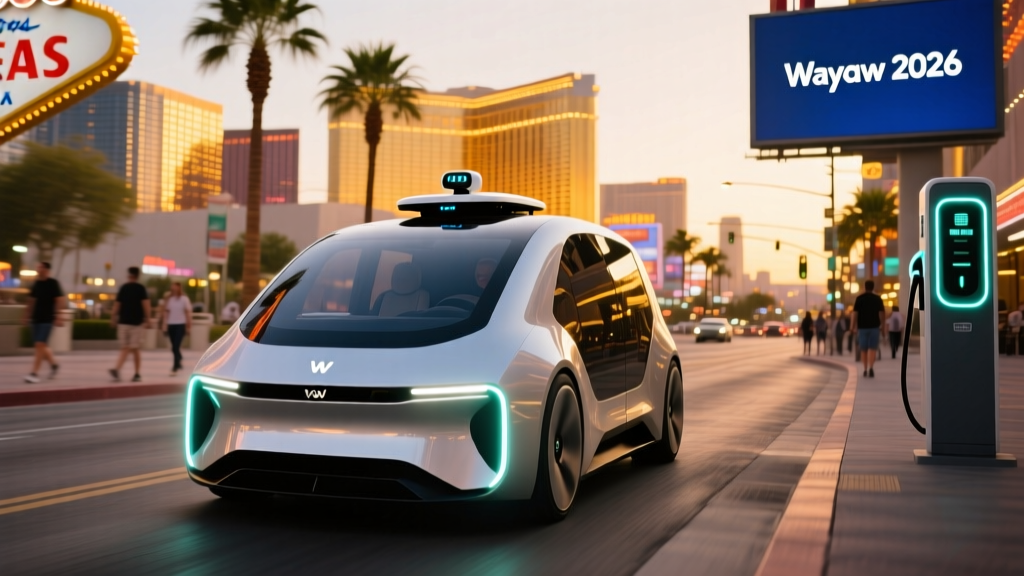
If you're standing on the Las Vegas Strip wondering whether you can hail a driverless Waymo robotaxi right now, the answer requires some nuance. Waymo does not currently operate a public, fully driverless robotaxi service in Las Vegas. However, Waymo has maintained a testing and mapping presence in the Las Vegas area, and the city has been part of Waymo's expansion roadmap discussions. Meanwhile, Las Vegas has hosted other autonomous vehicle pilots — most notably Motional's (Hyundai/Aptiv) robotaxi operations and various shuttle programs — though the landscape of who is operating, where, and in what capacity shifts frequently based on regulatory approvals and corporate strategy.
This guide breaks down exactly what autonomous ride-hailing options exist in Las Vegas as of 2026, how robotaxi pricing compares to Uber and Lyft, the real safety data behind Level 4 driverless services, and what limitations you should understand before stepping into a vehicle with no one behind the wheel.
Understanding SAE Automation Levels: Robotaxi vs. Driver-Assist
Before evaluating any robotaxi service, it's critical to understand the distinction between consumer driver-assist systems and true driverless robotaxis. Marketing language often blurs this line, but the SAE International framework is unambiguous.
| SAE Level | Name | Who Drives? | Example |
|---|---|---|---|
| Level 0 | No Automation | Human does everything | Conventional car |
| Level 1 | Driver Assistance | Human + one system (steering OR speed) | Adaptive cruise control |
| Level 2 | Partial Automation | Human supervises; system handles steering AND speed | Tesla Autopilot, GM Super Cruise, Ford BlueCruise |
| Level 3 | Conditional Automation | System drives in limited conditions; human must take over when requested | Mercedes DRIVE PILOT (limited markets) |
| Level 4 | High Automation | System drives fully within its operational domain; no human needed | Waymo One, Zoox |
| Level 5 | Full Automation | System drives everywhere, all conditions | Does not exist commercially |
Waymo One is a SAE Level 4 service. The vehicle operates without a human driver within a defined geofenced area and specific conditions. This is fundamentally different from Tesla's Full Self-Driving (Supervised), which remains a Level 2 system requiring continuous driver attention and hands-on-wheel readiness, regardless of its name. When you ride in a Waymo, there is no one in the driver's seat. When you use FSD in a Tesla, you are still the driver — legally and practically.
Where Can I Use Robotaxi Services Right Now?
As of 2026, fully driverless commercial robotaxi services in the United States are concentrated in a handful of metro areas. Here is the current landscape:
| Service | City | Status (2026) | Geofence Notes |
|---|---|---|---|
| Waymo One | Phoenix, AZ (metro) | Live — fully driverless, 24/7 | Chandler, Tempe, Mesa, parts of Scottsdale and Phoenix proper; ~300+ sq mi |
| Waymo One | San Francisco, CA | Live — fully driverless | Most of SF; expanded across the city |
| Waymo One | Los Angeles, CA | Live — fully driverless | Parts of LA including Santa Monica, Hollywood, downtown; expanding |
| Waymo One | Austin, TX | Live — limited driverless operations | Central Austin geofence; expanding gradually |
| Waymo | Las Vegas, NV | Testing/mapping — not public driverless service | Waymo vehicles have mapped and tested in Vegas, but no open Waymo One service as of 2026 |
| Motional (Hyundai/Aptiv) | Las Vegas, NV | Limited operations / pilot programs | Has operated Lyft-integrated robotaxi rides in parts of Vegas; availability varies |
| Zoox (Amazon) | Foster City, CA / Las Vegas, NV | Testing; limited public rides | Purpose-built vehicle; small-scale public exposure events |
| Cruise (GM) | Various | Paused / gradual re-entry post-2023 incident | Operations significantly scaled back; supervised testing in select cities |
The key takeaway for Las Vegas visitors: you cannot currently open the Waymo app and request a driverless ride on the Strip or in most of the valley. Waymo has tested in the area, and the city's grid layout, wide roads, and favorable weather make it a logical future expansion target. But "logical future target" and "available now" are very different things.
For visitors who want a robotaxi experience in the Southwest, Phoenix is roughly a 4.5-hour drive from Las Vegas and offers Waymo One service across a large portion of the East Valley. If you're planning a trip specifically to ride in a driverless vehicle, Phoenix is your nearest reliable option.
How Much Does a Robotaxi Cost vs. Uber and Lyft?
Robotaxi pricing has evolved as companies move from subsidized free-ride promotions toward sustainable unit economics. Here's how Waymo One pricing compares to traditional rideshare in markets where it operates:
| Factor | Waymo One | Uber / Lyft |
|---|---|---|
| Base fare structure | Time + distance, similar to rideshare | Time + distance + service fee |
| Typical 5-mile ride (off-peak) | $12–$18 | $10–$20 (varies by surge) |
| Surge pricing | Generally no dynamic surge pricing | Can 1.5x–3x+ during peak demand |
| Tipping | Not expected (no driver) | Customary ($2–$5+) |
| Wait time | 5–12 minutes (varies by density) | 3–8 minutes (varies by driver availability) |
| Ride credits / promotions | Frequent new-user promos ($5–$15 off) | New-user promos, subscription passes |
In practice, Waymo rides tend to be price-competitive with Uber and Lyft during normal demand periods and often cheaper during high-surge events (concerts, sporting events, airport rushes) because Waymo does not apply surge multipliers. However, Waymo's geofenced service area can limit availability, and wait times may be longer in peripheral zones.
For Las Vegas, if and when a driverless service launches on or near the Strip, expect initial promotional pricing to build ridership, followed by normalization to rates comparable to UberX or Lyft Standard. The absence of a driver tip is a consistent 15–20% savings over rideshare norms.
How Safe Are Robotaxis? Real Data, Not Marketing
Safety is the most consequential question in autonomous vehicles, and it demands data — not slogans. Waymo has published safety reports and accumulated billions of simulated miles plus millions of real-world driverless miles. Here's what the numbers show:
Waymo Safety Data Points (through available reporting)
- Real-world fully autonomous miles driven: Over 10 million driverless miles across Phoenix, San Francisco, Los Angeles, and Austin combined (as of late 2025 reporting). Waymo reports over 40 million total autonomous miles including safety-driver operations.
- Contact rate vs. human benchmarks: Waymo's published data (sourced from their Waymo Safety Report) indicates a reduction in police-reported crash involvement compared to human baseline rates in comparable urban environments. Specifically, Waymo reports approximately 85% fewer injury-causing crashes and 57% fewer police-reported crashes per million miles compared to human drivers in benchmarked cities.
- NHTSA Standing General Order data: Under NHTSA's Standing General Order, all ADS-equipped vehicles must report crashes. Waymo has reported incidents — predominantly low-speed, minor-contact events (e.g., being rear-ended at stoplights, scraping a parked vehicle). No Level 4 robotaxi fatality involving a Waymo vehicle in fully driverless mode has been reported as of this writing.
- Disengagement / intervention context: In fully driverless (Level 4) operations within the geofence, there is no human driver to "disengage." Remote assistance exists — a remote operator can provide guidance to the vehicle's planning system in ambiguous scenarios, but does not "joystick" the car in real time.
For comparison, the U.S. traffic fatality rate sits at roughly 1.3 deaths per 100 million vehicle miles (per NHTSA data). Robotaxi services have not accumulated enough driverless miles to produce statistically definitive fatality-rate comparisons — 10 million miles is a large number for one fleet, but small in epidemiological terms. What the data does suggest is that Level 4 robotaxis in geofenced, favorable-condition urban environments are performing at or above human-driver safety baselines for the crash categories measured.
The Cruise October 2023 incident in San Francisco — where a pedestrian was dragged after being struck by a human-driven vehicle and then run over by a Cruise robotaxi — underscored that edge cases involving multi-party scenarios remain challenging. That incident led to Cruise's California permit suspension and a significant industry-wide recalibration on post-collision behavior programming.
What Powers a Waymo Robotaxi? The Technology Stack
Waymo's 5th-generation and 6th-generation "Waymo Driver" systems use a sensor-fusion approach that differs significantly from Tesla's camera-only strategy. Here's what's on the vehicle:
Waymo 6th-Gen Driver (Jaguar I-PACE and newer platforms)
- LiDAR: Multiple roof-mounted and body-integrated LiDAR units providing 360° high-resolution 3D point-cloud mapping up to 500+ meters. LiDAR gives precise depth perception independent of lighting conditions — critical for nighttime and glare scenarios.
- Cameras: High-resolution camera array covering 360° with overlapping fields of view for redundancy. Used for traffic-light state detection, signage reading, lane-marking identification, and object classification.
- Radar: Multiple radar units for velocity detection of moving objects, performance in rain and fog where LiDAR and cameras degrade.
- Audio sensors: External microphones to detect sirens from emergency vehicles, even before they are visually in range.
- Compute: Custom-designed onboard compute platform processing sensor data in real time, running Waymo's perception, prediction, and planning stack.
- HD Maps: Waymo pre-maps every road in its geofence at centimeter-level precision. The vehicle localizes against this map in real time. This is why Waymo cannot simply "drive anywhere" — the map must exist first.
This sensor-rich approach contrasts with Tesla's vision-only (camera + neural network) strategy for FSD. The engineering tradeoff: Waymo's stack is more expensive per vehicle (estimated $100,000–$150,000+ in sensor hardware alone, though costs have decreased with each generation) but provides redundant sensing modalities. Tesla's approach is cheaper to manufacture but relies entirely on camera interpretation, which can struggle in edge cases involving unusual lighting, occlusion, or novel objects.
For Las Vegas deployment specifically, Waymo's mapping requirement means the company must complete HD mapping of every road in the intended service area before launching. The Strip's dense, dynamic environment — construction zones, pedestrian crowds, event-driven traffic surges — adds complexity to both the mapping and real-time perception challenges.
Regulatory Landscape: Who Approves Robotaxi Operations?
Robotaxi deployment in the United States is governed by a patchwork of state and local regulations. There is no single federal "robotaxi license." Here's how the framework operates:
- Federal (NHTSA): The National Highway Traffic Safety Administration sets vehicle safety standards (FMVSS) and requires crash reporting via the Standing General Order. NHTSA does not currently "approve" ADS operations but can investigate and compel recalls. Vehicles like the Zoox purpose-built robotaxi have required FMVSS exemptions since they lack traditional controls (steering wheel, pedals).
- State level — Nevada: Nevada was one of the first states to pass autonomous vehicle legislation (AB 511 in 2011, updated since). The Nevada DMV issues autonomous vehicle testing and deployment permits. Companies must demonstrate safety case documentation, insurance coverage (minimum $5M), and compliance with state traffic law. Nevada's framework allows both testing and commercial deployment, but each company must apply and be approved.
- State level — California (comparison): California's CPUC and DMV jointly regulate robotaxis. The CPUC issues commercial passenger service permits; the DMV issues testing and driverless deployment permits. This dual-agency structure created the framework through which Waymo and Cruise operated in SF and LA.
- Local (city/county): Municipalities often have input on geofence boundaries, curb management, and emergency-services coordination. Las Vegas and Clark County would be involved in any future deployment on or near the Strip.
For Waymo to launch a public Waymo One service in Las Vegas, the company would need to secure a Nevada DMV deployment permit, coordinate with local authorities on geofence design, and satisfy insurance and safety-reporting requirements. The regulatory pathway exists — it is a matter of corporate prioritization and operational readiness.
Current Limitations of Robotaxi Services
Level 4 robotaxis are genuinely impressive within their operational design domain, but that domain has hard boundaries. Understanding these limitations is essential for anyone planning to rely on autonomous ride-hailing:
What Robotaxis Cannot Do (as of 2026)
- Drive outside the geofence: If your destination is outside the mapped and approved service area, the ride cannot be requested. The vehicle will not cross the geofence boundary.
- Handle severe weather: Heavy rain, snow, ice, and dense fog degrade sensor performance. Waymo services may be suspended or restricted during such conditions. Phoenix's dry climate is one reason it was the first launch city.
- Navigate unmapped construction zones: While the system can handle minor route deviations, significant road-layout changes that don't match HD maps can cause the vehicle to stop and request remote assistance.
- Pick up at any address: Pick-up and drop-off points may be restricted to mapped, approved locations — often curb-side pullouts rather than arbitrary GPS coordinates. Dense urban areas with limited curb access can be challenging.
- Handle complex multi-party incident scenes: Unusual scenarios like a police officer directing traffic with hand signals, an accident scene with emergency vehicles blocking lanes, or a protest blocking a road may require the vehicle to stop, wait, or reroute — sometimes conservatively.
- Accommodate all passengers: Current robotaxi fleets (Jaguar I-PACE based) have limited capacity — typically 1–3 passengers, no car seats, limited cargo space, and wheelchair accessibility remains a work in progress for most operators.
- Operate on highways universally: While Waymo has expanded to include highway segments in some geofences, many robotaxi services initially launched on surface streets only. Highway operation at 65–75 mph requires additional validation.
For Las Vegas specifically, the Strip environment presents unique challenges: extreme pedestrian density on sidewalks spilling into roadways, frequent temporary road closures for events, construction on and around the corridor, and the sheer volume of ride-hail and shuttle traffic. These factors make the Strip one of the more complex urban environments for autonomous navigation — which is partly why services have concentrated initial deployments in less chaotic areas.
Frequently Asked Questions
Does Vegas have Waymo in 2026?
No. Waymo does not currently operate a public Waymo One driverless service in Las Vegas. Waymo vehicles have tested and mapped parts of the Las Vegas area, but there is no open commercial robotaxi service available to the public in the city as of 2026.
Can I ride in any autonomous vehicle in Las Vegas?
Availability varies. Motional (the Hyundai/Aptiv joint venture) has operated limited robotaxi pilot rides in Las Vegas, sometimes integrated with Lyft. Zoox (Amazon) has also conducted testing and limited public exposure events in the city. However, these are not equivalent to the always-available, on-demand driverless service that Waymo One provides in Phoenix or San Francisco. Check each company's app or website for current availability before planning a trip around it.
Is Tesla Full Self-Driving the same as a Waymo robotaxi?
No. Tesla FSD (Supervised) is a SAE Level 2 driver-assistance system. The driver must remain attentive, keep hands on the wheel, and be prepared to take over at any moment. Waymo One is a SAE Level 4 driverless service — there is no human driver, no steering wheel interaction required, and the system handles all driving within its geofence. They are fundamentally different categories of technology, regardless of Tesla's naming convention.
How much would a robotaxi ride cost in Las Vegas if available?
Based on Waymo One pricing in other markets, expect a 5-mile ride to cost approximately $12–$18 off-peak, comparable to UberX or Lyft Standard but without surge pricing or tipping. Airport runs (e.g., Harry Reid International to mid-Strip, roughly 4 miles) would likely fall in the $10–$16 range absent promotional pricing.
Why hasn't Waymo launched in Las Vegas yet?
Several factors likely contribute: the complexity of the Strip corridor's pedestrian and traffic environment, the need for comprehensive HD mapping across the intended service area, prioritization of larger initial markets (SF, LA, Phoenix, Austin), and coordination with Nevada state and local regulators. Las Vegas's favorable weather and grid layout are positives, but the dynamic, event-driven nature of the tourist corridor adds operational complexity.
How safe are Waymo robotaxis compared to human drivers?
Waymo's published safety data indicates approximately 85% fewer injury-causing crashes and 57% fewer police-reported crashes per million miles compared to human-driver benchmarks in comparable urban settings. However, total driverless miles (~10M+) remain small relative to the billions of human-driven miles needed for full statistical confidence. No Waymo driverless-mode fatality has been reported. For context, see NHTSA's crash reporting data.
Will Las Vegas get Waymo in the future?
Las Vegas is widely considered a strong candidate for future Waymo expansion given its weather, road infrastructure, tourism-driven transportation demand, and Nevada's established AV regulatory framework. However, Waymo has not announced a specific timeline for Las Vegas service. Any future launch would require Nevada DMV permitting, HD mapping completion, and local coordination.