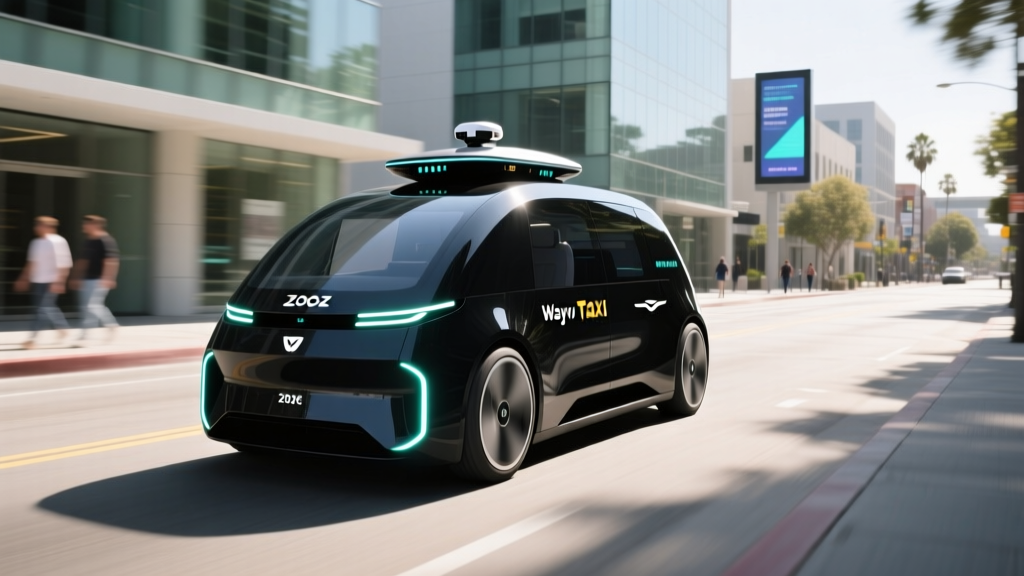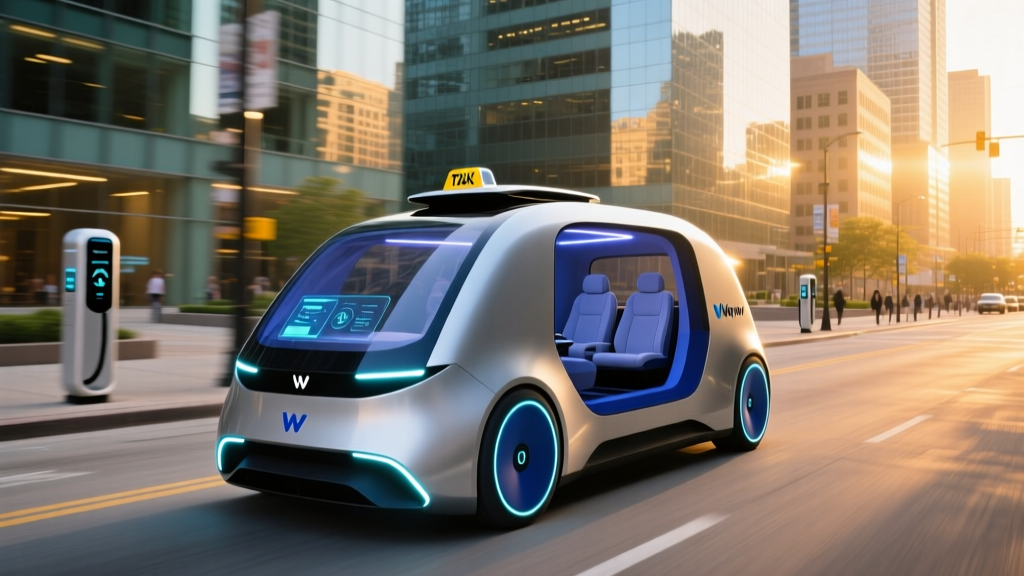
If you've been watching Waymo's driverless taxis sweep through Phoenix, San Francisco, and Los Angeles, you're probably wondering: does Chicago have Waymo? The short answer, as of early 2026, is no — Waymo has not launched commercial robotaxi service in Chicago. But the longer answer involves active testing, a complex Illinois regulatory landscape, and a Midwest expansion roadmap that could bring autonomous rides to the Windy City sooner than many expect.
This guide covers exactly where Waymo operates today, what's happening in Chicago specifically, how robotaxi pricing compares to Uber and Lyft, what the safety data actually shows, and the real-world limitations that determine when — and how — driverless service might reach Illinois.
Where Waymo Actually Operates in 2026
Waymo's commercial driverless service, branded as Waymo One, is live in a limited number of U.S. metro areas. These aren't announced pilot programs — they're fully operational, paid ride-hailing services where you summon a vehicle with no human behind the wheel.
| City | Status | Service Area Size | Hours | Vehicle |
|---|---|---|---|---|
| Phoenix, AZ | Fully commercial (since 2020) | ~225 sq mi | 24/7 | Jaguar I-PACE / Zeekr RT |
| San Francisco, CA | Fully commercial (since 2022) | ~50 sq mi core, expanding | 24/7 | Jaguar I-PACE / Zeekr RT |
| Los Angeles, CA | Fully commercial (since 2024) | ~80 sq mi | 24/7 | Jaguar I-PACE / Zeekr RT |
| Austin, TX | Commercial launch (2025) | ~40 sq mi initial | Limited hours initially | Zeekr RT |
| Chicago, IL | Not available — no announced date | N/A | N/A | N/A |
Waymo has also conducted mapping and testing in additional cities, including Atlanta and Miami, but these are not yet open to paying riders. Chicago is not currently listed on Waymo's public expansion roadmap, which means any launch is likely still 18–36 months away at minimum.
Why Chicago Is a Harder Robotaxi Market
Chicago presents a set of challenges that don't exist in Waymo's current Sun Belt strongholds. Understanding these obstacles explains why the company has prioritized warmer, less dense cities first.
Weather: The Sensor and Traction Problem
Chicago averages roughly 36 inches of snowfall per year and regularly experiences sub-freezing temperatures from November through March. For a robotaxi, this creates three compounding problems:
- Sensor occlusion: Heavy snow, sleet, and road salt spray can obscure lidar, cameras, and radar — the core perception stack Waymo relies on to detect pedestrians, cyclists, and other vehicles.
- Lane marking visibility: Snow-covered roads erase the lane markings that help autonomous systems maintain positioning, forcing reliance on HD maps and GPS alone.
- Traction variability: Black ice, slush, and partially plowed streets create friction coefficients that are difficult for driving algorithms to predict in real time.
Waymo has tested in snowy conditions in Buffalo, New York, and Novi, Michigan, but these were controlled mapping exercises — not commercial operations carrying passengers. No Level 4 robotaxi service currently operates commercially in a city with Chicago's winter severity.
Urban Density and Infrastructure Complexity
Chicago's Loop, River North, and West Loop corridors feature construction zones that shift weekly, elevated train tracks that interfere with GPS signals, and a street grid that includes multi-level roads (notably Wacker Drive). These edge cases require extensive mapping and validation before a driverless vehicle can navigate them safely without a human fallback.
Illinois Regulatory Framework
Unlike Arizona, which took a permissive approach to autonomous vehicle testing and deployment, Illinois has a more cautious regulatory posture. The state's Illinois General Assembly has passed legislation allowing autonomous vehicle testing, but commercial driverless ride-hailing requires specific approval from the Illinois Department of Transportation and, in Chicago, coordination with the Chicago Department of Transportation (CDOT). As of early 2026, no company has received full commercial deployment approval for driverless passenger service in Chicago.
Waymo One is a SAE Level 4 service — meaning the vehicle handles all driving tasks within a defined operational design domain (geofenced area, specific weather conditions) with no human driver present. This is fundamentally different from Tesla Autopilot, FSD Supervised, GM Super Cruise, or Ford BlueCruise, which are all SAE Level 2 systems requiring continuous driver attention and hands-on or eyes-on engagement. If you're comparing robotaxis to your car's driver-assist features, they are not the same category of technology.
How Much Do Robotaxi Rides Cost vs. Uber and Lyft?
In cities where Waymo One operates, pricing is designed to be competitive with traditional rideshare — not dramatically cheaper or more expensive. Here's how typical fares compare based on reported rider data and Waymo's published pricing structure:
| Route Type | Waymo One | UberX | Lyft Standard |
|---|---|---|---|
| Short trip (~3 miles) | $9–$13 | $10–$15 | $9–$14 |
| Medium trip (~8 miles) | $18–$26 | $17–$28 | $16–$25 |
| Airport run (~15 miles) | $32–$48 | $30–$50 | $28–$45 |
| Surge pricing | No surge multiplier | 1.5x–3.0x common | 1.3x–2.5x common |
The key differentiator: Waymo does not apply dynamic surge pricing the way Uber and Lyft do during peak demand. However, Waymo's availability is limited by fleet size, which means wait times can be longer during high-demand periods. In Phoenix, typical wait times range from 3–8 minutes; in San Francisco, they can stretch to 10–15 minutes during evening rush hour.
Waymo also offers promotional pricing for first-time riders and has partnered with Uber to list Waymo rides within the Uber app in select markets — meaning you may be able to request a Waymo through an app you already use.
Waymo's Safety Record: What the Data Shows
Safety is the most scrutinized aspect of robotaxi operations, and Waymo has published more data than any competitor. Here's what we know from official reports and regulatory filings:
- Total autonomous miles driven: Over 30 million fully driverless miles as of late 2025 (source: Waymo)
- Injury-causing crash rate: Waymo reports a 85% lower rate of injury-causing crashes compared to human drivers in the same geographies, based on a study published with the Swiss Re reinsurance company
- Contact with emergency services: Waymo vehicles contact roadside assistance or emergency services at a rate of approximately 1 per 10,000 trips for minor incidents (stalled vehicle, minor contact)
- NHTSA standing general order: Waymo reports all Level 4 incidents to NHTSA as required; their public crash data shows predominantly low-speed, minor-contact events
For context, the National Highway Traffic Safety Administration (NHTSA) requires all companies operating autonomous vehicles to report crashes under a Standing General Order. Waymo's reported incidents are overwhelmingly minor — fender-benders where the Waymo vehicle was typically rear-ended or sideswiped by a human-driven car, not the at-fault party.
However, there have been notable incidents that illustrate remaining limitations:
- In San Francisco, Waymo vehicles were documented in 2024 interacting unexpectedly with construction zones and school buses, prompting temporary operational pauses and software updates.
- In Phoenix, a Waymo vehicle was involved in a collision with a pedestrian who stepped into the roadway from behind a visual obstruction — the vehicle braked but could not avoid contact at the speed of travel.
These events underscore that Level 4 autonomy is not infallible. It is, based on available data, statistically safer than the average human driver in comparable conditions, but edge cases remain an active engineering challenge.
How Waymo's Technology Stack Works
Waymo's vehicles do not rely on a single sensor type. Unlike Tesla's camera-only approach, Waymo uses a redundant, multi-sensor perception stack:
| Sensor Type | Function | Range |
|---|---|---|
| Lidar (custom-built) | 3D point cloud mapping of surroundings; object detection and distance measurement | Up to 500+ meters |
| Cameras (multiple) | Color and texture recognition; traffic light state, signage, lane markings | Up to 300+ meters |
| Radar (imaging) | Velocity detection of moving objects; performance in rain/fog | Up to 350+ meters |
| External audio sensors | Detection of emergency vehicle sirens | Directional, ~100 meters |
| HD maps + GPS/IMU | Centimeter-level localization within pre-mapped environment | Geofenced area |
The Waymo Driver (their term for the full hardware/software system) processes data from all sensors simultaneously to build a real-time model of the environment. The system classifies objects (pedestrian, cyclist, vehicle, construction barrier), predicts their likely behavior, and plans a driving trajectory accordingly — all within milliseconds.
Crucially, Waymo vehicles operate within a geofenced operational design domain (ODD). The vehicle will only operate in areas that have been pre-mapped and validated. If the vehicle encounters a scenario outside its ODD — such as an unmapped road closure or severe weather beyond its operational limits — it will execute a minimal risk condition (pull over safely or stop) rather than attempt to navigate the unknown.
The current production vehicle is the Zeekr RT, a purpose-built electric robotaxi developed with Geely's Zeekr brand, featuring no steering wheel or pedals. Waymo also continues to operate modified Jaguar I-PACE vehicles (equipped with a 90 kWh NMC battery) in some markets, which do retain manual controls for testing and repositioning.
Current Limitations: What Robotaxis Cannot Do
Understanding what Waymo can't do is just as important as knowing what it can. These limitations directly explain why Chicago — and most U.S. cities — don't yet have service:
- Heavy snow and ice: No commercial robotaxi service operates in sustained winter snowfall. Sensor occlusion and unpredictable traction make current systems unsuitable for Chicago's January–March conditions.
- Unmapped areas: The vehicle will not drive outside its geofence. If your destination is beyond the mapped zone, the ride simply cannot be requested.
- Complex construction zones: While Waymo has improved its handling of temporary traffic controls, major multi-phase construction projects with shifting lane configurations can still require remote assistance or trip rerouting.
- Multi-level roads and tunnels: GPS-denied environments like Chicago's lower Wacker Drive or the Lake Shore Drive tunnel sections present localization challenges that require specialized mapping and validation.
- Airport pickups: In most markets, Waymo has limited or no access to airport ride-app pickup zones due to airport authority regulations, though Phoenix Sky Harbor access was added in 2024.
- Accessibility: While Waymo vehicles are equipped with features for riders with disabilities, wheelchair-accessible vehicle availability remains limited compared to traditional rideshare WAV options.
When Could Waymo Come to Chicago?
Waymo has not announced a Chicago launch date. Based on the company's expansion pattern — typically 12–18 months between announcement and commercial launch — and the regulatory and weather challenges outlined above, a realistic timeline for Chicago service would be:
- Testing/mapping phase: Could begin as early as 2026–2027 if Waymo selects Chicago as a next-wave city
- Limited commercial pilot: Possibly 2028, restricted to fair-weather months and a small geofence (e.g., Loop, River North, West Loop)
- Year-round commercial service: Unlikely before 2029 at the earliest, pending resolution of winter-weather operational capabilities
It's worth noting that other autonomous vehicle companies — including Cruise (before its 2024 operational pause) and Motional — have tested in Chicago, but none have reached commercial deployment. The city's regulatory environment and climate make it one of the most challenging major U.S. markets for Level 4 autonomy.
Frequently Asked Questions
Does Chicago have any self-driving taxi service right now?
No. As of 2026, no company operates a commercial driverless ride-hailing service in Chicago. Waymo, the market leader, has not announced Chicago as an upcoming market. Several companies have conducted testing in the city, but none have received approval for paid, driverless passenger service.
Is Waymo's robotaxi truly self-driving, or is there a remote human driver?
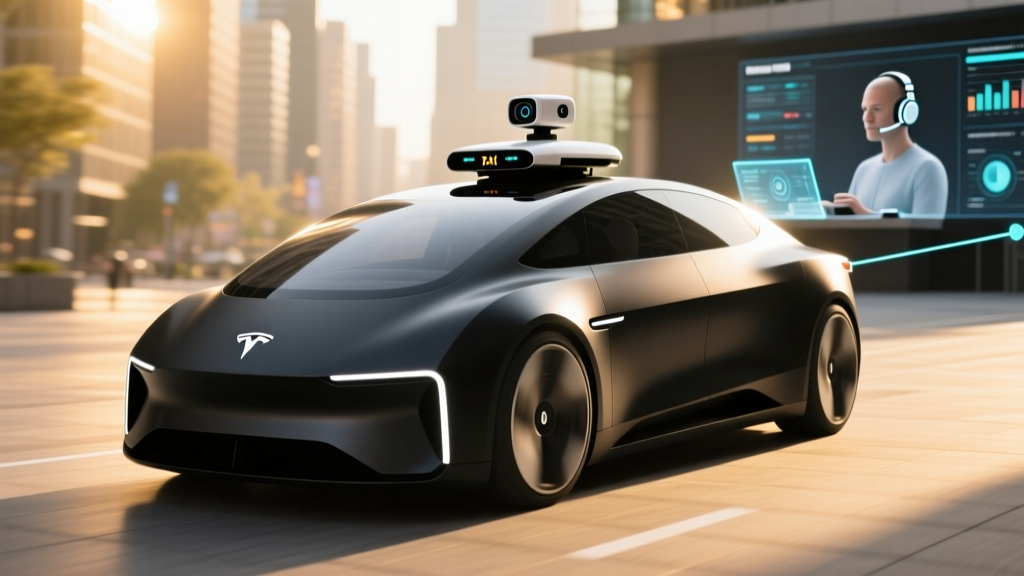
Waymo One is SAE Level 4 autonomy — the vehicle drives itself with no human in the driver's seat and no remote joystick control. However, Waymo employs remote fleet assistance operators who can help the vehicle resolve ambiguous situations (e.g., an unusual construction zone) by confirming a path or rerouting. The remote operator does not steer or accelerate the vehicle in real time; they provide high-level guidance that the vehicle's system then executes.
How does Waymo compare to Tesla's Full Self-Driving?
They are fundamentally different systems. Tesla FSD (Supervised) is an SAE Level 2 driver-assist system that requires a licensed, attentive driver in the seat at all times. Waymo One is an SAE Level 4 driverless service with no human driver present. Tesla FSD can technically drive on any road, while Waymo is limited to its pre-mapped geofence. As of 2026, Tesla has not launched a commercial robotaxi service.
What would Waymo rides cost in Chicago if it launched?
Based on pricing in existing markets, expect fares comparable to UberX or Lyft Standard — roughly $10–$15 for a short Loop-to-River North trip, $20–$30 for a medium-distance ride, and $35–$50 for an O'Hare or Midway airport run. Waymo does not use surge pricing, which could make it more predictable during peak demand.
Are robotaxis safe in rain?
Waymo operates in rain in all of its current markets, including San Francisco's frequent fog and drizzle and Phoenix's monsoon storms. Light to moderate rain does not suspend service. However, heavy downpours that significantly reduce visibility or cause standing water can trigger operational slowdowns or temporary pauses. Snow and ice remain outside current operational capabilities.