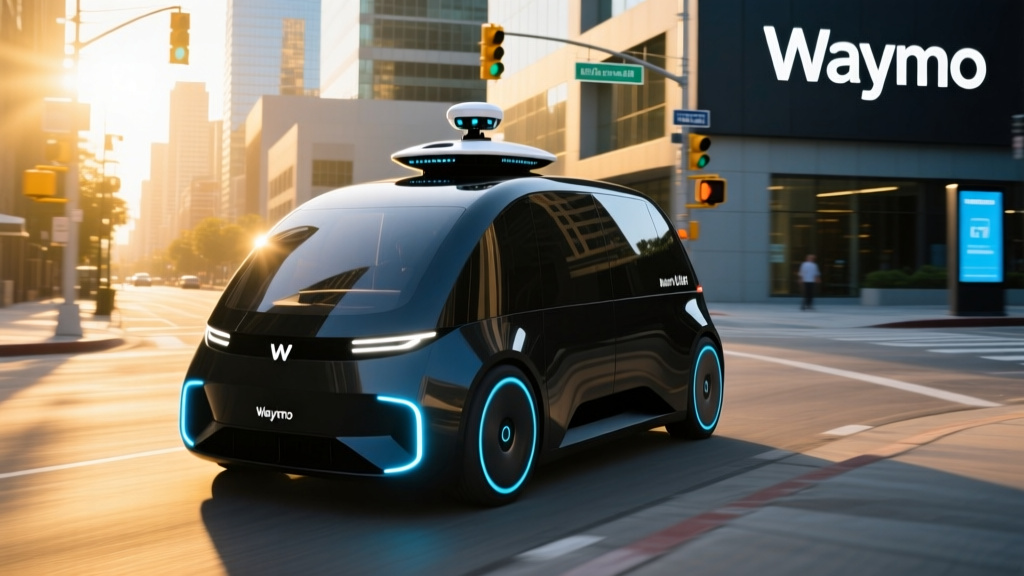
If you've seen a white Jaguar I-PACE or Zeekr van navigating city streets with a spinning roof rack of sensors and no one behind the wheel, you've likely wondered who's behind it. The short answer: Alphabet Inc., the parent company of Google, wholly owns Waymo as a subsidiary. But the full picture of how this corporate relationship shapes the world's most advanced robotaxi service is worth unpacking—especially if you're considering hailing one.
This guide breaks down Waymo's ownership structure, where you can actually ride today, what it costs, how safe the data says it is, and why Alphabet's deep pockets matter for the future of autonomous transportation.
Does Alphabet Own Waymo? The Corporate Structure Explained
Yes. Alphabet Inc. owns Waymo LLC as a wholly owned subsidiary. Waymo operates under Alphabet's "Other Bets" segment alongside companies like Verily (life sciences), Wing (drone delivery), and Calico (longevity research). Alphabet restructured from Google Inc. in 2015, and Waymo was spun out of Google's Self-Driving Car Project—which began in 2009—into a standalone Alphabet subsidiary in December 2016.
As of 2026, Waymo remains one of Alphabet's most capital-intensive ventures. Alphabet has invested over $30 billion into Waymo since the project's inception, including a $5.6 billion external funding round in October 2024 that valued Waymo at approximately $45 billion. Despite external investors participating, Alphabet retains majority ownership and full operational control.
This matters for consumers because Alphabet's financial backing gives Waymo a runway that independent autonomous vehicle startups simply cannot match. When Cruise (GM's robotaxi division) suspended operations in late 2023 after a serious incident in San Francisco, it underscored how fragile AV companies without deep-pocketed parents can be.
Where Can You Actually Ride a Waymo Robotaxi Right Now?
Waymo One, the company's commercial ride-hailing service, is not available everywhere. It operates within strictly defined geofenced areas—mapped zones where the system has been validated for driverless operation. Here's the current availability as of early 2026:
| City | Status | Service Area Notes | Hours |
|---|---|---|---|
| Phoenix, AZ | Fully operational | ~225 sq mi covering Phoenix, Scottsdale, Tempe, Mesa, Chandler | 24/7 |
| San Francisco, CA | Fully operational | ~55 sq mi covering most of SF proper, including SFO airport runs | 24/7 |
| Los Angeles, CA | Fully operational | ~80 sq mi covering downtown LA, Hollywood, Santa Monica, Westside, LAX | 24/7 |
| Austin, TX | Operational (expanding) | Initial geofenced zone covering downtown and central Austin | Limited hours, expanding |
| Atlanta, GA | Announced / Testing | Pre-commercial testing phase; public launch expected late 2026 | N/A |
Key detail: Waymo's geofence is not the entire metro area. In Phoenix, for example, rides that originate or terminate outside the mapped zone are not available. The app will simply not let you request a ride to an unmapped destination. This is a hard boundary, not a preference.
Waymo's Autonomy Level: What SAE Level 4 Actually Means
This is the single most important distinction in autonomous vehicles, and it's widely misunderstood. Waymo operates at SAE Level 4—not Level 2, not Level 5. Here's what that means in practice:
| Level | Name | Who Drives | Example |
|---|---|---|---|
| Level 0 | No Automation | Human does everything | Standard car |
| Level 1 | Driver Assistance | Human drives; system assists steering OR speed | Adaptive cruise control |
| Level 2 | Partial Automation | Human drives; system assists steering AND speed | Tesla Autopilot, GM Super Cruise, Ford BlueCruise |
| Level 3 | Conditional Automation | System drives in specific conditions; human must take over on request | Mercedes DRIVE PILOT (limited markets, ≤40 mph) |
| Level 4 | High Automation | System drives fully within its operational domain; no human needed | Waymo One, Zoox |
| Level 5 | Full Automation | System drives everywhere, all conditions, no human needed | Does not yet exist commercially |
This stands in sharp contrast to Level 2 systems like Tesla's FSD (Supervised), which require the human driver to remain engaged, monitor the road, and be ready to take over at any moment. Marketing language around "Full Self-Driving" can blur this line, but the SAE distinction is clear: Waymo is driverless; consumer ADAS features are driver-assist.
How Much Does a Waymo Ride Cost vs. Uber and Lyft?
Waymo One pricing is designed to be competitive with traditional rideshare, though it varies by city, time of day, and demand. Waymo uses dynamic pricing similar to Uber's surge model. Here's how typical fares compare based on real-world ride data:
| Route Example | Distance | Waymo One | UberX | Lyft Standard |
|---|---|---|---|---|
| SF: Downtown → Mission District | ~3 mi | $12–$16 | $11–$18 | $10–$17 |
| LA: Santa Monica → LAX | ~8 mi | $22–$30 | $20–$35 | $18–$32 |
| Phoenix: Scottsdale → PHX Airport | ~10 mi | $25–$34 | $24–$38 | $22–$35 |
| SF: Marina → SFO Airport | ~18 mi | $42–$55 | $40–$65 | $38–$60 |
What the data shows: Waymo fares generally fall within the same range as UberX and Lyft Standard for equivalent routes. During high-demand periods, Waymo's surge pricing can be less aggressive than Uber/Lyft because Waymo doesn't face the same driver-supply constraints—but its fleet size also means longer wait times during peak hours (typically 5–12 minutes vs. 2–5 minutes for rideshare in dense areas).
Waymo also offers Waymo One pricing tiers: standard rides in the Jaguar I-PACE fleet, and in select markets, a premium option using the custom Zeekr robotaxi vehicle designed from the ground up for autonomous service (wider doors, no steering wheel, more interior space).
How Safe Are Waymo Robotaxis? The Actual Data
Safety is the most scrutinized aspect of robotaxi operation, and Waymo publishes more transparency data than most competitors. According to Waymo's safety reports and data submitted to the National Highway Traffic Safety Administration (NHTSA), here are the key figures:
- Total fully driverless miles driven: Over 50 million miles across all operational cities
- Fatalities involving Waymo driverless vehicles: 0 (as of early 2026)
- Injury-causing collisions: Waymo reports a significantly lower rate per million miles compared to human benchmarks in equivalent urban environments
- Contact rate: Waymo's vehicles make contact with other objects (other vehicles, cyclists, pedestrians) at a lower rate than human drivers in comparable geographies, per peer-reviewed analysis published by the Insurance Institute for Highway Safety (IIHS)
- NHTSA Standing General Order compliance: Waymo reports all incidents as required under federal crash-reporting mandates
Waymo's approach to safety differs fundamentally from camera-only systems. The Waymo Driver relies on a redundant sensor suite: lidar, radar, and cameras working simultaneously. If one sensor modality is degraded (e.g., camera glare at sunset), the others compensate. This redundancy is a core reason Waymo has maintained its safety record in complex urban environments.
However, no system is perfect. Waymo vehicles have been involved in minor collisions—typically low-speed incidents where another party (a human driver, a cyclist) made contact with the Waymo vehicle. The company's public incident logs show these are overwhelmingly not at-fault events for the autonomous system, but each incident is reported and investigated.
Inside the Waymo Driver: Lidar, Cameras, and the Tech Stack
The "Waymo Driver" is the company's name for its complete autonomous driving system—the hardware and software that replaces a human driver. Here's what's on the roof and behind the panels:
| Sensor Type | Function | Range / Capability |
|---|---|---|
| Lidar (multiple units) | 3D mapping of surroundings using laser pulses; detects shape, distance, and movement of all objects | Up to 500+ meters; 360° coverage |
| Cameras (high-resolution, multiple) | Color imagery for classification (traffic lights, signs, lane markings, pedestrian intent) | Long-range telephoto + wide-angle; enhanced low-light performance |
| Radar (multiple units) | Velocity detection of moving objects; functions in rain, fog, and conditions that degrade lidar/cameras | Up to 350+ meters; all-weather |
| External audio sensors | Detects sirens from emergency vehicles from multiple directions | Directional audio classification |
| IMU + GPS + HD maps | Vehicle localization within centimeter-level accuracy on pre-mapped routes | Geofence-dependent |
Lidar vs. camera-only: This is a major industry debate. Tesla relies exclusively on cameras (its "Tesla Vision" approach) for its Level 2 FSD system. Waymo uses lidar as a foundational sensor. The practical difference: lidar provides precise depth measurement independent of lighting conditions. A camera-only system must infer depth from visual data, which can fail in scenarios like direct sun glare, heavy shadows, or uniform surfaces. Waymo's multi-sensor redundancy is a deliberate engineering choice prioritizing safety over cost minimization.
The 6th-generation Waymo Driver hardware, introduced across the fleet starting in 2024, features improved lidar resolution, better camera performance in low light, and a more compact roof-mounted sensor array that reduces aerodynamic drag—a meaningful factor for the all-electric Jaguar I-PACE's real-world range during a full day of robotaxi service.
The Regulatory Landscape: Who Approves Robotaxi Operations?
Robotaxi deployment in the United States is governed by a patchwork of state and local regulations. There is no single federal license to operate a driverless ride-hailing service. Here's how the regulatory framework works:
- State-level approval: Each state sets its own rules for autonomous vehicle testing and commercial deployment. California's DMV and the California Public Utilities Commission (CPUC) both play roles—the DMV issues testing and deployment permits, while the CPUC regulates commercial passenger service. Arizona has taken a permissive approach with minimal state-level restrictions. Texas passed legislation enabling AV operations statewide.
- Federal role: NHTSA sets vehicle safety standards and requires crash reporting under its Standing General Order, but does not currently "approve" or "certify" autonomous driving systems for commercial use the way it certifies vehicle safety features. The regulatory framework for AVs at the federal level remains under development.
- Local permits: Cities and counties may impose additional requirements—airport access agreements, curb-use rules, and local business licenses. Waymo's expansion into LAX and SFO required specific airport authority approvals.
Waymo holds the necessary permits in each city where it operates commercially. The company's regulatory strategy has been methodical: demonstrate safety data in one market, build public trust, then expand. This contrasts with approaches that prioritize rapid geographic expansion before safety validation is complete.
Current Limitations: Where Waymo Can't Go and What It Can't Do
Honest assessment of limitations is essential for anyone considering robotaxi use. Waymo is impressive, but it is not unlimited:
- Geofence boundaries: Rides cannot start or end outside the mapped operational zone. There is no "drive anywhere" mode.
- Heavy rain and fog: While the 6th-gen sensors perform better than predecessors, severe weather can trigger conservative behavior—longer stops, reduced speed, or trip cancellation. Waymo does not operate in blizzard conditions.
- Unmapped construction zones: Major road changes not yet reflected in Waymo's HD maps can cause the vehicle to take detours or pause. Waymo updates maps frequently, but real-time infrastructure changes remain a challenge.
- Highway driving: Waymo vehicles operate on highways within their geofence (including freeway segments in Phoenix and LA), but they do not handle high-speed rural interstate driving or long-distance intercity trips.
- Wait times: Fleet size constraints mean wait times of 5–15 minutes in many areas, compared to 2–5 minutes for Uber/Lyft in dense urban cores during peak hours.
- Accessibility: The Jaguar I-PACE fleet is not wheelchair-accessible. The Zeekr vehicle is designed with improved accessibility, but availability varies by market.
- No food or drink policy: Waymo enforces strict cleanliness rules; eating in the vehicle can result in cleaning fees.
How to Actually Use Waymo One: A Step-by-Step Guide
- Download the Waymo One app (iOS/Android) and create an account. You'll need a valid payment method.
- Check availability. The app will show you whether your pickup location is within the service area. If you're outside the geofence, the app will tell you.
- Enter your destination. The app will confirm the route is within the geofence and display an upfront price estimate.
- Request your ride. Wait time is displayed. The vehicle will arrive at your pickup point—you can identify it by the Waymo branding and sensor array.
- Start the ride. Tap "Start Ride" in the app once you're buckled in. The vehicle will begin driving autonomously. Interior screens show the route and the system's perception of surrounding objects.
- Ride support. A live support agent is accessible via in-vehicle button or the app at any time. You can also request a pullover or early stop.
Frequently Asked Questions
Is Waymo owned by Google or Alphabet?
Waymo is owned by Alphabet Inc., the parent company that was created when Google restructured in 2015. Google is also a subsidiary of Alphabet. So while Waymo is not owned by "Google" directly, they are sibling companies under the same Alphabet corporate umbrella.
Is Waymo truly self-driving or is there a remote human operator?
Waymo vehicles drive themselves autonomously within their operational domain—there is no remote human "driving" the car via joystick. However, Waymo employs remote fleet responders who can provide guidance to a vehicle that encounters an unusual scenario (e.g., an unmapped detour). The vehicle still executes all driving maneuvers itself; the remote responder provides high-level routing advice, not real-time steering input.
Can I use Waymo if I'm visiting Phoenix or San Francisco?
Yes. Waymo One is open to the public in Phoenix, San Francisco, Los Angeles, and Austin. You do not need an invitation or early-access status—simply download the app, create an account, and request a ride within the service area.
What vehicle does Waymo use?
Waymo's primary fleet vehicle is the all-electric Jaguar I-PACE, equipped with the 6th-generation Waymo Driver sensor suite. Waymo is also deploying a purpose-built autonomous vehicle developed with Zeekr (a Geely brand), designed from the ground up for robotaxi service with no steering wheel or pedals.
How does Waymo compare to Tesla's self-driving?
They are fundamentally different systems at different SAE levels. Waymo is Level 4—fully driverless within its geofenced zone, with no human needed. Tesla's FSD (Supervised) is Level 2—a driver-assist system that requires a human driver to remain engaged and ready to take over at all times. Waymo uses lidar, radar, and cameras; Tesla uses cameras only. Waymo operates as a ride-hailing service; Tesla FSD is a feature in consumer-owned vehicles.
Has a Waymo vehicle ever been in a serious crash?
As of early 2026, Waymo reports zero fatalities involving its fully driverless vehicles. The company has been involved in minor collisions, predominantly low-speed incidents where another road user made contact with the Waymo vehicle. All incidents are reported to NHTSA under the Standing General Order. Waymo publishes safety data and has participated in peer-reviewed safety studies through IIHS.
Will Waymo expand to my city?
Waymo has announced plans to expand beyond its current operational cities, with Atlanta among the next expected markets. However, expansion is deliberate and tied to safety validation, regulatory approval, and fleet scaling. There is no public timeline for nationwide coverage, and Waymo's geofenced model means expansion happens city by city, not as a blanket rollout.