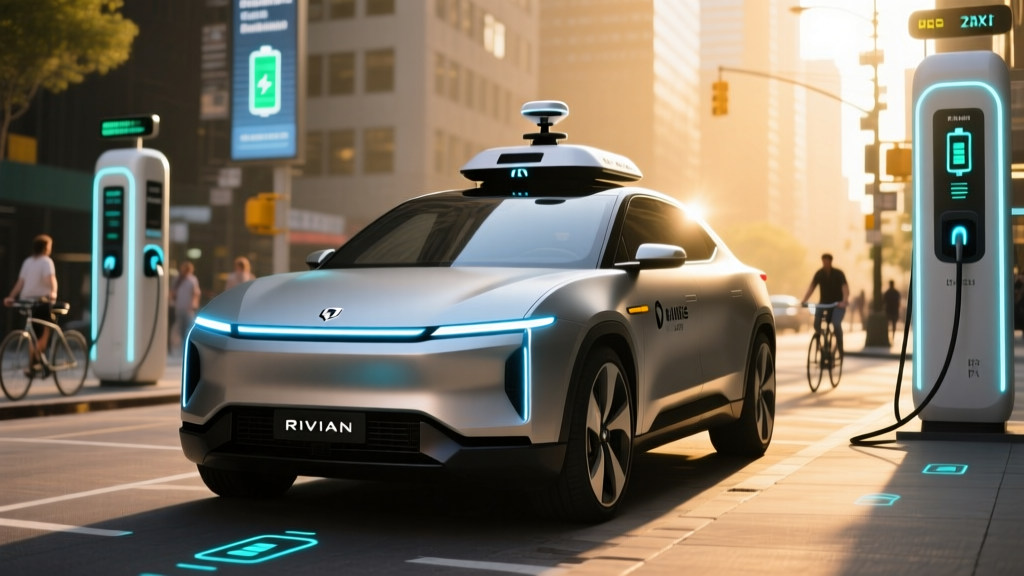
The Short Answer: No, Rivians Are Not Self-Driving
If you've been searching whether Rivians have self-driving capability, the direct answer is no. Every Rivian on the road today — the R1S SUV, R1T pickup, and the newly launched R2 — operates at SAE Level 2 automation. That means the driver must remain fully engaged, hands on or near the wheel, eyes on the road, at all times. Rivian's driver-assistance suite is capable, but it is not autonomous, and it is not a robotaxi.
This distinction matters enormously. Marketing language around "autonomy" and "self-driving" has created widespread confusion, and Rivian's own branding hasn't always helped clarify things. Let's break down exactly what Rivian's system can do, what it cannot, and how it compares to the true Level 4 robotaxi services actually operating without drivers today.
Understanding SAE Automation Levels: Where Rivian Sits
The Society of Automotive Engineers (SAE) defines six levels of driving automation, from Level 0 (no automation) to Level 5 (full automation anywhere, any condition). Here's how the ladder breaks down and where Rivian fits:
| SAE Level | Name | Who Drives? | Example |
|---|---|---|---|
| Level 0 | No Automation | Human does everything | Basic cruise control |
| Level 1 | Driver Assistance | Human + one assist (steering OR speed) | Adaptive cruise OR lane-keep |
| Level 2 | Partial Automation | Human supervises; system handles steering + speed together | Rivian Driver+, Tesla Autopilot, GM Super Cruise, Ford BlueCruise |
| Level 3 | Conditional Automation | System drives in specific conditions; human must take over when asked | Mercedes DRIVE PILOT (limited markets) |
| Level 4 | High Automation | System drives without human in defined areas; no driver needed | Waymo One, Zoox |
| Level 5 | Full Automation | System drives everywhere, all conditions | Does not exist commercially |
Rivian's current system, marketed as Rivian Driver+, is firmly Level 2. It combines adaptive cruise control with lane-centering assist, automatic emergency braking, blind-spot monitoring, and highway driving assist. It's a robust ADAS (Advanced Driver Assistance System), but the human behind the wheel is legally and operationally the driver at every moment.
What Rivian Driver+ Actually Does (and Doesn't Do)
Rivian's driver-assistance hardware and software have evolved significantly since the R1T and R1S launched. Here's what the current Rivian Driver+ suite includes on 2025–2026 models:
Capabilities
- Highway Assist: Maintains set speed and follows distance while centering the vehicle in its lane on divided highways. Works at speeds from 0 to approximately 90 mph.
- Adaptive Cruise Control: Adjusts speed to match traffic ahead, including stop-and-go functionality.
- Lane-Keeping Assist: Applies gentle steering corrections to keep the vehicle within detected lane markings.
- Automatic Emergency Braking (AEB): Detects vehicles, pedestrians, and cyclists ahead and applies brakes if the driver doesn't react.
- Blind-Spot Monitoring with Rear Cross-Traffic Alert: Warns of vehicles in blind spots during lane changes and when reversing.
- Traffic Sign Recognition: Reads speed-limit and regulatory signs and displays them on the instrument cluster.
What It Cannot Do
- Navigate on-ramps, off-ramps, or interchanges without driver input
- Change lanes autonomously (lane-change assist requires driver confirmation)
- Operate on unmapped or unmarked roads
- Handle construction zones, complex intersections, or roundabouts autonomously
- Function without the driver paying attention — the system monitors driver engagement and will issue escalating warnings, eventually bringing the vehicle to a controlled stop if the driver is unresponsive
Rivian vs. True Level 4 Robotaxis: A Fundamental Difference
To understand why Rivian doesn't have "self-driving," it helps to see what actual self-driving looks like. Level 4 robotaxi services operate vehicles with no human driver present within geofenced urban areas. Here's the current landscape:
| Service | SAE Level | Operational Cities (2026) | Driver Present? | Hours |
|---|---|---|---|---|
| Waymo One | Level 4 | Phoenix, San Francisco, Los Angeles, Austin | No | 24/7 in most markets |
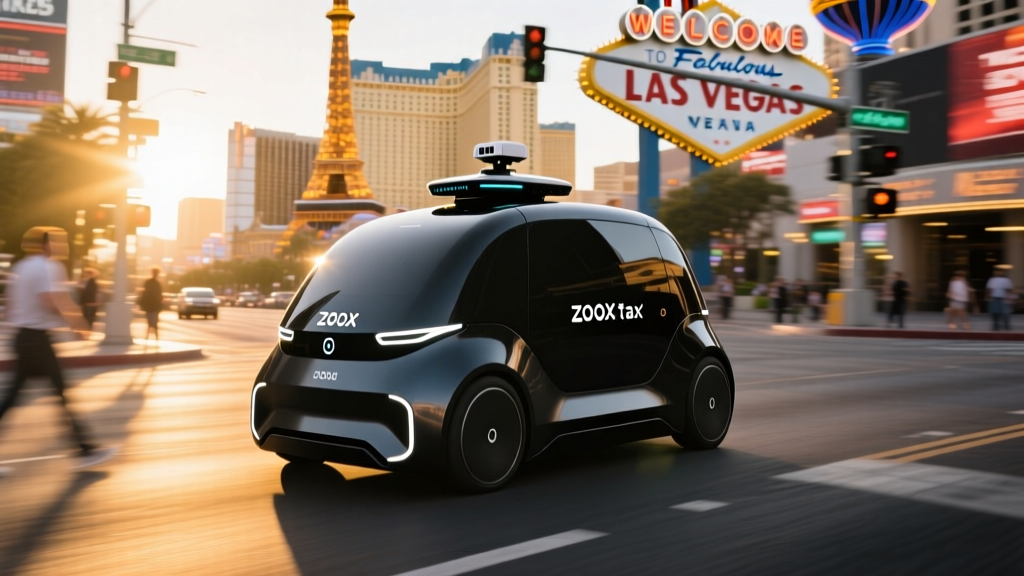
| Zoox | Level 4 | Las Vegas, Foster City (CA), limited Phoenix | No | Limited hours |
| Cruise | Level 4 | Paused operations in most markets post-2023 incidents; limited supervised testing | Varies | Limited |
| Baidu Apollo Go | Level 4 | Wuhan, Beijing, Chongqing (China) | No | Extended hours |
| Rivian Driver+ | Level 2 | Any road the owner drives (nationwide) | Yes — required | Anytime driver is present |
The difference is categorical, not incremental. A Waymo vehicle in Phoenix can pick you up at 2 AM with an empty driver's seat. A Rivian R1S can assist you on a highway drive from Denver to Aspen, but you are the driver, legally responsible for every mile.
Rivian's Sensor and Technology Stack
Rivian's approach to driver assistance relies on a specific hardware philosophy that differs meaningfully from both Tesla and the robotaxi companies:
Rivian R1S / R1T / R2 Sensor Suite
- Cameras: Multiple exterior cameras providing 360-degree surround view for object detection, lane reading, and traffic-sign recognition.
- Radar: Forward-facing radar for adaptive cruise control and emergency braking at distance.
- Ultrasonic Sensors: Short-range sensors for parking assist and low-speed obstacle detection.
- No LiDAR: Unlike Waymo, Zoox, and most Level 4 operators, Rivian does not equip its consumer vehicles with LiDAR (light detection and ranging) sensors.
This camera-plus-radar stack is similar to what Tesla uses for Autopilot and FSD Supervised, and it's adequate for Level 2 driver-assist functions. However, Level 4 robotaxi operators almost universally rely on LiDAR as a primary sensor, supplemented by cameras and radar, because LiDAR provides precise 3D depth mapping that cameras alone struggle to match in low-light, glare, or adverse weather conditions.
The absence of LiDAR on Rivian vehicles is a hardware constraint that would need to be addressed before any Level 3 or Level 4 capability could be deployed — even via an over-the-air software update, the physical sensors would need to be present.
Does Rivian Have a Robotaxi or Autonomous Driving Roadmap?
As of early 2026, Rivian has not announced a production timeline for Level 3 or Level 4 autonomy on its consumer vehicles. CEO RJ Scaringe has stated in interviews that Rivian is investing in its software and AI capabilities, and the company's partnership with Volkswagen Group — which includes a joint venture for shared electrical architecture and software — could eventually accelerate advanced driver-assist development.
However, Rivian has been notably cautious about overpromising on autonomy, a stark contrast to Tesla's long-running Full Self-Driving timeline predictions. Rivian has focused its engineering resources on vehicle quality, manufacturing scale (particularly with the R2 launch at its Normal, Illinois facility), and the core driving experience rather than pursuing unsupervised autonomy.
There is no announced Rivian robotaxi service, no driverless testing program disclosed publicly, and no hardware on current Rivian vehicles that would support Level 4 operation without significant additional sensors.
How Rivian Driver+ Compares to Other Level 2 Systems
Among Level 2 driver-assist systems available in 2026, Rivian Driver+ is competent but not class-leading. Here's how it stacks up against the major competitors:
| System | Manufacturer | Hands-Free Highway? | Auto Lane Change? | Driver Monitoring |
|---|---|---|---|---|
| Super Cruise | GM (Cadillac, Chevy, GMC) | Yes — on 750,000+ mi of mapped roads | Yes (with confirmation) | Camera-based eye tracking |
| BlueCruise | Ford / Lincoln | Yes — on 130,000+ mi of mapped highways | Yes (with confirmation) | Camera-based eye tracking |
| FSD Supervised | Tesla | No (hands-on required) | Yes | Camera-based (cabin cam + steering torque) |
| Autopilot | Tesla | No (hands-on required) | Yes (with confirmation) | Steering torque + cabin camera |
| DRIVE PILOT | Mercedes-Benz | Level 3 — hands-off, eyes-off (≤40 mph, specific conditions) | N/A (system controls lane) | Camera + driver readiness check |
| Driver+ | Rivian | No (hands-on required) | Assist only (driver must confirm + execute) | Torque-based steering detection |
The key takeaway: GM's Super Cruise and Ford's BlueCruise offer a meaningfully more relaxed highway experience because they allow hands-off driving on pre-mapped roads, backed by camera-based driver monitoring that's more reliable than torque sensing. Rivian's system works well for reducing fatigue on long drives, but you'll feel more "tethered" to the wheel than in a Super Cruise-equipped Cadillac or a BlueCruise-equipped F-150 Lightning.
Safety Record and Regulatory Context
Rivian vehicles have earned strong safety ratings. The R1S and R1T received top marks from the National Highway Traffic Safety Administration (NHTSA), and the Insurance Institute for Highway Safety (IIHS) has recognized Rivian models with high ratings in crashworthiness testing.
However, specific data on Rivian Driver+ intervention rates, disengagements, or incident rates is limited. Unlike robotaxi operators such as Waymo — which publishes detailed safety reports and disengagement data to California's DMV — consumer automakers are not required to publicly report ADAS disengagement metrics. The NHTSA Standing General Order requires manufacturers to report crashes involving Level 2+ systems, but granular per-brand data is not easily accessible to consumers.
On the regulatory side, Level 2 systems like Rivian Driver+ fall under existing federal motor vehicle safety standards (FMVSS) and are regulated primarily through NHTSA's enforcement authority. Level 4 robotaxi operations, by contrast, require state-level approval — the California Public Utilities Commission (CPUC) and the California DMV regulate Waymo's operations in that state, for example, and Arizona's approach is notably more permissive.
The Bottom Line: What Rivian Owners Should Know
If you own a Rivian or are considering one, here's the practical reality:
- Rivian Driver+ is a good Level 2 system that reduces highway fatigue and adds active safety layers, but you are the driver. Always.
- There is no self-driving Rivian, and no announced timeline for Level 3 or Level 4 capability on Rivian vehicles.
- The hardware on current Rivians (no LiDAR, torque-based driver monitoring) is not sufficient for unsupervised driving, even if software advanced to that level.
- If hands-free highway driving is a priority, GM's Super Cruise and Ford's BlueCruise currently offer a more relaxed Level 2 experience with camera-based monitoring and hands-off capability on mapped roads.
- If you want a true driverless ride today, Waymo One operates in Phoenix, San Francisco, Los Angeles, and Austin — but you can't buy a Waymo. It's a ride-hail service, not a vehicle you own.
Look elsewhere if: Hands-free highway driving is a must-have (consider GM Super Cruise vehicles), or you're specifically seeking autonomous/robotaxi capability (Waymo, not a personal vehicle purchase).
Frequently Asked Questions
Can a Rivian drive itself on the highway?
No. Rivian Driver+ can maintain speed, follow distance, and center the vehicle in its lane on highways, but the driver must keep hands on the steering wheel and remain fully attentive at all times. It is a Level 2 assist system, not an autonomous driving system.
Will Rivian add self-driving through a software update?
Not with current hardware. Level 4 autonomy requires sensor suites (including LiDAR) that Rivian vehicles don't have. Software alone cannot bridge the gap between a camera-and-radar Level 2 system and a LiDAR-equipped Level 4 vehicle. Any future higher-level autonomy would likely require new hardware generations.
How does Rivian Driver+ compare to Tesla Autopilot?
Both are Level 2 systems requiring driver supervision. Tesla's Autopilot and FSD Supervised offer more automated features (auto lane change, navigate-on-autopilot for highway interchanges), but both still require hands-on-wheel and eyes-on-road. Tesla has also faced NHTSA scrutiny for Autopilot-related incidents and the naming of "Full Self-Driving." Rivian's system is more conservative in its feature set but arguably more honest in its marketing.
Is it safe to use Rivian Driver+?
Yes, when used as intended — as a driver-assist tool, not a replacement for driving. The system adds safety layers (AEB, lane-keeping, adaptive cruise) that can prevent or mitigate accidents. The risk arises when drivers over-trust the system and disengage from the driving task. Rivian's torque-based steering monitoring is less robust than camera-based systems at catching inattentive drivers, so personal discipline is especially important.
Where can I ride in a real self-driving car?
True Level 4 robotaxi service is currently available through Waymo One in Phoenix, San Francisco, Los Angeles, and Austin. Zoox operates limited service in Las Vegas. These are ride-hail services you summon via an app — you cannot purchase a Level 4 autonomous vehicle as a consumer.
Does the Rivian R2 have better self-driving than the R1S or R1T?
The R2, launching for the 2026 model year, uses a new electrical architecture developed in partnership with Volkswagen. While Rivian has indicated the R2 will have enhanced driver-assist capabilities, the company has not announced Level 3 or Level 4 functionality. Expect a more capable Level 2 system, not a self-driving vehicle.