The Road to Relaunch: Understanding Cruise’s Phased Return
The autonomous vehicle industry experienced a seismic shock in late 2023 following a high-profile safety incident involving a Cruise robotaxi in San Francisco. The subsequent grounding of the fleet and suspension of commercial operations forced General Motors and Cruise to undertake a rigorous, ground-up reevaluation of their entire technology stack, safety protocols, and operational design domains (ODD). Now, the highly anticipated Cruise robotaxi relaunch is underway, characterized by a hyper-cautious, phased deployment strategy and significant under-the-hood software overhauls.
For autonomous vehicle enthusiasts, fleet operators, and smart driving technologists, the Cruise relaunch is not just a business recovery story; it is a masterclass in AV safety validation and edge-case mitigation. According to reporting by TechCrunch, Cruise initiated its return to public roads by deploying vehicles with human safety drivers behind the wheel, a critical step to retrain perception models and gather real-world shadow data without risking public safety.
The Anatomy of the Relaunch: A Phased Deployment Strategy
Unlike the aggressive, rapid-expansion tactics of the early 2020s, the current Cruise relaunch timeline is governed by a strict four-phase framework. This methodology ensures that every algorithmic update is validated in a controlled environment before full driverless autonomy is restored.
| Deployment Phase | Vehicle Platform | Technical Status | Human Oversight Level |
|---|---|---|---|
| Phase 1: Manual Mapping | Chevy Bolt EV / Origin | Data collection, HD mapping, sensor calibration | Human driver (100% manual control) |
| Phase 2: Shadow Mode | Chevy Bolt EV | AV stack active but suppressed; logging edge cases | Human safety driver (ready to intervene) |
| Phase 3: Constrained Autonomy | Chevy Bolt EV | Limited ODD driverless ops; heavy remote teleoperations | Remote assistance + Safety driver shadowing |
| Phase 4: Full Commercial | Cruise Origin | Full driverless commercial robotaxi service | Remote fleet monitoring |
This phased approach aligns closely with the safety validation frameworks recommended by the National Highway Traffic Safety Administration (NHTSA), emphasizing incremental risk reduction and continuous data-driven validation.
Technology Deep Dive: Sensor Suite and Perception Stack Overhaul
The core of the Cruise robotaxi relaunch timeline hinges on fundamental changes to the perception and planning stack. The October 2023 San Francisco incident highlighted a critical vulnerability in post-collision logic: after an initial impact caused by a human-driven vehicle throwing a pedestrian into the Bolt's path, the AV's pullover subroutine dragged the occluded pedestrian to the curb.
Post-Impact Immobilization Protocols
To resolve this, Cruise engineers completely rewrote the post-collision mitigation protocols. The updated software stack now includes a mandatory 'post-impact immobilization' subroutine. If the vehicle's acoustic sensors, suspension telemetry, or LiDAR point-cloud anomalies detect a kinetic impact, the planning stack immediately overrides all routing commands, locking the wheels and disabling the drivetrain to prevent secondary dragging injuries.
Hardware: Bolt EV vs. Cruise Origin
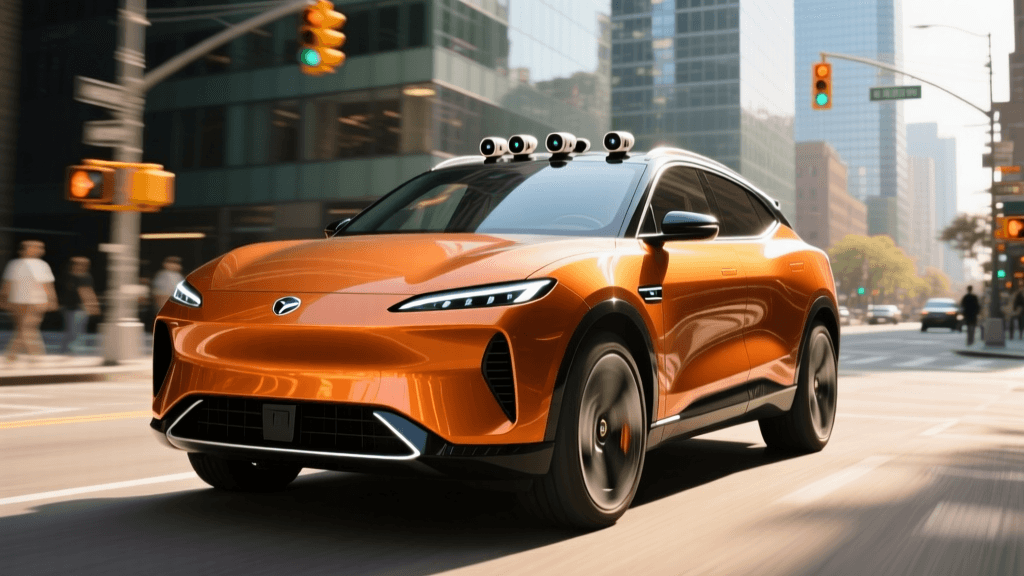
While the initial relaunch phases utilize the retrofitted Chevrolet Bolt EV, the ultimate goal is the deployment of the purpose-built Cruise Origin. The Bolt relies on a prominent roof-mounted 'puck' housing a Velodyne-derived LiDAR array, overlapping radar, and high-dynamic-range cameras. In contrast, the Origin embeds its sensor suite directly into the vehicle's body panels, eliminating the roof puck. This design lowers the center of gravity and reduces aerodynamic drag, but requires advanced edge-computing to stitch together a seamless 360-degree bird's-eye view without the elevated vantage point of a roof rack.
As noted in industry coverage by Reuters, the testing with human drivers is specifically designed to validate how the updated Bolt perception stack handles complex, multi-agent urban intersections before those learnings are ported to the Origin's unique sensor geometry.
Teleoperations: Redesigning the Remote Assistance Stack
A major focal point of the Cruise technology deep dive is the teleoperations network. Remote operators do not 'drive' the vehicles via joysticks; instead, they provide high-level routing approvals, semantic understanding of construction zones, and permission to cross ambiguous boundaries (e.g., crossing a double-yellow line to bypass a stalled truck).
Latency and Network Redundancy
The updated remote assistance stack now features aggressive network redundancy. Vehicles continuously ping multiple cellular towers across 5G and LTE bands. If latency spikes above 150 milliseconds, the vehicle's local compute module defaults to a 'minimal risk condition' (MRC), safely bringing the car to a halt in its current lane rather than executing a remote command that might be based on stale video telemetry. Furthermore, Cruise has increased the ratio of remote operators to active vehicles, ensuring that human-in-the-loop validation is instantaneous during the constrained Phase 3 rollout.
Relaunch Timeline and City-by-City Rollout Strategy
The Cruise relaunch timeline is heavily dependent on geographic and regulatory variables. Rather than returning immediately to the dense, chaotic streets of San Francisco, Cruise has targeted cities with favorable Operational Design Domains (ODDs).
- Phoenix, Arizona: Serving as the primary testing ground for Phase 2 and Phase 3. Phoenix offers wide, grid-like streets, predictable weather (no snow or heavy fog to scatter LiDAR photons), and a highly cooperative regulatory environment.
- Dallas, Texas: Selected for its diverse mix of urban density and suburban sprawl, allowing Cruise to test highway ingress/egress maneuvers and high-speed arterial roads.
- Houston, Texas: Provides a challenging environment with unpredictable weather patterns and complex, unmarked construction zones, serving as a stress-test for the updated teleoperations stack.
The timeline for returning to San Francisco and other dense coastal markets remains fluid, heavily contingent on the successful completion of millions of shadow-mode miles in the Texas and Arizona markets.
Actionable Insights for Autonomous Vehicle Developers
The Cruise robotaxi relaunch offers several critical takeaways for the broader smart driving and ADAS industry:
- Over-Index on Post-Collision Logic: Most AV development focuses on collision avoidance. Developers must allocate equal engineering resources to post-impact behaviors, ensuring the vehicle becomes a static, safe object immediately after an unavoidable kinetic event.
- Embrace Shadow Mode: Running the AV stack in 'shadow mode' behind human drivers is the most cost-effective way to gather edge-case data. Fleet operators should utilize this technique to benchmark their localized AI models against human intuition.
- Define Strict ODD Boundaries: The phased geographic rollout proves that attempting to conquer all weather and traffic conditions simultaneously is a flawed strategy. Restricting the ODD to favorable conditions allows for safer, incremental machine learning.
As Cruise navigates this complex relaunch timeline, the data generated from its phased approach will undoubtedly influence the next generation of SAE Level 4 autonomous systems, setting a new industry standard for safety, transparency, and technological resilience.