If you search for companies in self driving cars, you will find dozens of names — but only a handful actually operate fully driverless services you can hail today. The gap between marketing promises and real-world deployment remains wide. This guide cuts through the hype and focuses on who is running SAE Level 4 robotaxi services right now, where they operate, what they cost, and what their safety data actually shows.
| Level | Name | Who Drives | Example |
|---|---|---|---|
| Level 2 | Driver Assistance | Human (must stay engaged) | Tesla Autopilot, GM Super Cruise, Ford BlueCruise |
| Level 3 | Conditional Automation | System (in narrow conditions), human on standby | Mercedes Drive Pilot (limited markets) |
| Level 4 | High Automation | System (within geofence), no human needed | Waymo One, Zoox |
| Level 5 | Full Automation | System (everywhere, all conditions) | Does not exist commercially |
The companies in self driving cars that operate robotaxis you can hail today are Level 4. Tesla FSD (Supervised) is Level 2 — the driver is legally and practically responsible at all times.
Who the Major Players Are Right Now
As of 2026, the robotaxi landscape has consolidated around a few well-funded operators with real commercial services:
- Waymo (Alphabet/Google) — The largest commercial robotaxi operator in the US, running Waymo One in multiple metro areas with a fleet of custom-built Jaguar I-PACE EVs and newer Zeekr RT vehicles.
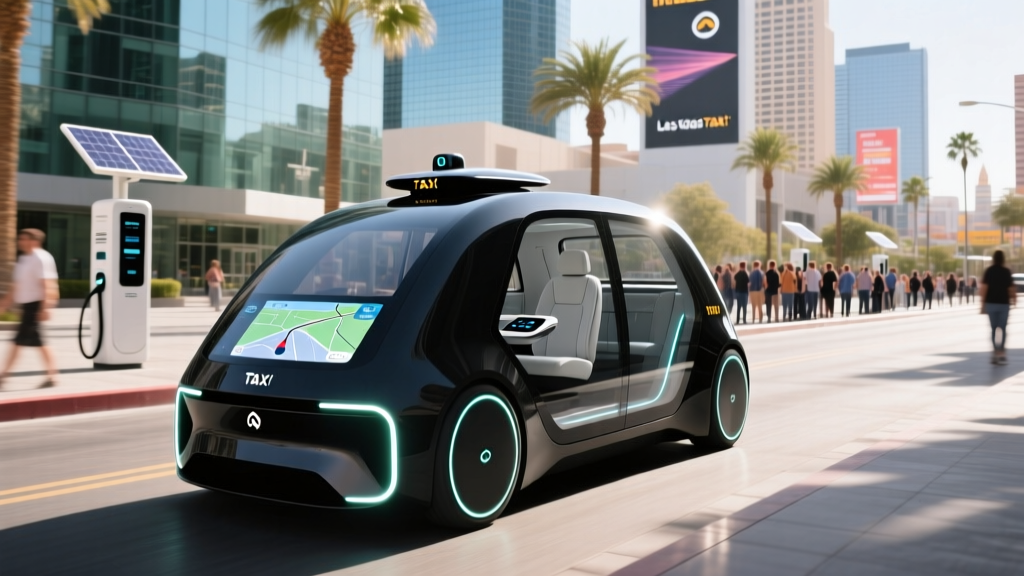
- Zoox (Amazon) — Operating its purpose-built bidirectional carriage (no steering wheel) in limited commercial service in Las Vegas and San Francisco.
- Baidu Apollo Go — The dominant player in China, operating hundreds of vehicles across multiple Chinese cities including Wuhan, Beijing, and Shenzhen.
- Pony.ai — Operating in China and expanding in the Middle East, with limited US testing.
- Motional (Hyundai/Aptiv joint venture) — Reduced operations significantly after restructuring; limited testing in Las Vegas.
- Cruise (GM) — Suspended all operations in late 2023 after a serious pedestrian incident in San Francisco. As of 2026, Cruise has been winding down and has not resumed commercial robotaxi service.
Where Can You Actually Use a Robotaxi Right Now?
Service availability is tightly controlled by geography. These are geofenced operations — the vehicle will not drive outside its approved zone.
| Company | Live Commercial Cities | Fleet Size (est.) | Hours of Operation |
|---|---|---|---|
| Waymo One | Phoenix (full metro), San Francisco (most of city), Los Angeles (select areas), Austin (expanding) | ~1,000+ vehicles | 24/7 in most markets |
| Zoox | Las Vegas (Strip corridor + downtown), San Francisco (limited zone) | ~200 vehicles | Limited hours, expanding |
| Baidu Apollo Go | Wuhan, Beijing, Chongqing, Shenzhen, Shanghai, Guangzhou | 1,000+ vehicles | Mostly 24/7 in major zones |
| Pony.ai | Beijing, Guangzhou, Shenzhen (China); Abu Dhabi (pilot) | ~300 vehicles | Varies by city |
If you are outside these geofenced zones, you cannot hail a robotaxi. Period. This is not a coverage gap that will be filled overnight — each new city requires regulatory approval, mapping, and extensive testing.
How to Hail a Robotaxi and What It Costs
Using a robotaxi service is similar to Uber or Lyft, with a few differences:
Waymo One
Download the Waymo One app (available in supported cities). Enter your pickup and dropoff — both must be within the service zone. The vehicle arrives autonomously, you unlock it via the app, and it drives you to your destination. No driver is present. The vehicle interior has screens showing the route and a "stop" button for emergencies.
Zoox
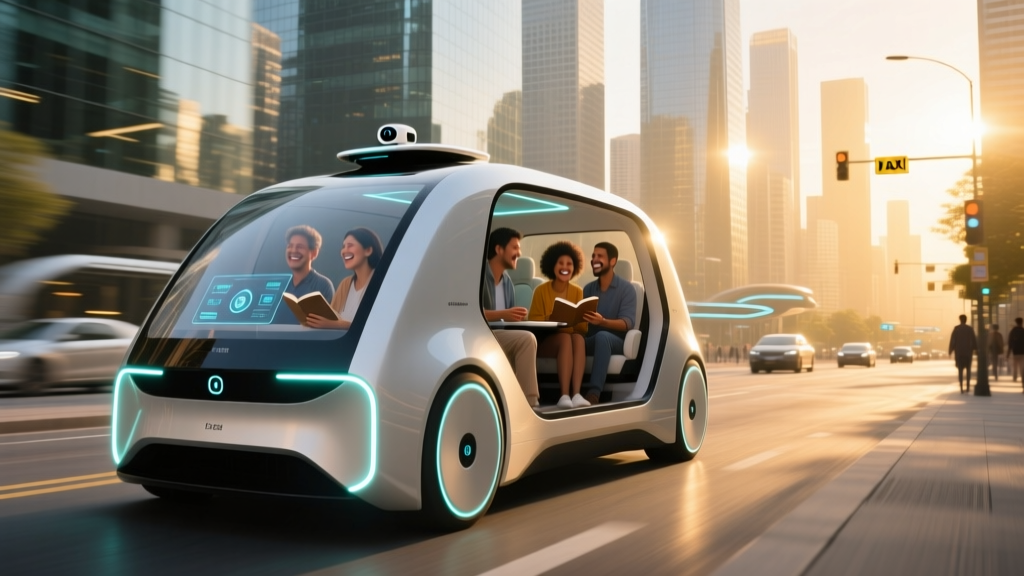
Zoox operates via its own app in Las Vegas and San Francisco. The Zoox carriage seats up to four passengers facing each other. Rides are currently offered to a limited user base, though Zoox has been gradually expanding access.
| Service | Base Fare | Per Mile | Typical 5-Mile Trip | Surge Pricing? |
|---|---|---|---|---|
| Waymo One | ~$5.00 | ~$1.50–$2.00 | $12–$16 | Limited; less volatile than Uber |
| UberX (comparison) | ~$3.50–$5.00 | ~$1.25–$2.50 | $10–$18 (varies with surge) | Yes, frequently |
| Lyft (comparison) | ~$3.50–$5.00 | ~$1.25–$2.25 | $10–$16 (varies with surge) | Yes, frequently |
| Baidu Apollo Go | ~¥4–6 (~$0.55–$0.85) | ~¥1.5–2/mi (~$0.20–$0.28) | ¥12–18 (~$1.70–$2.50) | Minimal |
Waymo pricing is generally comparable to UberX without surge, and often cheaper during peak hours. Baidu's aggressive pricing in China reflects heavy subsidization to build market share.
How Safe Are Robotaxis? The Real Data
Safety is the most contentious question in autonomous vehicles. Both proponents and critics cherry-pick data. Here is what we know from verifiable sources:
- Miles driven autonomously: Over 50 million fully driverless miles logged across all markets.
- Injury-causing crash rate: Waymo reported its vehicles were involved in injury-causing crashes at a rate of approximately 0.41 per million miles — compared to a human benchmark of approximately 2.1 per million miles (based on NHTSA national data). That is roughly an 80% lower rate.
- Police-contactable crash rate: Approximately 1.53 per million miles vs. the human benchmark of ~4.85 per million miles — a ~68% reduction.
- Caveat: Waymo operates primarily in good weather, on well-mapped urban/suburban roads, at moderate speeds. This is not directly comparable to all human driving (which includes rural highways, severe weather, and impaired drivers).
Key incidents worth noting:
- Cruise (October 2023): A Cruise robotaxi in San Francisco struck a pedestrian who had been thrown into its path by a human-driven vehicle. The robotaxi then dragged the pedestrian approximately 20 feet while pulling to the side of the road. California DMV suspended Cruise's license, and the company eventually shut down operations entirely. This incident highlighted the "edge case" problem — unusual scenarios that are difficult to train for.
- Waymo (various): Waymo has had minor property-damage incidents (parked car contacts, low-speed collisions) at rates roughly comparable to or below human drivers. No passenger fatalities have been reported in Waymo One service.
- Baidu Apollo Go: Baidu reports over 100 million cumulative autonomous test and commercial miles with no at-fault fatalities, though independent verification of Chinese robotaxi safety data is limited.
The data suggests that in their operational domains, Level 4 robotaxis from established operators like Waymo have safety records that are at least competitive with — and likely better than — average human drivers. But the operational domain is narrow, and edge cases remain the unsolved challenge.
What Technology Powers These Vehicles?
The technology stacks used by leading companies in self driving cars differ significantly in philosophy, though all rely on massive sensor suites:
| Component | Waymo (6th Gen) | Zoox (Carriage) | Baidu Apollo (6th Gen) |
|---|---|---|---|
| Primary Sensors | LiDAR + cameras + radar | LiDAR + cameras + radar | LiDAR + cameras + radar |
| LiDAR Units | 5+ roof/hood-mounted | 4 corner-mounted | 1 roof + supplemental |
| Camera Count | 29+ | 20+ | 12+ |
| HD Mapping | Yes (centimeter-level) | Yes | Yes |
| Geofencing | Yes (per-city zones) | Yes (tight corridors) | Yes |
| Remote Assistance | Yes (fleet response team) | Yes | Yes (5G cloud driving) |
| Vehicle Platform | Jaguar I-PACE EV / Zeekr RT | Purpose-built carriage (no steering wheel) | Various (modified production EVs) |
Note: Tesla's approach (cameras only, no LiDAR) is used for its Level 2 FSD (Supervised) system. No camera-only system currently operates a Level 4 commercial robotaxi service.
Why LiDAR Matters for Level 4
Every company operating a true Level 4 robotaxi uses LiDAR (Light Detection and Ranging). LiDAR provides a precise 3D point cloud of the environment regardless of lighting conditions — critical for detecting pedestrians, debris, and unusual obstacles at night or in glare. Tesla's camera-only approach works for Level 2, where a human can intervene, but the industry consensus for Level 4 is that redundant sensing (LiDAR + cameras + radar) is necessary for safety without a human fallback.
Geofencing and HD Mapping
Robotaxis do not drive just anywhere. They operate within geofenced zones that have been mapped at centimeter-level precision. The HD map includes lane geometry, curb heights, traffic signal locations, and construction-zone updates. When you request a ride, the system validates that both pickup and dropoff are within the mapped zone. If not, the ride is declined.
The Regulatory Landscape: Who Approves Robotaxi Operations?
There is no single federal license for robotaxis in the United States. Regulation is a patchwork:
- Federal (NHTSA): Sets vehicle safety standards (FMVSS). NHTSA has granted limited exemptions for vehicles without steering wheels (like the Zoox carriage) but has been slow to create a comprehensive framework for driverless vehicles. The NHTSA AV safety page outlines current guidance.
- State level: This is where most operational authority lies. California's DMV and CPUC (Public Utilities Commission) issue testing and commercial deployment permits. Arizona has taken a permissive approach, which is why Phoenix was Waymo's first market. Texas, Nevada, and other states have their own frameworks.
- City level: Even with state approval, cities can impose restrictions on hours, zones, and fleet sizes. San Francisco's Board of Supervisors voted to limit Waymo and Cruise operations before the Cruise suspension.
- China: Baidu and Pony.ai operate under municipal permits issued by city transportation bureaus, with national guidelines from the Ministry of Transport. China's regulatory approach has been more permissive in designated zones.
The lack of a unified federal framework means expansion is slow and state-by-state. A company approved in Arizona cannot simply start operating in New York.
Current Limitations: What Robotaxis Cannot Do
Understanding the limitations is critical for setting expectations:
- Heavy rain, snow, and fog: LiDAR and cameras degrade in precipitation. Waymo will pull over or refuse rides in heavy rain. Snow operations remain essentially non-existent commercially.
- Unmapped roads: Construction zones that change overnight, rural roads, and private property are outside the operational design domain.
- Complex human interactions: A crossing guard using hand signals, a police officer directing traffic with non-standard gestures, or aggressive human drivers engaging in unpredictable behavior can cause the vehicle to stop and request remote assistance.
- Highway merging at high speed: Most robotaxi operations are on surface streets at under 45 mph. Highway-speed autonomy in mixed traffic remains limited.
- Door-to-door in complex environments: Gated communities, underground parking garages, and drive-throughs are not accessible. Pickup/dropoff points are often at the nearest public curb, not your exact front door.
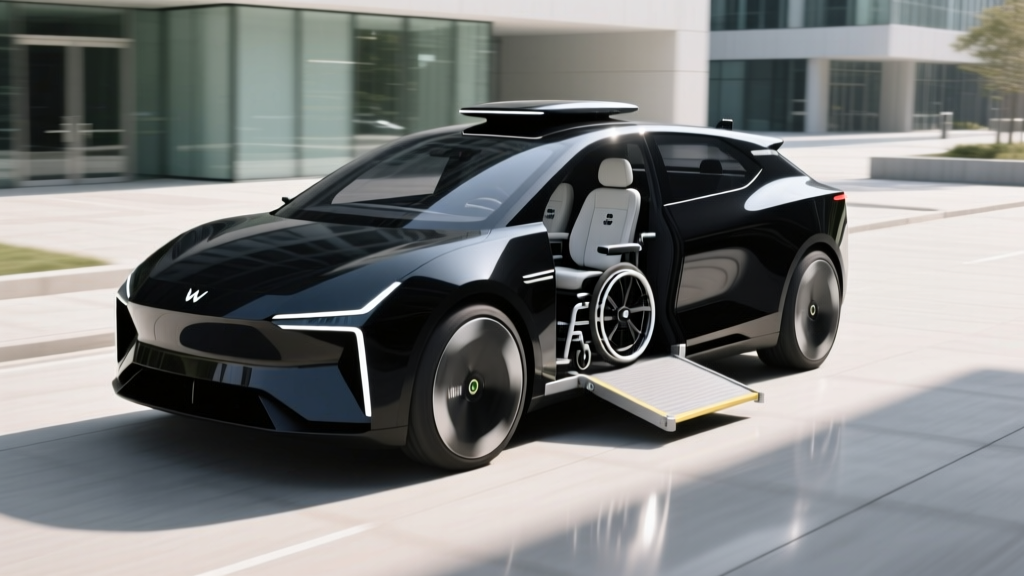
- Accessibility: While Waymo vehicles can accommodate folding wheelchairs, the Zoox carriage and some platforms have limitations for passengers with mobility devices.
These limitations are not minor footnotes — they define the real-world usability of robotaxi services. If you live in Minneapolis in January, robotaxis are not coming to your city anytime soon.
What About Tesla FSD? Is It a Robotaxi?
No. Tesla's Full Self-Driving (Supervised) is an SAE Level 2 driver-assistance system. The "Supervised" in the name is not marketing — it is a legal and technical requirement. The driver must remain attentive, hands ready, and is fully liable for all vehicle actions.
Tesla has discussed a future "Robotaxi" or "Cybercab" product, but as of 2026, no Tesla vehicle operates a driverless commercial ride-hailing service anywhere. Tesla's camera-only, no-LiDAR approach remains unproven for Level 4 operation. Every successful Level 4 deployment globally uses LiDAR.
This distinction matters enormously. Conflating Level 2 driver-assist with Level 4 robotaxi is the single most common source of public confusion about autonomous vehicles.
Frequently Asked Questions
Where can I use a robotaxi service right now?
In the US, Waymo One operates in Phoenix, San Francisco, Los Angeles, and Austin. Zoox operates in Las Vegas and limited areas of San Francisco. Outside the US, Baidu Apollo Go is the largest service, operating in Wuhan, Beijing, Shenzhen, and other Chinese cities. You must be within the service's geofenced zone to request a ride.
How much does a robotaxi cost vs. Uber or Lyft?
Waymo One fares are generally comparable to UberX without surge pricing — roughly $12–$16 for a 5-mile trip. During peak demand, Waymo can actually be cheaper than Uber/Lyft because its pricing is less volatile. Baidu Apollo Go in China is heavily subsidized and significantly cheaper than any US alternative, with 5-mile trips often under $3.
How safe are robotaxis based on real data?
Waymo's published data (validated by third-party researchers) shows an injury-causing crash rate approximately 80% lower than the human benchmark per million miles driven. However, this comparison has caveats: robotaxis operate in favorable conditions on well-mapped urban roads. The Cruise incident in San Francisco (October 2023) demonstrated that edge cases — unusual scenarios — remain a significant challenge and can have serious consequences.
What are the current limitations of robotaxi services?
Robotaxis cannot operate in heavy rain, snow, or fog. They are confined to geofenced, pre-mapped zones. They struggle with construction zones, non-standard traffic control (hand signals, police direction), and complex pickup/dropoff locations. Highway-speed operation is limited. Service is unavailable in most US cities.
Is this truly self-driving or just driver-assist?
Waymo and Zoox are genuinely driverless — SAE Level 4. No human is in the vehicle, and no human intervention is expected. This is fundamentally different from Tesla Autopilot/FSD (Supervised), GM Super Cruise, Ford BlueCruise, and all other consumer vehicles, which are SAE Level 2 and require an attentive human driver at all times.
Which companies in self driving cars are most likely to expand next?
Waymo has the clearest expansion roadmap, with Austin service growing and additional cities expected. Zoox is slowly expanding its Las Vegas zone. In China, Baidu continues to add cities rapidly. However, each new city requires 12–24 months of mapping, testing, and regulatory approval — expect measured growth, not rapid nationwide rollout.
Sources: NHTSA Automated Vehicle Safety, IIHS Advanced Driver Assistance, Waymo Safety Report (2024–2025), manufacturer and operator press releases.