The Viral Videos vs. the Data: What's Actually Happening
Search for "chinese self driving cars crashing" and you'll find dozens of short clips: a Baidu Apollo Go robotaxi stopped dead at a four-way intersection in Wuhan, a Pony.ai vehicle nudging a scooter in Guangzhou, or an Apollo minibus confused by construction cones in Beijing's Yizhuang district. Some clips are genuine. Many are stripped of context — a vehicle performing a conservative safety stop looks dramatic at 15-second clip speed but is often the system working as designed.
The harder question, and the one that matters if you're evaluating global autonomous-vehicle safety, is how China's Level 4 robotaxi fleets compare to Waymo and Cruise on measurable outcomes: collisions per million miles, disengagement rates, injury severity, and edge-case behavior. The answer requires separating social-media signal from regulatory filings, manufacturer disclosures, and municipal transport-bureau data.
This analysis covers the two dominant Chinese robotaxi operators — Baidu Apollo Go (the largest by ride volume) and Pony.ai — using the most current public data available through early 2026, including China's Ministry of Transport pilot-program disclosures and municipal incident reports.
SAE Automation Levels: What Chinese Robotaxis Actually Are
Before examining incidents, it's essential to establish what level of autonomy we're discussing. Consumer vehicles sold in China (BYD, NIO, XPeng, Li Auto) with features like XPeng's XNGP or Huawei's ADS 3.0 are SAE Level 2 driver-assist systems — the driver must remain engaged, hands on or near the wheel, eyes on the road. These are not robotaxis.
- Level 2 (Driver Assist): XPeng XNGP, Huawei ADS 3.0, Tesla Autopilot/FSD Supervised. Driver must supervise at all times.
- Level 3 (Conditional Automation): Limited production (Mercedes Drive Pilot in Germany/Nevada). System drives in narrow conditions; driver must take over on request.
- Level 4 (High Automation — Robotaxi): Baidu Apollo Go, Pony.ai, Waymo, Zoox. No driver in the vehicle within a defined operational design domain (geofenced area, weather constraints).
- Level 5 (Full Automation): Does not exist in production anywhere. No vehicle handles all conditions without a geofence.
The "Chinese self-driving cars crashing" discourse frequently conflates Level 2 consumer-vehicle incidents with Level 4 robotaxi operations. This article addresses Level 4 robotaxi data specifically.
Where Chinese Robotaxis Operate Right Now
China's robotaxi ecosystem is geographically concentrated in government-designated pilot zones. Unlike Waymo, which operates across Phoenix, San Francisco, Los Angeles, and Austin with relatively open geofences, Chinese operators run within tightly defined municipal boundaries and often specific districts within those cities.
| Operator | Primary Cities | Fleet Size (approx.) | Hours of Operation |
|---|---|---|---|
| Baidu Apollo Go (Luobo Kuaipao) | Wuhan (largest), Beijing (Yizhuang), Shanghai (Jiading), Guangzhou, Shenzhen, Chongqing | ~1,000+ vehicles (Wuhan alone ~500) | 24/7 in Wuhan; limited hours elsewhere |
| Pony.ai | Beijing (Yizhuang), Guangzhou (Nansha), Shenzhen, Shanghai | ~300 vehicles | 7 AM – 11 PM typical |
| AutoX (backed by Alibaba) | Shenzhen (Pingshan district primary) | ~100 vehicles | Limited pilot hours |
| WeRide | Guangzhou, Beijing pilot zone | ~150 vehicles | Daytime hours |
Wuhan is the global epicenter of robotaxi deployment by ride volume. Baidu Apollo Go completed over 8 million cumulative paid rides in Wuhan by late 2025, per Reuters reporting on Baidu's earnings disclosures. That scale makes Wuhan both the best case study for real-world safety data and the source of most viral incident footage.
The Technology Stack: Lidar-Heavy, Not Camera-Only
Chinese Level 4 robotaxis overwhelmingly use a sensor-fusion approach that contrasts with Tesla's camera-only FSD (Level 2). The hardware stack matters because it directly influences the failure modes you see in crash footage.
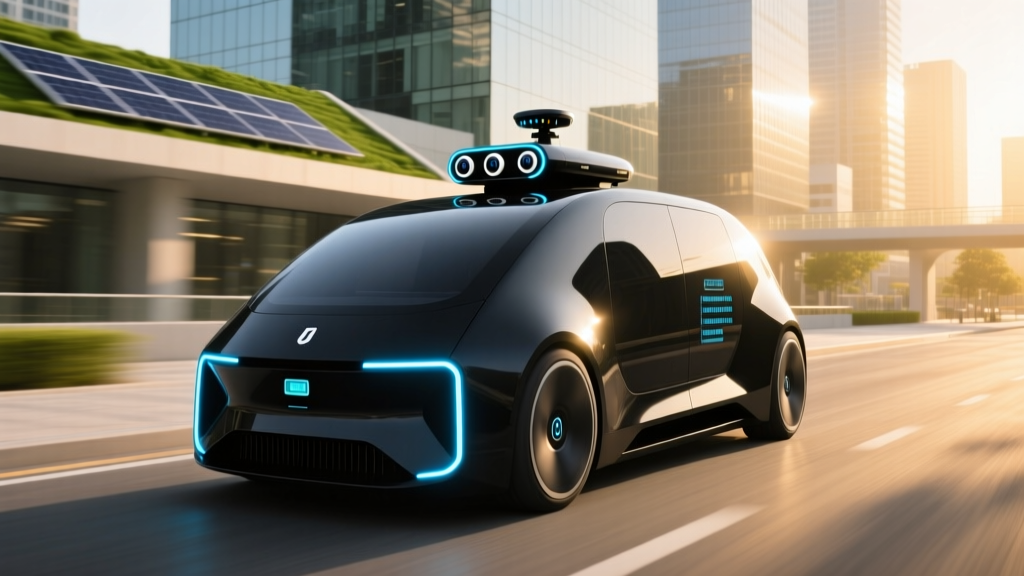
Typical Baidu Apollo Go 6th-Gen Vehicle (based on Jidu/Jiyue platform)
- Lidar: 4 units (roof-mounted + corner units), providing 360° point-cloud coverage to ~200 meters
- Cameras: 12+ units (wide, narrow, fisheye) for lane/traffic-light/object classification
- Millimeter-wave radar: 5 units for velocity detection in rain/fog where lidar degrades
- Ultrasonic: 12 units for low-speed proximity
- Compute: Dual NVIDIA DRIVE Orin (combined ~508 TOPS)
- HD maps: Centimeter-precision pre-mapped routes within geofence, updated weekly
- V2X: In some pilot zones (Yizhuang, Jiading), vehicles receive signal-phase data from smart traffic lights
Pony.ai's 7th-gen stack is similar: 4 lidar, 11 cameras, 5 radar, NVIDIA Orin. AutoX's 6th-gen uses 50+ sensors including 8 lidar.
This lidar-heavy approach explains a specific pattern in "crash" footage: the vehicles often perform conservative stops when encountering ambiguous edge cases (construction zones, erratic e-bikes, unusual road furniture). Lidar detects the obstacle reliably, but the classification/planning layer may halt rather than navigate around it. This produces viral "stranded robotaxi" videos that look like failures but are actually fail-safe behavior.
The real safety concern is different: edge cases where sensor fusion fails to classify a moving object correctly, particularly e-bikes and three-wheeled cargo scooters that are ubiquitous in Chinese cities and behave unpredictably. These are the scenarios behind the most serious documented incidents.
Safety Data: What the Numbers Actually Show
China's Ministry of Transport requires pilot-zone operators to report disengagements, collisions, and injuries. However, the reporting framework differs from California's DMV disengagement reports and NHTSA's Standing General Order (SGO) in the US. Municipal-level data from Wuhan, Beijing, and Guangzhou provides the clearest picture.
- Baidu Apollo Go cumulative rides: 8+ million paid rides (Wuhan-dominant) through late 2025, per Baidu earnings calls.
- Reported injury collisions in Wuhan (2024 calendar year): Wuhan Municipal Transport Bureau disclosed approximately 200+ incident reports involving Apollo Go vehicles, the majority minor (low-speed contact, abrupt stops causing passenger discomfort, rear-end collisions by human drivers hitting stopped robotaxis).
- Fatalities: No confirmed pedestrian or passenger fatalities attributed to Baidu Apollo Go or Pony.ai robotaxi fault as of early 2026. One widely discussed 2024 incident involved an Apollo Go vehicle striking a pedestrian who had entered the roadway unexpectedly; the pedestrian sustained injuries but survived. Baidu stated the vehicle was traveling below the speed limit and braked, but could not stop in time.
- Disengagement context: China does not publish disengagement-per-1,000-miles in the same format as California DMV reports. Baidu has claimed in investor presentations that its disengagement rate has improved by 10x since 2021, but specific figures are not independently audited.
- Rear-end pattern: The most common collision type is a human-driven vehicle rear-ending a stopped Apollo Go — mirroring Cruise's experience in San Francisco. Robotaxis stop conservatively; human drivers following too closely do not.
Comparing to US operators requires caution because reporting methodologies differ. Waymo reported to NHTSA under the SGO approximately 50+ collisions across its multi-city fleet over a comparable period, with the vast majority at low speed and many caused by other road users. Cruise's license was suspended in California in October 2023 after a specific incident involving a pedestrian dragged under the vehicle — an event with no direct parallel in the Chinese fleet's public record.
On a per-million-rides basis, Baidu's Wuhan operation appears to have a collision rate in the same order of magnitude as Waymo's US operations — low single-digit collisions per million rides, overwhelmingly minor. This is not to say the systems are equivalent; the operational environments are radically different. Wuhan's traffic density, e-bike prevalence, and pedestrian behavior create edge cases that Phoenix's suburban grid does not.
Pricing and How to Use the Service
Using a Chinese robotaxi as a visitor is possible but requires Chinese-language apps and, typically, a WeChat or Alipay account linked to a payment method accepted in China. Here's how Apollo Go and Pony.ai compare to conventional rideshare:
| Service | Base Fare | Per-km Rate | 5 km Trip (approx.) | Promotional Discounts |
|---|---|---|---|---|
| Baidu Apollo Go | ¥8 (~$1.10) | ¥1.5/km | ¥15-20 (~$2.10-2.75) | Frequent 50-70% off coupons for new users |
| Pony.ai | ¥10 (~$1.35) | ¥1.8/km | ¥18-22 (~$2.50-3.00) | Limited promotions |
| Didi (conventional rideshare) | ¥13 (~$1.80) | ¥2.0/km | ¥22-28 (~$3.00-3.85) | Standard |
| Beijing Taxi (metered) | ¥13 (~$1.80) | ¥2.3/km | ¥25-30 (~$3.40-4.10) | None |
Baidu has been aggressively subsidizing Apollo Go fares to build market share, a strategy that has drawn protests from Wuhan's human taxi drivers who cannot compete on price. The subsidized pricing is not sustainable — Baidu's stated goal is to reach unit-economic breakeven per vehicle, which the company projected for 2025 in Wuhan. Whether that breakeven has been achieved at unsubsidized fare levels is not publicly confirmed.
To use Apollo Go: download the 萝卜快跑 (Luobo Kuaipao) app or access via Baidu Maps, set pickup/dropoff within the geofenced zone, confirm the ride, and unlock the vehicle via the app upon arrival. Seats have seatbelt sensors; the vehicle will not move until all passengers are belted. An in-cabin screen shows the vehicle's perception of its surroundings. A remote operator can intervene via teleoperations if the vehicle becomes stuck.
Regulatory Landscape: Who Approves Operations
China's regulatory structure for robotaxis is municipal-first, national-second — the opposite of the US, where NHTSA sets federal safety standards and states add operational permits.
- National level: The Ministry of Transport (MOT) and Ministry of Industry and Information Technology (MIIT) issue pilot-program guidelines and safety-assessment standards. In 2023, MOT published the "Guiding Opinions on Promoting the Innovative Development of Autonomous Driving" which established a tiered licensing framework from testing → limited commercial → full commercial.
- Municipal level: City transport bureaus (Wuhan, Beijing, Shanghai, Guangzhou, Shenzhen) issue specific operating permits, define geofenced zones, set fleet-size caps, and collect incident reports. Wuhan's aggressive permitting is why Baidu scaled there fastest.
- District level: Within cities, specific districts (Beijing's Yizhuang Economic-Technological Development Area, Shanghai's Jiading, Shenzhen's Pingshan) have the most permissive rules, including allowing fully driverless (no safety operator) operations.
The regulatory environment shifted after a cluster of high-profile incidents in mid-2024. Wuhan temporarily capped Apollo Go fleet expansion and required Baidu to improve traffic-flow behavior (reducing unnecessary stops at empty intersections). Beijing's Yizhuang zone tightened teleoperation response-time requirements. These are operational corrections, not shutdowns — analogous to California DMV's post-Cruise-incident tightening of permit conditions.
Notably, China does not have an equivalent to California's requirement that operators publish disengagement reports. This makes independent safety comparison harder and is a legitimate transparency gap that Western researchers have flagged.
Current Limitations: Where These Systems Fail
Operational Limitations of Chinese Level 4 Robotaxis
- Geofence rigidity: Vehicles cannot operate outside pre-mapped zones. A trip from Wuhan's Hanyang district to the airport may require a handoff to conventional rideshare for the last few kilometers outside the geofence.
- Weather degradation: Heavy rain (common in Guangzhou/Shenzhen summers) degrades lidar performance. Operators reduce fleet deployment or suspend service during torrential downpours. Snow/ice (Beijing winters) similarly limits operations.
- Construction zones: China's rapid infrastructure development means frequent temporary lane shifts, barriers, and detours. HD maps may be outdated by days. This is the #1 source of "stranded vehicle" footage.
- E-bike and three-wheeler unpredictability: Chinese urban traffic includes millions of e-bikes that weave between lanes, run red lights, and travel against traffic. These are the edge cases most likely to trigger emergency stops or, rarely, contact incidents.
- Teleoperation dependency: When a vehicle cannot resolve a scenario, it stops and requests remote-human guidance. In Wuhan's peak hours, teleoperation wait times of 2-5 minutes have been reported, leaving vehicles stationary in travel lanes.
- No highway operations: Level 4 robotaxi services in China do not operate on expressways. Airport runs use surface streets only.
- Limited cargo/passenger flexibility: No child seats, no pet transport, no wheelchair-accessible vehicles in most fleets.
Why the "Crashing" Narrative Overstates the Risk
The volume of "Chinese self-driving cars crashing" content online reflects three factors more than an actual epidemic of collisions:
- Sheer scale: Wuhan alone has ~500 Apollo Go vehicles completing tens of thousands of rides daily. Even a 99.99% incident-free rate produces multiple observable events per day across the fleet, and smartphones are everywhere.
- Conservative-stop optics: A robotaxi stopped at a green light because it detected an ambiguous object is the system working correctly — but it looks broken on video. Human drivers honking at the stranded vehicle amplify the drama.
- Geopolitical narrative incentives: Content portraying Chinese technology as dangerous receives engagement in Western markets. Some footage is genuine; some is misrepresented or edited to remove the triggering event (e.g., a pedestrian stepping off a curb 3 meters ahead).
This does not mean the systems are flawless. The genuine concerns — teleoperation latency, e-bike edge cases, construction-zone navigation, and the transparency gap in incident reporting — are real and are the active areas of engineering and regulatory focus.
Frequently Asked Questions
Where can I use a Chinese robotaxi right now?
Baidu Apollo Go operates in Wuhan (largest, 24/7), Beijing (Yizhuang district), Shanghai (Jiading), Guangzhou, Shenzhen, and Chongqing. Pony.ai operates in Beijing, Guangzhou (Nansha), Shenzhen, and Shanghai. You need a Chinese phone number and WeChat/Alipay payment in most cases. Tourist access is possible but not streamlined.
How much does a Chinese robotaxi cost vs. Uber or Didi?
Apollo Go fares in Wuhan average ¥15-20 ($2.10-2.75) for a 5 km trip, roughly 30-50% cheaper than Didi's conventional rideshare, due to heavy subsidies. At unsubsidized rates, robotaxis are price-competitive with Didi but not dramatically cheaper. For comparison, a similar 5 km UberX ride in a US city typically costs $8-15 depending on market.
How safe are Chinese robotaxis — is there real data?
Baidu Apollo Go has completed 8+ million paid rides with no confirmed fatalities attributed to system fault. Wuhan reported ~200+ incident reports in 2024, the majority minor (low-speed contact, passenger discomfort from hard braking, rear-ends by following human drivers). On a per-million-rides basis, this is in the same order of magnitude as Waymo's US collision rate. Independent third-party audits of the data are not available, which is a legitimate limitation.
What are the current limitations of Chinese robotaxis?
Geofenced zones only (no off-route travel), weather restrictions (heavy rain/snow suspends service), construction-zone confusion, inability to handle highway driving, teleoperation delays during peak hours, and no wheelchair or child-seat accommodation. E-bike-dense traffic remains the most challenging edge case.
Is this truly self-driving or driver-assist?
Baidu Apollo Go and Pony.ai robotaxis are SAE Level 4 — fully driverless within their geofenced operational domain. There is no human in the driver's seat. This is fundamentally different from Level 2 consumer vehicles (XPeng XNGP, Huawei ADS, Tesla FSD Supervised) which require active driver supervision. Level 4 robotaxis cannot operate outside their mapped zones or in severe weather; Level 5 (drive anywhere, any condition) does not exist.
Has anyone died in a Chinese robotaxi crash?
As of early 2026, no confirmed pedestrian or passenger fatalities have been publicly attributed to Baidu Apollo Go or Pony.ai robotaxi system fault. A 2024 Wuhan incident involved an Apollo Go vehicle striking a pedestrian who entered the roadway; the pedestrian survived with injuries. This contrasts with Cruise's 2023 San Francisco incident (non-fatal but serious, leading to license suspension) and Waymo's record of no serious-injury collisions attributed to system fault. The data transparency gap in Chinese reporting means these figures should be treated as "publicly reported" rather than independently verified.
Sources consulted: Baidu quarterly earnings disclosures (2024-2025), Wuhan Municipal Transport Bureau pilot-program reports, California DMV disengagement reports (for US comparison), NHTSA Standing General Order collision data, Reuters technology reporting on Chinese AV regulation. Chinese regulatory filings accessed via Ministry of Transport publications.