Search for "cheapest self-driving cars" and you'll find a confusing mix of $30,000 sedans with driver-assist features and driverless taxis you can hail for $8. The problem? These are fundamentally different technologies operating at entirely different SAE automation levels. One requires your constant attention; the other has no steering wheel.
This guide cuts through the marketing noise to answer what buyers and riders actually need to know: where robotaxi services operate right now, what they cost per ride versus Uber or Lyft, which consumer vehicles offer the most advanced driver-assist for the lowest price, and what the real safety data shows.
SAE Automation Levels: What "Self-Driving" Actually Means
Before comparing costs, you must understand what you're buying or riding in:
- Level 2 (Driver Assist): The vehicle can steer, accelerate, and brake under certain conditions, but the human driver must remain fully engaged, hands on or near the wheel, eyes on the road. Examples: Tesla Autopilot/FSD (Supervised), GM Super Cruise, Ford BlueCruise, Hyundai HDA2. This is NOT self-driving.
- Level 3 (Conditional Automation): The vehicle handles all driving in specific, limited conditions (e.g., traffic jams under 40 mph on mapped highways). The driver can disengage but must take over when prompted. Currently very limited availability in the US (Mercedes Drive Pilot in select states).
- Level 4 (High Automation — Driverless): The vehicle handles all driving within a defined operational design domain (geofenced area, specific weather conditions) with no human driver required. These are robotaxis: Waymo, Zoox, and the relaunched Cruise. This IS self-driving — but only in approved zones.
- Level 5 (Full Automation): The vehicle drives anywhere, in any condition, with no human input required. This does not exist in production anywhere in 2026.
Where Can You Actually Ride a Driverless Robotaxi in 2026?
True Level 4 robotaxi service remains geographically limited. Here is where you can hail a vehicle with no one in the driver's seat today:
| Operator | Active Cities (2026) | Service Hours | Vehicle | Access |
|---|---|---|---|---|
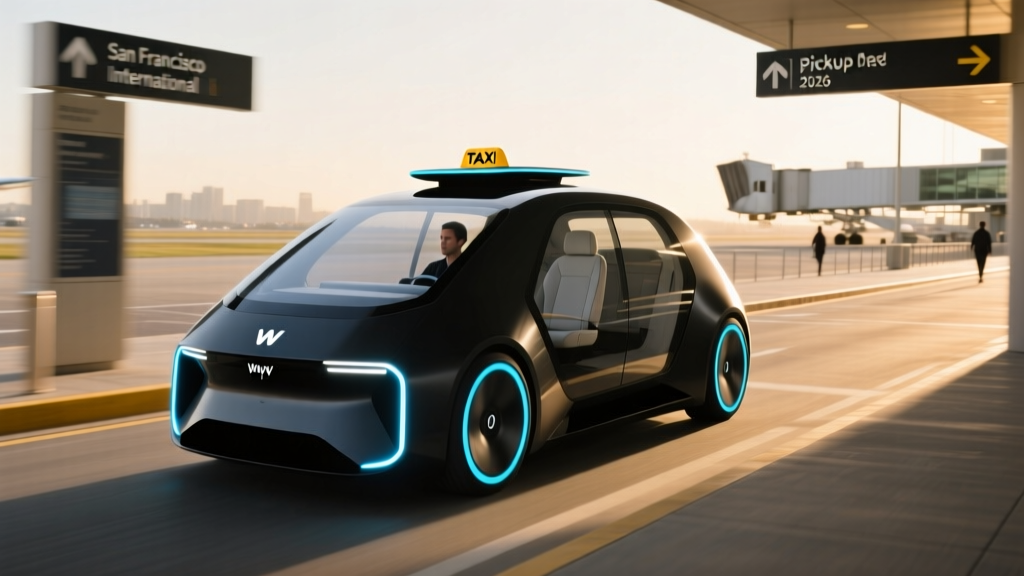
| Waymo (Alphabet) | Phoenix (metro), San Francisco, Los Angeles, Austin (limited) | 24/7 in Phoenix & SF; restricted hours in LA | Jaguar I-PACE (5th-gen sensor suite) | Open to public via Waymo One app |
| Zoox (Amazon) | Las Vegas (Strip corridor + downtown), Foster City, CA (limited) | Limited hours, invitation + waitlist expansion | Zoox purpose-built carriage (no steering wheel) | Waitlist; free promotional rides |
| Cruise (GM) | Phoenix, Dallas, Houston (relaunched with safety driver); fully driverless in select Phoenix zones | Limited daytime hours initially | Chevrolet Bolt EV / Cruise Origin (paused) | Waitlist; phased public rollout |
| Motional (Hyundai/Aptiv) | Las Vegas (strip + convention corridor) | Limited hours | Hyundai Ioniq 5 robotaxi | Uber/Lyft integration in LV |
Key takeaway: Unless you live in or visit Phoenix, San Francisco, Los Angeles, Austin, or Las Vegas, you cannot currently hail a driverless car. Announced expansions to cities like Miami, Atlanta, and Seattle are in testing phases — not open commercial service.
Robotaxi Pricing: How Much Does a Driverless Ride Cost vs. Uber?
The "cheapest self-driving car" to experience is almost certainly one you hail, not one you own. Here's how robotaxi fares compare to traditional rideshare in overlapping markets:
| Service | Typical 5-Mile Fare | Per-Mile Rate | Surge Pricing? | Tipping |
|---|---|---|---|---|
| Waymo One | $9–$15 | ~$1.50–$2.20/mi | Yes, during peak demand | No (in-app option available) |
| Uber (X, human driver) | $10–$18 | ~$1.80–$2.80/mi | Yes, frequent | Expected (15–20%) |
| Lyft (Standard, human driver) | $10–$17 | ~$1.75–$2.60/mi | Yes | Expected (15–20%) |
| Zoox (promotional) | $0 (free during launch phase) | N/A | No | No |
| Waymo (airport runs, PHX) | $18–$30 | Comparable to Uber Black | Yes | No |
Waymo has been aggressively pricing to compete with UberX in Phoenix and San Francisco, often undercutting rideshare on short trips when no surge is active. A 3-mile ride in Phoenix's Chandler suburb can cost as little as $7–$9 before any promotional credits. However, airport runs and longer cross-city trips often match or exceed Uber Black pricing.
Zoox is currently offering free rides in Las Vegas as part of its limited public launch — making it technically the cheapest self-driving car experience available, though availability is extremely restricted.
The Cheapest Consumer Cars with Advanced Driver-Assist (Level 2)
If you're looking to buy the cheapest car with the most capable driver-assist technology — not a robotaxi, but a consumer vehicle that handles highway steering, lane-keeping, and adaptive cruise — here are the most affordable options for 2026:
| Vehicle | Driver-Assist System | Hands-Free? | Base MSRP | System Cost (Add-On) | Effective Price |
|---|---|---|---|---|---|
| Chevrolet Equinox EV 2LT | Super Cruise | Yes (mapped highways) | $33,600 | Included on 2LT+ | ~$33,600 |
| Hyundai Ioniq 5 SEL | HDA2 (Highway Driving Assist 2) | No (hands-on required) | $42,600 | Standard | $42,600 |
| Tesla Model 3 Rear-Wheel Drive | Autopilot (basic) | No | $38,990 | Standard | $38,990 |
| Tesla Model 3 (FSD Supervised) | Full Self-Driving (Supervised) | No | $38,990 | $8,000 (or $99/mo) | $46,990 |
| Ford Mustang Mach-E Select | BlueCruise 1.4 | Yes (mapped highways) | $39,995 | Included (2-yr trial) | $39,995 |
| Mercedes EQS Sedan | Drive Pilot (Level 3) | Yes (specific conditions) | $105,550 | $2,500 option | ~$108,050 |
The Chevrolet Equinox EV with Super Cruise is the cheapest vehicle offering genuine hands-free driving on over 750,000 miles of mapped North American highways. Super Cruise uses a combination of GPS, real-time cameras, lidar-mapped road data, and a driver-attention camera to allow hands-off operation. The driver must remain alert and eyes forward, but physical steering input is not required.
Ford's BlueCruise 1.4 offers similar hands-free capability on 130,000+ miles of divided highways and is included on the Mustang Mach-E and F-150 Lightning at no extra cost for the first two years (then ~$75/year subscription).
What Level 2 Driver-Assist Does NOT Do
- Navigate unmapped roads or construction zones autonomously
- Handle stoplights, stop signs, or complex intersections without driver input
- Operate safely in heavy rain, snow, fog, or low-visibility conditions
- Make driving decisions without an attentive human ready to intervene instantly
- Qualify as "self-driving" under any legal or regulatory framework
The driver is legally and practically responsible for the vehicle at all times with Level 2 systems.
Robotaxi Safety Record: What the Data Actually Shows
Key Robotaxi Safety Metrics (Through Early 2026)
Waymo: Over 50 million fully driverless miles completed across Phoenix, San Francisco, and Los Angeles. According to a study published by the National Highway Traffic Safety Administration (NHTSA) and Waymo's own peer-reviewed safety data, Waymo vehicles were involved in approximately 5.7 police-reported crashes per million miles — compared to the human benchmark of roughly 14.4 per million miles in comparable urban environments. The vast majority of Waymo incidents involved other drivers striking the robotaxi, not the robotaxi causing the collision.
Cruise: Following a serious October 2023 incident in San Francisco where a Cruise vehicle dragged a pedestrian, the company suspended all driverless operations nationwide. Cruise has since relaunched in 2025–2026 with human safety drivers in Phoenix, Dallas, and Houston, with a phased return to driverless operations under stricter regulatory oversight. Cruise's pre-suspension record included approximately 700,000 driverless miles with a higher intervention rate than Waymo's.
Zoox: Limited public exposure with no major reported safety incidents during its Las Vegas and Foster City operations. Zoox's purpose-built vehicle features bidirectional driving capability and four-wheel steering, with sensor coverage designed to eliminate blind spots. However, total public miles driven remain comparatively low.
For context, the Insurance Institute for Highway Safety (IIHS) notes that human drivers average approximately 1.3 fatalities per 100 million vehicle miles traveled nationally. Robotaxi fleets have not recorded a passenger fatality as of early 2026, though sample sizes remain small relative to the billions of miles driven by human motorists annually.
How Robotaxi Technology Works: Sensors, Lidar, and Geofencing
Understanding the technology stack explains both the capabilities and the limitations of current robotaxis:
Waymo (5th Generation Driver)
- LiDAR: Custom-built "Laser Bear Honeycomb" units with 360° coverage and ~500-meter range, capable of detecting objects in complete darkness
- Cameras: 29 cameras covering 360° with high dynamic range for sun glare and low-light conditions
- Radar: 6 radar units for speed/distance measurement in rain and fog where cameras struggle
- Audio detection: External microphones to detect sirens from emergency vehicles
- HD Mapping: Centimeter-precision 3D maps of every operational road, updated continuously
Zoox (Purpose-Built Vehicle)
- Sensor suite: Repeated sensor fields — lidar, cameras, and radar overlap on all four sides for redundancy
- Symmetrical design: Vehicle can drive in either direction, eliminating the need for three-point turns or backing up
- Four-wheel steering: Enables tight urban maneuvering in constrained spaces
Tesla FSD (Supervised) — Camera-Only Approach
Tesla diverges from the robotaxi industry by relying exclusively on cameras (no lidar or radar) paired with neural-network processing. This approach is lower cost but remains Level 2 and requires active driver supervision. Tesla's FSD has not received regulatory approval for driverless operation anywhere.
The geofencing constraint is critical: Waymo vehicles will not operate outside their mapped service areas. If a passenger requests a destination beyond the geofence, the app simply won't allow the booking. This is a deliberate safety boundary, not a software limitation that can be overridden.
Regulatory Landscape: Who Approves Robotaxi Operations?
Robotaxi deployment in the United States requires approval from multiple overlapping authorities:
- State Public Utilities Commissions (PUCs): In California, the California Public Utilities Commission (CPUC) issues permits for commercial passenger service. Waymo holds a TCP (Transportation Charter-Party Carrier) permit allowing fare-charging driverless operations.
- State DMVs: The California DMV issues autonomous vehicle testing and deployment permits. Manufacturers must report disengagement data (how often a safety driver had to take over).
- NHTSA (Federal): The National Highway Traffic Safety Administration sets vehicle safety standards and investigates crashes. NHTSA's Standing General Order requires operators to report crashes involving Level 2–5 systems.
- City/Local Authorities: Municipal governments control road access, curb management, and can restrict operating hours or zones. San Francisco's Board of Supervisors has held multiple hearings on robotaxi expansion limits.
- State Legislatures: States like Arizona (Phoenix), Nevada (Las Vegas), and Texas (Austin) have passed laws explicitly permitting driverless commercial operations, while other states have more restrictive frameworks.
The patchwork regulatory environment is why robotaxi service exists in Phoenix and San Francisco but not in New York City or Chicago, despite those cities having far more potential riders.
Current Limitations: Where Robotaxis Still Fall Short
Operational Limitations in 2026
- Weather: Waymo avoids operating in heavy rain, flooding, snow, and dense fog. Phoenix's dry climate is a major reason it was the first robotaxi city. San Francisco service can be disrupted by heavy fog.
- Geofence boundaries: Service areas cover specific zones, not entire metro areas. In Phoenix, Waymo covers roughly 315 square miles — large, but you can't ride to Sedona or the Grand Canyon.
- Construction zones: Temporary lane closures, shifted lanes, and flaggers remain challenging. Waymo vehicles may pull over and request remote guidance, adding delays.
- Airport service: Phoenix Sky Harbor is served by Waymo, but SFO airport access was only approved in late 2024 and remains limited. LAX service is restricted.
- Multi-passenger coordination: No shared/pooled rides — each booking is exclusive, reducing cost efficiency compared to shared UberPool.
- Accessibility: Waymo's Jaguar I-PACE vehicles are not wheelchair accessible. Zoox's carriage-style vehicle has a low floor but ADA compliance details remain limited.
- Rural and suburban gaps: Robotaxis serve dense urban cores and specific suburbs. There is no robotaxi solution for rural transportation needs.
- Wait times: In high-demand periods in San Francisco, Waymo wait times can stretch to 15–20 minutes, longer than a typical Uber pickup.
Frequently Asked Questions
What is the cheapest self-driving car I can buy for personal use?
The cheapest car with the most advanced driver-assist available is the 2026 Chevrolet Equinox EV 2LT with Super Cruise at approximately $33,600 MSRP. It offers hands-free driving on mapped highways. However, this is Level 2 driver-assist — you must remain attentive and are legally responsible for driving. No consumer vehicle sold in 2026 is truly self-driving (Level 4).
How much does a Waymo ride cost compared to Uber?
For a typical 5-mile urban trip, Waymo charges $9–$15 while UberX charges $10–$18 in the same markets. Waymo is often cheaper on short trips without surge pricing, but can match or exceed Uber Black pricing on longer rides and airport runs. Waymo does not charge tips, which saves an additional 15–20% versus rideshare.
Where can I ride a robotaxi right now?
Fully driverless robotaxi service is available to the public in Phoenix (Waymo, 24/7), San Francisco (Waymo, 24/7), Los Angeles (Waymo, limited hours), and Las Vegas (Zoox, by invitation/waitlist; Motional via Uber). Austin has limited Waymo service. Cruise has relaunched with safety drivers in Phoenix, Dallas, and Houston with driverless service pending regulatory approval.
Are robotaxis actually safer than human drivers?
Waymo's published data shows approximately 5.7 police-reported crashes per million driverless miles versus approximately 14.4 for human drivers in comparable urban environments. However, robotaxi fleets operate in favorable conditions (mapped roads, fair weather, geofenced zones) and have not accumulated enough miles for statistically conclusive fatality comparisons. No robotaxi passenger fatalities have been reported as of early 2026.
Is Tesla FSD self-driving?
No. Tesla's Full Self-Driving (Supervised) is a Level 2 driver-assist system that requires the driver to remain fully engaged, with hands on the wheel and eyes on the road. Despite the "FSD" name, Tesla's own documentation and the system's on-screen warnings make clear that the driver is responsible for the vehicle at all times. Tesla FSD has not received regulatory approval for driverless operation in any jurisdiction.
When will robotaxis be available in my city?
Expansion depends on state legislation, local permits, mapping completion, and safety validation. Waymo has announced plans to expand to additional cities but has not published a public timeline for markets like Miami, Atlanta, or Seattle beyond testing operations. Realistic estimates for broad US metro coverage are late this decade at the earliest, and many cities may not see robotaxi service until the 2030s.
The cheapest way to experience a truly self-driving vehicle in 2026 is to download the Waymo One app in Phoenix or San Francisco and book a $7–$15 ride. The cheapest way to own the most capable driver-assist technology is a Chevrolet Equinox EV with Super Cruise. These are fundamentally different products serving different needs — and conflating them leads to dangerous expectations behind the wheel.