The Real Question Behind "Cheapest Self-Driving Car"
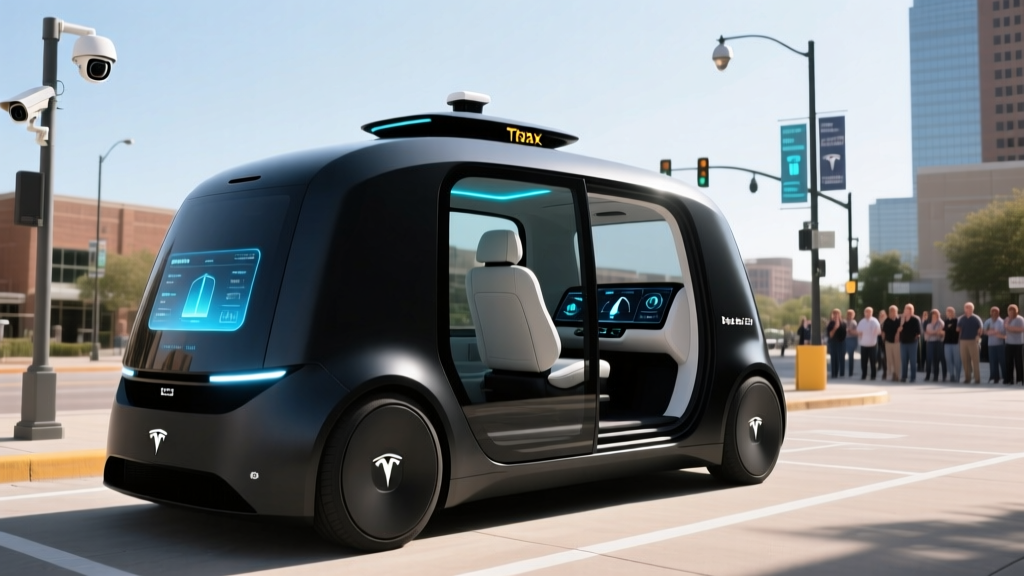
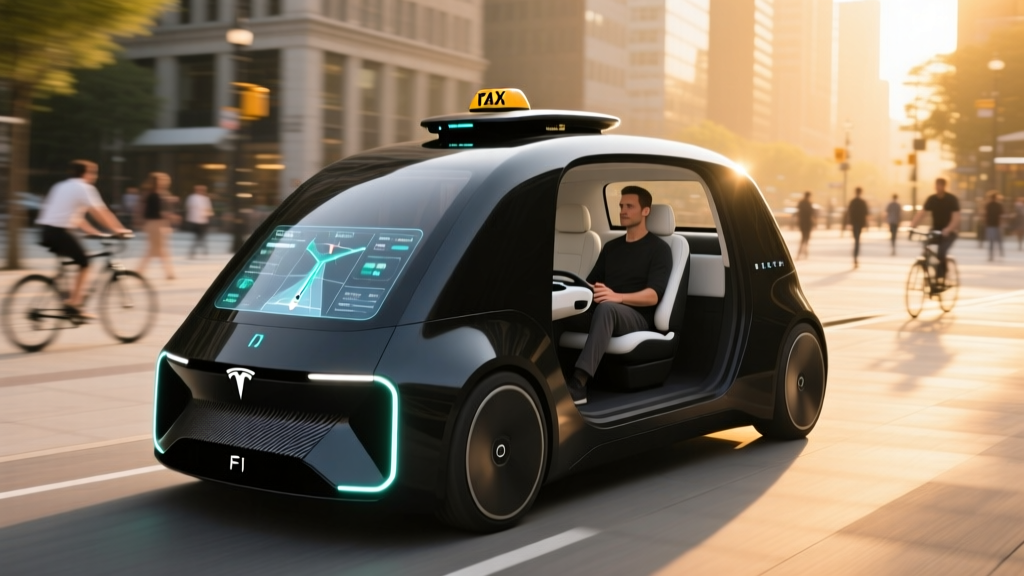
Search for the cheapest self-driving car and you'll find two very different answers colliding. One is a consumer vehicle with advanced driver-assist features — Tesla's Full Self-Driving (Supervised), GM's Super Cruise, Ford's BlueCruise — that still requires you to watch the road at all times. The other is a true driverless robotaxi you can hail right now, with no one behind the wheel, operating in specific US cities.
The price gap between these two categories is massive, and the terminology confusion is even bigger. Let's sort out what's actually available, what it costs, and whether "self-driving" means you can take a nap or whether you're still legally the driver.
- Level 2 (Driver Assist): The car steers and accelerates, but you must remain engaged, hands on or near the wheel, eyes on the road. Examples: Tesla Autopilot/FSD Supervised, GM Super Cruise, Ford BlueCruise, Hyundai HDA2. You are the driver. You are liable.
- Level 3 (Conditional Automation): The car handles all driving in narrow, defined conditions (e.g., traffic jams under 40 mph on approved highways). You can look away but must take over when summoned. Currently: Mercedes Drive Pilot (limited availability in Nevada and California). You are not driving — until the system asks you to.
- Level 4 (High Automation): Fully driverless within a geofenced service area. No steering wheel needed. No human driver needed. Examples: Waymo One, Zoox. You are a passenger.
- Level 5 (Full Automation): Drives anywhere, any condition, any weather. Does not exist in production anywhere in 2026.
Source: SAE International J3016
When people search for the cheapest self-driving car, they're usually imagining Level 4 or 5 — a vehicle that drives itself while they relax. In 2026, the only way to access that experience is through a robotaxi service. You cannot buy a Level 4 vehicle for personal use. Period.
Where Can I Use a Robotaxi Service Right Now?
True driverless robotaxi services operate in a handful of US metro areas. Availability is geofenced — meaning the car will only operate within a mapped service zone, and it won't drive you outside that boundary. Here's the current landscape as of early 2026:
| Service | Operator | Live Cities (2026) | Hours | SAE Level |
|---|---|---|---|---|
| Waymo One | Waymo (Alphabet) | Phoenix metro, San Francisco, Los Angeles, Austin (expanding) | 24/7 in most zones | Level 4 |
| Cruise | Cruise (GM) | Phoenix, Houston, Dallas (relaunching post-2024 suspension) | Limited hours | Level 4 |
| Zoox | Zoox (Amazon) | Las Vegas (limited public rides), Foster City CA (testing) | Invite/employee-only in most areas | Level 4 |
| Tesla Robotaxi (Cybercab) | Tesla | Not yet in commercial service (announced for Austin pilot) | N/A | Announced Level 4 |
Waymo One is the most broadly accessible option. If you live in or visit Phoenix, San Francisco, or Los Angeles, you can download the Waymo app, request a ride, and a Jaguar I-PACE equipped with Waymo's 5th-generation driver system will arrive with no one in the driver's seat. In Phoenix, the service covers over 225 square miles of the East Valley and operates around the clock.
Cruise is still rebuilding trust and operational scale following its October 2023 incident in San Francisco, where a pedestrian was dragged after being struck by a human-driven vehicle and then run over by a Cruise robotaxi. The company suspended all operations nationwide, underwent a safety review, and has been gradually relaunching with safety drivers before transitioning back to fully driverless service in select cities.
How Much Does a Robotaxi Cost vs. Uber or Lyft?
This is where the "cheapest self-driving car" question gets practical. You're not buying the vehicle — you're paying per ride. Here's how robotaxi pricing stacks up against traditional rideshare in comparable markets:
| Service | Base Fare | Per Mile | Per Minute | 5-Mile Trip Estimate |
|---|---|---|---|---|
| Waymo One (Phoenix) | ~$5.00 | ~$1.25 | ~$0.25 | $12–$18 |
| UberX (Phoenix avg.) | ~$3.50 | ~$1.10 | ~$0.22 | $10–$16 |
| Lyft (Phoenix avg.) | ~$3.25 | ~$1.05 | ~$0.20 | $9–$15 |
| Waymo One (SF) | ~$5.50 | ~$1.50 | ~$0.35 | $15–$22 |
| UberX (SF avg.) | ~$4.00 | ~$1.40 | ~$0.30 | $13–$20 |
The bottom line: Waymo rides are generally priced within $1–$4 of an equivalent UberX or Lyft ride for the same distance. In some cases, Waymo runs promotional pricing that undercuts rideshare, particularly for first-time riders or during off-peak hours. You're not paying a massive premium for the driverless experience — at least not on a per-ride basis.
However, surge pricing affects both services differently. Uber and Lyft surge based on driver supply; Waymo's pricing is more stable but availability can be limited during peak demand because the fleet size is fixed. You might wait 15–20 minutes for a Waymo during rush hour in San Francisco, while an Uber arrives in 3 minutes.
How Safe Are Robotaxis? The Real Data
- Waymo: Over 25 million fully driverless miles completed as of mid-2025. Waymo's own data, validated by third-party analysis from the NHTSA-reviewed reports, shows a 57% reduction in injury-causing crashes per million miles compared to human benchmarks in comparable urban environments.
- Cruise: Accumulated approximately 4.5 million driverless miles before its October 2023 suspension. The San Francisco incident involved the robotaxi braking hard (correctly avoiding initial impact) but then pulling over with the pedestrian still underneath — a post-collision decision-making failure, not a perception failure.
- California DMV disengagement reports: Waymo reported 0.02 disengagements per 1,000 autonomous miles in its 2024 filing — meaning the safety operator needed to intervene roughly once every 50,000 miles. (California DMV disengagement data)
The safety question is the most important one, and the answer is nuanced. Robotaxis are not perfect — they make different mistakes than humans do. But the data increasingly suggests they are safer than the average human driver in the urban environments where they operate.
Waymo published a peer-reviewed study in 2024 analyzing its first 7.1 million driverless miles, finding a 73% reduction in police-reported crash involvement compared to human benchmarks in the same geographic areas. This doesn't mean robotaxis never crash — they do, particularly low-speed rear-end and sideswipe incidents. But severe injury crashes are dramatically lower.
The Cruise incident illustrates the edge-case problem: the vehicle's perception system worked correctly (it detected the pedestrian and braked), but its post-incident behavior — attempting to pull over to the curb while the person was underneath — revealed a gap in decision-making logic. Cruise has since overhauled its software stack and added additional safety review layers before re-entering service.
What Technology Makes Robotaxis Work?
- LiDAR: 5 roof-mounted and side-mounted LiDAR units providing 360° 3D point-cloud mapping out to ~500 meters
- Cameras: 29 cameras covering all directions, including dedicated traffic-light and signal-reading cameras
- Radar: 6 radar units for velocity detection and redundancy in poor visibility
- Compute: Custom Waymo-designed computing platform with redundant processing paths
- HD Maps: Pre-mapped service areas with centimeter-level detail (lane geometry, curb heights, signal positions)
Tesla's approach (FSD Supervised — Level 2): Camera-only, 8 cameras, no LiDAR, no radar (removed in 2022+). Relies on neural-network vision processing. This is the core philosophical divide in autonomy: multi-sensor redundancy (Waymo) vs. vision-only scalability (Tesla).
The technology stack matters because it defines what the vehicle can and cannot handle. Waymo's LiDAR-heavy approach gives it reliable depth perception in rain, fog, and darkness — conditions where camera-only systems struggle. But LiDAR is expensive (each sensor array costs tens of thousands of dollars), which is why Waymo vehicles are fleet-owned, not consumer-purchasable.
Tesla's camera-only approach is cheaper to manufacture and theoretically more scalable, but it remains a Level 2 driver-assist system as of 2026. The driver must remain attentive. Tesla's FSD Supervised has improved significantly in highway and suburban driving, but urban edge cases — construction zones, erratic pedestrians, unusual road configurations — still require frequent human intervention.
What Consumer Cars Come Closest to "Self-Driving"?
If you can't buy a robotaxi, what's the closest thing you can actually purchase? Here's how the leading consumer systems compare — and what they actually cost:
| System | SAE Level | Vehicle(s) | Add-On Cost | Key Limitation |
|---|---|---|---|---|
| Tesla FSD (Supervised) | Level 2 | All Tesla models | $8,000 one-time or $99/mo | Driver must remain attentive; camera-only |
| GM Super Cruise | Level 2 | Cadillac, Chevy Silverado, GMC Sierra, Hummer EV | Included or $2,200–$2,500 option | Only works on ~750,000 mi of pre-mapped divided highways |
| Ford BlueCruise 1.4 | Level 2 | Mustang Mach-E, F-150 Lightning, Lincoln models | $2,100 (2-yr) or $75/mo | Hands-free on ~130,000 mi of approved highways only |
| Mercedes Drive Pilot | Level 3 | S-Class, EQS (select trims) | $2,500 option | Only under 40 mph, specific highways, NV/CA only |
The cheapest path to a hands-free driving experience in a car you own is Ford BlueCruise or GM Super Cruise — both around $2,000–$2,500. But neither is self-driving. Both require you to remain alert and ready to take over, monitored by in-cabin driver-facing cameras. If you look away for too long, the system will alert you, then disengage.
Mercedes Drive Pilot is the only Level 3 system available to US consumers, and it's severely limited: approved only on specific highways in Nevada and California, only in heavy traffic under 40 mph, and only during daylight with clear weather. When active, you can legally watch a video on the center screen — Mercedes accepts liability during Level 3 operation. But the operational design domain (ODD) is so narrow that most owners will use it rarely.
The Regulatory Landscape: Who Approves Robotaxis?
Robotaxi operations in the US require approval from multiple layers of government, and this patchwork is a major reason expansion has been slow:
- Federal (NHTSA): Sets vehicle safety standards (FMVSS). Currently, NHTSA does not "approve" autonomous driving systems but can investigate and order recalls. In 2024, NHTSA issued a standing general order requiring all Level 2+ and Level 4 operators to report crashes within 24 hours. (NHTSA Standing General Order)
- State (DMV/PUC): States like California, Arizona, Texas, and Nevada have created specific permitting frameworks. California's CPUC issues permits for commercial robotaxi service; the DMV tracks testing miles and disengagements. Arizona has minimal regulation, which is why Waymo launched there first.
- Local (city/county): Cities can restrict where robotaxis operate, set speed limits, and negotiate operational agreements. San Francisco's Board of Supervisors famously voted to limit Cruise expansion before the 2023 incident.
This fragmented regulatory environment means a robotaxi approved in Phoenix may need entirely separate permits, safety reviews, and operational agreements to operate in Austin. It's a significant bottleneck for scaling, and it's why expansion has been city-by-city rather than nationwide.
Current Limitations: What Robotaxis Cannot Do
- Geofencing: Waymo will not drive you outside its mapped service area. In Phoenix, that means no trips to Sedona or Flagstaff. In SF, no Golden Gate Bridge crossings to Marin County (limited bridge access).
- Weather: Heavy rain, fog, and snow degrade sensor performance. Waymo operates in moderate rain but will refuse rides or pull over during severe weather events. Snow operations remain extremely limited.
- Construction zones: Temporary lane shifts, flaggers, and unmapped road changes are among the hardest edge cases. Robotaxis may refuse to proceed or take significantly longer routes.
- No highway (mostly): Waymo's Phoenix service includes some freeway segments, but most robotaxi operations are surface-street only. Long-distance intercity trips are not possible.
- Accessibility: Current robotaxi fleets are not wheelchair-accessible. Waymo has announced plans for accessible vehicles but none are in service as of early 2026.
- Pickup/dropoff precision: The car will stop at a safe, legal location near your requested address — not necessarily at your exact front door. You may need to walk a short distance.
- No stops or errands: You cannot ask a Waymo to wait while you run into a store. It's point-A to point-B only.
These limitations aren't trivial. If you live outside a geofenced zone, need to drive in snow, or regularly navigate construction-heavy routes, a robotaxi is not a replacement for personal vehicle ownership. It's a complement — useful for airport runs, nights out, or commutes within the service area.
So What Is the Cheapest Self-Driving Car, Really?
The answer depends entirely on what you mean by "self-driving" and "car":
- You live in or frequently visit Phoenix, San Francisco, Los Angeles, or Austin
- Your trips are within the geofenced service area
- You want true Level 4 driverless experience with no attention required
- You spend $150+/month on Uber/Lyft already (the cost difference is negligible)
Choose a consumer Level 2 system (Super Cruise / BlueCruise / FSD) if:
- You want hands-free highway driving on road trips across the country
- You need a vehicle that goes anywhere — no geofence, no weather restrictions beyond normal driving
- You're comfortable remaining the responsible driver at all times
- You want the feature integrated into a car you own ($2,000–$8,000 additional cost)
Wait for Level 4 consumer vehicles if:
- You want a personal car that drives itself without your attention — this does not exist for purchase in 2026
- Mercedes Drive Pilot (Level 3) may expand ODD in coming years; Tesla's Cybercab is announced but not in commercial service
For pure cost, hailing a Waymo for $12–$18 per ride is cheaper than buying any vehicle with advanced autonomy features — especially if you drive fewer than 10,000 miles per year and live in a service area. The total annual cost of occasional robotaxi rides might be $2,000–$4,000, versus $35,000+ for a vehicle purchase plus insurance, charging, and depreciation.
But if you need a car anyway, adding Ford BlueCruise ($2,100) or GM Super Cruise (included on many trims) gives you the most practical hands-free experience available today — with the understanding that you're still the driver, legally and practically.
Frequently Asked Questions
Can I buy a Waymo or Cruise robotaxi for personal use?
No. Waymo and Cruise vehicles are fleet-operated only. The sensor suites (LiDAR arrays, redundant compute, HD mapping systems) cost tens of thousands of dollars per vehicle and require constant calibration, software updates, and fleet management infrastructure. There is no consumer purchase option, and none is planned.
Is Tesla FSD actually self-driving?
No. Tesla Full Self-Driving (Supervised) is an SAE Level 2 driver-assist system. The "Supervised" designation, added by Tesla in 2024, explicitly acknowledges that the driver must remain engaged and attentive at all times. Despite the name, it does not provide autonomous driving. You are legally and practically the driver, responsible for all vehicle actions.
How does Waymo handle an emergency or accident?
Waymo vehicles have a rider support button that connects you to a remote human operator who can communicate with you and, if needed, coordinate with emergency services. The vehicle can also autonomously pull over and contact support if it detects a collision or system fault. Waymo reports all crashes to NHTSA under the Standing General Order.
What about insurance and liability in a robotaxi crash?
When you ride in a Waymo, Waymo's commercial insurance covers the trip. You are not liable for the vehicle's actions — Waymo is. This is fundamentally different from Level 2 driver-assist, where you carry personal auto insurance and bear full liability. This liability shift is one of the biggest legal distinctions between Level 2 and Level 4.
Will robotaxis replace car ownership?
Not for most people in 2026. Geofencing, limited city availability, weather constraints, and the inability to make stops or drive outside service areas mean robotaxis work as a supplement to transit and rideshare — not a replacement for personal vehicle ownership. In dense urban cores with good coverage (downtown Phoenix, central San Francisco), some residents have reduced or eliminated car ownership using a combination of robotaxis, transit, and occasional car-share. But this remains the exception, not the norm.