Why Lidar Matters for Advanced Driver Assistance
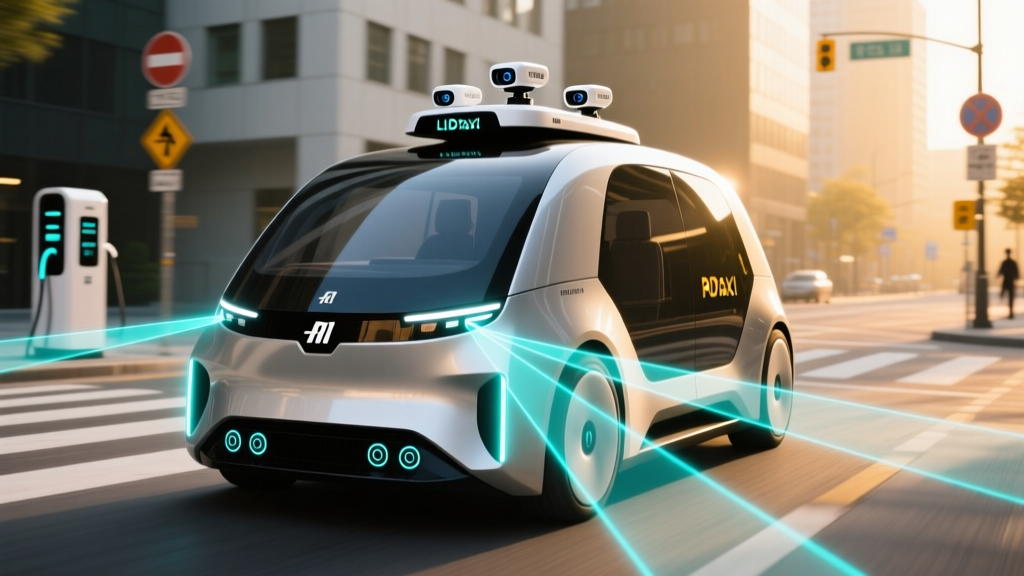
Lidar — light detection and ranging — fires millions of laser pulses per second to build a precise, real-time 3D map of a vehicle's surroundings. Unlike cameras, which rely on ambient light and software interpretation, or radar, which offers lower resolution, lidar measures the exact time-of-flight of reflected photons to calculate distance to objects with centimeter-level accuracy. For advanced driver-assistance systems (ADAS), this means more reliable detection of stationary obstacles, pedestrians at night, and debris in low-visibility conditions.
As of 2026, the automotive industry remains split on whether lidar is essential for consumer-level ADAS. Tesla famously abandoned radar and ultrasonic sensors in favor of a pure camera vision approach ("Tesla Vision"), while Mercedes-Benz, Volvo, Lotus, and several Chinese automakers have integrated lidar into production vehicles. The question for buyers: does having lidar on your car actually translate into better, safer, or more capable driver assistance?
The honest answer is nuanced. Lidar improves the sensor suite's redundancy and object-detection reliability, but every consumer system available today — lidar-equipped or not — remains SAE Level 2. The driver must remain engaged, eyes on or near the road, hands on or ready to grip the wheel. No production car sold in the U.S. is self-driving.
All consumer ADAS features discussed here — whether they use lidar, cameras, radar, or a combination — operate at SAE Level 2 (partial automation). The system can manage steering and acceleration/braking simultaneously under specific conditions, but the human driver is responsible for supervision and must be prepared to intervene instantly. SAE Level 4 (high automation, no driver needed) exists only in geofenced commercial robotaxi services like Waymo. If a feature requires you to pay attention, it is not self-driving — regardless of how many sensors it has.
How Lidar Works Alongside Cameras and Radar
Modern ADAS sensor stacks typically combine three technologies, each compensating for the others' weaknesses:
| Sensor Type | Strength | Weakness | Typical Placement |
|---|---|---|---|
| Lidar | Precise 3D distance mapping; works in darkness; detects stationary objects reliably | Performance degrades in heavy rain, snow, fog; higher unit cost | Roof, windshield header, or front bumper |
| Camera | Color and texture recognition; reads signs, lane markings, traffic lights; low cost | Struggles in glare, darkness, fog; depth estimation is inferred, not measured | Windshield, mirrors, rear |
| Radar | Excellent in rain, fog, snow; measures velocity of moving objects directly | Low spatial resolution; can miss stationary objects or small obstacles | Front grille, rear bumper, corners |
The engineering argument for lidar is sensor redundancy. If a camera is blinded by sun glare and radar struggles to distinguish a stopped car from an overhead bridge, a lidar unit can independently confirm the obstacle's exact position. Mercedes-Benz has cited this redundancy as the reason its Drive Pilot system — the first internationally certified Level 3 system (in Germany, under very limited conditions) — requires lidar. For consumer Level 2 systems in the U.S., lidar adds a margin of confidence but does not change the fundamental driver-supervision requirement.
2026 Production Cars With Lidar: Model-by-Model Breakdown
Below is a survey of EVs and electrified vehicles available in the U.S. market for the 2026 model year that include at least one lidar sensor as part of their ADAS suite. Availability, cost, and capability vary significantly.
Mercedes-Benz EQS / EQE — DRIVE PILOT (with Lidar)
The 2026 EQS sedan and EQE sedan offer Mercedes' most advanced ADAS. In the U.S., Mercedes provides DRIVE PILOT on the EQS (S 580 4MATIC and above trims), which uses a rear-window-mounted lidar unit alongside cameras, radar, and ultrasonic sensors. In Germany, DRIVE PILOT is certified to SAE Level 3 at speeds up to 95 km/h (~59 mph) on approved highways — meaning the driver can legally disengage from driving under those narrow conditions. However, in the U.S., DRIVE PILOT operates as a Level 2 system in Nevada and California with driver supervision required. The lidar sensor provides enhanced object detection for the adaptive cruise and lane-centering functions.
- Lidar unit: 1x Valeo Scala 3, rear-window mounted
- Additional sensors: 1x long-range radar, 4x corner radars, stereo camera, ultrasonic sensors, rear camera
- Cost: Included on EQS 580 4MATIC ($127,350 MSRP); optional on lower trims as part of a package
- Subscription: No recurring fee for U.S. Level 2 DRIVE PILOT functionality
Volvo EX90 — Core Computing + Lidar Standard
The 2026 Volvo EX90 three-row electric SUV ships with a roof-mounted Luminar lidar sensor as standard equipment on all trims — a notable decision. Volvo positions lidar as a core safety technology, not a premium add-on. The EX90's sensor suite includes the Luminar Iris lidar (with a claimed 250-meter detection range for dark objects), five radars, and eight cameras. The system powers Volvo's Pilot Assist (Level 2 highway driving assist) and an enhanced safety layer that Volvo calls an "invisible safety shield" — continuously scanning for pedestrians, cyclists, and animals even when the ADAS is not actively engaged.
- Lidar unit: 1x Luminar Iris, roof-mounted (standard, all trims)
- Additional sensors: 5 radars, 8 cameras, ultrasonic sensors
- Cost: Included in base MSRP ($79,995 for Twin Motor Core trim)
- Subscription: Volvo has announced future "advanced driver-assist" features may be offered via subscription, but Pilot Assist with lidar is included at purchase
Lotus Eletre — Lidar-Enhanced ADAS
The Lotus Eletre, an electric performance SUV, includes four deployable lidar units (front, rear, and both front fenders) as part of its Intelligent AD system. These lidars pop out from the bodywork when engaged and retract when not in use, reducing drag. The Eletre's ADAS suite also includes seven 8-megapixel cameras, four surround-view cameras, and six millimeter-wave radars. In the U.S. market, the system operates at Level 2 with features including adaptive cruise, lane-centering, and automated lane changes.
- Lidar units: 4x deployable (front, rear, fenders)
- Additional sensors: 7x 8MP cameras, 4x surround cameras, 6x radars
- Cost: Included in Eletre S ($107,400 MSRP) and above
- Subscription: No recurring fee announced for U.S. market
What About Tesla?
Tesla's 2026 lineup (Model 3, Model Y, Model S, Model X, Cybertruck) does not use lidar. Tesla relies exclusively on a camera-based system called Tesla Vision, powering both Basic Autopilot (included) and Full Self-Driving Supervised ($8,000 one-time purchase or $99/month subscription as of early 2026). Tesla CEO Elon Musk has long argued that cameras alone, paired with advanced neural-network software, are sufficient — reasoning that human drivers use only eyes (cameras) and a brain (software). Critics counter that cameras alone lack direct depth measurement, making lidar a valuable safety redundancy. The real-world safety data remains debated; see the NHTSA crash investigation database for ongoing analysis.
ADAS Brand Naming Comparison (2026)
| Brand | ADAS Name | Lidar? | SAE Level | Hands-Free? |
|---|---|---|---|---|
| Mercedes-Benz | DRIVE PILOT | Yes (EQS/EQE) | Level 2 (US) | No (US) |
| Volvo | Pilot Assist | Yes (EX90) | Level 2 | No |
| Lotus | Intelligent AD | Yes (Eletre) | Level 2 | No |
| Tesla | FSD (Supervised) | No | Level 2 | No |
| GM (Cadillac/Chev) | Super Cruise | Yes (some) | Level 2 | Yes (mapped roads) |
| Ford | BlueCruise | No | Level 2 | Yes (mapped roads) |
Real-World Capabilities and Limitations of Lidar-Equipped ADAS
Having driven lidar-equipped systems from Mercedes and Volvo alongside camera-only systems from Tesla, the differences are measurable but not transformative at the Level 2 tier. Here is what lidar adds — and what it does not fix.
Where Lidar Helps
- Stationary obstacle detection: Lidar detects stopped vehicles, road debris, and barriers at distance without relying on training data. Camera-only systems have historically struggled with stationary objects (a factor in several NHTSA-investigated Tesla incidents).
- Nighttime performance: Lidar generates its own light, making it independent of headlamp illumination. Pedestrian detection at night on unlit roads is measurably more robust.
- Construction zones: Temporary lane shifts, jersey barriers, and irregular road geometry are mapped in 3D by lidar in real time, even before camera-based systems can classify them.
- Tunnel and bridge transitions: Sudden lighting changes that can temporarily blind cameras do not affect lidar.
Where Lidar Does Not Help
- Heavy precipitation: Rain, snow, and fog scatter lidar laser pulses, reducing effective range. In a heavy Midwest snowstorm, lidar range can drop from 250 meters to under 50 meters. Radar actually outperforms lidar in these conditions.
- Reading intent: Lidar can detect a pedestrian but cannot read a construction worker's hand signal or determine whether a cyclist is about to turn. Camera-based semantic understanding remains essential for these scenarios.
- Map dependency: Most hands-free Level 2 systems (Super Cruise, BlueCruise) rely on pre-mapped HD routes, regardless of whether lidar is present. Lidar does not eliminate this requirement.
- Cost-to-benefit ratio: A lidar unit adds $500–$1,500 in hardware cost. Whether this translates into measurably fewer incidents compared to a well-tuned camera + radar system is still being evaluated by IIHS and NHTSA.
- It does not make your car self-driving. You are the driver. You are liable.
- It does not handle all weather conditions. Heavy rain, snow, and fog degrade lidar performance.
- It does not navigate unmapped roads autonomously. Lane centering still requires visible or detectable lane markings.
- It does not eliminate the need for insurance, attention, or readiness to take over within seconds.
- It does not recognize traffic officer hand signals, temporary signs held by workers, or non-standard road configurations reliably.
Cost Breakdown: Lidar ADAS Purchase and Subscription Pricing
The cost of accessing lidar-enhanced ADAS varies from "included in MSRP" to "requires a high-trim purchase plus a subscription." Here is a comparison of current 2026 pricing:
| Vehicle / System | Lidar Included? | ADAS Cost (Purchase) | Subscription | Min. Trim MSRP |
|---|---|---|---|---|
| Volvo EX90 / Pilot Assist | Yes (standard) | Included | None (currently) | $79,995 |
| Mercedes EQS / DRIVE PILOT | Yes (S 580+) | Included (upper trims) | None (US Level 2) | $127,350 |
| Lotus Eletre / Intelligent AD | Yes | Included | None (announced) | $107,400 |
| GM Super Cruise (Cadillac LYRIQ) | Yes (some models) | Included (mid+ trims) | $25/mo after 3 yrs | $58,595 |
| Tesla FSD (Supervised) — no lidar | No | $8,000 one-time | $99/month | $38,990 (Model 3) |
Volvo's decision to standardize lidar on the EX90 is the most consumer-friendly approach — no upsell, no subscription gate. Mercedes bundles it into high trims, effectively requiring a $127K+ purchase. GM's Super Cruise on the Cadillac LYRIQ uses lidar on some models and remains one of the best hands-free highway systems, but charges $25/month after the initial three-year included period. Tesla's camera-only FSD remains the most widely deployed system by user count, but its $8,000 purchase price or $99/month subscription is the most expensive ongoing cost in the segment.
Should You Prioritize Lidar When Buying an EV?
For the 2026 model year, lidar is a beneficial but not decisive feature. Here is a practical decision framework based on how you drive:
Choose a Lidar-Equipped EV If:
- You frequently drive at night on rural or poorly lit roads where pedestrian and animal detection matters most.
- You commute through construction zones with irregular lane geometry.
- You value sensor redundancy as a safety philosophy — the engineering "belt and suspenders" approach.
- You're purchasing a luxury EV (EX90, EQS, Eletre) where lidar is included or bundled at no extra cost.
A Camera-Only or Radar-Based System Is Sufficient If:
- Your driving is primarily daytime, urban/suburban, on well-marked roads.
- You want hands-free highway driving on mapped routes — GM Super Cruise and Ford BlueCruise (no lidar on Ford) are proven and well-reviewed for this use case.
- You're budget-conscious and prefer a Tesla Model 3 or Model Y, where FSD Supervised offers broad (if imperfect) coverage without lidar hardware.
It is worth noting that lidar costs are declining rapidly. Luminar, Valeo, and Hesai (a major supplier for Chinese-market EVs) have driven per-unit costs below $500 at volume. Expect lidar to appear on more mid-price EVs by 2028. For now, it remains primarily a feature of premium and luxury electric vehicles.
Frequently Asked Questions
Is a car with lidar actually self-driving?
No. Every production car with lidar available in the U.S. in 2026 operates at SAE Level 2, meaning the driver must remain fully engaged and responsible. The only exception is the Mercedes DRIVE PILOT system, which holds Level 3 certification in Germany under very restricted conditions (specific highways, under 59 mph, good weather) — but in the U.S., it functions as Level 2. True self-driving (Level 4) is limited to geofenced commercial robotaxis like Waymo, which are not available for consumer purchase.
Does lidar work in rain and snow?
Lidar performance degrades in heavy precipitation. Rain droplets and snowflakes scatter laser pulses, reducing effective detection range — sometimes from 250 meters to under 50 meters in heavy snow. Radar actually outperforms lidar in these conditions. This is why lidar-equipped systems also include radar: the sensors compensate for each other's weaknesses. If you live in a region with frequent heavy snow or rain, lidar alone is not a silver bullet — the full sensor fusion stack matters more.
Why doesn't Tesla use lidar?
Tesla's engineering philosophy, led by CEO Elon Musk, holds that cameras paired with advanced neural-network AI are sufficient — and that lidar adds unnecessary cost and complexity. Musk has called lidar a "crutch" that delays development of robust vision-based systems. Critics, including many robotics and autonomous-driving researchers, argue that direct depth measurement from lidar provides a critical safety redundancy that cameras cannot replicate, particularly for stationary objects and nighttime scenarios. NHTSA has investigated multiple Tesla incidents involving collisions with stationary emergency vehicles, a scenario where lidar proponents argue their technology would have an advantage.
How much does lidar add to a car's price?
The lidar hardware itself costs roughly $500–$1,500 per unit at current production volumes. However, automakers rarely itemize lidar cost — it's bundled into trim packages or standard equipment. In practice, accessing lidar on a 2026 EV means buying a Volvo EX90 (starting at $79,995, lidar standard), a Mercedes EQS 580+ ($127,350+), or a Lotus Eletre ($107,400+). There is no budget EV with lidar in the U.S. market yet, though Chinese-market vehicles from BYD, NIO, and XPeng include lidar on models starting under $40,000 USD equivalent.
Will lidar become standard on all EVs?
Industry trends suggest lidar adoption will grow, but it is not guaranteed to become universal. Unit costs are falling (Luminar targets sub-$500 per unit at scale), and suppliers like Hesai, Valeo, and Innoviz are scaling production. However, Tesla's market dominance and commitment to camera-only ADAS proves that high-volume deployment without lidar is commercially viable. The most likely outcome: lidar becomes standard on premium vehicles and optional on mid-market vehicles, while camera + radar remains the baseline for entry-level EVs. See NHTSA's automated vehicle safety resources for evolving regulatory context.
Does having lidar lower my insurance premium?
As of 2026, no major U.S. insurer offers a specific discount for lidar-equipped vehicles. Some insurers provide general ADAS discounts (typically 5–10%) for features like automatic emergency braking and lane-keeping assist, which lidar-equipped vehicles include. However, the higher replacement cost of lidar sensors (a single unit can cost $1,000–$2,000 to replace after a collision) can increase comprehensive and collision premiums. Volvo has stated it expects insurance partnerships based on its lidar safety data, but no programs have launched yet.
Sources: Mercedes-Benz USA spec sheets; Volvo Cars USA EX90 specifications; NHTSA Automated Vehicle Safety; IIHS; Lotus Cars USA Eletre specifications. Tax credit eligibility for EV purchases is subject to IRS §30D rules including MSRP caps, buyer income limits, and battery-sourcing requirements — consult IRS.gov or a tax professional before purchasing.