Who Pays When a Self-Driving Car Crashes?
The question behind every robotaxi ride and every Tesla FSD engagement is the same: if something goes wrong, whose insurance covers it? The answer depends entirely on the vehicle's automation level, who is behind the wheel (if anyone), and which state you're in. As of 2026, car insurance for self-driving cars is not one uniform system — it's a patchwork shaped by whether you're riding in a driverless Waymo in Phoenix or supervising Tesla's Full Self-Driving (Supervised) on a Dallas freeway.
This guide breaks down how liability, insurance, and coverage actually work across the major autonomous platforms operating today, grounded in current regulatory frameworks and real safety data. No hype, no hand-waving — just the specifics you need as a rider, an EV owner, or a policyholder.
SAE Automation Levels: Why They Determine Your Insurance
Before discussing premiums and liability, you have to understand the automation level of the vehicle you're in. The Society of Automotive Engineers (SAE) defines six levels of driving automation, and insurance responsibility shifts dramatically between them.
| Level | Name | Who Drives? | Example Systems | Insurance Liability |
|---|---|---|---|---|
| 0 | No Automation | Human | Basic cruise control | Driver fully liable |
| 1 | Driver Assistance | Human | Adaptive cruise, lane-keep | Driver fully liable |
| 2 | Partial Automation | Human (must supervise) | Tesla Autopilot/FSD Supervised, GM Super Cruise, Ford BlueCruise | Driver fully liable |
| 3 | Conditional Automation | System (human must take over on request) | Mercedes Drive Pilot (limited markets) | Shared — automaker liable when engaged |
| 4 | High Automation | System (within geofence) | Waymo One, Zoox, Cruise (restricted) | Operator/company liable in service area |
| 5 | Full Automation | System (everywhere) | None currently available | Theoretical — operator fully liable |
The critical distinction for insurance purposes: at Level 2, you are the driver. Every major consumer system sold in the U.S. today — Tesla FSD (Supervised), Ford BlueCruise, GM Super Cruise — is Level 2. Your personal auto policy covers you, and you bear full liability. At Level 4, the robotaxi operator assumes liability while the vehicle is operating autonomously within its approved service area. This is not a subtle difference; it fundamentally changes who writes the check after a collision.
Where Robotaxis Operate Today (and How Insurance Applies)
Level 4 robotaxi services are geofenced — they only operate in mapped, approved areas. Here's where you can actually hail one in 2026 and how insurance works in each context.
| Operator | SAE Level | Active Cities | Hours | Insurance Model |
|---|---|---|---|---|
| Waymo One | Level 4 | Phoenix, San Francisco, Los Angeles, Austin (expanding) | 24/7 in most markets | Waymo commercial policy covers riders; no personal insurance required |
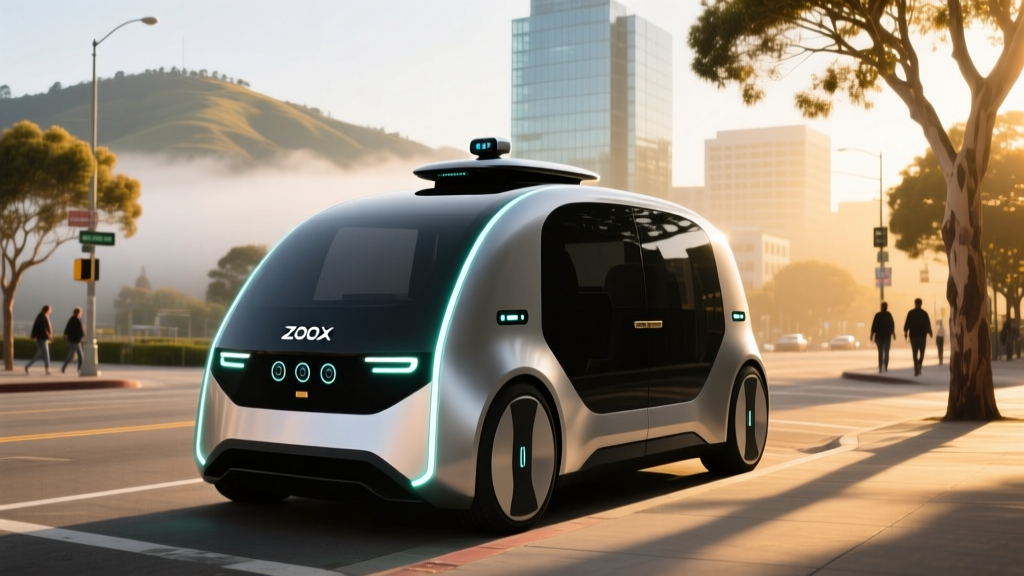
| Zoox | Level 4 | Las Vegas, Foster City (CA), limited Phoenix | Limited hours | Zoox (Amazon) commercial liability; riders not liable |
| Cruise | Level 4 (restricted) | Phoenix (limited relaunch post-2023 suspension) | Daytime only, phased | GM/Cruise commercial policy; heavily restricted operations |
When you step into a Waymo vehicle in Phoenix or San Francisco, you are not the driver. Waymo's commercial insurance policy — typically carrying $5 million to $10 million in combined liability coverage, well above state minimums — is the primary coverage for any incident during your ride. You do not need to provide proof of personal insurance, and your own auto policy is not at risk. This is fundamentally different from rideshare, where the driver's personal and commercial policies interact in complex ways during different trip phases.
Robotaxi Pricing vs. Uber and Lyft: The Real Cost Per Ride
Insurance structure aside, most potential riders want to know: does a robotaxi cost more or less than a conventional rideshare? The answer varies by market and time of day, but the gap has narrowed significantly.
| Service | Base Fare | Per-Mile Rate | Per-Minute Rate | Typical 5-Mile Ride |
|---|---|---|---|---|
| Waymo One | $2.50–$3.50 | $1.25–$1.75 | $0.30–$0.45 | $11–$17 |
| UberX (human driver) | $2.00–$3.00 | $1.10–$1.60 | $0.25–$0.40 | $9–$15 |
| Lyft Standard | $2.00–$3.00 | $1.00–$1.50 | $0.25–$0.40 | $8–$14 |
| Waymo (promotional/discounted) | Varies | Varies | Varies | $6–$12 |
Waymo frequently runs introductory pricing in newer markets to build ridership, sometimes undercutting UberX by 20-30%. At standard rates, the difference is typically $1-$4 per ride for a 5-mile trip. The premium (when it exists) reflects the cost of the technology stack — lidar, high-definition mapping, redundant compute — but Waymo has stated publicly that unit economics improve as fleet utilization increases.
From an insurance perspective, the robotaxi fare includes liability coverage. With Uber or Lyft, the driver carries a combination of personal insurance and the platform's contingent commercial policy (which varies by trip phase: $50K/$100K/$25K when the app is on but no ride accepted, up to $1 million when a passenger is in the car). Robotaxi coverage is simpler and more uniform — the operator's policy is primary from the moment you enter the vehicle.
Robotaxi Safety: What the Data Actually Shows
Insurance premiums are built on risk data, so let's look at what we know about robotaxi safety records with concrete numbers.
- Over 30 million fully autonomous miles driven across Phoenix, San Francisco, Los Angeles, and Austin
- Waymo's own analysis (peer-reviewed methodology) showed a 76% reduction in injury-causing crash involvement per million miles compared to human benchmarks in comparable urban environments
- NHTSA Standing General Order data shows Waymo vehicles involved in reported incidents at lower rates than human drivers per mile, though direct comparison requires context (geofenced urban vs. all-road driving)
- Most reported Waymo incidents involve low-speed contact with stationary objects or other vehicles that violated traffic rules — not high-speed collisions
Sources: NHTSA AV Safety Data, Waymo Safety Reports
For context, the human driver fatality rate in the U.S. is approximately 1.35 per 100 million vehicle miles traveled (NHTSA, 2024 data). Robotaxi fleets have not accumulated enough miles to produce statistically significant fatality-rate comparisons at that scale, but the non-fatal collision data trends favorably for Level 4 systems in their operating domains.
This safety record directly affects insurance pricing. Waymo's commercial policy premiums are negotiated at fleet scale, and the company's claims frequency data informs those rates. For riders, this means the liability coverage baked into your ride is underwritten by real actuarial data — not speculation.
The Technology Stack: Why It Matters for Insurance Underwriting
Insurance companies evaluating autonomous vehicle risk need to understand the technology. Here's how the major platforms differ in their sensor and compute approaches, which directly affects failure modes and therefore insurance risk.
Waymo — Multi-Sensor Fusion
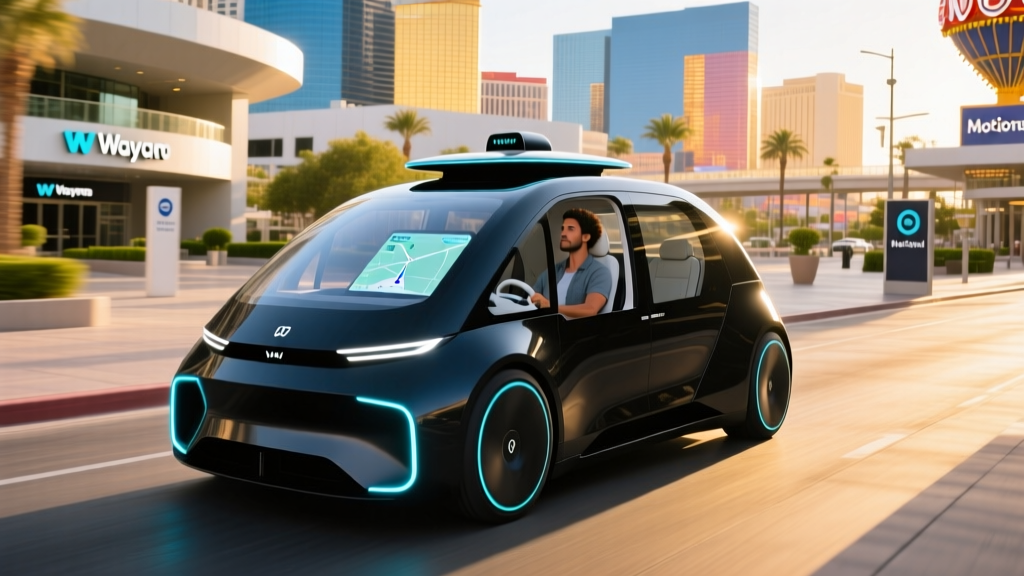
Waymo's 6th-generation driver system uses a combination of lidar (multiple roof- and body-mounted units providing 360° 3D point clouds), cameras (high-resolution, multiple focal lengths), and radar (improved resolution for weather degradation scenarios). The system runs on custom-designed compute hardware with redundant pathways. This multi-sensor approach provides overlapping coverage — if one sensor type degrades (camera glare, lidar rain scatter), others maintain situational awareness. From an insurance perspective, redundancy reduces single-point-of-failure risk.
Zoox — Purpose-Built Vehicle
Zoox takes a different approach: rather than retrofitting an existing vehicle, it designed a bidirectional, steering-wheel-free carriage from scratch. The sensor suite includes lidar, cameras, and radar distributed across the vehicle body. The purpose-built design eliminates blind spots inherent in conventional vehicle architectures. Insurance underwriters view this as a controlled-risk architecture — fewer edge cases from driver-seat ergonomics or mirror limitations.
Tesla FSD (Supervised) — Camera-Only, Level 2
Tesla's approach uses a camera-only vision system (8 cameras, no lidar or radar in current production vehicles) paired with neural network processing. This is a Level 2 system — the driver must remain attentive and is fully liable. Insurance companies treat Tesla FSD the same as any other Level 2 driver-assist system: the human driver's personal auto policy is primary, and Tesla does not assume liability for FSD operation. Some insurers have begun offering usage-based discounts for ADAS-equipped vehicles, but no major U.S. carrier currently offers a distinct "FSD discount" backed by claims data.
How Insurance Works for Level 2 vs. Level 4: The Owner's Guide
If you own a vehicle with advanced driver-assist features, understanding your insurance exposure is critical. Here's the practical breakdown.
You Own a Tesla, Ford, GM, or Other Level 2 Vehicle
- Your personal auto insurance is fully responsible for any crash, regardless of whether Autopilot, FSD (Supervised), BlueCruise, or Super Cruise was engaged
- The automaker does not assume liability at Level 2 — the driver supervision requirement is explicit in every system's terms of use
- Some insurers (Progressive, State Farm, Geico) ask whether your vehicle has ADAS features and may offer modest discounts (typically 5-10% on comprehensive/collision) based on claims data showing reduced rear-end and lane-departure incidents
- If you modify your vehicle's software or use aftermarket "defeat devices" to bypass driver monitoring, your insurer may deny a claim — this is considered material misrepresentation
You Ride in a Level 4 Robotaxi (Waymo, Zoox)
- The operator's commercial insurance is primary for any incident during the ride
- Your personal auto insurance is not involved — you don't even need to own a car
- If you're injured as a passenger, you'd file a claim against the operator's policy (or your own health insurance for medical costs, with subrogation handled between carriers)
- Property you bring into the vehicle is typically covered under the operator's rider policy or your own renters/homeowners insurance
The Emerging Level 3 Gap
Mercedes-Benz's Drive Pilot system, available in limited form in Nevada and California, is the first SAE Level 3 system sold in the U.S. At Level 3, the automaker accepts liability when the system is properly engaged within its operational design domain (specific highways, under 40 mph, good weather). This creates a novel insurance situation: your personal policy covers you when you're driving, but Mercedes's product liability coverage applies when Drive Pilot is active. Insurers are still developing actuarial models for this split-liability scenario, and policyholders should confirm their carrier's stance on Level 3 vehicles before purchasing.
Regulatory Landscape: Who Decides What's Legal
Autonomous vehicle regulation in the U.S. operates at both federal and state levels, and insurance requirements flow from these approvals.
Federal (NHTSA)
The National Highway Traffic Safety Administration sets vehicle safety standards but does not currently have a comprehensive federal framework for Level 4 deployment. NHTSA's Standing General Order (amended 2024) requires all manufacturers and operators of Level 2+ through Level 4 systems to report crashes within 24 hours. This data feeds into the agency's oversight but does not directly set insurance requirements.
State-Level Approval
Most operational authority comes from state regulators:
- California (CPUC + DMV): Waymo holds both a deployment permit and a passenger service permit. Operators must carry minimum $5 million in liability insurance. The DMV tracks disengagement reports annually.
- Arizona: Among the most permissive frameworks. Waymo has operated commercially in Phoenix since 2020. The state requires proof of insurance but has minimal operational restrictions.
- Texas: Austin operations governed under state autonomous vehicle law (HB 2023, effective 2023). Operators must carry insurance meeting state minimums multiplied by a factor set by the Texas Department of Insurance.
- Nevada: Level 3 Mercedes Drive Pilot approved for specific highway corridors. Insurance requirements mirror standard vehicle registration with product-liability overlay for the automaker.
For consumers, the regulatory patchwork means that insurance protections for robotaxi riders can vary by state. In practice, major operators carry coverage well above state minimums uniformly across markets — but the legal floor differs.
Current Limitations: What Self-Driving Systems Cannot Do
Understanding limitations is essential for insurance purposes because operating outside a system's design envelope can shift liability back to the human.
- Weather: Level 4 robotaxis (Waymo, Zoox) reduce speed or pause operations in heavy rain, fog, or snow. If a Waymo vehicle pulls over due to weather, it's following its operational design domain — but a human driver in the same conditions would still be fully liable under their personal policy.
- Geofencing: Waymo and Zoox operate only within mapped service areas. Crossing the geofence boundary is not possible — the vehicle will initiate a safe stop. This limits coverage to specific neighborhoods and corridors.
- Construction zones: Rapidly changed road configurations (new lane markings, temporary barriers) remain challenging. Level 4 systems may reroute or request remote assistance; Level 2 systems rely on the human driver to take over.
- Edge cases: Unusual road users (horse-drawn carriages, oversized loads, funeral processions), emergency vehicles with non-standard configurations, and unmapped private roads can exceed system capabilities.
- Level 2 supervision: Tesla FSD (Supervised), BlueCruise, and Super Cruise all require active driver monitoring. If the system detects inattention and you fail to respond, the vehicle will decelerate and stop — but any crash during inattention is your liability.
Frequently Asked Questions
Do I need special car insurance if my car has Tesla FSD or GM Super Cruise?
No special policy is required. These are Level 2 driver-assist systems, and your standard personal auto insurance covers you fully. Some insurers offer small ADAS discounts (5-10% on certain coverages), but you should not expect a major premium reduction. You remain the driver and are fully liable for any crash, whether or not the assist system was active.
If a Waymo hits my car, whose insurance pays?
Waymo's commercial liability insurance would be the primary coverage for damages caused by the Waymo vehicle. You would file a claim against Waymo's policy (typically through their claims process, initiated via the Waymo app or customer service). Your own collision coverage could cover your vehicle immediately with subrogation handled between insurers afterward — the same process as any at-fault driver situation.
Does riding in a robotaxi affect my personal auto insurance?
No. Riding in a Waymo or Zoox vehicle does not appear on your motor vehicle record and has no impact on your personal auto insurance premiums. You are a passenger, not a driver, and the operator's commercial policy covers the ride entirely.
Will car insurance get cheaper as self-driving technology improves?
Long-term, likely yes — but gradually. As Level 4 operations expand and claims data shows sustained safety improvements, actuarial models will adjust. For Level 2 vehicle owners, premiums will likely decrease incrementally as ADAS features become standard and claims data confirms collision reduction. However, repair costs for sensor-equipped vehicles (lidar units, camera arrays, radar modules) are significantly higher than for conventional vehicles, which partially offsets the safety-driven premium reduction.
What happens if a self-driving car gets a traffic ticket?
For Level 4 robotaxis, the operating company receives any citations or violations. Waymo and Zoox have processes for handling traffic enforcement interactions, including remote communication with law enforcement. For Level 2 vehicles, the human driver receives the ticket — the assist system is not recognized as a legal driver in any U.S. jurisdiction.
Can I get uninsured motorist coverage for robotaxi rides?
Your personal uninsured/underinsured motorist (UM/UIM) coverage typically applies when you're a passenger in any vehicle, including a robotaxi. If another driver hits the Waymo you're riding in and that driver is uninsured, your UM/UIM coverage could apply for your injuries. However, the robotaxi operator's own high-limit policy would likely be the primary source of compensation in most scenarios.