What Are the Blind Spots of a Car — and Why Do They Matter?
Every vehicle has blind spots — areas around the car that the driver cannot see through mirrors or direct line of sight. In a typical sedan, these zones extend roughly 10 to 25 feet behind the rear pillars on each side, plus a significant area directly behind the bumper. Larger vehicles like SUVs and trucks have even more expansive blind zones, sometimes spanning entire lanes of traffic for 30 feet or more.
According to NHTSA data, lane-change and merge crashes account for hundreds of thousands of collisions annually, many directly caused by drivers failing to detect vehicles in adjacent lanes. This is precisely the problem that Blind Spot Monitoring (BSM) and the broader ecosystem of Advanced Driver Assistance Systems (ADAS) were designed to solve.
Modern EVs — from the Tesla Model Y to the Hyundai Ioniq 5 to the Ford Mustang Mach-E — ship with multi-sensor arrays that continuously scan these danger zones. But understanding what these systems actually detect, how they work technically, and where they fall short is essential before you trust them with your safety.
How Blind Spot Monitoring Actually Works: The Sensor Stack
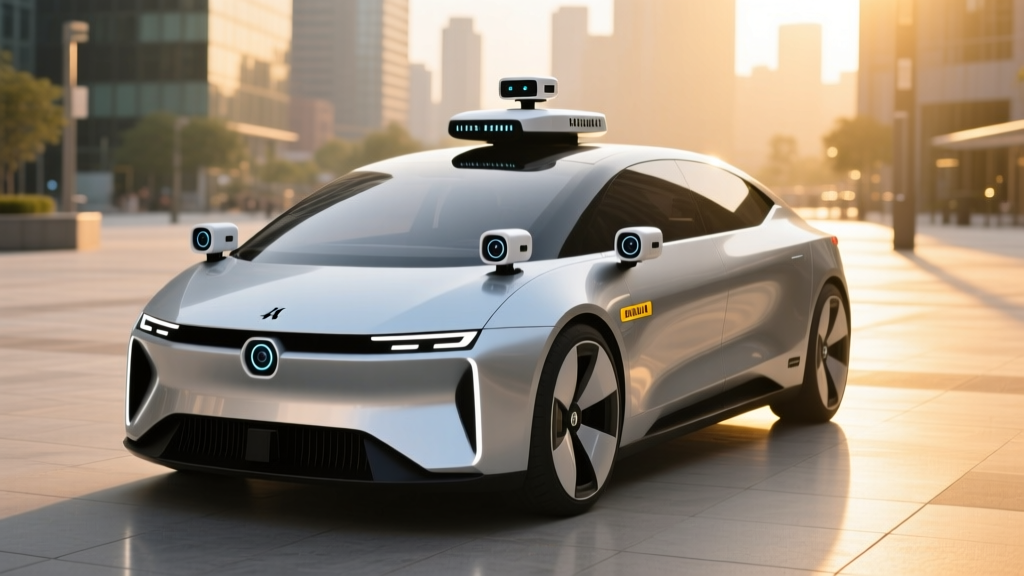
Blind spot detection relies on a layered sensor approach that varies by manufacturer and trim level. Here is how each sensor type contributes:
| Sensor Type | Function | Detection Range | Strengths | Weaknesses |
|---|---|---|---|---|
| Rear Radar (mmWave, 77 GHz) | Detects vehicles approaching from behind in adjacent lanes | Up to ~160 ft (50 m) | Works in rain, fog, darkness; measures speed and distance | Cannot classify object type; limited lateral resolution |
| Surround-View Cameras (fisheye, 190°+ FOV) | Visual object detection, lane-line recognition | Up to ~80 ft (25 m) effective | Classifies vehicles, cyclists, pedestrians; reads lane markings | Degraded by rain, snow, dirt, glare, darkness |
| Ultrasonic Sensors (short-range) | Near-body proximity detection for parking/low-speed | Up to ~15 ft (5 m) | Precise distance measurement at low speed | Too short-range for highway blind spot use |
| Front-Facing Camera + Radar Fusion | Forward collision and lane-keeping context | Up to ~650 ft (200 m) for radar | Enables lane-centering and adaptive cruise | Not directly relevant to rear blind spots |
The core blind spot monitoring function primarily uses the rear-mounted radar units — typically two modules, one behind each rear bumper corner. These 77 GHz millimeter-wave radars emit radio pulses and measure the reflected signal to determine the distance, speed, and direction of nearby objects. When a vehicle enters the monitored zone (usually defined as the adjacent lane from roughly the B-pillar back to 10–25 meters behind), the system triggers a visual alert — typically an amber icon in or near the side mirror.
If the driver activates a turn signal while a vehicle is detected in the blind zone, most systems escalate to an audible chime and/or a flashing alert. Some vehicles, like the Hyundai Ioniq 5 and Kia EV6, also apply brief corrective steering input to discourage the lane change — a feature Hyundai calls Blind Spot Collision-Avoidance Assist (BCA).
SAE Automation Level: This Is Not Self-Driving
Blind Spot Monitoring, Rear Cross-Traffic Alert, and even full ADAS suites like Tesla Autopilot, Ford BlueCruise, and GM Super Cruise are classified as SAE Level 2 driver-assist systems. This means the vehicle can control steering and/or braking in specific scenarios, but the driver must remain fully engaged — eyes on the road, hands on or near the wheel, ready to take over instantly. No consumer vehicle sold in 2026 offers SAE Level 4 or Level 5 autonomy for personal ownership. Only purpose-built robotaxi services like Waymo (operating in Phoenix, San Francisco, and Los Angeles) achieve Level 4, and only within geofenced areas.
This distinction matters because overreliance on BSM can create a false sense of security. The system is an aid — a sophisticated second set of eyes — not a replacement for mirror checks, shoulder checks, and active situational awareness. IIHS research has shown that drivers who understand their ADAS limitations have fewer incidents than those who over-trust the technology.
Brand-Specific Naming: What Each Automaker Calls It
Blind spot monitoring is nearly universal on new EVs in 2026, but the naming, packaging, and feature depth vary significantly. Here is how the major EV manufacturers label and bundle their systems:
| Manufacturer | BSM Name | Active Assist Name | Standard On (2026 Models) | Subscription Required? |
|---|---|---|---|---|
| Tesla | Blind Spot Monitoring | Autopilot (lane-centering + TACC) | All models, all trims | No — included. FSD (Supervised) is $8,000 or $99/mo extra |
| Ford | BLIS (Blind Spot Information System) | BlueCruise (hands-free highway) | Standard on most trims above base | BlueCruise: included 90 days, then ~$75/mo or $800/2yr |
| GM (Chevrolet/Cadillac) | Side Blind Zone Alert | Super Cruise (hands-free highway) | Standard on 2LT/above trims | Super Cruise: included 3 years, then ~$25/mo |
| Hyundai/Kia/Genesis | Blind-Spot Collision-Avoidance Assist (BCA) | Highway Driving Assist 2 (HDA2) | SEL/above trims (standard on most EVs) | No — included with vehicle |
| BMW | Active Blind Spot Detection | Driving Assistant Professional | Included with Driving Assistant package | No — one-time package cost (~$1,700) |
| Mercedes-Benz | Active Blind Spot Assist | DRIVE PILOT (Level 3, limited) | Standard on most EV trims | No for BSM; DRIVE PILOT subscription TBD |
| Toyota/Lexus | Blind Spot Monitor (BSM) | Toyota Safety Sense 3.0 (TSS) | Standard on nearly all trims | No — included |
| Rivian | Blind Spot Warning | Driver+ (highway assist) | All R1T and R1S trims | No — included via OTA updates |
The key takeaway: basic blind spot monitoring is standard or near-standard on virtually every mainstream EV sold in 2026. The cost differentiation comes with higher-level features like hands-free highway driving (BlueCruise, Super Cruise) or advanced supervised autonomy (Tesla FSD), which layer on top of BSM but do not replace it.
Real-World Capabilities: What BSM Actually Does Well
In daily driving, a properly functioning blind spot monitoring system is genuinely valuable. Here is where these systems perform best:
- Highway lane changes: Detecting faster-approaching vehicles in adjacent lanes that may not yet be visible in side mirrors — this is the primary use case, and radar-based BSM handles it reliably at speeds from 20 to 90+ mph.
- Rear cross-traffic alert (RCTA): When backing out of a parking space, the same rear radar units scan laterally for approaching vehicles, cyclists, or pedestrians — a genuine safety benefit in crowded lots.
- Trailer/tow mode awareness: Vehicles like the Ford F-150 Lightning and Rivian R1T extend the BSM detection zone when a trailer is connected, accounting for the longer combined vehicle length.
- Exit warning: Some systems (Hyundai, Kia, Mercedes) also warn rear passengers about approaching cyclists or vehicles when opening a door — using the same rear radar sensors.
- Night and low-visibility driving: Radar-based BSM works identically in pitch darkness, heavy rain, or fog — conditions where human mirror checks are significantly degraded.
Real-World Limitations: Where Blind Spot Systems Fail
- Cannot detect motorcycles or bicycles reliably at high speed: Small radar cross-sections and fast relative speed differentials mean motorcycles can slip through detection zones. Camera-based systems do better but still miss in poor lighting.
- Sensor blockage in winter weather: Heavy snow, ice buildup, or road salt accumulation on rear bumper radar covers can disable BSM entirely. The system will usually display a "sensor blocked" warning — but you may not notice it mid-drive.
- Does not cover directly behind the vehicle: BSM monitors adjacent lanes, not the zone directly behind your car. That is the role of the rearview camera and rear cross-traffic alert, which are separate systems.
- False positives near guardrails and barriers: On tight highway curves with concrete barriers, radar reflections can trigger phantom alerts — especially in construction zones with temporary lane shifts.
- Does not prevent all lane-change collisions: If a vehicle approaches extremely rapidly (speed differential >30 mph), the system may detect it but the alert may come too late to prevent a merge. The driver's judgment of gap size and closing speed remains critical.
- Stationary object detection is limited: BSM is designed for moving vehicles. Parked cars, debris, or road-edge drop-offs are not reliably flagged.
Cold-weather EV owners should pay particular attention to sensor blockage. In testing, rear radar units behind bumper covers can accumulate ice in temperatures below 25°F, especially during freezing rain events. Keeping the sensor areas clean — and checking for the dashboard "sensor blocked" indicator before highway driving — is a simple but often overlooked habit.
Cost Breakdown: What You Pay for Blind Spot and ADAS Features
The cost structure for blind spot monitoring and broader ADAS features has shifted significantly. Basic BSM is increasingly bundled at no extra charge, while advanced features layer on subscription or one-time purchase costs:
| Feature Tier | Examples | Cost Structure | Typical Price |
|---|---|---|---|
| Basic BSM + RCTA | Toyota BSM, Hyundai BCA, Tesla BSM | Included in vehicle MSRP | $0 additional (standard on most trims) |
| ADAS Package Upgrade | BMW Driving Assistant Pro, Mercedes Driver Assistance Package | One-time purchase at order | $1,200 – $2,500 depending on brand |
| Hands-Free Highway Driving | Ford BlueCruise, GM Super Cruise | Trial period + subscription | BlueCruise: ~$75/mo or $800/2yr; Super Cruise: ~$25/mo after 3yr trial |
| Supervised Full-Route Assist | Tesla FSD (Supervised) | One-time purchase or monthly sub | $8,000 one-time or $99/month |
| Level 3 Conditional Autonomy | Mercedes DRIVE PILOT (NV, CA only) | Subscription (limited availability) | $2,500/year (limited to specific highways, under 40 mph) |
For most EV buyers in 2026, basic blind spot monitoring is already included in the vehicle price — there is no separate charge. The decision point is whether to pay extra for higher-tier ADAS like hands-free highway driving or Tesla's FSD (Supervised). These premium features enhance the driving experience but do not eliminate the need for the driver to monitor blind spots and remain engaged.
BSM vs. Full ADAS: Understanding the Feature Hierarchy
It is helpful to think of blind spot monitoring as the foundation of a layered safety stack, not a standalone solution. Here is how BSM fits into the broader ADAS ecosystem:
- Tier 1 — Passive Alerts: BSM visual/audible warnings, RCTA, forward collision warning, lane departure warning. These alert you but take no action.
- Tier 2 — Active Intervention: Blind Spot Collision-Avoidance Assist (steering correction), automatic emergency braking (AEB), lane-keeping assist (LKA). These can brake or steer to prevent a collision.
- Tier 3 — Sustained Assist: Adaptive cruise control (ACC), lane-centering assist, highway driving assist. These continuously manage speed and steering on highways but require driver supervision.
- Tier 4 — Hands-Free (Eyes-On): BlueCruise, Super Cruise. These allow hands-off driving on pre-mapped divided highways with driver monitoring cameras ensuring attention.
- Tier 5 — Supervised Autonomy: Tesla FSD (Supervised). Navigates intersections, on-ramps, and city streets but requires continuous driver readiness.
Every tier above Tier 1 builds upon the sensor data from the same radar and camera hardware. A Tesla Model Y uses its eight surround cameras for BSM alerts, Autopilot lane-centering, and FSD navigation simultaneously — the same sensor feed, processed by different software modules.
Frequently Asked Questions
Can blind spot monitoring detect a motorcycle or bicycle?
It can, but reliability is lower than for full-size vehicles. Motorcycles have a much smaller radar cross-section, and bicycles even smaller. Camera-based detection (like Tesla's vision-only approach) can identify cyclists but is more susceptible to lighting and weather conditions. Never rely solely on BSM when sharing the road with motorcycles or bicycles — a physical shoulder check remains essential.
Does BSM work when towing a trailer?
Most modern systems continue to function while towing, and some (Ford F-150 Lightning, Rivian R1T, GM full-size EVs) specifically extend the monitored zone to account for the trailer's length. Check your owner's manual for the specific tow-mode BSM behavior, as the detection zone geometry changes significantly with a 20+ foot trailer attached.
Why does my blind spot system show a "sensor blocked" message?
This typically occurs when snow, ice, mud, or heavy road grime accumulates over the rear radar sensors (located behind the rear bumper corners). Cleaning the bumper area with water and a soft cloth usually resolves the issue. In heavy freezing rain or snow, the system may remain disabled until conditions improve. This is a normal safety response — the system refuses to provide potentially inaccurate data rather than give false confidence.
Is Tesla's blind spot monitoring better than other brands?
Tesla uses a camera-only approach (no radar on current Model 3, Model Y, Model S, and Model X), which provides good object classification but is more vulnerable to weather degradation than radar-based systems from Hyundai, Ford, or Toyota. In clear conditions, Tesla's BSM is effective and well-integrated with the touchscreen visualization. In heavy rain, fog, or when cameras are obscured, radar-based systems generally maintain more consistent detection. Neither approach is universally superior — the trade-off is classification accuracy (camera advantage) versus all-weather reliability (radar advantage).
Do I still need to check my mirrors if my car has BSM?
Yes. BSM is a supplemental safety layer, not a replacement for mirror checks and shoulder checks. The system does not cover all angles, can be blocked or degraded, and may not detect all object types. The IIHS consistently emphasizes that driver attention and traditional observation habits remain the primary defense against lane-change collisions. Think of BSM as a net that catches what you miss — not as the only net you need.
Which 2026 EVs include blind spot monitoring as standard equipment?
Virtually every mainstream EV sold in the US for 2026 includes BSM as standard or near-standard equipment. This includes the Tesla Model 3 and Model Y, Hyundai Ioniq 5 and Ioniq 6, Kia EV6 and EV9, Ford Mustang Mach-E and F-150 Lightning, Chevrolet Equinox EV and Blazer EV, BMW i4 and iX, Rivian R1T and R1S, and Toyota bZ4X. Entry-level trims on some models (e.g., base Chevrolet Equinox EV) may require a package upgrade — always verify at the point of purchase.