The Short Answer: No, You Cannot Buy a Waymo
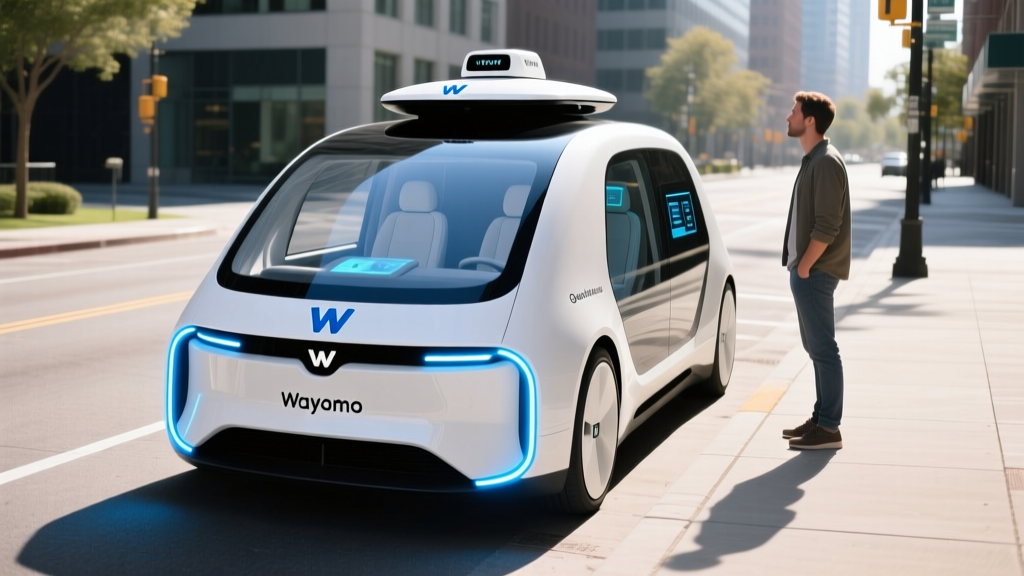
If you've watched a white Waymo Jaguar I-PACE or Hyundai Ioniq 5 pull up without a driver and wondered, "Can you buy a Waymo?" — the answer is no. Waymo does not sell its autonomous vehicles to consumers, dealerships, or private fleet operators. Every Waymo vehicle on the road is owned and operated by Waymo (a subsidiary of Alphabet Inc.) as part of its commercial robotaxi service, Waymo One.
This isn't a matter of timing or exclusivity. The hardware, software, and sensor suite that enable Waymo's driverless operations are not homologated for consumer ownership, and the company has no announced plans to retail vehicles. What you can do is use Waymo One as a passenger in select U.S. metro areas — and in many cases, it's becoming a practical alternative to Uber or Lyft.
Waymo operates at SAE Level 4, meaning the vehicle handles all driving tasks within a defined operational design domain (geofenced area, specific conditions) with no human driver required behind the wheel. This is fundamentally different from Level 2 systems like Tesla Autopilot or GM Super Cruise, which require continuous driver supervision. Level 4 means no steering wheel interaction, no driver monitoring camera watching your eyes — just a rider in the back seat.
Where Can You Use Waymo One Right Now?
Waymo One operates as a commercial, app-based ride-hailing service in a growing but still limited set of U.S. cities. Unlike Uber, which is available virtually everywhere, Waymo's service area is tightly geofenced — meaning the car will only pick up and drop off within a mapped boundary.
| Metro Area | Status | Service Area Notes |
|---|---|---|
| Phoenix, AZ (East Valley + Downtown) | Live — fully driverless since 2020 | Largest continuous geofence; includes Tempe, Mesa, Chandler, Scottsdale, Sky Harbor Airport |
| San Francisco, CA | Live — fully driverless | Expanded to most of SF proper; airport service to SFO available |
| Los Angeles, CA | Live — fully driverless | Covers West LA, Downtown, Hollywood, Mid-City, and parts of the Valley |
| Austin, TX | Live — limited driverless operations | Initial geofence covering central Austin; expansion ongoing |
| Atlanta, GA | Announced — testing phase | Commercial launch expected; not yet open to general public |
Key limitation: Even within live cities, you cannot hail a Waymo outside the geofence. If your destination falls beyond the mapped boundary, the app will not let you book the ride. Waymo expands these boundaries incrementally, but rural areas, highways outside city limits, and suburban fringes remain uncovered.
How Much Does Waymo Cost vs. Uber and Lyft?
Waymo One uses dynamic pricing similar to rideshare platforms, but in practice, fares tend to be competitive with — and often slightly below — comparable UberX or Lyft rides, particularly during peak surge periods when human-driver platforms spike aggressively.
| Route Example | Waymo One | UberX | Lyft |
|---|---|---|---|
| SF: Mission to SFO Airport (~14 mi) | $28–$36 | $30–$52 | $28–$48 |
| Phoenix: Scottsdale to Sky Harbor (~12 mi) | $22–$30 | $24–$40 | $22–$38 |
| LA: Santa Monica to Downtown (~16 mi) | $30–$42 | $32–$55 | $30–$50 |
How to use it: Download the Waymo One app (iOS/Android), create an account, enter your pickup and drop-off within the service area, and confirm. A driverless vehicle arrives, you unlock it via the app, and the ride proceeds with no one in the front seats. Payment is handled in-app, and tipping is not applicable.
Waymo occasionally offers promotional pricing for new riders, and unlike Uber/Lyft, there's no surge multiplier driven by driver scarcity — supply is fleet-managed. However, wait times can be longer in low-density zones or during peak demand since the fleet size in each city is still in the hundreds to low thousands of vehicles.
How Safe Are Waymo Robotaxis? The Real Data
This is the question that matters most, and Waymo has published more safety data than any other robotaxi operator. As of early 2026, Waymo's fleet has accumulated over 30 million fully driverless miles across Phoenix, San Francisco, Los Angeles, and Austin.
- 30+ million driverless miles completed with no driver behind the wheel (cumulative through early 2026).
- Fatalities: Zero passenger or pedestrian fatalities attributed to Waymo's autonomous system during driverless operations.
- Injury rate: Waymo's published data shows a ~85% reduction in injury-causing crashes compared to human benchmarks in equivalent urban environments, per their insurance claims analysis.
- Contact rate: Minor low-speed contact incidents (e.g., scraping a parked car) occur but at rates below human-driver baselines per million miles.
- NHTSA Standing General Order: Waymo reports all Level 4 incidents as required; public data is available via NHTSA's AV reporting portal.
For context, human drivers in the U.S. experience approximately 1.35 fatalities per 100 million vehicle miles traveled (NHTSA FARS data). Waymo's zero-fatality record over 30 million miles is statistically encouraging but not yet at a sample size to declare definitive superiority — though the trend is strongly positive.
The vehicles are remotely monitored by Waymo's operations team. If the car encounters an ambiguous scenario (construction zone, unusual obstruction), it can pull over safely and request remote guidance — but a remote operator does not "joystick" the car. The vehicle's system still executes all driving maneuvers.
What Technology Powers Waymo's Self-Driving System?
Waymo's approach is sensor-redundant and fundamentally different from camera-only systems. The current-generation Waymo Driver (6th generation, deployed on the Hyundai Ioniq 5 and Zeekr vehicles) includes:
- LiDAR: Multiple solid-state and spinning LiDAR units providing a 360° 3D point cloud, effective to 500+ meters. LiDAR is the core perception layer and works in darkness, rain, and glare.
- Cameras: High-resolution vision system for traffic light state detection, signage reading, lane markings, and object classification.
- Radar: Millimeter-wave radar for velocity detection of moving objects and redundancy in poor-visibility conditions.
- External audio sensors: Microphones to detect emergency vehicle sirens and adjust behavior accordingly.
- HD Maps: Pre-built centimeter-accuracy maps of every operational road, updated continuously. The car localizes against these maps in real time — it does not navigate unfamiliar, unmapped roads.
This sensor fusion approach gives Waymo a significant redundancy advantage over vision-only systems. If cameras are blinded by sun glare, LiDAR still perceives the environment. If rain scatters LiDAR returns, radar maintains object tracking. The trade-off is cost: a single Waymo vehicle's sensor and compute suite is estimated at tens of thousands of dollars in hardware alone — a primary reason consumer sales are not viable.
The system runs on custom-designed compute hardware mounted in the vehicle, processing terabytes of sensor data per hour in real time. Every driving decision — lane changes, unprotected left turns, four-way stop negotiation — is handled by Waymo's planning and prediction models.
The Regulatory Landscape: Who Approves Robotaxi Operations?
Robotaxi deployment in the U.S. is governed at the state and local level, with federal oversight limited to vehicle safety standards (NHTSA) and incident reporting. There is no single federal "robotaxi license."
- Arizona: The most permissive regulatory environment. No specific AV permit required for commercial deployment; Waymo has operated freely in the Phoenix metro since 2020 under general business licensing.
- California: The California Public Utilities Commission (CPUC) issues permits for commercial AV passenger service. Waymo holds a Tier 3 (driverless, paid) permit. The California DMV separately issues testing and deployment permits. San Francisco and Los Angeles operations required both CPUC and local approval.
- Texas: Austin has welcomed AV testing and commercial operations with relatively light regulation, though local coordination with the city's transportation department is required.
- Federal (NHTSA): Requires all AV operators to submit incident reports under the Standing General Order. NHTSA does not currently approve or certify AV systems for deployment — a regulatory gap that industry and safety advocates have called on Congress to address.
The patchwork nature of state regulation means Waymo's expansion speed is heavily dependent on local political and regulatory willingness. Some cities actively court robotaxi operators; others have imposed moratoriums or strict operating conditions.
Current Limitations: What Waymo Cannot Do
Level 4 autonomy is powerful but bounded. Waymo is transparent about its operational design domain (ODD), and understanding these limitations is essential for setting expectations:
- Geofencing: The car will not operate outside its mapped service area. No intercity travel, no rural routes, no unmapped roads.
- Heavy weather: Waymo reduces operations or pauses service during heavy rain, fog, or snow. Phoenix and LA rarely face this; San Francisco fog and Austin storms occasionally cause service interruptions.
- Construction zones: While Waymo can navigate minor construction, major road reconfigurations may cause the vehicle to pull over and wait for remote guidance or reroute.
- Highway speeds: Waymo's current operations are primarily urban/suburban (surface streets and limited-access roads up to ~65 mph). Long-distance highway travel between cities is not supported.
- Parking structures and driveways: Drop-off is at the curb. The vehicle will not navigate into private driveways, parking garages, or gated communities unless specifically mapped.
- Accessibility: Waymo vehicles (Ioniq 5, Jaguar I-PACE) are standard passenger vehicles — not wheelchair-accessible. The company has stated it is working on accessible vehicle options but has not deployed them at scale.
- No cargo or delivery (yet): Waymo One is a passenger service. Package delivery and freight are handled by separate Waymo Via operations with different vehicle platforms.
Why You Can't Buy One — and What to Do Instead
The economics and liability model of Level 4 autonomy make consumer sales impractical for the foreseeable future:
- Hardware cost: The sensor suite (LiDAR, radar, cameras, compute) adds an estimated $30,000–$50,000+ to vehicle cost, making a consumer-priced Waymo economically unviable compared to a $40,000 EV with Level 2 assist.
- Software dependency: The Waymo Driver requires continuous HD map updates, remote operations infrastructure, and fleet management — none of which can be replicated by an individual owner.
- Liability: In a Level 4 system, the operator (Waymo) assumes liability for driving decisions. Selling the car to a consumer would create an unresolvable liability gap — who is responsible when there's no driver and no fleet operator?
- Regulatory approval: No regulatory framework currently exists for privately owned Level 4 vehicles operating without a commercial permit.
If you want autonomous-capable driving as a consumer, the closest available technology is Level 2+ driver-assist — systems like Tesla's FSD (Supervised), GM's Super Cruise, or Ford's BlueCruise. These require your constant attention and hands-on or eyes-on engagement. They are not robotaxis, and conflating them with Waymo's Level 4 system is a common and dangerous misconception.
- Choose Waymo One if: You live in or visit Phoenix, San Francisco, Los Angeles, or Austin and want a genuinely driverless ride within the service area — especially for airport runs or predictable urban trips.
- Choose a Level 2+ EV if: You want advanced driver assistance for highway commuting and road trips anywhere in the country, and you're willing to remain the responsible driver at all times.
- Wait if: You're hoping to own a personal robotaxi. Industry timelines for consumer Level 4 ownership remain speculative and likely more than a decade away, if they arrive at all.
Frequently Asked Questions
Can you buy a used Waymo vehicle at auction?
No. Waymo retains ownership of all its vehicles throughout their lifecycle. Retired Waymo vehicles have their autonomous hardware removed before disposal or repurposing. You cannot purchase a functional Waymo-equipped car through any channel.
Can I buy the Waymo self-driving technology for my own car?
No. Waymo does not sell its sensor suite, software, or HD mapping system to consumers or aftermarket installers. The Waymo Driver is an integrated, proprietary system designed for specific vehicle platforms and is not transferable.
Is Waymo truly self-driving, or is there a hidden remote driver?
Waymo is genuinely self-driving (SAE Level 4) within its operational domain. There is no remote driver controlling the vehicle. A remote operations team monitors the fleet and can provide guidance when the vehicle encounters an edge case, but the car's onboard system executes all steering, braking, and acceleration decisions autonomously.
How does Waymo compare to Tesla's Full Self-Driving?
These are fundamentally different systems. Waymo is Level 4 — no driver required, geofenced to specific cities. Tesla FSD (Supervised) is Level 2 — the driver must remain fully engaged and responsible at all times, and it operates anywhere but with no guarantee of correct behavior. Waymo uses LiDAR, radar, and cameras; Tesla uses cameras only. Comparing them directly is misleading because they serve different use cases and carry different liability models.
Will Waymo ever sell cars to consumers?
Waymo has not announced any consumer vehicle sales program, and the company's business model is built around operating a mobility-as-a-service fleet. Industry analysts widely expect Waymo to remain a service operator rather than a vehicle manufacturer or retailer for the foreseeable future.
What happens if a Waymo gets into an accident?
Waymo carries commercial insurance for its fleet. In the event of a collision, Waymo's operations team is notified immediately, and the company manages the incident response. As the Level 4 operator, Waymo — not the passenger — bears liability for driving decisions made by the autonomous system.