If you've watched a Waymo Jaguar I-PACE pull up to a curb in Phoenix or San Francisco with no one behind the wheel, you've probably asked: can I buy a robotaxi? The short answer is no — not the vehicle, and not the service. Robotaxis in 2026 are operated by fleet companies in tightly regulated geofenced zones. You can ride in one, but you cannot purchase one for personal use, and the technology that makes them driverless is not available to consumers in any form.
This guide explains exactly what a robotaxi is, where you can use one today, what it costs compared to Uber or Lyft, what the safety data actually shows, and why the idea of "buying a robotaxi" doesn't map to reality — yet.
What Is a Robotaxi? Understanding SAE Automation Levels
A robotaxi is a fully driverless ride-hailing vehicle — no human behind the wheel, no remote teleoperator actively steering. In the SAE International J3016 framework, robotaxis operate at Level 4 (High Automation): the system performs all driving tasks within a defined operational design domain (ODD), and no human fallback is required within that domain.
SAE Automation Levels — Quick Reference
| Level | Name | Who Drives | Example |
|---|---|---|---|
| 0 | No Automation | Human | Conventional car |
| 1 | Driver Assistance | Human + system assists | Adaptive cruise control |
| 2 | Partial Automation | Human (must supervise) | Tesla Autopilot/FSD Supervised, GM Super Cruise, Ford BlueCruise |
| 3 | Conditional Automation | System (human must take over on request) | Mercedes DRIVE PILOT (limited markets, ≤40 mph) |
| 4 | High Automation | System (within ODD, no human needed) | Waymo One, Zoox |
| 5 | Full Automation | System (everywhere, all conditions) | Does not exist in production |
Critical distinction: Consumer driver-assist features like Tesla FSD (Supervised), GM Super Cruise, and Ford BlueCruise are Level 2. The driver must remain engaged and is legally responsible. Robotaxis like Waymo are Level 4 — no driver is present or needed within their service area.
Where Can I Use a Robotaxi Service Right Now?
As of early 2026, fully driverless robotaxi services in the United States are limited to a handful of metro areas. Availability changes frequently as regulators approve or suspend operations, so always check the operator's app for live service zones.
| Operator | Service Name | Active US Cities (Driverless) | Hours | Vehicle |
|---|---|---|---|---|
| Waymo (Alphabet) | Waymo One | Phoenix (metro-wide), San Francisco (most of city), Los Angeles (select zones), Austin (announced rollout) | 24/7 in Phoenix & SF | Jaguar I-PACE (custom-equipped), Zeekr RT (expanding) |
| Zoox (Amazon) | Zoox | Las Vegas (limited corridor), Foster City CA (testing → limited public) | Limited hours | Zoox purpose-built carriage (no steering wheel) |
| Cruise (GM) | Cruise | Operations suspended since late 2023; limited supervised testing resumed in Phoenix/Dallas/Houston with human safety drivers. No driverless service as of 2026. | N/A | Chevrolet Bolt EV, Origin (paused) |
| Motional (Hyundai/Aptiv) | — | No fully driverless public service; limited Lyft integration with safety drivers in Las Vegas | N/A | Hyundai Ioniq 5 (robotaxi variant) |
| Tesla (announced) | Tesla Robotaxi / Cybercab | Announced for Austin mid-2026; not yet operational. No regulatory approval confirmed. | N/A | Cybercab (concept/announced) |
Key takeaway: If you're outside Phoenix, San Francisco, or Los Angeles, you cannot hail a driverless robotaxi today. Announced expansions are not live service — regulatory approval from state DMVs and the National Highway Traffic Safety Administration (NHTSA) is required before any driverless operation begins.
How Much Does a Robotaxi Cost vs. Uber and Lyft?
Robotaxi pricing is designed to compete with — and often undercut — traditional rideshare. Waymo One uses a pricing model similar to Uber/Lyft: base fare + per-mile + per-minute, with surge-like adjustments during peak demand. However, Waymo has committed to avoiding aggressive surge multipliers.
| Service | Typical 5-Mile Trip (SF) | Typical 10-Mile Trip (Phoenix) | Surge Pricing | Tipping |
|---|---|---|---|---|
| Waymo One | $12–$18 | $15–$22 | Moderate demand pricing | Not available (no driver) |
| UberX | $14–$25 | $16–$28 | Dynamic surge (1.2x–3x+) | |
| Lyft | $13–$24 | $15–$27 | Dynamic surge |
On average, Waymo fares run comparable to or 10–20% below Uber/Lyft for equivalent routes in the same city, particularly during periods when human rideshare triggers surge pricing. There's no tipping, which saves $2–$5 per ride. However, wait times can be longer in fringe zones because the fleet is smaller than Uber's driver pool.
How to use it: Download the Waymo One app (iOS/Android), set your pickup and dropoff within the geofenced service area, and confirm. The car arrives, you unlock it via the app (or by tapping your phone on the window sensor), and it drives itself to your destination. You can make stops, adjust climate, and play music via the rear-seat screen.
How Safe Are Robotaxis? Real Data, Not Marketing
Safety is the most scrutinized aspect of robotaxi operations. The data is mixed but generally favorable in controlled environments — with important caveats.
Waymo Safety Data (as reported through 2025)
- 30+ million fully driverless miles completed across Phoenix, SF, and LA
- 85% fewer injury-causing crashes compared to human benchmarks in comparable urban environments, per Waymo's peer-reviewed analysis published with insurer data
- Contact rate: approximately 1 police-reported contact per 500,000+ driverless miles — compared to ~1 per 250,000 miles for human drivers in the same cities
- Limitation: Most miles are driven in fair weather, well-mapped urban zones with moderate speeds (≤45 mph). Highway and severe-weather data is minimal.
Source: NHTSA Standing General Order crash reporting, Waymo safety reports
Cruise's 2023 suspension is an essential data point. In October 2023, a Cruise vehicle in San Francisco struck a pedestrian who had been thrown into its path by a human-driven car, then dragged the pedestrian approximately 20 feet while pulling to the curb. The California DMV suspended Cruise's permit, citing delayed reporting to regulators and safety concerns. Cruise subsequently paused all driverless operations nationwide and has not resumed driverless service as of 2026.
This incident illustrates that robotaxi safety is not just about crash rates — it's about post-crash behavior, regulator trust, and edge-case handling. A robotaxi may statistically crash less than a human, but when it does, the scrutiny is orders of magnitude higher.
Technology Stack: Lidar, Cameras, and Geofencing
Robotaxis rely on a sensor fusion stack far more complex than anything in a consumer vehicle. Here's how the major platforms differ:
Waymo (Jaguar I-PACE / Zeekr RT)
- 5+ lidar units (custom "Laser Bear Honeycomb" by Waymo) providing 360° 3D point clouds at ~20 Hz
- 8+ cameras for object classification, traffic-light state, and lane detection
- 6 radar units for velocity detection and redundancy in low-visibility conditions
- HD maps updated frequently — the vehicle does not navigate unmapped roads
- Geofenced ODD: operates only within pre-mapped, approved zones; will not drive outside them
Zoox (Purpose-Built Vehicle)
- Symmetrical sensor layout: lidar + cameras + radar on all four corners
- Bidirectional driving (vehicle can move in either direction — no "front" or "back")
- No steering wheel or pedals — true Level 4 by design
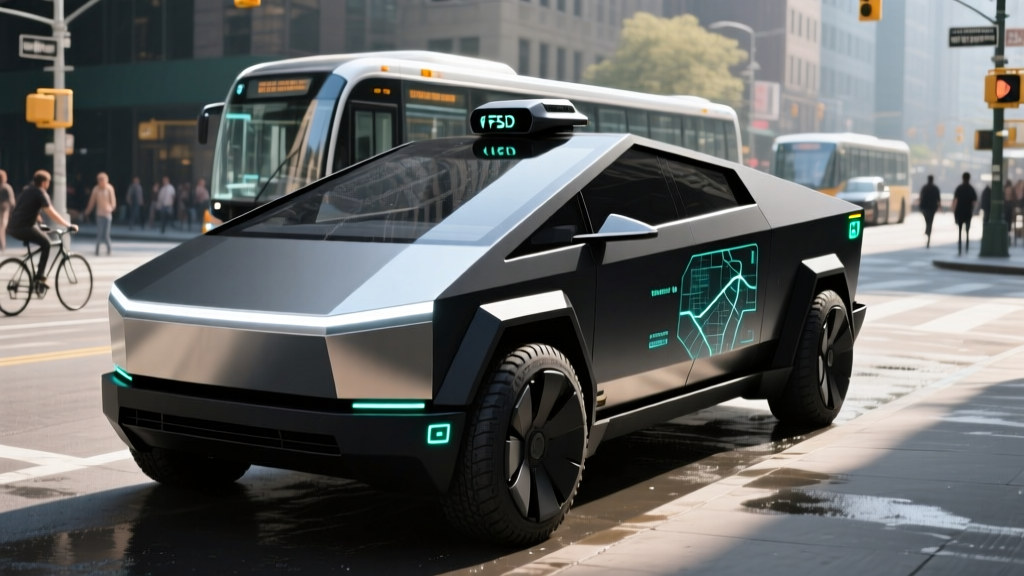
Tesla Cybercab (Announced — Camera-Only)
- Vision-only approach: cameras + neural networks, no lidar or radar
- Relies on end-to-end neural network training from Tesla's fleet data
- Unproven at Level 4: no camera-only system has received regulatory approval for driverless ride-hailing in the US as of 2026
The lidar vs. camera debate remains unresolved. Waymo and Zoox argue lidar provides essential redundancy — it works in darkness, detects objects without training data, and provides precise distance measurements. Tesla argues lidar is unnecessary cost and that neural networks trained on billions of camera miles can generalize better. The regulatory outcomes will settle this: if Tesla's Cybercab receives approval for driverless operation, the camera-only thesis is validated. Until then, lidar-equipped platforms are the only proven Level 4 systems.
The Regulatory Landscape: Who Approves Robotaxi Operations?
Robotaxi deployment in the US requires approval from multiple overlapping authorities:
- State DMV or equivalent: Issues the deployment permit. California's DMV has been the most active regulator, with a structured permit system (testing → deployment). Arizona has taken a lighter-touch approach, allowing Waymo to operate with minimal state oversight.
- State Public Utilities Commission (PUC): In California, the CPUC must approve commercial ride-hailing operations by robotaxi companies. Both Waymo and Cruise received CPUC permits before launching in SF.
- NHTSA (federal): Sets vehicle safety standards (FMVSS). Vehicles without steering wheels or mirrors (like Zoox or the Cruise Origin) require exemptions from NHTSA, which are granted on a case-by-case basis with annual caps.
- Local/municipal governments: Cities can impose operating restrictions, speed limits, zone exclusions, and data-sharing requirements. San Francisco's Board of Supervisors has repeatedly pushed for tighter oversight.
The patchwork nature of this regulation means a robotaxi approved in Phoenix may not be legal in neighboring Scottsdale. There is no federal "robotaxi license" — approval is state-by-state, city-by-city.
Current Limitations: What Robotaxis Cannot Do
- Geofencing: Robotaxis will not drive outside their approved zone. If your destination crosses the boundary, the ride cannot be completed.
- Weather: Heavy rain, fog, snow, and ice degrade sensor performance. Waymo may restrict service or increase following distances in moderate rain; snow operations are not available in any US market.
- Construction zones: Unexpected lane closures, temporary signals, and flaggers can confuse the system. Robotaxis may stop and wait for remote guidance or reroute.
- Highway driving: Most current robotaxi services avoid limited-access highways. Waymo has begun limited highway segments in Phoenix, but this is not widespread.
- Complex pickups: Gated communities, parking garages, private driveways, and unpaved roads are generally not serviced. Pickups must occur on public roads within the mapped zone.
- Emergency vehicles: While robotaxis are programmed to yield, there have been documented instances of robotaxis stopping in travel lanes when encountering emergency scenes, causing congestion.
- No adaptive behavior: A robotaxi will not break traffic rules to accommodate unusual situations (e.g., crossing a double-yellow to pass a stalled vehicle). It will wait — potentially indefinitely.
So, Can You Buy a Robotaxi?
No. Here's what exists and what doesn't:
| What You Want | Can You Buy It? | Why Not |
|---|---|---|
| A Waymo-equipped Jaguar I-PACE | No | Waymo's sensor suite and software are proprietary and not sold to consumers. The vehicles are fleet-owned. |
| A Zoox vehicle | No | Zoox vehicles are not FMVSS-certified for consumer sale; they operate under NHTSA exemption for fleet use only. |
| Tesla Cybercab | Not yet | Announced for production ~2026–2027. Tesla has stated it will sell to consumers, but no pricing, specs, or regulatory approval for driverless use exist yet. |
| A car with Level 4 autonomy for personal use | No | No consumer vehicle sold in the US in 2026 offers Level 4 autonomy. Mercedes DRIVE PILOT (Level 3) is available in Nevada/California on the S-Class and EQS, but only at speeds ≤40 mph on specific highways, and the driver must be present. |
| A car with Level 2 driver-assist | Yes | Tesla FSD (Supervised), GM Super Cruise, Ford BlueCruise, and others are widely available — but you must remain the driver. |
If you want to experience Level 4 autonomy today, your only option is to ride in a robotaxi where the service operates. You cannot own one, and no consumer vehicle currently sold can replicate what Waymo does in Phoenix or San Francisco.
Frequently Asked Questions
Where can I use a robotaxi service right now?
Fully driverless robotaxi service (no human in the car) is available via Waymo One in Phoenix, San Francisco, and parts of Los Angeles. Zoox has very limited operations in Las Vegas. Everywhere else, robotaxi companies are either testing with safety drivers or have not launched.
How much does a robotaxi cost vs. Uber or Lyft?
Waymo One fares are typically comparable to or 10–20% below Uber/Lyft for equivalent trips, especially during surge periods. A 5-mile trip in San Francisco typically costs $12–$18. There's no tipping since there's no driver.
How safe are robotaxis — is there real data?
Waymo reports 30+ million driverless miles with approximately 85% fewer injury-causing crashes than human benchmarks in comparable environments. However, Cruise's 2023 suspension after a pedestrian-dragging incident shows that edge-case failures carry outsized consequences. Robotaxis are statistically safe in their limited ODD but have not been tested at scale in snow, heavy rain, or complex highway interchanges.
What are the current limitations of robotaxis?
Robotaxis are geofenced (won't leave approved zones), weather-limited (no snow, restricted in heavy rain), struggle with construction zones and temporary signals, generally avoid highways, and cannot handle private property pickups. They will not break rules to adapt to unusual situations and may wait indefinitely rather than improvise.
Is this truly self-driving or just driver-assist?
Robotaxis like Waymo and Zoox are SAE Level 4 — truly driverless within their operational domain. No human is present, and no human intervention is needed. This is fundamentally different from Tesla Autopilot, FSD (Supervised), GM Super Cruise, and Ford BlueCruise, which are all Level 2 driver-assist systems requiring continuous human supervision. Never confuse the two.
Will I ever be able to buy a robotaxi for personal use?
Tesla has announced plans to sell the Cybercab to consumers, potentially in the 2026–2027 timeframe, but no pricing, final specs, or regulatory approvals are confirmed. Waymo and Zoox have indicated no plans to sell vehicles to individuals — their business model is fleet-operated ride-hailing. Realistically, personal Level 4 ownership is years away, and it will require both vehicle certification and regulatory frameworks that don't yet exist in most states.
Can I buy a Tesla and use it as a robotaxi to earn money?
Not today. Tesla's announced "Robotaxi Network" concept would allow owners to add their vehicles to a shared fleet, but this service is not operational, has no regulatory approval, and no timeline has been confirmed. Using a Level 2 vehicle for unsupervised autonomous ride-hailing would be illegal in every US jurisdiction.