The Short Answer: Waymo on Highways in 2026
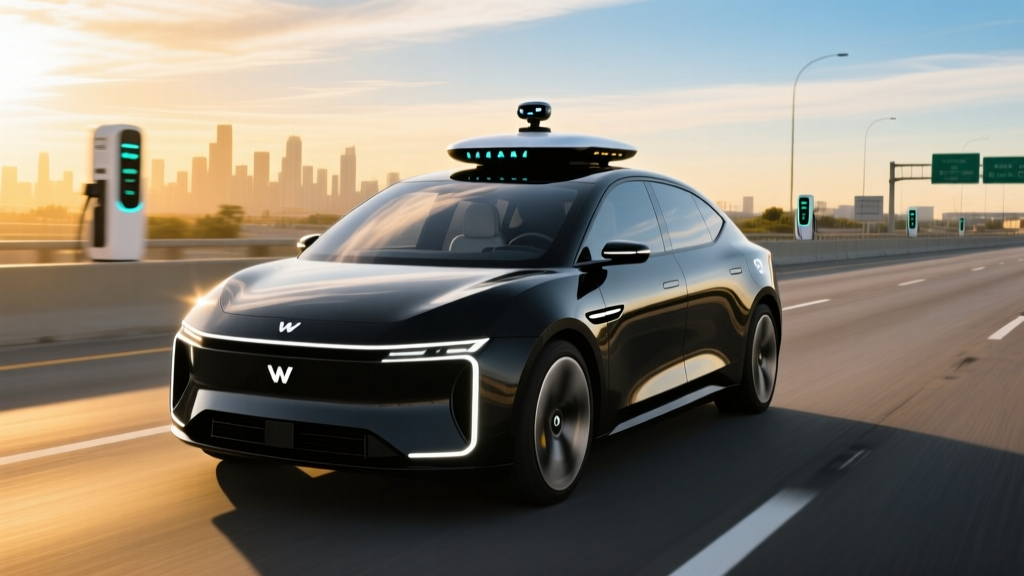
Yes — Waymo's sixth-generation Jaguar I-PACE robotaxis can operate on highways and freeways, but only within geofenced segments in approved metropolitan areas. As of early 2026, Waymo One riders in Phoenix, San Francisco, Los Angeles, and Austin can be routed onto limited-access highways when the trip origin and destination both fall inside the service boundary. The vehicle handles lane changes, merges, speed adjustments, and exits without human intervention.
However, "can Waymo go on the highway" has nuance. Waymo does not currently offer intercity highway trips (e.g., San Francisco to Los Angeles). Highway segments are included only when they connect two points within a single metro geofence. If your route requires leaving the approved zone, the Waymo One app will not dispatch a ride.
SAE Automation Level: What Waymo Actually Is
| SAE Level | Name | Driver Required? | Example |
|---|---|---|---|
| Level 2 | Partial Automation | Yes — hands on, eyes on | Tesla Autopilot, GM Super Cruise, Ford BlueCruise |
| Level 3 | Conditional Automation | Yes — can disengage, must take over on request | Mercedes DRIVE PILOT (limited markets/conditions) |
| Level 4 | High Automation | No — within ODD (geofence, weather, speed) | Waymo One, Zoox |
| Level 5 | Full Automation | No — anywhere, any condition | Does not exist commercially |
Waymo operates at SAE Level 4: fully driverless within its defined Operational Design Domain (ODD). There is no steering wheel accessible to the passenger, and no expectation of human takeover. This is fundamentally different from Level 2 driver-assist systems like Tesla FSD (Supervised), which require continuous driver attention.
Where Can I Use Waymo One Right Now?
Waymo One — the commercial ride-hail product open to the general public — operates in four U.S. metros as of 2026. Expansion is incremental and geofence boundaries shift, so always check the Waymo One app for your exact pickup eligibility.
| Metro Area | Status (2026) | Highway Segments | Approx. Service Area |
|---|---|---|---|
| Phoenix, AZ (East Valley + Downtown) | Fully open, no waitlist | Yes — Loop 101, Loop 202, I-10 segments | ~300+ sq mi |
| San Francisco, CA | Fully open | Yes — US-101, I-280, I-80 segments within city | ~50 sq mi (city core) |
| Los Angeles, CA | Fully open, phased expansion | Yes — I-10, I-110, US-101 segments | ~80+ sq mi |
| Austin, TX | Open (launched 2025) | Yes — limited I-35, Mopac segments | ~40+ sq mi |
Waymo has announced testing in additional cities, but testing is not commercial service. Until a city appears in the Waymo One app with bookable rides, it is not available to the public.
How Much Does Waymo Cost vs. Uber and Lyft?
Waymo One uses dynamic pricing similar to rideshare platforms, but without a human driver to pay. In practice, pricing is competitive with UberX and Lyft standard rides — sometimes slightly cheaper, sometimes slightly more, depending on demand and distance.
| Route Example | Waymo One (est.) | UberX (est.) | Lyft (est.) |
|---|---|---|---|
| SF: Embarcadero → Mission (3 mi) | $11–$15 | $12–$18 | $11–$17 |
| Phoenix: Scottsdale → Airport (10 mi) | $22–$30 | $24–$35 | $22–$32 |
| LA: Santa Monica → Downtown (16 mi) | $28–$40 | $30–$48 | $28–$45 |
| Austin: Downtown → Airport (8 mi) | $18–$25 | $20–$30 | $18–$28 |
How to use it: Download the Waymo One app (iOS/Android), enter your pickup and dropoff, confirm the price, and the nearest vehicle drives to you. There is no driver to tip. Payment is handled in-app via card. Waymo also offers Waymo Via for delivery in select areas, though this is separate from the rider experience.
One practical advantage: no surge pricing driven by driver scarcity. Waymo's fleet availability depends on vehicle supply in your zone, not on whether a human driver wants to work at 2 a.m. Wait times in core zones typically run 3–8 minutes.
How Safe Are Waymo Robotaxis? The Real Data
Waymo publishes safety data and has been the subject of independent research. As of late 2025, Waymo reported over 30 million fully driverless miles completed across its commercial fleet. The company's sixth-generation hardware suite (dubbed "Driver") includes improved lidar, cameras, and radar.
Waymo Safety Metrics (Reported Data)
- Total driverless miles: 30+ million (cumulative through 2025, per Waymo Safety Report)
- Injury-causing crash rate: ~85% lower than human benchmark in comparable urban environments (per Waymo's analysis using NHTSA data as baseline)
- Police-reported contact rate: ~57% lower than human drivers in same geographies
- NHTSA Standing General Order: Waymo files incident reports as required for all ADS-equipped vehicles; minor contact incidents (e.g., low-speed sideswipes by other vehicles) do occur
Context matters: Waymo's crash data skews toward low-severity incidents — typically other drivers rear-ending or sideswiping the robotaxi at low speed. The vehicles are conspicuous (roof-mounted lidar array, prominent branding), and they drive conservatively, which means they are sometimes struck by human drivers who do not expect a vehicle to stop for a pedestrian or yield aggressively.
There have been no reported passenger fatalities in a Waymo One driverless ride. However, high-profile incidents involving other AV operators (notably Cruise's 2023 pedestrian dragging incident in San Francisco) have rightly kept regulators and the public cautious. Waymo's more conservative ODD and avoidance of extreme edge cases has, so far, kept it out of comparable headline events.
Technology Stack: How Waymo Sees the Road
Waymo's approach is sensor-heavy and differs sharply from Tesla's camera-only FSD strategy. The sixth-generation Waymo Driver, deployed on the Jaguar I-PACE (84 kWh battery, NMC chemistry, EPA 234-mile range), integrates:
- Lidar: Multiple roof- and body-mounted units providing 360° 3D point-cloud mapping. Lidar works in darkness and is not fooled by glare, a key advantage over camera-only systems for detecting pedestrians and obstacles at night.
- Cameras: High-resolution surround cameras for lane-line detection, traffic-signal state recognition, and object classification.
- Radar: Imaging radar for velocity detection of other vehicles and redundancy in rain or fog where lidar and cameras degrade.
- HD Maps: Waymo pre-maps every inch of its geofenced service area at centimeter-level resolution. The vehicle always knows exactly where it is relative to the curb, lane center, and intersection geometry.
- Compute: Custom onboard AI hardware running Waymo's perception, prediction, and planning stack. Decisions are made locally — no remote teleoperator "drives" the car in real time, though remote support can assist with unusual scenarios (e.g., a construction zone with unclear lane markings).
This sensor-fusion approach is more expensive per vehicle than camera-only, but it provides the redundancy required for true driverless operation in complex urban environments. Each Jaguar I-PACE robotaxi carries well over $100,000 in sensor and compute hardware on top of the vehicle's ~$72,000 base MSRP.
Current Limitations: Where Waymo Cannot Go
Level 4 autonomy means full driverless capability within the ODD — and the ODD has hard boundaries. Here is what Waymo cannot do in 2026:
- Intercity highway trips: You cannot book a Waymo from San Francisco to Sacramento. Highway segments are only included as connectors within a single metro geofence.
- Heavy rain, fog, or snow: The Phoenix and LA fleets rarely encounter this, but San Francisco fog and Austin thunderstorms can trigger service pauses or route restrictions. Waymo will not dispatch if sensor confidence drops below threshold.
- Unmapped zones: If your destination falls outside the geofence, the app will not let you book. There is no manual override.
- Unpaved roads, parking garages, drive-throughs: The vehicle will drop you at the nearest accessible curb. It cannot navigate a spiral parking garage or pull up to a McDonald's window.
- Construction zones with major reconfiguration: While Waymo handles routine cones and lane shifts, a fully reconfigured intersection with no visible lane markings and a flagger giving hand signals may cause the vehicle to pull over and wait, or request remote assistance.
- Child seats and accessibility: Waymo vehicles do not currently offer child safety seats. Wheelchair-accessible vehicles are limited and availability varies by city.
These are not bugs — they are the explicit boundaries of the ODD. Waymo's strategy is to expand the ODD incrementally rather than attempt Level 5 "anywhere, anytime" capability, which no company has achieved.
Regulatory Landscape: Who Approves Robotaxi Operations?
Robotaxi deployment in the U.S. is governed by a patchwork of state and local authorities — there is no single federal "robotaxi license."
- California (CPUC + DMV): The California Public Utilities Commission issues passenger-service permits; the DMV issues driverless testing and deployment permits. Waymo holds both for San Francisco and Los Angeles.
- Arizona: Among the most permissive states. No specific AV deployment permit is required beyond standard vehicle registration and insurance. Waymo has operated commercially in Phoenix since 2020.
- Texas: The Texas Department of Transportation and local municipalities regulate AV operations. Austin's launch required city coordination for geofence approval.
- Federal (NHTSA): NHTSA does not "approve" AV systems but mandates safety-defect reporting (Standing General Order), sets FMVSS vehicle standards, and can issue recalls. In 2024–2025, NHTSA increased scrutiny of ADS-equipped vehicles following incidents involving multiple operators.
The regulatory environment remains fluid. Local pushback — particularly in San Francisco, where residents raised concerns about driverless vehicles blocking emergency responders and idling in traffic — has slowed expansion timelines in some cities. Waymo's approach of incremental geofence growth and proactive incident reporting has so far kept it in regulators' good graces relative to competitors.
Frequently Asked Questions
Can Waymo go on the highway between cities?
No. Waymo uses highway segments only as connectors within a single metro geofence. A trip from downtown LA to Santa Monica may include an I-10 segment, but you cannot book a ride from LA to San Diego.
Is Waymo truly self-driving, or is someone watching remotely?
Waymo is SAE Level 4 — there is no human driver in the vehicle, and no remote operator driving it in real time. Remote support staff can assist with unusual situations (e.g., advising the vehicle on how to navigate around a fallen tree), but the vehicle executes all driving actions autonomously.
How does Waymo compare to Tesla FSD?
These are fundamentally different products. Tesla FSD (Supervised) is SAE Level 2: the driver must remain attentive, hands on the wheel, and is legally responsible for the vehicle at all times. Waymo One is Level 4: no driver, no steering wheel accessible to the passenger, and Waymo is liable for the vehicle's operation. Tesla FSD can drive on any road; Waymo can only drive within its geofence.
What happens if the Waymo vehicle gets confused or stuck?
The vehicle will pull over safely and contact remote support. In most cases, the support agent provides guidance (e.g., confirming it is safe to proceed around an obstacle), and the vehicle resumes its route. If the situation cannot be resolved, Waymo will dispatch a replacement vehicle or issue a refund.
Is Waymo available 24/7?
Hours vary by city. Phoenix and Austin offer near-24/7 service in core zones. San Francisco and LA have more limited late-night availability. Check the app for real-time service hours in your area.