California remains the epicenter of autonomous vehicle testing and commercial deployment in the United States. With Waymo, Zoox, and several other operators running thousands of driverless trips daily across San Francisco, Los Angeles, and Phoenix-adjacent corridors, the state's regulatory bodies — the California DMV and the California Public Utilities Commission (CPUC) — have accumulated years of incident and violation data. For prospective robotaxi users, EV owners with advanced driver-assist systems, and policymakers, the question is practical: how often do California autonomous vehicles commit traffic violations, and what does the safety record actually look like in 2026?
This guide cuts through the headlines. We examine the concrete data on robotaxi traffic violations, disengagement rates, and collision reports, explain the regulatory framework governing these vehicles, and clarify what autonomy level today's commercial services actually operate at.
SAE Automation Levels: Where Robotaxis Actually Sit
A common source of confusion — and misleading headlines — is the conflation of consumer driver-assist features with commercial robotaxi services. The SAE International J3016 standard defines six levels of driving automation, and the distinction matters enormously when evaluating violation and safety data.
| Level | Name | Who Drives | Examples |
|---|---|---|---|
| 0 | No Automation | Human | Conventional vehicles |
| 1 | Driver Assistance | Human (system assists steering OR speed) | Adaptive cruise control, lane-keeping assist |
| 2 | Partial Automation | Human (must supervise at all times) | Tesla Autopilot/FSD Supervised, GM Super Cruise, Ford BlueCruise |
| 3 | Conditional Automation | System (human must take over on request) | Mercedes Drive Pilot (limited deployment, specific highways) |
| 4 | High Automation | System (within geofenced ODD, no human needed) | Waymo One, Zoox commercial service |
| 5 | Full Automation | System (everywhere, all conditions) | Does not exist commercially |
California's Robotaxi Landscape: Who's Operating Where
As of 2026, California's commercial robotaxi market is dominated by Alphabet's Waymo, with Amazon-owned Zoox operating a more limited service. Cruise (GM's robotaxi division) significantly scaled back its operations following a serious 2023 incident in San Francisco and has been gradually rebuilding its testing footprint under stricter DMV oversight, though full commercial driverless service has not resumed at prior scale.
| Operator | Service Name | California Cities | SAE Level | Availability |
|---|---|---|---|---|
| Waymo | Waymo One | San Francisco, Los Angeles (expanded metro area), parts of Silicon Valley | Level 4 | 24/7 commercial service |
| Zoox | Zoox Ride | Foster City, limited San Francisco zones | Level 4 | Limited commercial service |
| Cruise | — | Testing only (restricted) | Level 4 | Safety-driver testing; no commercial driverless service |
Where can I use a robotaxi service right now? If you're in San Francisco, Waymo One operates across most of the city around the clock. In Los Angeles, Waymo covers a growing service area including downtown, Hollywood, Santa Monica, and LAX airport runs. Zoox is available to a limited rider pool in Foster City and designated San Francisco zones. Outside California, Waymo also operates commercially in Phoenix and Austin.
Traffic Violations and Incident Data: What the Numbers Show
California requires autonomous vehicle operators to report two critical data sets: disengagement reports (filed annually with the DMV) and collision reports (filed within 10 days of any incident involving injury, death, or property damage exceeding $1,000). Additionally, the NHTSA Standing General Order requires nationwide crash reporting for vehicles operating at Level 2 and above.
- Total driverless miles in California: ~5+ million miles annually (cumulative across all U.S. operations exceeds 30 million driverless miles)
- Reported collisions: The majority are low-speed rear-end contacts where the robotaxi was struck by a human-driven vehicle, not the at-fault party
- At-fault violations: Rare but documented — includes instances of vehicles proceeding through a stale traffic signal phase or misinterpreting temporary construction-zone lane markings
- Disengagement rate (Waymo): Typically reported as fewer than 1 disengagement per 10,000+ autonomous miles in recent DMV filings, though direct cross-company comparison is unreliable due to differing ODD definitions
Sources: California DMV Disengagement Reports, NHTSA crash reporting database.
What Types of Traffic Violations Occur?
When California autonomous vehicles do commit traffic violations, the patterns tend to cluster around edge cases rather than fundamental driving competence:
- Signal timing misinterpretation: Vehicles occasionally proceeding on a stale green or failing to recognize a temporary signal override at construction zones.
- Right-of-way ambiguity: Unprotected left turns across pedestrian crosswalks where the vehicle's prediction model misjudges pedestrian intent — leading to either overly conservative stops (blocking traffic) or, rarely, proceeding when a pedestrian has the right of way.
- Geofence boundary behavior: Vehicles operating near the edge of their approved operational design domain may encounter road configurations not fully mapped, leading to improper lane usage.
- Emergency vehicle interaction: There have been documented instances of robotaxis failing to properly yield to or pull over for approaching emergency vehicles — an area where both Waymo and Cruise have faced scrutiny and subsequent software updates.
It's worth noting that the rate of these violations per million miles is significantly lower than the human baseline. The IIHS and multiple independent analyses have found that human drivers commit moving violations at rates orders of magnitude higher — particularly for speeding, failure to yield, and signal violations. The scrutiny on robotaxi violations is higher precisely because the vehicles are held to a different standard: any violation by a machine is newsworthy, while millions of human violations go unrecorded daily.
Technology Stack: How Robotaxis See the Road
Understanding why violations occur requires understanding how Level 4 robotaxis perceive their environment. Unlike consumer vehicles that rely primarily on cameras (Tesla's approach) or camera-plus-radar combinations, commercial robotaxis employ a multi-sensor redundancy stack.
- LiDAR (Light Detection and Ranging): Multiple roof- and bumper-mounted units creating a real-time 3D point cloud of the vehicle's surroundings to ~200+ meters. Provides depth accuracy independent of lighting conditions.
- Cameras: 8–12+ high-resolution cameras covering 360°, used for traffic signal state detection, lane marking recognition, signage reading, and object classification.
- Radar: Short- and long-range radar units for velocity detection of moving objects, particularly useful in rain and fog where LiDAR performance degrades.
- HD Maps + Localization: Pre-built centimeter-accuracy maps of the geofenced service area, combined with real-time GPS/IMU localization to position the vehicle precisely within its known environment.
- Compute: Custom AI accelerator hardware processing terabytes of sensor data per hour, running perception, prediction, and planning models simultaneously.
The reliance on HD maps and geofencing is both a strength and a limitation. Within the mapped zone, the vehicle has extraordinary environmental awareness. Outside it — or when the physical environment changes due to construction, new signage, or temporary road closures — the system must either handle the novel situation through its general perception models or pull over safely and request remote assistance.
Pricing: Robotaxi vs. Uber and Lyft
How much does a robotaxi cost compared to traditional rideshare? Pricing varies by city, time of day, and trip length, but Waymo One has generally positioned itself competitively with Uber and Lyft — sometimes undercutting both during promotional periods, sometimes running slightly higher during peak demand.
| Trip Type | Waymo One | UberX | Lyft Standard |
|---|---|---|---|
| Short trip (3 mi, off-peak) | $9–$13 | $10–$15 | $9–$14 |
| Medium trip (8 mi, off-peak) | $18–$26 | $20–$30 | $19–$28 |
| Airport run (SFO ↔ downtown, ~14 mi) | $35–$50 | $38–$55 | $36–$52 |
| Surge/peak pricing | Limited or no surge multiplier | 1.5x–3.0x surge common | 1.5x–2.5x surge common |
The notable advantage for robotaxis is pricing predictability. Waymo does not apply the aggressive surge multipliers that Uber and Lyft use during peak hours, holidays, or bad weather. A trip that might surge to $65 on UberX during a rainy Friday evening may remain $30 on Waymo. The tradeoff: wait times can be longer during peak demand because the fleet size is fixed and cannot scale with driver incentives the way human rideshare networks do.
Regulatory Framework: Who Approves and Oversees Operations
California's autonomous vehicle regulation involves a two-agency structure that is more complex than most states:
- California DMV: Issues permits for testing (with and without safety drivers) and for commercial deployment. Requires annual disengagement reports and collision reports within 10 days. The DMV can suspend or revoke permits — as it did with Cruise in October 2023 following the San Francisco pedestrian-dragging incident.
- California Public Utilities Commission (CPUC): Regulates the commercial passenger service aspect — essentially treating robotaxi operators as transportation network companies (TNCs). The CPUC approved Waymo's commercial fare-charging service and sets rules around accessibility, insurance, and data reporting.
- NHTSA (Federal): Oversees vehicle safety standards at the federal level. The Standing General Order (issued 2021, updated since) requires all Level 2+ and ADS-equipped vehicles involved in crashes to be reported within one day for serious incidents. NHTSA can open defect investigations and issue recalls — which it has done for specific autonomous driving system software updates.
The regulatory landscape continues to evolve. In 2025–2026, California lawmakers have debated bills requiring more granular real-time data sharing from robotaxi operators, stricter penalties for violations that endanger pedestrians, and expanded accessibility requirements for wheelchair-accessible autonomous vehicles.
Current Limitations: Where Robotaxis Cannot Operate
What are the current limitations? Despite impressive capability within their geofenced zones, Level 4 robotaxis face significant operational constraints that users should understand before relying on them:
- Heavy rain and fog: LiDAR performance degrades in heavy precipitation. Waymo vehicles have been documented pulling over or refusing trips during intense Bay Area atmospheric river events.
- Geofence boundaries: Service is restricted to pre-mapped areas. A trip from downtown San Francisco to Marin County (across the Golden Gate Bridge) may not be available if the bridge corridor is outside the operational design domain.
- Construction zones: Temporary lane shifts, flaggers, and altered road geometry remain challenging. Vehicles may route around construction or, in some cases, stop and request remote guidance.
- Unprotected left turns: Complex multi-lane unprotected left turns with heavy oncoming traffic and pedestrian activity remain an edge case where the vehicle may be overly conservative, causing delays.
- Special events and road closures: Large-scale events (parades, protests, marathon road closures) that are not pre-loaded into the system can cause the vehicle to refuse service to affected areas.
- No highway driving (most services): Waymo's San Francisco and LA service areas primarily cover surface streets. High-speed freeway driving within the commercial service is limited or unavailable in most California markets as of 2026.
Is This Truly Self-Driving or Driver-Assist?
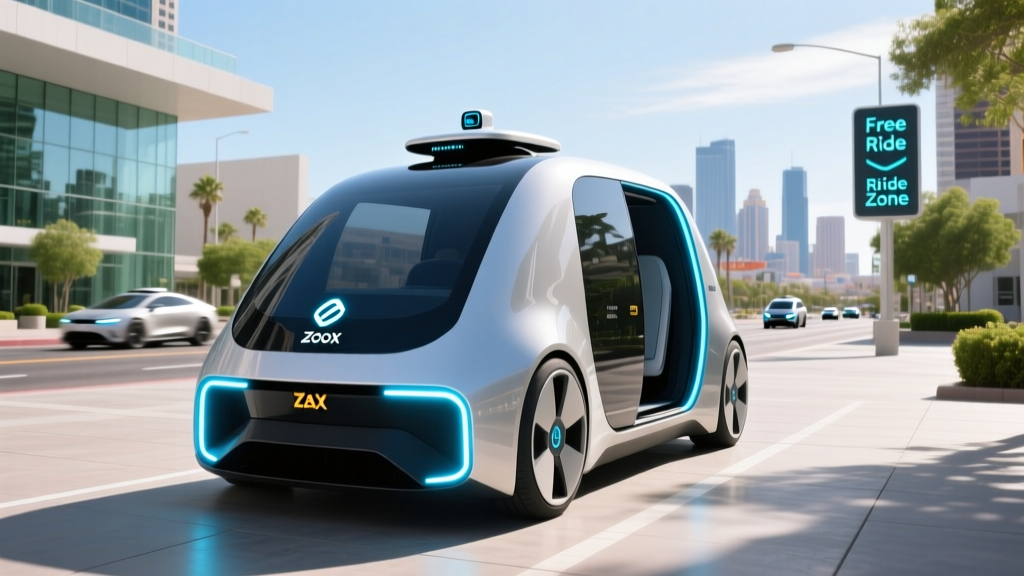
Is this truly self-driving or driver-assist? Commercial robotaxi services like Waymo One and Zoox are SAE Level 4 — meaning the vehicle handles all aspects of driving within its defined operational design domain (geofenced area, approved weather conditions, mapped roads) with no human driver present. There is no steering wheel in the Zoox vehicle; Waymo's 5th-generation Jaguar I-PACE and newer Zeekr-based vehicles have steering controls but no human in the driver's seat during commercial service.
This is fundamentally different from Tesla's Full Self-Driving (Supervised), GM's Super Cruise, or Ford's BlueCruise, all of which are SAE Level 2 systems requiring continuous human supervision. When a Level 2 vehicle commits a traffic violation, the human driver is liable. When a Level 4 robotaxi commits one, the operating company bears responsibility — which is why California's DMV reporting requirements and the CPUC's commercial oversight apply specifically to these services.
Level 5 autonomy — a vehicle that can drive anywhere, in any condition, with no geographic or weather restrictions — does not exist commercially and is not expected in the near term. Every operational robotaxi service today functions within a carefully bounded operational design domain.
Frequently Asked Questions
Are robotaxis safer than human drivers?
Based on available data, Waymo's driverless operations show lower rates of at-fault collisions per million miles compared to human benchmarks in equivalent urban environments. However, direct statistical comparison is complicated by differing exposure conditions (robotaxis operate in dense urban areas at lower speeds, while human crash data includes highway and rural driving). The NHTSA crash data and independent studies from the IIHS suggest a safety benefit, but the sample size of Level 4 miles remains small relative to the trillions of miles driven by humans annually.
What happens if a robotaxi gets a traffic ticket?
California law enforcement can and has issued citations involving autonomous vehicles. In practice, when a Level 4 robotaxi commits a moving violation, the citation is directed to the operating company. Waymo and other operators maintain law enforcement liaison teams and have protocols for officers to interact with stopped vehicles (including a dedicated phone line for first responders).
Can I ride in a robotaxi if I'm in a wheelchair?
Accessibility remains an ongoing challenge. Waymo has committed to deploying wheelchair-accessible vehicles and has partnered with accessibility organizations, but the current fleet of Jaguar I-PACE vehicles is not wheelchair accessible. Zoox's purpose-built vehicle was designed with accessibility in mind, but fleet size is very limited. The CPUC has pressed operators on ADA compliance timelines.
Do robotaxis work in bad weather?
Light rain: generally yes. Heavy rain, fog, or flooding: service may be restricted or suspended. The LiDAR and camera systems are affected by precipitation density, and the vehicles are programmed to refuse trips or pull over when sensor confidence drops below safety thresholds. This is a significant practical limitation in areas with frequent severe weather.
How do I report a problem with a robotaxi?
Both Waymo and Zoox provide in-app reporting for rider issues. For public safety concerns (a vehicle stopped in traffic, blocking an intersection, or involved in a collision), California law enforcement can contact the operator's 24/7 operations center directly. The California DMV's Autonomous Vehicle Program also accepts public complaints regarding AV operations.