Search for "Cadillac Escalade self driving" and you'll find a tangle of marketing terms, YouTube demos, and conflicting claims. The Escalade is one of the most technologically advanced SUVs on the road, and its hands-free driving system is genuinely impressive. But impressive is not the same as autonomous, and understanding the distinction matters — both for your safety and your expectations.
This guide cuts through the noise. We'll cover exactly what the 2026 Cadillac Escalade can do on its own, what it absolutely cannot do, the SAE automation level it operates at, the sensor hardware behind the wheel, and how GM's hands-free tech compares to true Level 4 robotaxi services like Waymo. If you're shopping for an Escalade or evaluating its driver-assistance capabilities, this is the technical breakdown you need.
Is the Cadillac Escalade Actually Self-Driving?
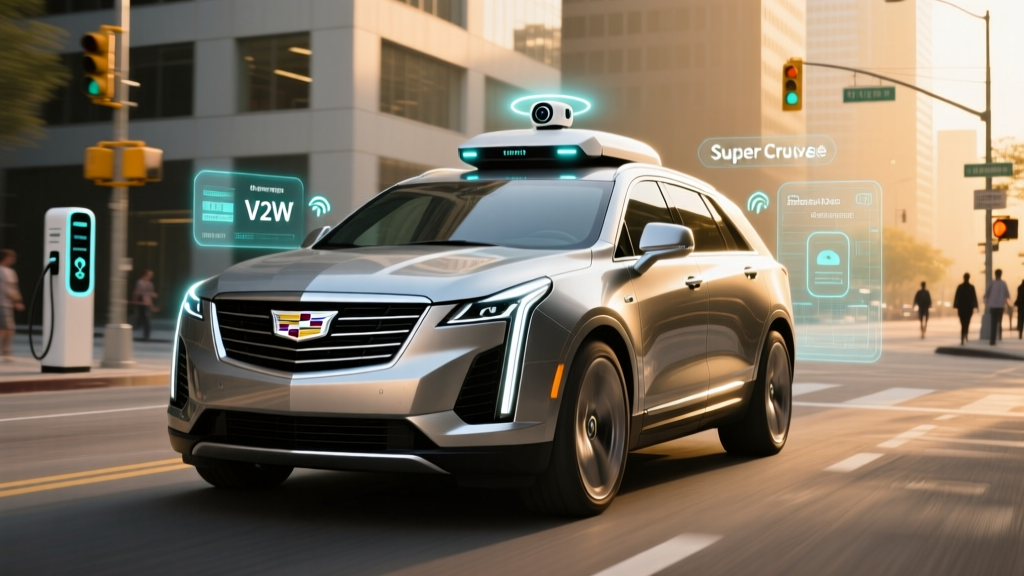
The short answer: no. The Cadillac Escalade is not a self-driving vehicle in the way a Waymo robotaxi is. It is a hands-free, driver-assisted vehicle that requires your continuous supervision. GM's Super Cruise and the newer Ultra Cruise (available on higher trims) are classified as SAE Level 2 systems — the same automation tier as Tesla Autopilot, Ford BlueCruise, and BMW Highway Assistant.
SAE Automation Levels: Where the Escalade Sits
| Level | Classification | Driver Role | Example |
|---|---|---|---|
| Level 0 | No automation | Full control | Basic cruise control |
| Level 1 | Driver assistance | Hands on, feet ready | Adaptive cruise + lane keep |
| Level 2 | Partial automation | Hands off, eyes on, mind on | Super Cruise / Ultra Cruise |
| Level 3 | Conditional automation | Eyes off (limited conditions) | Mercedes Drive Pilot (limited) |
| Level 4 | High automation | No driver needed (geofenced) | Waymo, Zoox robotaxis |
| Level 5 | Full automation | None | Does not yet exist |
The Escalade operates at Level 2. You can remove your hands from the wheel, but you must remain alert and ready to take over at any moment. The vehicle's driver monitoring system enforces this.
This distinction is critical because marketing language often blurs it. "Hands-free driving" sounds autonomous, but legally and technically, you are still the driver. If something goes wrong while Super Cruise is engaged, liability falls on you — not General Motors.
Super Cruise vs. Ultra Cruise: What the 2026 Escalade Offers
For the 2026 model year, the Escalade offers two tiers of hands-free driving technology depending on trim and option packages.
Super Cruise (Available on Premium Luxury and Above)
Super Cruise is GM's established hands-free highway driving system. It combines adaptive cruise control with lane centering on pre-mapped divided highways. Key specifications:
- Road coverage: Over 750,000 miles of compatible roads across the US and Canada (as of 2026), including most interstates and major divided highways
- Hands-free operation: Yes — on compatible roads only
- Automatic lane changes: Yes, with driver confirmation prompt
- Speed range: 0–90 mph (includes stop-and-go traffic)
- Driver monitoring: Infrared camera mounted on steering column tracks eye gaze and head position
- Sensors: Forward-facing camera, long-range radar, GPS, LiDAR-mapped HD road data
Ultra Cruise (Available on Escalade V-Series and Platinum)
Ultra Cruise is GM's next-generation system, designed to extend hands-free driving beyond divided highways. As of the 2026 model year, it covers:
- Road coverage: Over 2 million miles of roads — including many undivided roads, rural highways, and surface streets
- Enhanced sensors: Adds multiple short-range radars and additional cameras for 360° awareness
- Urban street capability: Hands-free on many non-highway roads (though not all intersections)
- Parking assist: Remote parking and retrieval in select scenarios
The Technology Stack: How Escalade Hands-Free Driving Works
Understanding the sensor suite helps explain both the Escalade's capabilities and its limitations. Here's the hardware architecture behind Super Cruise and Ultra Cruise:
2026 Escalade Sensor Configuration
| Sensor Type | Quantity | Function |
|---|---|---|
| Forward camera (wide-angle) | 1 | Lane detection, traffic sign recognition, object classification |
| Surround-view cameras | 4 | 360° awareness, adjacent lane monitoring (Ultra Cruise) |
| Long-range radar (front) | 1 | Vehicle detection at distance, adaptive cruise |
| Short-range corner radars | 4 (Ultra Cruise) | Blind-spot detection, cross-traffic, near-field objects |
| Ultrasonic sensors | 12 | Low-speed parking, close-proximity obstacles |
| Driver attention camera (IR) | 1 | Eye/head tracking to ensure driver engagement |
| GPS + HD map data | — | Road geometry, speed limits, lane configuration |
This is a camera-and-radar-first architecture supplemented by pre-mapped data — fundamentally different from the LiDAR-dominant approach used by Waymo and Cruise robotaxis. The trade-off is cost and scalability (no expensive spinning LiDAR) versus all-weather robustness (camera systems degrade in heavy rain, fog, or snow).
Where Super Cruise and Ultra Cruise Work in 2026
Unlike robotaxis that operate in specific city zones, the Escalade's hands-free systems work on compatible roads across the continent. The coverage map is not city-specific — it's road-specific.
Compatible Road Coverage
- Super Cruise: 750,000+ miles of divided highways in the US and Canada — virtually every major interstate
- Ultra Cruise: 2,000,000+ miles including undivided highways, rural roads, and many surface streets
To check whether a specific route is compatible, GM provides a coverage map via the Cadillac owner portal and the in-vehicle navigation system highlights compatible roads in green when you approach them.
Where It Does NOT Work
- Unmapped roads or newly constructed highways not yet in the HD map database
- Most city streets without clear lane markings (Ultra Cruise extends this, but not universally)
- Private roads, parking garages, or unpaved roads
- Roads in Mexico (coverage is US and Canada only as of 2026)
Safety Record and Real-World Performance Data
GM has published limited but concrete data on Super Cruise's safety performance. Here's what we know:
Super Cruise Safety Data (GM Reported)
- Cumulative hands-free miles driven: Over 160 million miles across all GM Super Cruise vehicles (as of late 2025 reporting)
- Engagement rate: GM reports drivers use Super Cruise for approximately 25% of compatible highway miles driven
- Disengagement frequency: GM has not published a standardized interventions-per-1,000-miles metric comparable to California DMV disengagement reports (GM does not test in California's autonomous vehicle program since Super Cruise is Level 2, not Level 4)
- NHTSA Standing General Order: GM has reported Level 2 ADAS incidents under NHTSA's Standing General Order for crash reporting, though individual incident data is aggregated and not model-specific in public filings
Note: Because Super Cruise is a Level 2 system, it is not subject to the same public disengagement reporting requirements as Level 4 robotaxi operators like Waymo. Direct safety comparisons between the two categories are not apples-to-apples.
IIHS and Third-Party Evaluations
The Insurance Institute for Highway Safety (IIHS) has evaluated driver monitoring systems across multiple manufacturers. GM's Super Cruise has consistently received favorable marks for its driver attention camera, which IIHS considers a best practice for preventing driver disengagement. The infrared eye-tracking camera issues escalating warnings — visual alert, audible chime, seat haptic pulse, and ultimately vehicle slowdown with hazard lights — if the driver looks away from the road for too long.
Current Limitations: What the Escalade Cannot Do
Understanding limitations is as important as understanding capabilities. Here is an honest accounting of where the 2026 Escalade's hands-free systems fall short:
Known Limitations of Super Cruise / Ultra Cruise
- Weather degradation: Heavy rain, snow, fog, or ice on sensors can cause the system to disengage and request driver takeover. Camera-based perception is particularly vulnerable to reduced visibility.
- Construction zones: Temporary lane shifts, missing lane markings, or unmapped road changes can exceed the system's ability to navigate safely. The system will alert and disengage.
- No traffic light or stop sign handling: Super Cruise does not stop for red lights or stop signs on surface streets. Ultra Cruise has limited intersection capability but does not handle all signalized intersections.
- No off-highway autonomy: The Escalade will not navigate a neighborhood, find a parking spot in a lot, or handle a driveway on its own.
- Geofence rigidity: If a road is not in the HD map database, hands-free mode will not activate — even if the road looks perfectly suitable.
- Lane change limitations: Automatic lane changes require clear space and may not execute in dense traffic. The driver must confirm each change.
- Subscription requirement: Super Cruise includes a trial period (typically 3 years); continued use requires a paid OnStar/Super Cruise subscription.
- Not a robotaxi: You cannot summon the Escalade from across a parking lot, send it to pick up a passenger, or exit the vehicle while it drives itself anywhere.
How This Compares to True Level 4 Robotaxis
The search interest in "Cadillac Escalade self driving" often stems from confusion about what different autonomy levels mean in practice. Here's a direct comparison between the Escalade's Level 2 system and a Level 4 robotaxi like Waymo:
| Feature | Cadillac Escalade (Super/Ultra Cruise) | Waymo Robotaxi |
|---|---|---|
| SAE Level | Level 2 (Partial Automation) | Level 4 (High Automation) |
| Driver required | Yes — must monitor at all times | No — fully driverless |
| Operational area | 750K–2M miles of mapped roads nationwide | Specific city zones (Phoenix, SF, LA, Austin) |
| Liability in a crash | Driver | Operator (Waymo) |
| Sensor suite | Camera + radar + HD maps | LiDAR + camera + radar + custom compute |
| Weather capability | Degrades in heavy rain/snow | Operates in rain; limited in extreme conditions |
| City street navigation | Limited (Ultra Cruise extends this) | Full — intersections, signals, pedestrians |
| Cost to user | Vehicle purchase ($82K–$155K+) + subscription | Per-ride fare (comparable to Uber/Lyft) |
| You own the vehicle | Yes | No |
The Escalade gives you hands-free comfort on highway commutes and road trips — a genuine quality-of-life upgrade for long-distance drivers. A robotaxi gives you full transportation-as-a-service in limited urban zones. They solve fundamentally different problems.
Pricing: The Escalade's Hands-Free Tech in Context
If you're evaluating the Escalade partly for its autonomous capabilities, here's what you're paying:
| 2026 Escalade Trim | Base MSRP | Hands-Free System | Subscription After Trial |
|---|---|---|---|
| Luxury | ~$82,000 | Not available | — |
| Premium Luxury | ~$92,000 | Super Cruise (included w/ package) | ~$25/month after 3-yr trial |
| Sport | ~$93,000 | Super Cruise (included w/ package) | ~$25/month after 3-yr trial |
| Platinum | ~$108,000 | Ultra Cruise (available) | ~$25/month after 3-yr trial |
| V-Series | ~$155,000 | Ultra Cruise (standard) | ~$25/month after 3-yr trial |
MSRP figures are approximate for 2026 model year and exclude destination charges and options. Verify current pricing with your dealer. The Escalade does not qualify for the federal §30D clean vehicle credit because the IQ EV variant's eligibility depends on battery sourcing and MSRP caps — consult IRS guidelines and a tax professional.
The Regulatory Landscape for Hands-Free Driving
The Escalade's hands-free systems operate under existing federal motor vehicle safety standards (FMVSS) and do not require special state-level autonomous vehicle permits — because they are Level 2 driver-assist systems, not autonomous vehicles.
Key regulatory context:
- Federal (NHTSA): Level 2 systems are regulated as advanced driver-assistance features, not as autonomous vehicles. GM must comply with NHTSA's Standing General Order requiring crash reporting for vehicles with ADAS Level 2+ and ADS Level 3–5 systems.
- State level: No special license, registration, or insurance is required to use Super Cruise or Ultra Cruise. Standard auto insurance applies, and you remain the liable driver.
- Contrast with robotaxis: Level 4 operators like Waymo require state-level permits (e.g., California DMV and CPUC approvals, Arizona's permissive framework) and carry commercial insurance for driverless operations.
Frequently Asked Questions
Can the Cadillac Escalade drive itself without a driver in the car?
No. The Escalade requires a licensed, attentive driver in the driver's seat at all times when the vehicle is in motion. Super Cruise and Ultra Cruise are hands-free, not driver-free. If you need to look away, the system will warn you; if you fail to respond, it will slow the vehicle and activate hazard lights, but it will not continue driving autonomously.
Is Super Cruise truly self-driving or just driver-assist?
It is driver-assist — specifically SAE Level 2 partial automation. The system handles steering and acceleration/braking on compatible roads, but the human driver remains responsible for monitoring the environment and intervening when needed. Calling it "self-driving" is inaccurate and potentially dangerous.
How much does Super Cruise cost after the free trial?
After the included trial period (typically 3 years on new Escalade purchases), the Super Cruise connected service requires an active OnStar subscription, currently around $25 per month. Without the subscription, the hands-free functionality will not operate, though standard adaptive cruise control and lane-keep assist continue to work.
Does Super Cruise work in bad weather?
Performance degrades significantly in heavy rain, snow, fog, or when sensors are obstructed by dirt or ice. The system will alert the driver and disengage if sensor confidence drops below safe thresholds. This is a fundamental limitation of camera-and-radar-based perception compared to LiDAR-dominant systems.
Can I use Super Cruise on any road?
No. Super Cruise only activates on GM-mapped divided highways (750,000+ miles of coverage). Ultra Cruise extends this to many undivided roads and surface streets (2,000,000+ miles), but neither system works on unmapped roads, in parking lots, or on roads without adequate lane markings. The navigation system shows compatible roads in green.
How does Escalade hands-free tech compare to Tesla FSD?
Both are SAE Level 2 systems requiring driver supervision. Super Cruise uses HD map data and a driver attention camera (hands-free on mapped roads). Tesla FSD (Supervised) uses a vision-only approach without HD maps and relies on steering-wheel torque monitoring rather than eye tracking (hands-on required in most scenarios). Super Cruise is generally considered more reliable on highways due to its map-based approach, while Tesla FSD attempts broader road coverage without geofencing. Neither is "self-driving."
Will the Escalade ever become a Level 4 autonomous vehicle?
GM has not announced plans to make the Escalade a Level 4 vehicle. GM's autonomous driving efforts have been focused on its Cruise robotaxi division (which operates modified Chevrolet Bolts and Origin vehicles), though Cruise operations were significantly scaled back in 2024–2025. Any future Level 4 capability in a consumer vehicle remains speculative and unannounced.
Bottom Line: Hands-Free Highway Excellence, Not Full Autonomy
The 2026 Cadillac Escalade with Super Cruise or Ultra Cruise offers some of the best hands-free highway driving available in any consumer vehicle. On long road trips and daily interstate commutes, it genuinely reduces fatigue and makes driving more comfortable. The driver monitoring system is among the best in the industry, and the road coverage is extensive.
But it is not self-driving. It is a sophisticated Level 2 driver-assist system that requires your attention, your judgment, and your readiness to intervene. If you're searching for "Cadillac Escalade self driving" hoping to find a vehicle that will chauffeur you while you sleep or send itself to pick up your kids, that technology does not exist in any production consumer vehicle today — not from Cadillac, not from Tesla, not from anyone.
What the Escalade does offer is the best version of what's currently possible: confident, comfortable, hands-free highway driving with robust safety guardrails. For many buyers, that's more than enough.