The Short Answer: The BMW M4 Is Not Self-Driving
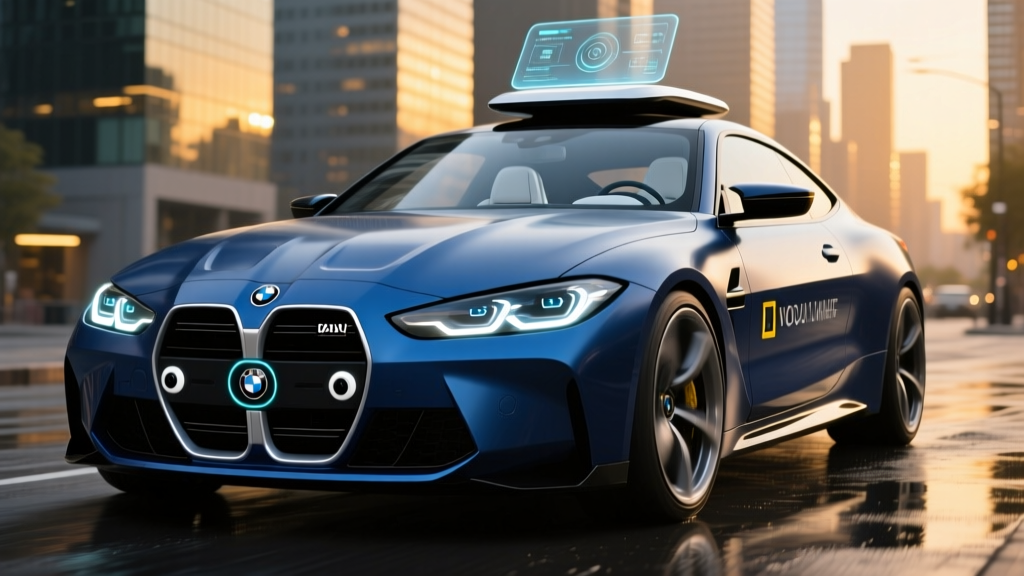
If you've searched for "BMW M4 self driving" hoping to find a sports coupe that chauffeurs you while you nap, the reality is more nuanced — and far more interesting from a technology standpoint. The 2026 BMW M4, including the Competition xDrive variant, is equipped with sophisticated SAE Level 2 driver-assistance systems. It is not autonomous. You must remain engaged, eyes on or near the road, hands available to intervene at any moment.
This distinction matters enormously. Consumer confusion between Level 2 driver-assist (like BMW's Highway Assistant, Tesla's Autopilot, or GM's Super Cruise) and Level 4 robotaxis (like Waymo's driverless fleet) is one of the most persistent misunderstandings in the EV and smart-driving space. Let's clarify exactly what the M4 can do, what it cannot, and where the technology actually stands in 2026.
Level 2: Partial Driving Automation. The vehicle can simultaneously control steering and speed under specific conditions. The human driver must continuously supervise, remain alert, and be prepared to take over immediately. This is driver assistance, not self-driving.
What ADAS Technology Does the BMW M4 Actually Have?
The 2026 BMW M4 comes available with BMW's Driving Assistant Professional package, which bundles several advanced driver-assistance features into a cohesive system. Here's the technology stack as it exists on the current-generation M4 (G82/G83):
| Feature | Capability | Sensor Basis |
|---|---|---|
| Highway Assistant | Hands-off steering on divided highways up to ~85 mph; driver must keep eyes on road (monitored by cabin camera) | Radar + cameras + ultrasonic |
| Active Cruise Control w/ Stop & Go | Maintains set speed and following distance, including full stops in traffic | Front radar + camera |
| Steering & Lane Control Assistant | Centers vehicle in lane on marked roads | Forward-facing camera |
| Automatic Lane Change | Initiates lane change with turn-signal tap when system deems it safe (driver confirmed) | Surround cameras + radar |
| Parking Assistant Professional | Automated parallel/perpendicular parking; remote parking via smartphone app | Ultrasonic + surround-view cameras |
| Emergency Stop Assistant | Brings vehicle to a controlled stop if driver becomes unresponsive | Driver monitoring camera + ADAS suite |
The sensor suite relies on a camera-and-radar fusion approach — not lidar. BMW uses a forward-facing radar unit, multiple surround cameras, and ultrasonic sensors for close-range detection. The cabin-facing driver monitoring camera is essential: it tracks your eye gaze and head position to ensure you're paying attention when Highway Assistant is engaged in hands-off mode.
SAE Automation Levels: Where the M4 Fits in the Autonomy Spectrum
Understanding the SAE J3016 automation framework is critical to evaluating any "self-driving" claim. Here's how the levels break down and where the BMW M4 sits:
| Level | Name | Who Drives? | Example |
|---|---|---|---|
| 0 | No Automation | Human always | Basic car, no assist |
| 1 | Driver Assistance | Human (one axis assisted) | Cruise control OR lane-keep |
| 2 | Partial Automation | Human supervises; system steers + accelerates | BMW Highway Assistant, Tesla Autopilot, GM Super Cruise |
| 3 | Conditional Automation | System in defined conditions; human on standby | Mercedes Drive Pilot (limited markets) |
| 4 | High Automation | System fully; no human needed in geofence | Waymo, Zoox robotaxis |
| 5 | Full Automation | System always, everywhere | Does not exist commercially |
The BMW M4's Highway Assistant is a sophisticated Level 2 system. It can steer, accelerate, and brake simultaneously on qualifying highways — and in the 2026 model year, it allows hands-off operation at speeds up to approximately 85 mph on divided highways. But the driver remains legally and practically responsible. If you look away from the road for too long, the system will issue escalating warnings and eventually disengage, activating hazard lights and bringing the car to a stop via the Emergency Stop Assistant.
This is fundamentally different from a Level 4 Waymo robotaxi, which operates with no human in the driver's seat whatsoever within its geofenced service area. Conflating these two categories — as marketing sometimes encourages and as the phrase "BMW M4 self driving" implies — is technically incorrect and potentially dangerous.
BMW's Highway Assistant vs. True Level 4 Robotaxis: A Direct Comparison
To put the M4's capabilities in context, here's how its driver-assist system compares to actual autonomous robotaxi services operating in the United States in 2026:
| Attribute | BMW M4 (Highway Assistant) | Waymo One (Level 4 Robotaxi) |
|---|---|---|
| SAE Level | Level 2 (driver-assist) | Level 4 (driverless) |
| Driver required? | Yes — eyes on, hands available | No — no human driver in seat |
| Operational area | Any divided highway (nationwide) | Geofenced zones in Phoenix, SF, LA, Austin |
| Sensor stack | Camera + radar + ultrasonic | Lidar + camera + radar (custom 5th-gen) |
| Weather handling | Functions in rain/snow (reduced confidence) | May pause or limit service in heavy rain/fog |
| Ownership model | You own the car (~$80,000+ MSRP) | Per-ride fare (comparable to Uber/Lyft) |
| Liability in a crash | Driver is responsible | Waymo assumes liability |
The comparison makes the distinction stark. The M4 gives you excellent assistance on a road trip from Denver to Salt Lake City — reducing fatigue on long highway stretches. A Waymo robotaxi gives you a ride from point A to point B within its service area with no human involvement at all. These are categorically different technologies serving different use cases.
Where Can You Actually Use BMW's Hands-Off Highway Assistant?
Unlike Level 4 robotaxis, which are restricted to mapped geofenced zones in a handful of cities, BMW's Highway Assistant works on qualifying divided highways nationwide. The system uses GPS and map data to determine whether the road meets its operational criteria — typically limited-access, divided highways with clear lane markings.
When conditions are met, the instrument cluster and head-up display will indicate that Highway Assistant is available. You activate it, and if the driver monitoring camera confirms your eyes are directed at the road, the system permits hands-off driving. This works on interstates like I-95, I-5, I-80, and thousands of miles of similar roads across all 50 states.
The practical advantage over a geofenced robotaxi is obvious: you can use it anywhere there's a suitable highway, not just in a 100-square-mile zone in Phoenix. The trade-off is that you're still the driver — you can't read a book, watch a video, or close your eyes.
Real-World Safety Data: What the Numbers Show
Safety is the most scrutinized question in autonomous and assisted driving. Here's what we know from available data:
For Level 2 systems like BMW's Highway Assistant, the National Highway Traffic Safety Administration (NHTSA) requires standing general orders for crash reporting involving ADS and ADAS. However, because Level 2 systems place responsibility on the driver, crash data reflects driver behavior as much as system performance.
For Level 4 robotaxis: Waymo reported in 2024 that across over 7.1 million driverless miles, its vehicles were involved in contact events at a rate significantly lower than human benchmark data for comparable urban driving environments. The Insurance Institute for Highway Safety (IIHS) continues to evaluate automated systems but notes that comprehensive independent safety comparisons remain challenging due to differing operational domains.
For the BMW M4 specifically, the Highway Assistant system has not been the subject of standalone NHTSA defect investigations as of early 2026. BMW's driver monitoring camera — which tracks eye gaze direction rather than just head position — is considered one of the more robust attention-monitoring implementations in the Level 2 space, reducing the risk of driver disengagement compared to torque-sensing steering wheels alone.
Current Limitations: What the BMW M4 Self-Driving System Cannot Do
No matter how you frame the BMW M4's autonomous capabilities, the limitations are substantial and non-negotiable:
- No city-street autonomy: Highway Assistant only activates on divided, limited-access highways. Surface streets, intersections, and roundabouts are entirely your responsibility.
- No stoplight/stop-sign handling: The system does not detect or respond to traffic signals or stop signs autonomously in hands-off mode.
- Weather degradation: Heavy rain, snow, fog, or glare can cause the system to reduce confidence or disengage entirely. Camera-based lane detection is particularly vulnerable to faded markings and snow-covered roads.
- Construction zones: Temporary lane shifts, cones, and altered road geometry frequently exceed the system's operational design domain. Expect manual takeover requests.
- No point-to-point navigation: The M4 will not autonomously navigate from your driveway to a destination. It assists on highway segments of your trip — you handle everything else.
- Hands-off, not mind-off: Even in hands-off mode, the driver monitoring camera requires your eyes to remain directed forward. Extended glances at your phone or the center screen will trigger warnings and disengagement.
- No valet or remote summon (on public roads): The Parking Assistant Professional can handle parking maneuvers and remote parking in tight garages, but it does not drive the car to you across a parking lot on public-access roads.
The BMW M4's driver-assistance systems are not a substitute for an attentive driver. They are designed to reduce workload on monotonous highway stretches — not to eliminate the need for driving. Misuse of Level 2 systems (falling asleep, phone distraction, leaving the driver's seat) has been a factor in multiple fatal crashes across the industry. Treat these features as fatigue-reduction tools, not autonomy.
Pricing: The M4's ADAS Package vs. Robotaxi Fares
The BMW M4's Driving Assistant Professional package is typically included or available as a modest-cost option (approximately $1,700 as a standalone package on recent model years, though bundling varies by trim). Given the M4's starting MSRP of approximately $80,200 for the 2026 Coupe (Competition xDrive starts around $90,000+), the ADAS cost is a rounding error on the overall purchase.
| Scenario | Estimated Cost | Notes |
|---|---|---|
| 2026 BMW M4 Competition xDrive (MSRP) | ~$90,000+ | Includes Driving Assistant Pro; not eligible for §30D credit (MSRP cap for sedans/coupes is $55,000) |
| Average Waymo ride (5 miles, Phoenix) | $12–$20 | Varies by demand, time, and city |
| Comparable Uber/Lyft (5 miles) | $10–$18 | Surge pricing can push higher |
| Weekly robotaxi commuter (10 rides) | $120–$200/week | ~$6,000–$10,000/year |
The economics don't really compete: the M4 is a performance sports coupe that happens to have excellent driver-assist technology. You're buying it for the 503-hp twin-turbo inline-six, the 0-60 mph time of approximately 3.4 seconds (Competition xDrive), and the driving experience. The ADAS is a bonus for the highway commute to the fun roads. A robotaxi is a mobility service — you don't own it, you don't drive it, and it doesn't do 0-60 in 3.4 seconds.
Regulatory Landscape: Who Approves What?
The regulatory environment for automated driving in the US is fragmented:
- Level 2 ADAS (BMW M4): Regulated under existing Federal Motor Vehicle Safety Standards (FMVSS). No special approval needed — BMW self-certifies compliance. NHTSA monitors crash data and can issue recalls or investigations.
- Level 4 Robotaxis: Require state-level approval for commercial operation. California (CPUC and DMV), Arizona (minimal regulation), and Texas have been the most permissive. The NHTSA maintains federal oversight of vehicle safety standards, while state and local authorities control where and how driverless vehicles can operate commercially.
BMW's Level 2 system faces far fewer regulatory hurdles, which is why it's available in all 50 states today. Level 4 services like Waymo must navigate a patchwork of state and municipal regulations, which is why expansion has been gradual and geographically limited.
Frequently Asked Questions
Is the BMW M4 self-driving?
No. The BMW M4 features SAE Level 2 driver-assistance technology (Highway Assistant), which can steer, accelerate, and brake on divided highways with hands off the wheel — but the driver must remain attentive and is legally responsible for the vehicle at all times. It is not autonomous or self-driving.
Can I take my hands off the wheel in the BMW M4?
Yes, but only on qualifying divided highways when the Highway Assistant is active and the driver monitoring camera confirms your eyes are directed at the road. This is hands-off, not mind-off. You must remain prepared to take over instantly.
Does the BMW M4 have lidar?
No. BMW's current ADAS stack on the M4 uses a camera-and-radar fusion approach with ultrasonic sensors for parking. Lidar is not part of the sensor suite. This is typical for Level 2 systems; Level 4 robotaxis like Waymo rely heavily on lidar.
How does BMW's Highway Assistant compare to Tesla Autopilot or GM Super Cruise?
All three are SAE Level 2 systems. BMW's Highway Assistant allows hands-off driving on divided highways with eye monitoring via cabin camera. GM Super Cruise uses a similar approach with LiDAR-mapped highways and an attention camera. Tesla Autopilot/FSD (Supervised) requires hands-on-wheel torque detection (no hands-off mode in the US as of 2026). Real-world performance varies by road conditions, weather, and traffic complexity — none of these systems is interchangeable with Level 4 autonomy.
Will BMW ever offer Level 3 or Level 4 autonomy on the M4?
BMW has demonstrated Level 3 capabilities in testing and has discussed future Level 3 availability on select models in specific markets (similar to Mercedes-Benz's Drive Pilot in Germany). However, no Level 3 system has been announced for the M4 in the US market as of 2026. Level 4 personal-vehicle autonomy does not exist on any production car sold to consumers anywhere in the world.
Does the BMW M4 qualify for the federal EV tax credit?
No. The BMW M4 is not an electric vehicle — it uses a 3.0-liter twin-turbocharged inline-six gasoline engine. Even if it were a BEV, its MSRP (well above the $55,000 sedan/coupe cap under IRS §30D rules) would disqualify it from the new clean vehicle credit. For current credit eligibility rules, consult the IRS clean vehicle credit page or a qualified tax professional.