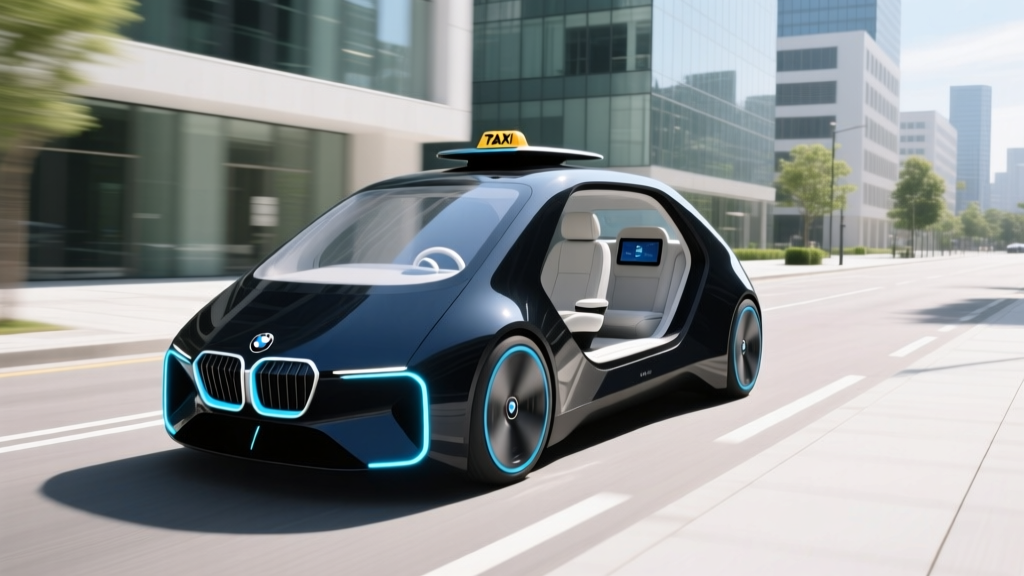
The BMW Driverless Car Question: What Can BMW Actually Do Today?
Search for "BMW driverless car" and you'll find a mix of concept-car hype, YouTube demos, and genuine confusion about what BMW vehicles can actually do without a driver behind the wheel. The short answer: BMW does not operate a Level 4 robotaxi service like Waymo or Zoox. What BMW does offer is some of the most advanced consumer driver-assistance and conditional automation technology available in production vehicles — and understanding the distinction matters enormously for anyone considering a purchase.
This guide dissects exactly where BMW's autonomous driving technology stands in 2026, separating genuine capability from marketing aspiration. We'll cover the BMW Personal Pilot L3 system available in the 7 Series and iX, the broader Driving Assistant Professional suite, real-world limitations, and how BMW's approach compares to true driverless robotaxi services.
- Level 0: No automation. Warnings only (e.g., blind-spot alert).
- Level 1: Single-axis assist — steering OR acceleration (e.g., adaptive cruise control).
- Level 2: Combined steering AND acceleration assist. Driver must remain fully engaged. (BMW Driving Assistant Professional, Tesla Autopilot, GM Super Cruise.)
- Level 3: Conditional automation — the car drives itself in specific scenarios, driver can disengage but must take over when requested. (BMW Personal Pilot L3, Mercedes Drive Pilot.)
- Level 4: High automation — fully driverless within a defined operational domain. No driver needed. (Waymo, Zoox robotaxis.)
- Level 5: Full automation everywhere, all conditions. Does not exist in production today.
Source: SAE International J3016
BMW Personal Pilot L3: Conditional Autonomy in the 7 Series and iX
BMW's most advanced production autonomy system is the Personal Pilot L3, a Level 3 conditional automation feature introduced on the BMW 7 Series (G70 generation) and subsequently made available on the BMW iX. This system represents BMW's entry into certified Level 3 territory — joining Mercedes-Benz's Drive Pilot as one of only a handful of SAE Level 3 systems approved for public roads.
Under Level 3 operation, the BMW Personal Pilot L3 allows the driver to fully remove their hands from the steering wheel and take their eyes off the road — reading, watching content on the central display, or using a smartphone — provided specific conditions are met. The vehicle assumes full legal responsibility for driving during Level 3 engagement.
BMW Personal Pilot L3 Operational Requirements
| Parameter | Requirement |
|---|---|
| Maximum Speed | 37 mph (60 km/h) |
| Road Type | Divided highways only (physically separated carriageways) |
| Traffic Condition | Congested/stop-and-go traffic |
| Weather | Clear conditions (no heavy rain, snow, or fog) |
| Time of Day | Daytime only (initial rollout) |
| Driver Takeover Time | ~10 seconds advance warning before required handover |
| Availability (US) | Limited — state-by-state regulatory approval required |
The system uses a comprehensive sensor suite: multiple high-resolution cameras, long-range radar, ultrasonic sensors, and lidar (a key differentiator from camera-only systems like Tesla's). BMW's lidar integration provides precise 3D mapping of the vehicle's surroundings, enabling reliable object detection even in challenging lighting conditions within its operational domain.
BMW Driving Assistant Professional: Level 2 for Everyday Driving
For the vast majority of BMW owners, the primary autonomy experience comes through the Driving Assistant Professional package — a Level 2 system available across the BMW lineup including the i4, i5, i7, iX, X5, and X7. This is the system most people encounter when researching a "BMW driverless car," and it's critical to understand this is not self-driving.
BMW's Driving Assistant Professional (Level 2) requires the driver to maintain continuous supervision of the road and be prepared to take control instantly. Hands-off detection varies by model — some use capacitive steering wheels, others use driver-monitoring cameras. Despite marketing language like "hands-free" in specific highway scenarios, the legal and practical responsibility remains entirely with the driver. This is the same SAE Level 2 classification as Tesla Autopilot, GM Super Cruise, and Ford BlueCruise.
Level 2 Feature Breakdown: Driving Assistant Professional
| Feature | Capability | Limitation |
|---|---|---|
| Active Cruise Control w/ Stop & Go | Maintains speed and following distance, full stop and resume | May not detect stationary objects reliably |
| Steering & Lane Control Assistant | Centers vehicle in lane, gentle curves | Struggles with construction zones, faded markings |
| Automatic Lane Change | Initiates lane change on turn-signal tap (highway) | Requires driver confirmation, may abort in dense traffic |
| Highway Assistant (Hands-Free) | Hands-free driving up to ~85 mph on divided highways (select models) | Eyes-on monitoring required via camera; geofenced to mapped highways |
| Parking Assistant Professional | Automated parallel/perpendicular parking, Reversing Assistant | Low-speed only, requires clear space detection |
The Highway Assistant feature, available on models like the i7 and 7 Series equipped with the latest iDrive 8.5 system, represents BMW's most advanced Level 2 capability — allowing hands-off driving on mapped divided highways at speeds up to approximately 85 mph. However, the driver-monitoring camera must confirm continuous eye-on-road attention. Look away for more than a few seconds and the system escalates warnings before disengaging.
BMW vs. True Robotaxi Services: A Technology Comparison
Understanding where BMW fits in the broader autonomous landscape requires comparing its approach to Level 4 robotaxi operators. BMW is building autonomy into consumer vehicles — you buy the car, you own the technology. Robotaxi companies like Waymo operate fleet-based driverless services — you hail a ride, no steering wheel required.
| Attribute | BMW Personal Pilot L3 | BMW Driving Assistant Pro (L2) | Waymo (Level 4 Robotaxi) |
|---|---|---|---|
| SAE Level | Level 3 (Conditional) | Level 2 (Partial) | Level 4 (High) |
| Driver Required? | In vehicle, can disengage eyes/hands | Full supervision required | No driver — fully unmanned |
| Speed Range | Up to 37 mph | Up to ~85 mph (hands-free highway) | Up to 65+ mph (varies by city) |
| Liability | BMW when L3 active | Driver always | Waymo |
| Sensor Suite | Lidar + radar + cameras + ultrasonic | Radar + cameras + ultrasonic | Custom lidar + radar + cameras (5th gen) |
| Availability | Select models, limited US states | Most BMW models nationwide | Phoenix, SF, LA, Austin (expanding) |
| Cost Model | ~$6,000 option + vehicle purchase | ~$2,500 package + vehicle purchase | Per-ride pricing (app-based) |
Safety Data: What We Know About BMW's Autonomous Systems
- BMW Personal Pilot L3 testing: BMW reported over 1.2 million miles of Level 3 validation testing across European and US roads prior to certification, including extreme weather and edge-case scenarios.
- NHTSA Standing General Order (SGO): Under NHTSA's mandatory crash reporting rule for ADS/ADAS-equipped vehicles, BMW has reported fewer than 15 incidents involving Level 2 Driving Assistant systems between 2022–2025 — a low rate relative to the volume of equipped vehicles on US roads. (NHTSA SGO Data)
- Level 3 liability framework: Under BMW's L3 certification, BMW assumes liability for accidents occurring while Personal Pilot L3 is actively engaged within its operational design domain — a significant legal commitment that incentivizes conservative system design.
- IIHS assessment: BMW's driver-monitoring systems received positive marks from the Insurance Institute for Highway Safety for robust attention verification, though IIHS continues to advocate for stricter safeguards on all partial-automation systems.
Compared to Waymo's published safety data — which includes over 7.1 million fully driverless miles in Phoenix alone with a documented 85% reduction in police-reported crash rates versus human benchmarks — BMW's Level 3 system operates under fundamentally different parameters. BMW's L3 is designed for low-speed highway congestion, a scenario where crash severity is typically lower but engagement duration is high. The system's conservative operational envelope (37 mph max, clear weather, divided highways) reflects a deliberate engineering choice to minimize edge-case exposure.
Where Can You Actually Use BMW's Autonomous Features?
Availability depends heavily on which system you're discussing and where you live:
BMW Personal Pilot L3 — US Availability
| State | Status | Notes |
|---|---|---|
| Nevada | ✅ Approved | First US state to certify BMW L3 system |
| California | ⚠️ Pending/Limited | DMV and CPUC regulatory review ongoing; Mercedes Drive Pilot approved first |
| Germany | ✅ Approved | Autobahn use approved up to 60 km/h since 2024 |
| All Other US States | ❌ Not Approved | No federal framework; state-by-state approval required |
The fragmented US regulatory landscape means that a BMW 7 Series owner in Las Vegas can legally use Level 3 features on I-15, while an identical vehicle in neighboring Arizona cannot — not because the technology doesn't work, but because state law hasn't established the legal framework for conditional automation liability.
BMW Driving Assistant Professional — Nationwide
The Level 2 Driving Assistant Professional package is available on BMW models sold in all 50 states with no geographic restrictions. The Highway Assistant (hands-free) feature requires mapped divided highways, which covers the majority of the US Interstate system. This is the system that works today, everywhere, with the driver supervision caveat.
The Technology Stack: How BMW's Autonomy Hardware Compares
- Lidar: Solid-state units providing high-resolution 3D point clouds up to ~200 meters — critical for depth perception and object classification in the Level 3 domain.
- Long-Range Radar: Forward-facing 77 GHz radar for vehicle detection at distance, adaptive cruise control, and emergency braking.
- Surround-View Cameras: Multiple high-resolution cameras (front, rear, side) for lane detection, traffic sign recognition, and object classification.
- Ultrasonic Sensors: Short-range proximity detection for parking and low-speed maneuvering.
- Driver Monitoring Camera: Infrared camera tracking eye gaze and head position to ensure takeover readiness.
- HD Maps: Pre-mapped highway segments provide redundant localization data beyond real-time sensor input.
Key distinction from Tesla: BMW uses lidar as a core sensor; Tesla removed all radar and ultrasonic sensors in favor of a camera-only "Tesla Vision" approach. BMW's multi-sensor redundancy is the industry-standard approach for Level 3+ certification, shared by Mercedes, Waymo, and most ADAS developers.
Current Limitations: What BMW's Systems Cannot Do
- No highway-speed autonomy: Capped at 37 mph — useful only in congestion, not for open-road cruising.
- No urban street driving: Requires physically divided highways; cannot handle intersections, cross-traffic, or pedestrians.
- Weather restrictions: System disables in heavy rain, snow, fog, or when sensors are obstructed.
- No construction zone handling: Temporary lane shifts and barriers outside the system's operational design domain.
- Geographic restriction: Only approved in select jurisdictions (Nevada, Germany); most US owners cannot legally activate L3.
- Daytime limitation: Initial certification covers daytime operation only; nighttime L3 approval is pending.
- Driver attention required at all times: Despite hands-free highway capability, eyes-on monitoring is enforced. This is not "set and forget."
- Lane change requires initiation: The system will not autonomously navigate to an exit or overtake without driver signal input.
- Phantom braking: Like all camera/radar-based systems, occasional false-positive emergency braking can occur, especially with overhead signs or shadows.
- Lane marking dependency: Faded, missing, or conflicting lane markings can cause steering assist degradation or disengagement.
- Inclement weather performance: Heavy rain and snow reduce camera and radar effectiveness; system may restrict or disable features.
Pricing and Ownership: What BMW Autonomy Actually Costs
| Package / System | Approximate Cost | Availability |
|---|---|---|
| Driving Assistant Professional (L2) | ~$2,500 (package) | Most 2025–2026 BMW models |
| Personal Pilot L3 (Conditional Automation) | ~$6,000 (option) | 7 Series, i7, iX (select markets) |
| BMW Highway Assistant (Hands-Free L2) | Included in Pro package | Select models w/ iDrive 8.5+ |
| Parking Assistant Professional | ~$1,000 (standalone or bundled) | Most 2025–2026 models |
For comparison, a single Waymo ride in Phoenix averages $15–$25 for a 5–10 mile trip — roughly comparable to Uber/Lyft pricing in the same market. BMW's autonomy model is a capital expenditure (you buy the hardware with the car) versus a robotaxi's operating expenditure (pay per ride). If you drive 15,000 miles annually, the Driving Assistant Professional package pays for itself in utility within the first year — but you're still the driver.
The Regulatory Landscape: Why BMW's L3 Isn't Available Everywhere
The United States lacks a unified federal framework for Level 3 vehicle certification. While NHTSA sets Federal Motor Vehicle Safety Standards (FMVSS) for vehicle hardware, the question of who is liable when an automated system is driving falls to individual states. This creates a patchwork:
- Nevada and Arizona have been early adopters, creating regulatory pathways for L3 and L4 operations.
- California requires separate approvals from both the DMV (for testing) and CPUC (for commercial deployment), creating a longer timeline.
- Most states have no specific L3 legislation, meaning BMW's Personal Pilot L3 exists in a legal gray area — the hardware is present, but activation may not be legally permissible.
BMW has stated it is working with regulators in additional states to expand L3 approval, but timelines remain dependent on legislative action rather than engineering readiness. See NHTSA's automated vehicles page for current federal guidance.
Frequently Asked Questions
Does BMW have a fully driverless car I can buy?
No. BMW does not sell or operate a Level 4 or Level 5 driverless vehicle. The most advanced system available is the Personal Pilot L3 (Level 3 conditional automation), which allows eyes-off, hands-off driving only below 37 mph on divided highways in clear conditions — and only in states that have approved it. The driver must remain in the vehicle and ready to resume control.
Is BMW's self-driving technology better than Tesla's FSD?
They take fundamentally different approaches. BMW's Personal Pilot L3 is a certified Level 3 system with BMW accepting liability during engagement — but it operates only in a very narrow envelope (low speed, highways, clear weather). Tesla's Full Self-Driving (Supervised) covers a much broader range of scenarios but remains a Level 2 system where the driver bears full legal responsibility. "Better" depends on whether you value certified-but-limited or broad-but-supervised.
Can I use BMW's hands-free highway driving on any road?
No. The Highway Assistant (hands-free Level 2) works only on pre-mapped divided highways — primarily the Interstate system. It will not engage on surface streets, undivided roads, or unmapped segments. The driver-monitoring camera must confirm your eyes remain on the road at all times.
How safe is BMW's autonomous driving compared to a human driver?
BMW has not published a direct crash-rate comparison versus human drivers for its L3 system. NHTSA SGO reporting data shows a low incident rate for BMW's L2 systems relative to fleet size. The L3 system's conservative operational envelope (low speed, controlled-access roads, clear weather) is designed to minimize risk exposure. For context, Waymo's L4 robotaxi data shows an 85% reduction in police-reported crashes versus human benchmarks in comparable urban environments.
Will BMW eventually offer Level 4 autonomy?
BMW has participated in Level 4 development through partnerships and testing programs, but has not announced a production Level 4 vehicle or robotaxi service. The company's current strategy focuses on expanding Level 3 capabilities (higher speeds, more road types, nighttime operation) rather than pursuing full driverless operation. Any future L4 deployment would require both technical readiness and state-level regulatory approval.
What happens if I'm in a crash while BMW's L3 system is driving?
Under BMW's Level 3 certification, BMW assumes liability for accidents that occur while the Personal Pilot L3 system is properly engaged within its operational design domain. This is a significant legal distinction from Level 2 systems (including BMW's own Driving Assistant Professional), where the driver is always legally responsible regardless of system engagement.
The Bottom Line: BMW Autonomy in Perspective
If you're researching a "BMW driverless car" hoping for a vehicle that can drive you door-to-door while you sleep, that technology does not exist from BMW — or from any automaker selling to consumers in 2026. What BMW offers is a genuinely advanced, conservatively engineered automation stack that pushes the boundary of what's legally and technically certified for consumer use.
The Personal Pilot L3 system in the 7 Series and iX represents a meaningful step: certified Level 3 with manufacturer liability, lidar redundancy, and a clear operational domain. For daily use, the Driving Assistant Professional package provides robust Level 2 assistance that reduces fatigue on long highway drives — with the non-negotiable requirement that you remain the driver.
For true driverless mobility today, robotaxi services like Waymo (Phoenix, San Francisco, Los Angeles, Austin) remain the only option — and they operate as a ride-hailing service, not a vehicle you can purchase. BMW's path is the ownership model: increasingly capable automation in a car that's still yours to drive, insure, and maintain.