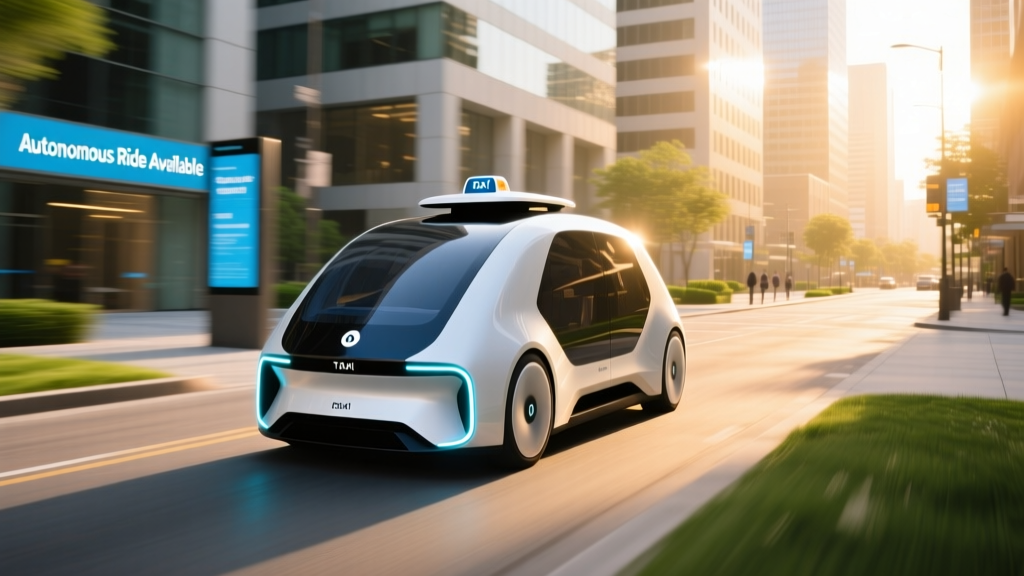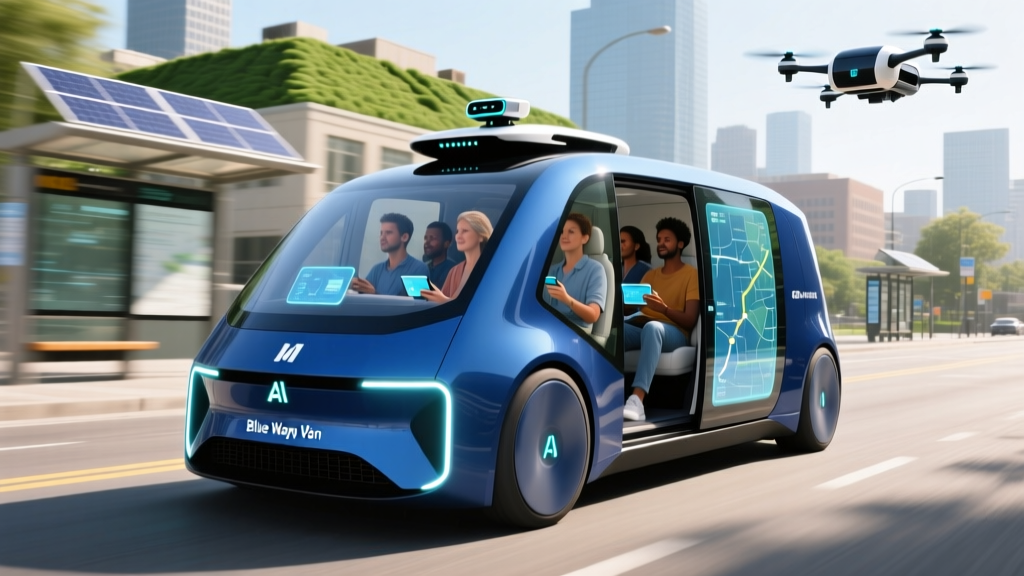
If you've seen photos of a boxy, futuristic blue Waymo van gliding through Phoenix or San Francisco streets with no one in the driver's seat, you've spotted Waymo's custom-built Zeekr robotaxi — the next-generation vehicle designed from the ground up for fully driverless rideshare. Unlike the Jaguar I-PACE SUVs that launched the service, this purpose-built electric van represents a fundamental shift in how robotaxi fleets are engineered, deployed, and scaled.
Here's what you need to know about the blue Waymo van in 2026: where it operates, what it costs, how safe it is, and the technology that makes Level 4 autonomy possible.
What Is the Blue Waymo Van?
The blue Waymo van is a custom electric robotaxi built by Zeekr, a premium EV brand under China's Geely Holding Group (which also owns Volvo and Polestar). Waymo and Zeekr announced the partnership in late 2021, and the vehicle — sometimes referred to internally as the Zeekr M-Vision concept adapted for production — began entering Waymo's commercial fleet in limited numbers starting in 2024-2025.
Unlike the Jaguar I-PACE, which is a consumer EV retrofitted with Waymo's sensor suite, the Zeekr robotaxi was designed as a mobility-as-a-service vehicle from day one. That means:
- No steering wheel, pedals, or driver's seat — the entire cabin is passenger space
- Sliding doors on both sides for curbside pickup flexibility
- A low, flat floor optimized for easy entry, including wheelchair accessibility
- Integrated sensor packaging (lidar, cameras, radar) built into the body rather than bolted on
- Commercial-duty components designed for 24/7 fleet operation rather than personal-use duty cycles
The Waymo Zeekr robotaxi operates at SAE Level 4 — meaning it performs all driving tasks without any human intervention, but only within a defined operational design domain (ODD). This is fundamentally different from Level 2 driver-assist systems like Tesla Autopilot, GM Super Cruise, or Ford BlueCruise, which require an attentive human driver at all times. Inside the blue Waymo van, there is no driver to pay attention — the vehicle handles everything within its geofenced service area.
Where Can You Ride the Blue Waymo Van Right Now?
Waymo's commercial robotaxi service, Waymo One, operates in a growing but still geographically constrained set of metro areas. The Zeekr van is being gradually integrated into the fleet alongside the existing Jaguar I-PACE vehicles — you don't choose which vehicle you get when you hail a ride.
| City | Status | Service Area | Zeekr Van Deployed |
|---|---|---|---|
| Phoenix, AZ | Fully commercial (Waymo One) | Metro Phoenix including Tempe, Scottsdale, Chandler — 225+ sq mi | Yes — primary deployment city |
| San Francisco, CA | Fully commercial (Waymo One) | Most of SF proper, expanding southward | Yes — in active rotation |
| Los Angeles, CA | Commercial service active | Downtown LA, Hollywood, Santa Monica, Westside corridors | Yes — limited numbers |
| Austin, TX | Commercial service launched 2025 | Central Austin, South Congress, airport corridor | Planned/rolling deployment |
| Mountain View, CA | Limited/employee service | Select zones near Google campus | Testing phase |
Key reality check: Even in fully commercial cities, the robotaxi is geofenced. You can only request rides with origins and destinations within the approved service zone. If your trip would take you outside the boundary — say, from downtown SF to Marin County — the app won't let you book it. Waymo expands these zones incrementally as they validate new road segments.
Technology Stack: What Powers the Blue Waymo Van
The Zeekr robotaxi runs Waymo's 6th-generation Driver system, the latest iteration of hardware and software that Waymo has iterated on since 2009 (originally as Google's self-driving car project). Here's the sensor and compute breakdown:
Sensor Suite
- LiDAR: Multiple solid-state and spinning lidar units providing 360° 3D point-cloud mapping out to 500+ meters. Waymo uses proprietary lidar (developed in-house since ~2016), not off-the-shelf units.
- Cameras: High-resolution cameras covering all directions, optimized for traffic-light detection, sign reading, lane markings, and object classification in varying light conditions.
- Radar: Imaging radar for velocity detection, particularly in rain and fog where lidar and cameras degrade.
- Audio sensors: External microphones to detect emergency vehicle sirens and adjust behavior accordingly.
Compute & Software
- Custom Waymo-designed compute platform (not NVIDIA or Mobileye off-the-shelf) running perception, prediction, and planning algorithms
- HD maps of every operational road segment, pre-built and continuously updated
- Real-time prediction engine modeling the behavior of hundreds of surrounding agents (pedestrians, cyclists, vehicles) simultaneously
Why LiDAR + Cameras + Radar (Not Camera-Only)?
Tesla's FSD (Supervised) relies exclusively on cameras — a "vision-only" approach. Waymo's philosophy is that redundant sensing modalities are essential for Level 4 operation where no human can intervene. LiDAR provides precise depth data regardless of lighting; cameras offer semantic understanding (reading signs, detecting brake lights); radar penetrates weather that degrades optical sensors. For a vehicle with no driver to fall back on, this redundancy is non-negotiable.
The Zeekr van benefits from purpose-built sensor integration: the lidar pods are flush-mounted into the roofline rather than perched on aftermarket roof racks, and the camera/radar array is designed into the vehicle's body panels. This improves aerodynamics, reduces maintenance complexity, and gives the van its distinctive "spaceship" look.
Pricing: Waymo vs. Uber vs. Lyft
Waymo One pricing is designed to be competitive with Uber and Lyft — not dramatically cheaper or more expensive. The goal is adoption, not undercutting. Based on rider reports and Waymo's published fare structures in 2025-2026:
| Factor | Waymo One | UberX | Lyft |
|---|---|---|---|
| Base fare (short trip, ~3 mi) | $8–$12 | $8–$15 | $7–$14 |
| Per-mile rate | ~$1.10–$1.50/mi | ~$1.00–$2.00/mi | ~$0.90–$1.80/mi |
| Surge pricing | No traditional surge; limited supply may mean longer waits | Yes, 1.5x–3x+ during peak | Yes, Prime Time pricing |
| Tips | No tipping (no driver) | Expected (15–20%) | Expected (15–20%) |
| Wait time | 3–8 min (depends on fleet density) | 2–6 min | 2–7 min |
| Consistency | Very consistent — same car type, same experience | Variable by driver/vehicle | Variable by driver/vehicle |
The no-tip advantage is real. A $15 UberX ride becomes $18+ after a 20% tip. The equivalent Waymo ride at $13 is your total cost. For frequent riders, this adds up meaningfully over a month.
Waymo also periodically offers promotional pricing (e.g., first-ride discounts, referral credits) to build adoption in new markets. Check the Waymo One app for current offers in your city.
Safety Record: What the Data Actually Shows
This is where buyer (or rider) skepticism is warranted — and where data, not marketing, should guide your judgment. Waymo has published safety data and has been studied by independent researchers.
Waymo Safety Data Points (through 2025)
- Total autonomous miles driven: 50+ million fully driverless miles (Waymo's cumulative fleet across all cities, per company disclosures)
- Injury-causing crash rate: Waymo's published data (and a IIHS-reviewed study) showed an approximately 85% reduction in injury-causing crash rates compared to human baseline in comparable urban environments
- Police-reported crash rate: Approximately 57% lower than human benchmarks in Waymo's operational cities
- Contact events: The vast majority of Waymo-involved incidents are low-speed contact events (under 10 mph), often with other vehicles rear-ending the Waymo at a stop — similar to how human drivers are rear-ended
- NHTSA Standing General Order: Waymo, like all ADS operators, is required to report crashes to NHTSA under the Standing General Order for automated driving systems. These reports are publicly searchable.
Context that matters: Waymo's fleet drives primarily in dense urban environments at moderate speeds (25-45 mph typical). This is statistically different from highway driving, where most fatal crashes occur. The comparison to "human drivers" includes highway miles, rural roads, and drunk driving — all scenarios Waymo avoids by design. The apples-to-apples comparison is urban, low-to-moderate-speed driving in the same cities, and on that metric, the data favors Waymo.
Notable incidents: Waymo vehicles have been involved in publicized incidents, including a 2024 event in San Francisco where a Waymo struck a pedestrian who darted into traffic from behind a double-parked vehicle. The vehicle braked but could not stop in time. NHTSA investigated and the incident underscored a reality: Level 4 autonomy dramatically reduces risk but does not eliminate physics. At the same time, studies showed that a human driver in the same scenario would likely have had an equal or worse outcome due to slower reaction times.
How to Use the Waymo One App
Hailing the blue Waymo van (or a Jaguar I-PACE — you get whichever vehicle is closest) is straightforward:
- Download the Waymo One app (iOS/Android) and create an account
- Confirm your city is supported and you're within the service zone
- Enter your pickup and drop-off — the app will confirm both are within the geofence
- Get a fare estimate before confirming — Waymo shows the price upfront, similar to Uber
- Wait for your vehicle — the app shows the vehicle's approach on a map, its license plate, and a unique identifier (e.g., "Look for the blue van with the Waymo logo")
- Unlock the vehicle — when it arrives, tap "Unlock" in the app. The doors open automatically.
- Ride — a screen inside shows your route, ETA, and a "pull over" button if you need to end the ride early
- Exit at your destination — the vehicle waits briefly to confirm you've exited, then drives away to its next fare
Accessibility: Waymo has been deploying wheelchair-accessible versions of its vehicles (including the Zeekr van) in select markets. The app includes an accessibility filter — availability varies by city and fleet density.
Current Limitations: What the Blue Waymo Van Cannot Do
Operational Limitations (2026)
- Geofencing: The vehicle operates only within a pre-mapped, approved zone. No intercity trips, no highway driving outside the ODD, no rural roads.
- Heavy weather: While the sensor suite handles light rain and fog, heavy rain, snow, and ice significantly degrade lidar and camera performance. In Phoenix monsoons or rare SF heavy-fog events, Waymo may pause service or restrict the operating area.
- Construction zones: Major, unmapped construction can confuse the system. Waymo's HD maps are updated frequently, but sudden lane closures or detours may cause the vehicle to pull over and wait for remote guidance.
- No highway merging at high speed: Most Waymo service areas avoid limited-access highways. Where highway segments are included (e.g., certain Phoenix freeway on-ramps), speeds are kept moderate.
- Pickup/drop-off precision: The vehicle pulls to a safe curb stop, but it cannot pull into a driveway, parking garage, or private lot. You walk to/from the curb.
- No trunk access for large items: The Zeekr van's cargo area is limited. Groceries and bags fit, but furniture or large luggage may not. Waymo's app provides cargo-space guidance before booking.
- Children and unaccompanied minors: Waymo One requires riders to be 18+. You cannot send a child alone in a Waymo.
- Pets: Service animals are permitted. Pet policy varies by market — check the app for current rules.
Regulatory Landscape: Who Approves Robotaxi Operations?
Robotaxi deployment in the United States is governed by a patchwork of state and local regulations — there is no single federal "robotaxi license." Here's the framework:
- State level: States like Arizona, California, and Texas have specific regulatory frameworks for autonomous vehicle testing and commercial deployment. Arizona (under Governor Ducey's 2018 executive order and subsequent legislation) has been the most permissive, which is why Phoenix was Waymo's first commercial market. California requires a Deployment Permit from the California Public Utilities Commission (CPUC) and a separate permit from the California DMV.
- Federal level: NHTSA regulates vehicle safety standards. For vehicles like the Zeekr van that lack steering wheels and pedals, NHTSA has issued exemptions and updated Federal Motor Vehicle Safety Standards (FMVSS) to accommodate ADS-equipped vehicles. NHTSA also mandates crash reporting under the Standing General Order.
- Local/municipal: Cities control curb access, parking, and local permits. San Francisco's Board of Supervisors and the SF Municipal Transportation Agency (SFMTA) have been active in shaping robotaxi operating conditions, including speed limits, school-zone behavior, and incident-response requirements.
The regulatory environment is evolving. After high-profile incidents involving Cruise (GM's robotaxi unit, which suspended operations in late 2023 after a pedestrian-dragging incident in San Francisco), several jurisdictions tightened oversight. Waymo has generally maintained a more cautious expansion strategy, which has helped it avoid the regulatory backlash that affected competitors.
Zeekr Van Specs: The Electric Platform Underneath
The Zeekr-built robotaxi is based on Geely's SEA (Sustainable Experience Architecture) — the same modular EV platform underpinning the Zeekr 001, Polestar 4, and Volvo EX30. Here are the known and estimated specifications for the Waymo-configured Zeekr van:
| Specification | Value |
|---|---|
| Platform | Geely SEA (modular EV skateboard) |
| Battery (estimated) | ~100 kWh usable, NMC chemistry |
| Range (estimated) | ~250 miles (fleet duty cycle with HVAC + compute load) |
| Charging | DC fast charge capable; fleet depot charging primarily |
| Seating capacity | 2–4 passengers (lounge-style configuration) |
| Top speed | Software-limited to ~65 mph (urban ODD) |
| Autonomy hardware | Waymo 6th-gen Driver (lidar, cameras, radar, custom compute) |
| Accessibility | Flat floor, wide sliding doors, wheelchair-accessible variants |
Fleet economics note: The Zeekr van is designed for high-utilization fleet operation — targeting 20+ hours per day of revenue service with depot charging during off-peak hours. This duty cycle is brutal on battery longevity, which is why Waymo spec's the vehicle with robust thermal management and likely uses an NMC chemistry optimized for cycle life over energy density. Expect battery replacement on a 3-5 year cadence at fleet scale, factored into Waymo's per-ride economics.
Frequently Asked Questions
Is the blue Waymo van truly self-driving, or is there a remote driver?
There is no driver — in the vehicle or remotely controlling it in real-time. Waymo operates at SAE Level 4, meaning the AI handles all driving tasks within its operational domain. Waymo does have a remote-assistance team that can provide high-level guidance if the vehicle encounters an ambiguous situation (e.g., an unusual construction zone), but these remote agents do not "joystick" the vehicle. They confirm a path or approve a reroute; the vehicle still executes all steering, braking, and acceleration autonomously.
How much does a Waymo ride cost compared to Uber or Lyft?
Base fares are comparable — typically $8–$15 for a short urban trip. The key difference is no surge pricing and no tipping. During peak demand, Uber/Lyft fares can double or triple, while Waymo's pricing remains stable (though you may wait longer if fleet capacity is maxed). For a regular commuter, Waymo often works out 15–25% cheaper per ride once you factor in the no-tip and no-surge advantages.
Can I hail the blue Waymo van specifically?
No. The Waymo One app dispatches whichever vehicle is closest — this could be a Jaguar I-PACE or a Zeekr van. As the Zeekr fleet grows, you'll see them more frequently, especially in Phoenix and San Francisco. The ride experience is similar regardless of vehicle, though the Zeekr van offers more interior space and a more modern cabin layout.
What happens if the Waymo van gets into an accident?
Waymo vehicles carry commercial insurance, and the company accepts liability for incidents caused by its autonomous driving system. After any collision, the vehicle contacts Waymo's response team, which can dispatch roadside assistance and coordinate with local law enforcement. Riders can also use the in-app support or the "Help" button inside the vehicle to reach a live agent immediately. All incidents are reported to NHTSA as required by the Standing General Order.
Is Waymo safer than a human Uber driver?
The available data suggests yes, for the specific driving conditions where Waymo operates (urban, moderate-speed, good weather). Waymo's published data and independent studies indicate a roughly 57–85% reduction in crash rates compared to human benchmarks in comparable environments. However, this comparison is not perfectly apples-to-apples: Waymo avoids highways, bad weather, and rural roads — all higher-risk scenarios. The honest framing is that Waymo is demonstrably safer within its operational domain, and that domain is intentionally chosen to minimize risk.
Why doesn't Waymo operate in more cities?
Scaling Level 4 autonomy requires building HD maps, validating every road segment, establishing local regulatory approvals, deploying fleet infrastructure (charging depots, cleaning/maintenance facilities), and tuning the AI for each city's unique driving culture. Phoenix is relatively flat, gridded, and sunny — an easier environment. San Francisco is hilly, foggy, and dense with unpredictable pedestrians and cyclists — much harder. Each new city requires months to years of mapping, testing, and regulatory negotiation before commercial service can begin.
What's the difference between Waymo's Level 4 and Tesla FSD?
This is the most important distinction in autonomous driving today. Tesla's Full Self-Driving (Supervised) is SAE Level 2 — a driver-assist system that requires a fully attentive human driver who is responsible for the vehicle at all times. Waymo is SAE Level 4 — no human driver is needed, and the company accepts liability for the driving. Tesla FSD can drive on highways and rural roads nationwide but with a human safety net. Waymo drives only in geofenced urban zones but with no human in the loop at all. They solve fundamentally different problems.
Sources: Waymo safety reports and public disclosures, NHTSA automated vehicle resources, Insurance Institute for Highway Safety (IIHS), SAE International J3016 standard for driving automation levels, CPUC robotaxi deployment permits (California).