Blind spot monitoring (BSM) has become one of the most practical and widely adopted driver-assistance features in modern electric vehicles. Unlike more complex systems like adaptive cruise control or lane-centering assist, BSM solves a specific, high-stakes problem: the inability of mirrors alone to reveal vehicles hiding in your blind zones during lane changes. For EV buyers evaluating trim levels and option packages, understanding what BSM actually does, how it works technically, what it costs, and where it falls short is essential before signing a purchase agreement.
What Blind Spot Monitoring Actually Does
Blind spot monitoring uses sensors to detect vehicles traveling in adjacent lanes that are not visible through your side mirrors. When a vehicle enters the monitored zone—typically extending from the B-pillar back roughly 10 to 15 feet and spanning one lane width—the system illuminates a warning indicator, usually an amber icon embedded in or near the side mirror housing.
If you activate your turn signal while a vehicle is detected in that zone, most systems escalate the alert: the indicator flashes rapidly, an audible chime sounds, and some vehicles apply a brief steering torque or haptic vibration to discourage the lane change. This escalation hierarchy—passive warning first, active intervention second—is a defining characteristic of modern BSM implementations.
Many systems bundle BSM with rear cross-traffic alert (RCTA), which scans laterally behind the vehicle when reversing out of parking spaces or driveways. Some also include rear collision warning, which detects fast-approaching vehicles from behind while you're stationary or moving slowly. These bundled features share the same sensor hardware but serve distinct use cases.
Blind spot monitoring that only provides visual/audible alerts is classified as SAE Level 1—a driver-support feature that warns but does not control the vehicle. Systems that add active steering intervention (e.g., gently nudging the wheel back toward the original lane) operate at SAE Level 2. In both cases, the driver remains fully responsible for all vehicle control and must stay engaged at all times. BSM is not autonomous driving and does not relieve the driver of the duty to check mirrors and perform shoulder checks.
How BSM Works: Sensors, Radar, and Camera Fusion
The backbone of most blind spot monitoring systems is short-range radar. Typically, two 24 GHz or 77 GHz radar units are mounted behind the rear bumper cover—one on each side of the vehicle. These millimeter-wave radar sensors emit radio waves that reflect off nearby objects, calculating distance, relative speed, and direction of travel.
Radar is favored for BSM because it performs reliably in conditions that defeat camera-only systems: rain, fog, snow, darkness, and direct sun glare. The radar beams are shaped to cover the blind-zone geometry without triggering false alerts from vehicles two lanes over or from stationary roadside objects like guardrails.
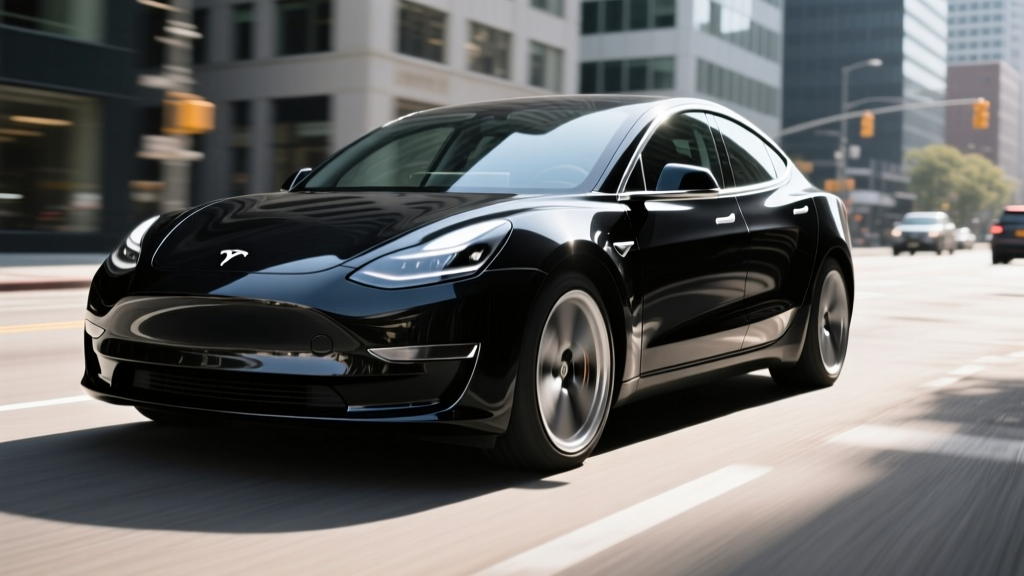
Some newer EVs supplement radar with camera-based detection. Tesla's vision-only approach (post-2022, after removing radar hardware) relies on its surround-view camera array and neural-network processing to identify vehicles in blind zones. While camera-based BSM has improved substantially with software updates, it remains more susceptible to degradation in heavy precipitation, lens obstruction from road grime, and low-light conditions compared to radar-based systems.
A handful of premium models employ sensor fusion—combining radar and camera data—to improve object classification accuracy and reduce false positives. This is more common in vehicles that also use these sensors for adaptive cruise control and automatic emergency braking.
| Sensor Type | Typical Range | Weather Robustness | Used By |
|---|---|---|---|
| 24 GHz Radar | ~15–30 ft lateral | Excellent (rain, fog, dark) | Hyundai, Kia, Toyota, Ford, BMW |
| 77 GHz Radar | ~15–50 ft lateral | Excellent | Mercedes, Audi, Volvo, Rivian |
| Camera (Vision-Only) | ~20–40 ft lateral | Moderate (degraded by rain, grime, dark) | Tesla (2022+ models) |
| Radar + Camera Fusion | ~15–50 ft lateral | Very Good | Genesis, select BMW/Mercedes trims |
Brand-Specific Naming, Availability, and Trim Coverage
Every major automaker markets blind spot monitoring under a proprietary name, and availability varies dramatically by trim level. On many mainstream EVs, BSM is standard from the mid-tier trim upward but absent on base models. On luxury EVs, it is typically standard across all trims. Here is how the major EV-relevant brands handle it as of the 2025–2026 model years:
| Brand | Feature Name | Standard / Optional | Example Models |
|---|---|---|---|
| Tesla | Blind Spot Camera / Monitoring | Standard on all trims (vision-based) | Model 3, Model Y, Model S, Model X, Cybertruck |
| Hyundai | Blind-Spot Collision-Avoidance Assist (BCA) | Standard on SEL and above; not on base SE | Ioniq 5, Ioniq 6, Kona Electric |
| Kia | Blind-Spot Collision-Avoidance Assist | Standard on S and above; base models omit | EV6, EV9, Niro EV |
| Ford | BLIS (Blind Spot Information System) | Standard on most trims; base may require package | Mustang Mach-E, F-150 Lightning |
| Chevrolet | Side Blind Zone Alert | Standard on 2LT/RS and above | Equinox EV, Blazer EV, Silverado EV |
| Rivian | Blind Spot Warning | Standard on all trims | R1S, R1T |
| BMW | Active Blind Spot Detection | Standard on most EV trims | i4, i5, i7, iX |
| Mercedes-Benz | Active Blind Spot Assist | Standard on most EV trims; part of Driver Assistance Package on some | EQE, EQS, EQB |
| Volvo / Polestar | Blind Spot Information System (BLIS) | Standard on all trims | EX30, EX90, Polestar 2, Polestar 3 |
| Toyota | Blind Spot Monitor (BSM) | Standard on most trims above base | bZ4X |
| Volkswagen | Side Assist / Blind Spot Monitor | Standard on Pro S and above | ID.4, ID.7 (announced) |
A critical point for budget-conscious buyers: on mainstream EVs like the Hyundai Ioniq 5 and Kia EV6, the base trim often omits BSM entirely. If blind spot monitoring is a non-negotiable feature, you may need to step up one or two trim levels, adding $3,000–$6,000 to the MSRP. Always verify the specific model-year spec sheet, as manufacturers occasionally reshuffle standard features between model years.
Real-World Limitations: Where BSM Falls Short
Blind spot monitoring is genuinely useful and has been shown to reduce lane-change crashes. A study by the Insurance Institute for Highway Safety (IIHS) found that vehicles equipped with BSM had approximately 14% fewer lane-change collisions compared to unequipped counterparts. But the technology has important limitations every EV owner should understand:
- Does not detect motorcycles or bicycles reliably. The radar cross-section of a motorcycle is far smaller than a passenger car. Many BSM systems will miss a motorcycle in the blind zone entirely. Shoulder checks remain essential.
- Does not monitor vehicles approaching rapidly from two lanes over. If a car changes lanes into your target lane from the far side, BSM may not alert you until that vehicle is already in the monitored zone—which may be too late.
- Does not function at very low speed differentials. Most radar-based systems filter out stationary objects and vehicles moving at nearly identical speeds to reduce false alerts. A car creeping alongside you in stop-and-go traffic may not trigger a warning.
- Camera-based systems degrade in bad weather. Tesla's vision-only BSM and similar camera-dependent implementations can struggle with heavy rain, snow accumulation on lenses, mud splash, and direct sun glare. Radar-based systems are far more robust in these conditions.
- Does not replace shoulder checks. BSM coverage typically starts at the B-pillar. A vehicle that is just barely behind your rear quarter panel may be in a gap between mirror visibility and sensor coverage.
- False alerts from guardrails and barriers. On tight highway curves or in construction zones, radar can reflect off concrete barriers and metal guardrails, producing nuisance warnings. Most systems filter these with software, but occasional false positives occur.
- Towing and accessories can block sensors. Hitch-mounted bike racks, cargo carriers, and trailers can physically obstruct rear-bumper-mounted radar units, rendering BSM inoperative. Check your owner's manual for sensor-clearance requirements.
In cold-weather EV ownership, another practical issue emerges: ice and packed snow accumulation on the rear bumper can attenuate radar signals. Many vehicles will display a "sensor blocked" warning and disable BSM until the bumper is cleared. This is not a malfunction—it is a normal limitation of the physics involved.
Cost: Purchase Price, Subscriptions, and Trim Premiums
Unlike advanced driver-assist packages such as Tesla's Full Self-Driving (Supervised) or GM's Super Cruise, blind spot monitoring is rarely sold as a standalone subscription. It is almost always bundled into the vehicle's hardware at the factory and included in the trim price. However, the cost of accessing BSM varies significantly depending on the brand and trim strategy:
| Brand | Cost Model | Approximate Trim Premium to Get BSM | Subscription Required? |
|---|---|---|---|
| Tesla | Included (standard) | $0 — standard on all trims | No |
| Hyundai | Trim-bundled | ~$3,000–$4,500 (SE → SEL) | No |
| Kia | Trim-bundled | ~$3,500–$5,000 (base → S/Light) | No |
| Ford | Trim-bundled or package | ~$2,000–$4,000 depending on model | No |
| Chevrolet | Trim-bundled | ~$3,000–$5,500 (base → 2LT/RS) | No |
| Rivian | Included (standard) | $0 — standard on all trims | No |
| BMW | Included or Driver Assistance Pkg | $0–$1,700 (package on base i4) | No |
| Mercedes-Benz | Included or Driver Assistance Pkg | $0–$2,500 (package on some EQ models) | No |
| Volvo / Polestar | Included (standard) | $0 — standard on all trims | No |
The takeaway: if BSM is important to you, budget for a mid-tier trim or a driver-assistance package. The incremental cost is typically $2,000–$5,500 over the base MSRP, but this step-up usually also includes rear cross-traffic alert, rear automatic emergency braking, and sometimes a 360-degree camera system—features that share the same sensor hardware.
Notably, no mainstream automaker currently charges a monthly subscription specifically for blind spot monitoring. This contrasts with higher-level features like Tesla's FSD ($99/month subscription or $8,000 one-time purchase as of early 2026) or GM's Super Cruise (three years included, then ~$25/month). BSM remains a one-time hardware purchase baked into the vehicle price.
BSM vs. Competing and Adjacent Systems
Blind spot monitoring is sometimes confused with more advanced lane-change assist features. It's important to distinguish them:
Passive BSM (warning only): Illuminates a mirror indicator and optionally chimes. The driver decides whether to proceed with the lane change. This is the most common implementation.
Active BSM (steering intervention): If you signal and begin changing lanes with a vehicle in the blind zone, the system applies gentle corrective steering torque to keep you in your lane. Hyundai calls this Blind-Spot Collision-Avoidance Assist (BCA). Mercedes calls it Active Blind Spot Assist. This is still Level 2—the system assists, but the driver can override it at any time by applying more steering force.
Lane Change Assist (highway): Some systems, like BMW's Active Lane Change Assistant or Mercedes' Active Lane Change Assist (part of Distronic), go further by initiating a lane change on command when the driver holds the turn signal and the system confirms the blind zone is clear. This is a higher-level convenience feature but still requires driver supervision and confirmation.
Tesla's approach: Tesla displays a live camera feed of the blind-spot area on the center touchscreen when the turn signal is activated. This visual augmentation, combined with audible warnings, is unique in the industry. However, because it relies entirely on cameras (no radar), it is more prone to temporary degradation in poor weather compared to radar-equipped competitors.
Safety Data and the Case for BSM
The safety case for blind spot monitoring is well-supported by crash data. According to the IIHS, BSM-equipped vehicles showed a 14% reduction in lane-change crashes and a 23% reduction in lane-change crashes with injuries. The National Highway Traffic Safety Administration (NHTSA) has included BSM in its recommended advanced driver-assistance technologies, though it does not mandate the feature.
For EV owners specifically, BSM addresses a unique concern: electric vehicles are significantly quieter than internal-combustion vehicles at low speeds. While this primarily affects pedestrian awareness, it also means that adjacent vehicles may not hear your EV approaching during a lane change. BSM provides a technology-based safety net that compensates for the reduced auditory cues that other drivers rely on.
However, it bears repeating: BSM is a supplement to, not a replacement for, proper mirror adjustment and shoulder checks. The IIHS rates vehicles with BSM more favorably in its safety assessments, but no testing body considers BSM sufficient as a standalone safety measure.
Frequently Asked Questions
Is blind spot monitoring the same as self-driving?
No. Blind spot monitoring is an SAE Level 1 (warning-only) or Level 2 (active intervention) driver-assistance feature. It does not steer, accelerate, or brake the vehicle autonomously. The driver must remain fully engaged, keep hands on the wheel, and make all lane-change decisions. Only Level 4 systems like Waymo's robotaxi service operate without a human driver—and those are not available in consumer vehicles.
Does Tesla's blind spot monitoring work as well as radar-based systems?
Tesla's vision-only BSM (using cameras and neural networks) has improved substantially through over-the-air software updates, and its live camera-feed display on the center screen is a genuinely useful feature. However, in heavy rain, snow, or when camera lenses are obstructed by road grime, camera-based detection is inherently less reliable than 77 GHz radar. If you regularly drive in adverse weather, a radar-equipped BSM system (Hyundai, Kia, Ford, BMW, Volvo) offers more consistent performance.
Can I add blind spot monitoring to my EV after purchase?
Factory-installed BSM is deeply integrated into the vehicle's electrical architecture, sensor suite, and mirror assemblies. Aftermarket BSM kits exist (typically $200–$500 plus installation), but they are radar-based add-ons with separate indicator lights and are not integrated into the vehicle's turn-signal logic or steering system. They provide basic warning functionality but lack the refinement and reliability of OEM systems. For most buyers, choosing the correct trim at purchase is the better path.
Does blind spot monitoring work when towing a trailer?
In most cases, no. Hitch-mounted trailers, bike racks, and cargo carriers physically block the rear-bumper-mounted radar sensors that BSM depends on. Many vehicles will automatically detect the obstruction and display a "sensor blocked" message, disabling BSM and rear cross-traffic alert. Some premium systems (e.g., on the Ford F-150 Lightning with the tow package) offer trailer-length calibration to extend the monitoring zone, but this requires factory-integrated trailer wiring and setup.
Why does my BSM give false alerts near guardrails?
Radar-based BSM systems can reflect off metal guardrails, concrete barriers, and sound walls—especially on tight highway curves where the barrier angle changes rapidly relative to the sensor. Modern systems use software filtering to distinguish moving vehicles from stationary infrastructure, but brief false alerts can still occur in construction zones or on sharply curving roads. This is a known limitation of radar physics, not a malfunction.
Is BSM included in the federal EV tax credit calculation?
Blind spot monitoring is part of the vehicle's MSRP and does not affect §30D tax credit eligibility on its own. The federal EV tax credit (up to $7,500 for new EVs in 2026) depends on the vehicle's total MSRP (must be under $55,000 for sedans, $80,000 for SUVs/trucks/vans), your adjusted gross income, and battery-component/critical-mineral sourcing requirements. See IRS.gov for current eligibility rules. Stepping up to a higher trim for BSM could push a borderline vehicle over the MSRP cap, so verify before configuring.