What Blind Spot Cameras Actually Do — and Don't Do
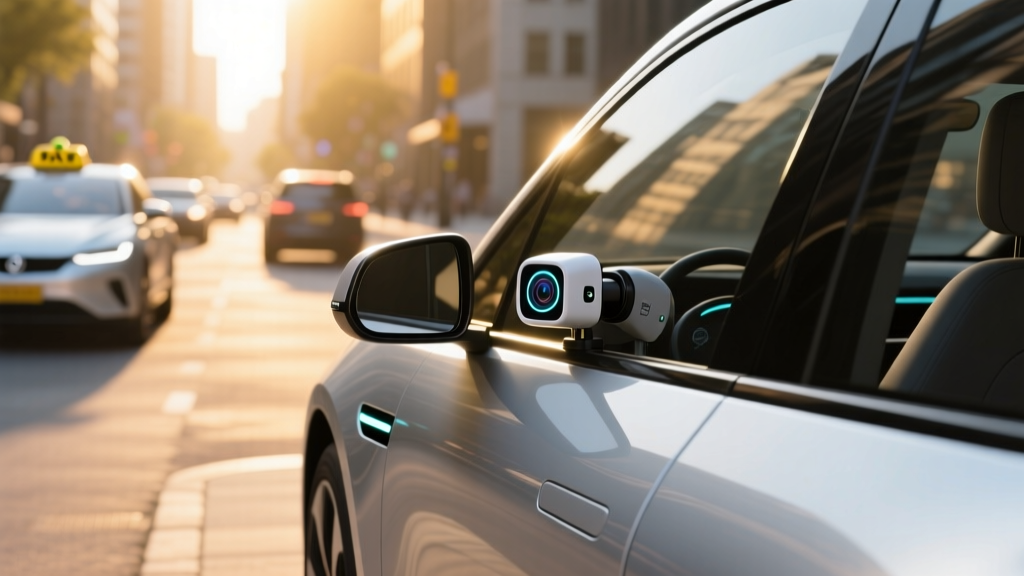
Blind spot cameras are a subset of advanced driver-assistance systems (ADAS) that use wide-angle cameras, typically mounted on or near the side mirrors, to capture live video of the zones alongside and slightly behind your vehicle. When you activate a turn signal or manually trigger the system, the camera feed is displayed on the instrument cluster or center screen, showing you what traditional mirrors cannot.
Unlike basic blind spot monitoring (BSM) — which uses radar sensors to detect vehicles and illuminate a warning light in the mirror housing — blind spot cameras provide a visual, real-time video feed. Some systems go further, integrating with rear cross-traffic alert, lane-change assist, and even automatic steering intervention to prevent a collision.
But here is what blind spot cameras do not do: they do not drive the car for you. They are a Level 2 driver-assist feature, meaning the driver must remain fully engaged, hands on the wheel, and eyes on the road at all times.
Blind spot cameras fall under SAE Level 1 (information/warning only) or Level 2 (when paired with active lane-change intervention). At no point does the system assume full driving responsibility. The driver must supervise, verify the lane is clear, and execute or confirm the lane change. This is not autonomous driving — that designation begins at Level 4, currently limited to geofenced robotaxi services like Waymo.
How the Technology Works: Cameras, Radar, and Sensor Fusion
Modern blind spot camera systems rarely rely on cameras alone. Most automakers use a sensor-fusion approach that combines multiple inputs:
- Wide-angle cameras (190°+ field of view): Mounted under or beside each side mirror, these capture the blind zone that mirrors miss. Resolution typically ranges from 1.2 to 3 megapixels, with low-light enhancement for night driving.
- Short-range radar (24 GHz or 77 GHz): Mounted behind the rear bumper corners, radar detects moving objects up to ~70 meters back and feeds data to the blind spot warning system. Radar works in rain, fog, and darkness where cameras struggle.
- Ultrasonic sensors: Used at low speeds (under ~20 mph) for close-proximity detection during parking or tight lane changes.
- ECU processing: A dedicated ADAS computer fuses camera and radar data, classifies objects (car, truck, motorcycle, cyclist), and determines whether to issue a warning or intervene with steering or braking.
When you signal a lane change, the system cross-references camera imagery with radar returns. If a vehicle is detected in the target lane, you get escalating alerts: first a mirror indicator light, then an audible chime, and in some systems (like Hyundai's Blind-Spot Collision-Avoidance Assist), a brief steering torque to keep you in your lane.
Which EVs Offer Blind Spot Cameras? Brand-by-Brand Breakdown
Not all blind spot systems include a camera feed. Many EVs offer radar-based BSM with mirror indicator lights but no live video. Below is a comparison of systems that specifically include a camera view on the dashboard or center display.
| Brand / System Name | Models (2025–2026) | Camera Feed? | Active Intervention? | Standard / Optional |
|---|---|---|---|---|
| Hyundai / Kia — Blind Spot View Monitor (BVM) | Ioniq 5, Ioniq 6, EV6, EV9 | Yes — shows in instrument cluster on turn signal | Yes (BCA — Blind-Spot Collision-Avoidance) | Standard on SEL/Limited; not on base SE |
| Honda — LaneWatch (discontinued) / BSM with camera | Prologue (2025–2026) | Partial — right-side camera on turn signal (select trims) | Yes (Honda Sensing suite) | Standard on Touring trim |
| Genesis — Blind Spot View Monitor | GV60, Electrified GV70, Electrified G80 | Yes — full cluster feed on signal | Yes (BCA with steering assist) | Standard on all trims |
| Tesla — Autopilot BSM | Model 3, Model Y, Model S, Model X, Cybertruck | No live camera feed on signal; camera view available via app/visualization | Yes (Auto Lane Change with FSD) | BSM standard; FSD requires $8,000 purchase or $99/mo subscription |
| Ford / Lincoln — BLIS (Blind Spot Information System) | Mustang Mach-E, F-150 Lightning | No camera feed — radar-based mirror indicators | Yes (Cross-Traffic Alert + trailer coverage) | Standard on Premium/Lariat and above |
| Rivian — Blind Spot Warning | R1T, R1S (2025+ refresh) | No dedicated camera feed; camera-based visualization in drive display | Yes (Highway Assist lane-keeping) | Standard on all trims |
The clear leaders in dedicated blind spot camera feeds are Hyundai Motor Group brands (Hyundai, Kia, Genesis), which project a live video image directly into the digital instrument cluster when you activate a turn signal. This is the closest thing to "looking over your shoulder" without actually turning your head.
Real-World Capabilities and Limitations
In controlled testing, blind spot camera systems perform well. But real-world driving introduces variables that spec sheets don't capture.
- Rain, snow, and road spray: Camera lenses mounted on mirror housings accumulate water and grime. In heavy rain, image clarity degrades significantly. Radar-based BSM continues to function, but the camera feed may become unusable.
- Direct sunlight glare: Low-angle sun (dawn/dusk) can wash out camera sensors, especially on the sun-facing side of the vehicle.
- Motorcycle and bicycle detection: Narrow-profile objects are harder for both cameras and radar to classify. NHTSA has documented cases where BSM systems failed to detect approaching motorcycles (NHTSA ADAS Overview).
- High-speed differentials: If a vehicle approaches from behind at 30+ mph faster than your speed, the system may not alert in time. These systems are calibrated for typical highway speed differentials (5–15 mph).
- Lane marking dependency (active intervention): Systems that steer you back into your lane require visible lane markings. Faded lines, construction zones, and snow-covered roads defeat the intervention feature.
- Display distraction: Glancing at a camera feed on the instrument cluster pulls your eyes off the road ahead. Studies by the IIHS have raised concerns about over-reliance on camera displays replacing proper mirror checks and shoulder checks.
In cold-weather driving (below 32°F / 0°C), camera lenses can ice over, particularly in freezing rain or slush conditions. Hyundai and Genesis include a camera-lens heater on some models, but this is not universal. Tesla's side repeater cameras, used for Autopilot visualization, have been known to fog in rapid temperature changes.
Cost Breakdown: What You'll Pay for Blind Spot Camera Systems
Pricing varies dramatically depending on whether the blind spot camera is bundled into a trim level, part of an optional package, or tied to a subscription service.
| Brand | Cost Structure | Estimated Cost | Notes |
|---|---|---|---|
| Hyundai (Ioniq 5/6) | Included in trim | $0 additional (SEL trim starts ~$47,400 for Ioniq 5) | Not available on base SE; requires SEL or above |
| Kia (EV6/EV9) | Included in trim | $0 additional (GT-Line starts ~$54,000 for EV6) | Standard on GT-Line and above |
| Genesis (GV60) | Standard on all trims | $0 additional (base ~$53,350) | All Genesis EVs include BVM standard |
| Honda (Prologue) | Included in Touring trim | $0 additional (Touring ~$51,900) | Lower trims have BSM without camera feed |
| Tesla (all models) | BSM standard; camera visualization + auto lane change with FSD | $8,000 one-time or $99/month subscription (FSD) | Basic BSM alerts are free; FSD adds auto lane change |
| Ford (Mach-E / Lightning) | Included in trim (no camera feed) | $0 additional (Premium trim) | Radar-based only; BlueCruise adds hands-free but not blind spot camera |
The takeaway: if a dedicated blind spot camera feed is a priority, Hyundai Motor Group vehicles (Hyundai, Kia, Genesis) offer it as standard equipment on mid-to-high trims with no subscription required. Tesla's system is more capable in terms of automated lane changes, but requires a significant additional investment for FSD — and still does not display a dedicated blind spot camera feed on the screen when signaling.
Blind Spot Cameras vs. Traditional BSM vs. Tesla's Approach
It helps to distinguish three tiers of blind spot technology available in 2026 EVs:
| Feature Tier | How It Works | Driver Action Required | Examples |
|---|---|---|---|
| Tier 1: BSM Warning Only | Radar detects vehicles; indicator light in mirror housing illuminates | Driver checks mirror, decides whether to change lanes | Ford BLIS, Rivian BSW, base Tesla BSM |
| Tier 2: BSM + Camera Feed | Radar warning + live camera video on instrument cluster or center display | Driver glances at display and mirror, decides whether to change lanes | Hyundai BVM, Kia BVM, Genesis BVM, Honda LaneWatch-style |
| Tier 3: BSM + Active Intervention | System detects threat and applies steering torque or braking to prevent lane change into a vehicle | Driver must still monitor; system intervenes only as a last resort | Hyundai BCA, Tesla Auto Lane Change (FSD), Honda Sensing LCA |
Tesla's approach is unique: rather than a dedicated blind spot camera feed, the Autopilot system uses its surround-camera array (including side repeaters) to build a real-time 3D visualization of surrounding vehicles on the center display. When FSD (Supervised) is active and you signal a lane change, the car evaluates the gap, checks for approaching vehicles using camera and neural-net processing, and executes the lane change automatically — while you remain responsible for supervising the maneuver.
Hyundai's approach is more traditional and arguably more intuitive: a clear, full-screen camera image appears in the instrument cluster exactly where you'd naturally look when checking a blind spot. There's no subscription, no neural network, just a camera showing you what's there.
Safety Data and Regulatory Context
According to the Insurance Institute for Highway Safety (IIHS), blind spot warning systems reduce lane-change crashes by approximately 14% and lane-change injuries by 23%. When paired with active intervention (automatic steering or braking), the reduction is likely higher, though large-scale studies are still underway.
The National Highway Traffic Safety Administration (NHTSA) classifies blind spot systems as "crash avoidance technologies" and emphasizes that they supplement — not replace — driver awareness. NHTSA's NCAP program includes BSM as a recommended technology but does not require it for a 5-star rating.
One area of concern: camera-based systems can create a false sense of security. Drivers may begin relying solely on the camera feed and stop performing physical shoulder checks. IIHS research has shown that drivers using ADAS features like blind spot cameras tend to engage in more secondary tasks (phone use, adjusting controls), assuming the system will catch everything. It won't — especially in edge cases involving fast-approaching motorcycles, emergency vehicles, or debris.
Decision Framework: Which System Is Right for You?
- You want a dedicated live camera feed without a subscription
- You frequently drive in dense urban traffic with tight lane changes
- You prefer a traditional, easy-to-understand visual aid
Choose Tesla with FSD if:
- You want the system to actively execute lane changes for you (with supervision)
- You're comfortable with a camera-only (no radar) approach to object detection
- You're willing to pay $8,000 or $99/month for the full FSD suite
Stick with basic BSM (Ford, Rivian, others) if:
- You prefer to make your own lane-change decisions with a simple mirror-indicator warning
- You don't want to pay extra for camera feeds or subscriptions
- You drive primarily in fair weather where camera limitations are less relevant
Frequently Asked Questions
Are blind spot cameras the same as blind spot monitoring?
No. Blind spot monitoring (BSM) uses radar to detect vehicles and alerts you with a warning light in the mirror housing. Blind spot cameras add a live video feed, typically displayed on the instrument cluster or center screen, so you can visually confirm what's in your blind zone. Many EVs have BSM without a camera feed.
Do blind spot cameras work at night?
Yes, but with reduced clarity. Modern blind spot cameras use low-light enhancement and IR-sensitive sensors, but image quality in unlit rural roads is noticeably worse than daytime. Radar-based BSM works identically day or night, which is why most systems use both.
Is Tesla's blind spot system better than Hyundai's?
They serve different purposes. Hyundai's BVM gives you a clear, dedicated camera image on the instrument cluster — simple and effective. Tesla's system provides a surround-visualization and, with FSD, can automatically execute lane changes. Tesla's is more automated; Hyundai's is more transparent and doesn't require a subscription. Neither replaces driver attention.
Can I add blind spot cameras to my EV after purchase?
Generally, no. OEM blind spot camera systems are integrated into the vehicle's ADAS computer, mirror housings, and instrument cluster display. Aftermarket camera kits exist (typically $200–$500 installed), but they lack sensor fusion with radar and cannot provide active steering intervention. For safety-critical features, OEM systems are strongly preferred.
Do I still need to check my mirrors and do a shoulder check?
Yes — always. Both NHTSA and IIHS emphasize that blind spot cameras and BSM are supplements to, not replacements for, proper mirror checks and shoulder checks. Cameras can miss fast-approaching motorcycles, emergency vehicles, and debris. The system is a safety net, not a substitute for attentive driving.
Does using blind spot cameras affect my insurance rate?
Some insurers offer small discounts (typically 3–8%) for vehicles equipped with ADAS features including BSM and blind spot cameras. Check with your provider — discounts vary by carrier and state. The vehicle must typically have the feature documented on the window sticker or build sheet.