When analysts and EV watchers ask about the global robotaxi race, one question keeps surfacing: how large is Baidu's Apollo Go fleet, really? The query baidu apollo go robotaxi fleet size 2023 spiked as the company crossed major ride-volume milestones, but the numbers only tell half the story. To understand where Apollo Go stands in 2026 — and whether it's a credible alternative to Waymo, Cruise's rebooted operations, or Zoox — you need the fleet data alongside autonomy level, safety records, pricing, and the regulatory framework that keeps these vehicles on the road.
This profile pulls together Baidu's disclosed figures, third-party reports, and regulatory filings to give you a precise picture of Apollo Go's scale, technology, and real-world readiness.
Fleet Size Trajectory: 2023 Baseline to 2026 Operations
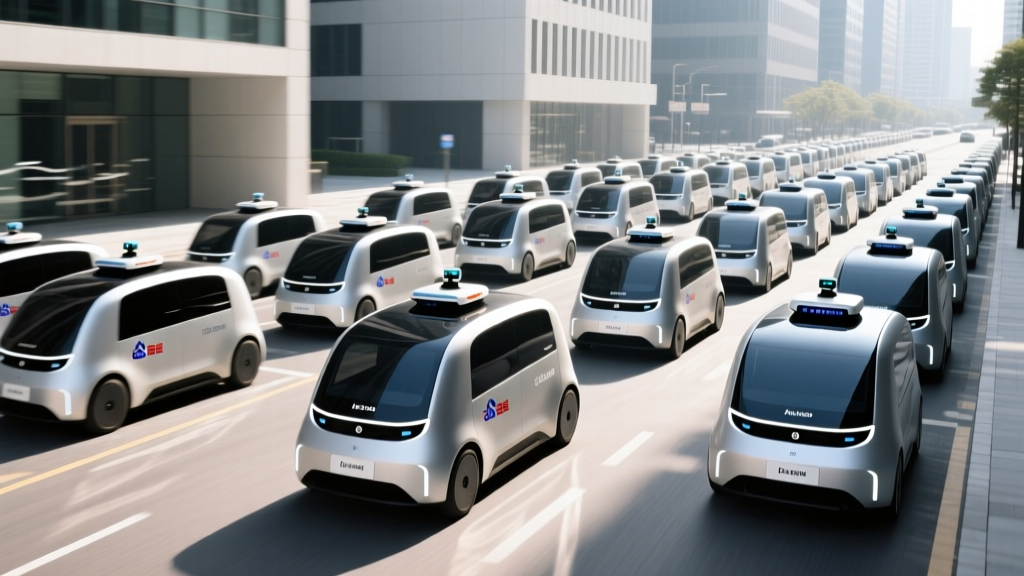
By the end of 2023, Baidu reported operating over 1,000 robotaxis across its Apollo Go network, with the bulk concentrated in Wuhan, Beijing, Chongqing, and Shenzhen. The company had completed more than 5 million cumulative rides by late 2023, a figure that made it the largest robotaxi operator globally by ride count at the time.
Here's how the fleet has scaled since:
| Year | Estimated Fleet Size | Cumulative Rides | Key Cities Added |
|---|---|---|---|
| 2022 | ~500 vehicles | ~1 million | Wuhan (pilot), Chongqing (pilot) |
| 2023 | 1,000+ vehicles | 5+ million | Shenzhen, Shanghai expansion |
| 2024 | 1,500–2,000 vehicles | 9+ million | Wuhan full-city coverage |
| 2025 | 2,000–3,000 vehicles | 15+ million | Hefei, additional tier-2 cities |
| 2026 (current) | ~3,000+ vehicles (est.) | 20+ million (est.) | Expanded Wuhan, Beijing zones |
Wuhan remains Apollo Go's flagship market. By mid-2024, Baidu had deployed a fleet large enough to cover most of the city's urban core, making it the first municipality where a single robotaxi operator achieved near-citywide availability. That concentration matters for understanding utilization rates and per-vehicle economics — metrics Baidu has cited when discussing a path to unit-level profitability.
SAE Autonomy Level: What Apollo Go Actually Is
Apollo Go robotaxis operate at SAE Level 4 within approved geofenced zones. This means the vehicle handles all driving tasks — steering, acceleration, braking, route navigation, and hazard response — without any human driver in the loop. If the system encounters a scenario it cannot handle, it executes a minimal-risk maneuver (pulling over safely) rather than handing control to a passenger.
This is fundamentally different from SAE Level 2 consumer systems like Tesla Autopilot, GM Super Cruise, or Ford BlueCruise, which require continuous driver supervision. Apollo Go passengers are riders, not drivers.
| Level | Name | Driver Required? | Examples |
|---|---|---|---|
| Level 2 | Partial Automation | Yes — full attention | Tesla Autopilot/FSD (Supervised), BlueCruise, Super Cruise |
| Level 3 | Conditional Automation | No, in specific conditions | Mercedes Drive Pilot (limited markets) |
| Level 4 | High Automation | No — within geofence | Baidu Apollo Go, Waymo One, Zoox |
| Level 5 | Full Automation | No — anywhere | None commercially deployed |
Where Apollo Go Operates Today
Apollo Go's service footprint is entirely within mainland China, governed by municipal-level autonomous driving permits. Here's the current operational map:
| City | Status | Coverage Area | Operating Hours |
|---|---|---|---|
| Wuhan | Fully operational | ~300+ sq km urban core | 24/7 in most zones |
| Beijing (Yizhuang) | Fully operational | ~60 sq km demonstration zone | 6:00 AM – 11:00 PM |
| Chongqing | Operational | Designated zones (Yongchuan) | Daytime hours |
| Shenzhen | Operational | Qianhai and select districts | Extended hours |
| Shanghai (Jiading) | Operational | Demonstration area | Daytime/evening |
| Hefei | Expansion phase | Limited zones | Daytime hours |
| Guangzhou | Limited pilot | Nansha district | Restricted hours |
Where can I use this robotaxi service right now? If you're in the United States or Europe, the answer is: you can't. Apollo Go is not available outside China. For US-based readers, Waymo One (Phoenix, San Francisco, Los Angeles, and expanding) remains the closest Level 4 equivalent. Apollo Go is relevant to the global EV and autonomy conversation because of its scale and data volume — not because it's a ride option for Western consumers.
Technology Stack: Sensors, Compute, and the 6th-Gen Vehicle
Baidu's current robotaxi fleet primarily uses the 6th-generation Apollo vehicle, built on a customized electric platform (co-developed with JMC/Jiangling based on the Renault-based Yiwei EV architecture). Here's what's under the hood — technologically, not literally:
- LiDAR: 4 roof-mounted solid-state LiDAR units (360° coverage, ~200m range)
- Cameras: 12 high-resolution cameras (perception, traffic-light reading, lane detection)
- Radars: 5 millimeter-wave radars (redundant object detection, all-weather)
- Ultrasonic sensors: 12 units (close-range, parking, low-speed obstacle avoidance)
- Compute: Custom Baidu Apollo computing unit, ~1,200 TOPS processing power
- HD Maps: Centimeter-level pre-mapped routes, updated continuously via fleet data
- V2X: Vehicle-to-infrastructure communication in supported zones (traffic-signal integration)
- Powertrain: Full BEV, ~55–65 kWh LFP battery, ~250 km (155 mi) operational range
Unlike Tesla's camera-only approach for its Level 2 FSD (Supervised) system, Baidu relies on a sensor-fusion stack combining LiDAR, cameras, and radar. This is consistent with Waymo's approach and reflects the industry consensus that Level 4 geofenced operations benefit from hardware redundancy. The LiDAR units are critical for depth perception in complex urban environments — unprotected left turns, mixed pedestrian/e-bike traffic, and construction zones.
The 6th-gen vehicle's hardware cost has dropped significantly compared to earlier generations. Baidu has cited a per-vehicle sensor and compute cost of approximately ¥250,000 (~$35,000 USD), down from over ¥1 million for the 3rd-gen vehicles. That cost reduction is the primary enabler of fleet scaling: you can't deploy 3,000 vehicles if each one carries $150,000 in rooftop hardware.
Pricing: Apollo Go vs. Uber, Lyft, and Waymo
One of Apollo Go's most aggressive strategies has been pricing. Baidu has subsidized rides heavily to build ridership and collect real-world data. Here's how the economics compare:
| Service | Market | Avg. Short Ride (5 km / 3 mi) | Avg. Medium Ride (15 km / 9 mi) | Surge Pricing? |
|---|---|---|---|---|
| Baidu Apollo Go | Wuhan, China | ¥4–10 (~$0.55–$1.40) | ¥15–25 (~$2.10–$3.50) | No |
| Didi (human driver) | Wuhan, China | ¥12–18 (~$1.70–$2.50) | ¥25–40 (~$3.50–$5.60) | Yes |
| Waymo One | San Francisco, US | $10–$15 | $20–$35 | Limited |
| UberX | San Francisco, US | $12–$18 | $22–$40 | Yes |
| Lyft | Los Angeles, US | $10–$16 | $20–$38 | Yes |
How much does it cost vs Uber/Lyft? In its Chinese markets, Apollo Go is dramatically cheaper than human-driven rideshare — often 50–70% less per ride. This is not sustainable long-term; Baidu has acknowledged the subsidies and framed them as customer-acquisition costs during the scaling phase. The company has stated that unit economics turn positive at approximately 20+ rides per vehicle per day, a threshold it claims to have approached in Wuhan's busiest zones by late 2024.
For comparison, Waymo One in the US prices rides roughly at parity with Uber/Lyft (sometimes slightly higher, sometimes lower depending on distance and time). The gap between Apollo Go's China pricing and Waymo's US pricing reflects labor-cost differences, subsidy strategies, and market maturity — not a fundamental cost advantage of Baidu's technology.
Safety Record: What the Data Shows
- Cumulative autonomous miles: 100+ million km (~62 million miles) across the fleet
- Reported at-fault collisions: Baidu reports zero fatal or serious-injury incidents involving Apollo Go robotaxis in fully driverless mode through 2025
- Disengagement rate: Baidu has reported remote-assistance intervention rates below 0.1 per 1,000 km in mature operating zones (Wuhan core), though exact methodology is not independently audited to the same standard as California DMV disengagement reports
- Minor incidents: Low-speed contact events (e.g., sideswipes by human drivers, stationary-object proximity) have been reported in local media but without systemic pattern evidence
How safe are robotaxis (real data)? The honest answer requires nuance. Baidu's safety record, as self-reported, is strong — no fatalities or serious injuries attributed to the autonomous system in driverless operations. That aligns with Waymo's published data, which has shown robotaxi-involved collision rates below human-driver baselines in comparable urban environments.
However, a critical caveat: China does not have an equivalent to the NHTSA Standing General Order that requires US-based operators to report every crash involving an ADS-equipped vehicle. Baidu publishes periodic safety white papers, but the granularity and independent verification fall short of what regulators in California (via the DMV and CPUC) require of Waymo and Cruise.
What we can say with confidence: Apollo Go's scale — tens of millions of rides across dense, chaotic Chinese urban traffic — represents one of the largest real-world Level 4 datasets in existence. That volume is itself a safety signal, even if the reporting framework differs from Western standards.
Regulatory Framework: Who Approves Apollo Go?
Robotaxi regulation in China operates at the municipal level, not the federal level. Each city establishes its own demonstration zones, testing requirements, and commercial-operation permits. Key regulatory bodies include:
- Beijing: Beijing High-Level Autonomous Driving Demonstration Area (BJHAD) — issues phased permits from testing → front-seat safety driver → rear-seat safety → fully driverless
- Shanghai: Shanghai Intelligent Connected Vehicle pilot zone (Jiading)
- Shenzhen: First Chinese city to pass a dedicated autonomous driving regulation (August 2022), establishing a legal liability framework for driverless vehicles
- Wuhan: Aggressive municipal support; expanded geofence zones rapidly from 2023–2025
The Shenzhen regulation was particularly significant: it established that in a fully driverless vehicle, the vehicle owner/operator bears liability in the event of an accident — not a human driver (since there isn't one). This legal clarity enabled Baidu to scale driverless operations without the regulatory ambiguity that slowed early US deployments.
For US context, compare this to the patchwork of state-level regulation: California (DMV + CPUC permits), Arizona (minimal state oversight, which enabled Waymo's early Phoenix launch), and a federal landscape where NHTSA sets vehicle safety standards but has not established a comprehensive ADS operations framework.
Current Limitations: Where Apollo Go Cannot Go
What are the current limitations? Despite its scale, Apollo Go faces constraints that every Level 4 system shares:
- Geofencing: Vehicles operate only within pre-mapped, approved zones. A ride from Wuhan's Hanyang district to an unmapped suburb is not possible — the app simply won't allow it.
- Weather: Heavy rain, fog, and snow degrade LiDAR and camera performance. Apollo Go reduces operating speed or suspends service in severe conditions, similar to Waymo's rain-protocol in San Francisco.
- Construction zones: Unmapped road changes require HD-map updates. If a new construction zone appears overnight, the fleet may avoid that segment until the map is refreshed — sometimes hours, sometimes days.
- Complex multi-point interactions: Informal traffic scenarios common in Chinese cities — unmarked e-bike swarms, vendors occupying lanes, ad-hoc detours — can trigger conservative behavior (pulling over, requesting remote assistance).
- No highway operations: Apollo Go currently operates on surface streets only. Highway merging at 100+ km/h is not part of the operational design domain (ODD).
- Accessibility: Current vehicles require passengers to enter/exit independently. Wheelchair-accessible robotaxi variants are not yet in widespread deployment.
- No cross-city trips: Each city's geofence is independent. You cannot take an Apollo Go from Wuhan to Changsha — these are separate operational islands.
Is this truly self-driving or driver-assist? Within its operational domain, Apollo Go is genuinely self-driving — SAE Level 4, no human in the loop, no steering wheel accessible to the passenger. This is not driver-assist. However, "self-driving" does not mean "can drive anywhere in any condition." The geofence, weather restrictions, and HD-map dependency are real boundaries. Outside those boundaries, the vehicle stops — it does not degrade to a Level 2 mode that hands you the wheel, because there is no driver seat with controls.
Frequently Asked Questions
Can I ride an Apollo Go robotaxi in the United States?
No. Apollo Go operates exclusively in mainland China. There are no announced plans for US or European deployment. If you want a Level 4 robotaxi ride in the US, Waymo One (Phoenix, SF, LA) is your primary option as of 2026.
How does Apollo Go's fleet size compare to Waymo's?
As of 2025–2026, Waymo operates approximately 1,000–1,500 vehicles across its US markets. Apollo Go's fleet is estimated at 2,000–3,000+ vehicles, making it larger by unit count. However, direct comparison is difficult: Wuhan's traffic complexity, regulatory environment, and subsidy structure differ enormously from San Francisco or Phoenix.
What vehicle platform does Apollo Go use?
The current 6th-generation Apollo Go vehicle is a purpose-built electric minivan/MPV, co-developed with JMC (Jiangling Motors) using an EV platform. It features sliding doors, a rear-seat passenger display, and no driver controls. Earlier generations used modified Lincoln MKZ and GAC Aion vehicles.
Does Apollo Go use Tesla's camera-only approach?
No. Apollo Go uses a multi-sensor fusion stack: 4 LiDAR units, 12 cameras, 5 radars, and 12 ultrasonic sensors. This is closer to Waymo's approach than Tesla's vision-only FSD (Supervised). The redundancy is considered essential for Level 4 operations where no human driver is available as a fallback.
How does Baidu make money on rides that cost under $2?
At current subsidized pricing, Baidu is not profitable per ride. The company frames low pricing as a customer-acquisition and data-collection strategy. Path-to-profitability modeling assumes higher utilization (20+ rides/vehicle/day), gradual price increases as the service matures, and hardware-cost reductions with each vehicle generation. Baidu has indicated that some Wuhan zones are approaching unit-level break-even as of 2025.
What happens if an Apollo Go vehicle encounters an emergency?
The vehicle executes a minimal-risk maneuver — typically pulling to the curb and stopping. A remote operations center monitors the fleet and can provide guidance or take remote control at low speed if needed. Passengers can contact support via the in-vehicle screen or the Apollo Go app. Emergency services can be dispatched through the app's built-in SOS function.