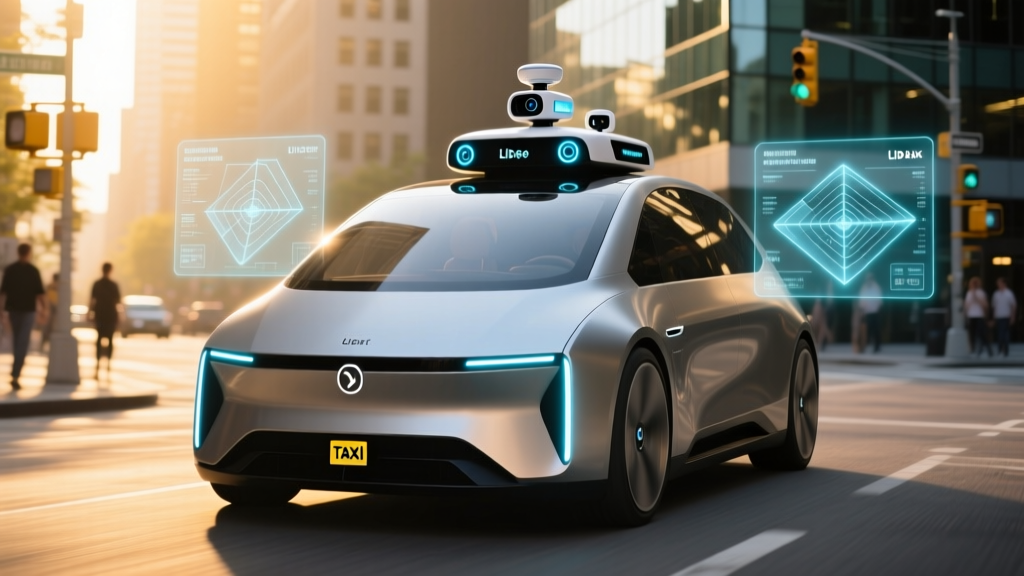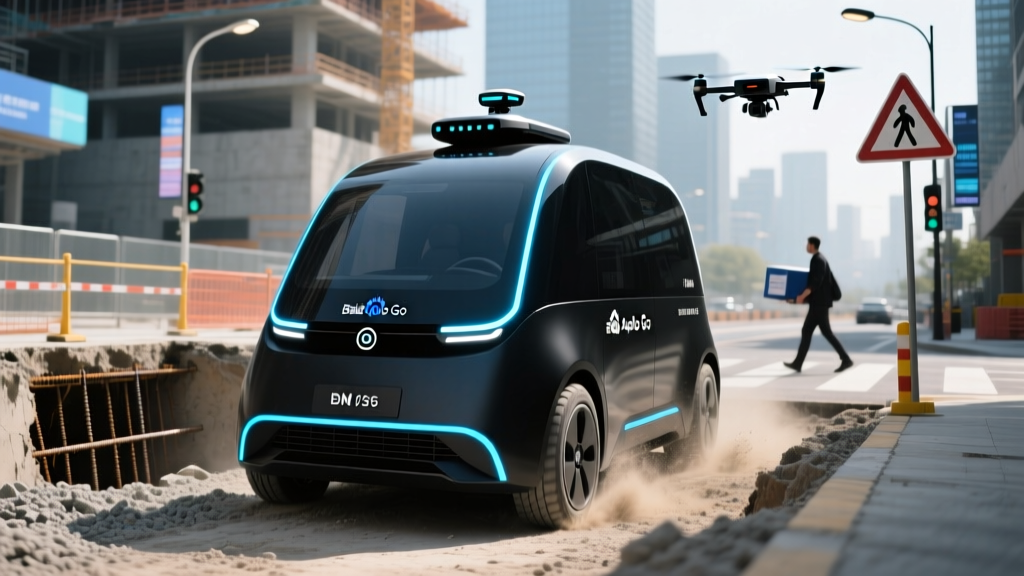
Baidu's Apollo Go (known as 萝卜快跑, or "Luobo Kuaipao," in China) is the world's largest robotaxi fleet by ride volume. By early 2026, the service has logged tens of millions of fully driverless trips across more than a dozen Chinese cities. But a recurring question from observers and prospective riders alike centers on a very specific — and very common — urban obstacle: the construction pit.
Road construction zones, open utility trenches, and temporary lane shifts are among the hardest edge cases for any Level 4 autonomous system. This article examines how Apollo Go handles these scenarios, what the safety data actually shows, where you can ride today, and where the system's hard limits remain.
SAE Level 4: What Apollo Go Actually Is (and Isn't)
Before evaluating construction-zone performance, it's critical to understand what Apollo Go is classified as under the SAE J3016 automation framework.
| Level | Name | Driver Required? | Examples |
|---|---|---|---|
| Level 2 | Partial Automation | Yes — hands on, eyes on | Tesla Autopilot, GM Super Cruise, Ford BlueCruise |
| Level 3 | Conditional Automation | Yes — eyes off in limited conditions | Mercedes Drive Pilot (highway traffic jams, ≤40 mph) |
| Level 4 | High Automation | No — within geofenced ODD | Baidu Apollo Go, Waymo One, Zoox |
| Level 5 | Full Automation | No — anywhere, any condition | Does not exist commercially |
Where Can You Use Apollo Go Right Now?
Unlike Waymo, which operates in a handful of U.S. metro areas, Apollo Go's footprint is entirely within mainland China. As of early 2026, fully driverless (no in-car safety driver) commercial service is live in the following cities:
| City | Service Type | Operating Hours | Notes |
|---|---|---|---|
| Wuhan | Fully driverless | ~24 hours | Largest fleet; 500+ vehicles; broadest coverage area |
| Beijing (Yizhuang) | Fully driverless | ~24 hours | Started in designated zones; expanding to more districts |
| Chongqing | Fully driverless | Daytime/evening | Challenging hilly terrain; limited geofence |
| Shenzhen | Fully driverless | Extended hours | Regulatory pioneer — first Chinese city to pass L4 robotaxi legislation |
| Shanghai (Jiading) | Fully driverless | Daytime/evening | Specific suburban district; expanding |
| Guangzhou | Fully driverless | Daytime/evening | Nansha district primary zone |
| Changsha | Mixed (some with safety driver) | Limited hours | Earlier test market |
Baidu has announced intentions to expand to additional cities and to begin limited international pilots, but as of this writing, no Apollo Go service operates outside mainland China. If you're in the U.S. or Europe, you cannot currently hail an Apollo Go ride.
The Construction Pit Problem: How Apollo Go Handles Road Disruptions
Construction pits — open trenches for utility work, building foundations adjacent to roadways, or lane excavations — represent a specific category of "edge case" that tests the limits of any autonomous driving system. Here's why they're difficult:
- Map staleness: HD maps used by L4 systems reflect the road as it was when last surveyed. A construction pit that appeared overnight isn't in the map.
- Irregular geometry: Construction zones don't follow standard lane markings. Cones, barriers, steel plates, and temporary shifts create non-standard drivable-space boundaries.
- Depth perception challenge: An open pit (as opposed to a flat construction zone) requires the system to recognize a negative obstacle — a drop-off — not just an object protruding upward.
- Unpredictable workers: Human construction workers move unpredictably near the vehicle's path, requiring conservative behavior.
Apollo Go's Approach to Construction Zones
Baidu's Apollo system uses a multi-layered strategy for encountering construction areas:
- Pre-trip route validation: Before dispatching a vehicle, the fleet management system cross-references known construction permits and reported road closures against the planned route. If a known construction pit blocks the route, the system reroutes before the ride begins.
- Real-time perception: The vehicle's sensor suite (detailed below) detects unexpected obstacles — cones, barriers, open trenches — in real time. The perception stack classifies objects and estimates drivable space.
- Conservative fallback: When the system cannot confidently navigate through or around a construction zone, it executes a minimal-risk maneuver: pulling to the side of the road, activating hazards, and escalating to a remote safety operator via teleoperation.
- Remote teleoperation: A human operator in Baidu's cloud control center reviews the vehicle's camera and lidar feeds and can either guide the vehicle through the zone at low speed or authorize a reroute/ride cancellation.
In practice, this means Apollo Go vehicles will sometimes stop and wait near construction pits rather than attempt to navigate around them autonomously. This is by design — the system prioritizes safety over trip completion speed. Riders may experience delays of 2–8 minutes when teleoperation is triggered.
Technology Stack: Sensors, Compute, and Mapping
- LiDAR: 4+ solid-state units (roof-mounted and corner positions), providing 360° point-cloud coverage up to ~200 meters
- Cameras: 12+ high-resolution units covering all directions; used for lane detection, traffic light recognition, and object classification
- Millimeter-wave radar: 5 units for velocity detection of moving objects and all-weather redundancy
- Ultrasonic sensors: Short-range proximity detection for low-speed maneuvering
- GNSS/IMU: High-precision positioning (centimeter-level with RTK correction) fused with inertial measurement
- HD Maps: Centimeter-accuracy maps updated regularly; used as a prior for localization and route planning
- Compute: Custom Baidu autonomous driving computer; reported >1000 TOPS of processing capacity
This is a lidar-forward, sensor-fusion architecture — fundamentally different from Tesla's camera-only approach. The lidar units are particularly relevant for construction pit detection: they can identify negative obstacles (drop-offs, trenches) that cameras alone might struggle to classify, especially in low-light conditions or when shadows obscure depth cues.
However, lidar has limits. Reflective surfaces (standing water in a pit, polished steel plates) can produce noisy returns. And if a construction pit is covered by a temporary steel plate that is flush with the road surface, the system may not detect the hazard beneath — though in this case, the road surface is physically drivable.
Safety Record: What the Data Shows
- Cumulative autonomous miles driven: >100 million km (~62 million miles) across all test and commercial operations
- Fully driverless commercial rides completed: >8 million (Wuhan alone accounts for >5 million)
- Reported at-fault collisions: Baidu reports a collision rate significantly lower than human-driver benchmarks in its operating cities, though independent third-party audits of the full dataset are not publicly available
- Disengagement/intervention rate: Baidu reports remote-assistance requests occurring roughly once per several hundred miles in complex urban zones; the rate has been declining year-over-year as the system matures
Note: China's regulatory bodies do not currently require the same standardized disengagement reporting that California's DMV mandates for U.S. operators. Direct numerical comparison with Waymo's California DMV reports should be made cautiously.
There have been documented minor incidents — including vehicles stopping unexpectedly in traffic, minor contact with stationary objects, and one widely reported 2024 incident in Wuhan where an Apollo Go vehicle made contact with a pedestrian who entered the roadway. Chinese regulatory authorities investigated and the service continued operating with mandated safety improvements.
For context, NHTSA tracks autonomous vehicle crash reports in the U.S. but Apollo Go, operating exclusively in China, falls outside that reporting framework. Chinese municipal transport authorities in cities like Beijing and Shenzhen oversee Apollo Go's operational safety.
Pricing: Apollo Go vs. Uber and Lyft
One of Apollo Go's most disruptive features is its pricing — heavily subsidized by Baidu to build market share and validate the robotaxi business model.
| Service | Base Fare | Per-km Rate | Typical 10-km Ride | Notes |
|---|---|---|---|---|
| Apollo Go | ~¥4–6 ($0.55–$0.85) | ~¥1.2–1.8/km | ~¥16–24 ($2.20–$3.30) | Heavy promotional discounts; surge pricing rare |
| Didi (ride-hailing) | ~¥8–10 | ~¥2.0–2.8/km | ~¥28–38 ($3.90–$5.30) | Human driver; widely available |
| Uber (U.S. equivalent, for reference) | ~$2.50 | ~$1.50–2.50/mi | ~$12–18 | U.S. market pricing; not available in China |
| Waymo One (U.S., for reference) | ~$3–5 | ~$1.50–2.00/mi | ~$12–20 | U.S. robotaxi; comparable to Uber pricing |
Apollo Go rides are typically 40–60% cheaper than equivalent Didi rides in the same city. Baidu has acknowledged that the service is not yet profitable on a per-ride basis at these prices. The company's strategy relies on fleet cost reduction (the 6th-gen RT6 vehicle reportedly costs roughly ¥200,000 / ~$28,000 per unit, down from ¥480,000 for the previous generation) and eventual price normalization as the market matures.
For U.S. readers: there is currently no way to ride Apollo Go outside China. If you're comparing robotaxi costs stateside, Waymo One (Phoenix, San Francisco, Los Angeles, Austin) is the closest analog, with pricing generally comparable to Uber/Lyft.
Regulatory Landscape: Who Approves Robotaxi Operations?
Apollo Go operates under a patchwork of municipal and national Chinese regulations — a framework quite different from the U.S. state-by-state approach:
- National level: China's Ministry of Transport issued guidelines in 2023 permitting fully driverless robotaxi testing and commercial operations, with safety requirements including remote monitoring, insurance mandates, and data localization.
- Municipal level: Each city (Beijing, Wuhan, Shenzhen, etc.) issues its own operating permits. Shenzhen was the first to pass a dedicated autonomous driving regulation (effective August 2022) that established liability frameworks — notably, if a driverless vehicle is at fault in a collision, the vehicle owner/operator (Baidu) bears liability.
- Geofence enforcement: Permits restrict operations to specific zones within each city. Expansion requires additional mapping, testing, and regulatory approval — a process that can take 6–12 months per zone.
In the U.S., by contrast, robotaxi regulation involves state DMVs (testing permits), state public utility commissions (commercial ride-hailing authorization), and NHTSA (vehicle safety standards). Waymo operates under California's CPUC and DMV permits, Arizona's relatively permissive framework, and Texas's emerging regulations. IIHS and NHTSA both publish guidance and crash data relevant to autonomous vehicles.
Current Limitations: What Apollo Go Cannot Do
- Outside geofenced zones: The vehicle will not drive beyond its approved operational area, even if the rider requests a destination outside the boundary.
- Severe weather: Heavy rain, dense fog, snow, and ice reduce sensor effectiveness. Apollo Go suspends service or restricts operations during severe weather events. (Wuhan rarely sees snow; this is more relevant in Beijing and Chongqing.)
- Unmapped or newly built roads: If a road hasn't been HD-mapped and validated, the system won't use it.
- Complex multi-point construction zones: When construction creates ambiguous, rapidly changing road geometry across a long stretch, the vehicle is more likely to stop and escalate to remote assistance rather than navigate autonomously.
- Highway driving (most cities): Most Apollo Go operations are on urban surface streets. Highway-speed autonomous operation (>80 km/h) is limited or unavailable in many permitted zones.
- Off-road or unpaved routes: The system is designed for paved, marked urban roads only.
Returning to the construction pit scenario specifically: Apollo Go can usually detect and avoid a single, well-delineated construction pit with proper barriers and signage. The system struggles more with ambiguous construction zones — where barriers are incomplete, lane markings are contradictory, and the drivable path is unclear. In these cases, the vehicle defaults to stopping and requesting remote human guidance. This is a safe outcome, but it can mean a stalled vehicle blocking a lane for several minutes while teleoperation resolves the situation.
Construction Zones and Edge Cases: A Broader Industry Challenge
It's worth noting that construction zone navigation is an industry-wide challenge, not unique to Baidu. Waymo's U.S. fleet also encounters construction-related disengagements. The fundamental difficulty is that construction zones are, by definition, non-standard: they violate the assumptions baked into HD maps and trained perception models.
Baidu has invested heavily in what it calls "light-map" and "mapless" driving capabilities — reducing dependency on pre-built HD maps so the system can react to novel road configurations more fluidly. This technology is in testing but is not yet the primary operating mode for commercial Apollo Go rides. When fully deployed, it should reduce the construction-pit problem significantly — the vehicle would rely more on real-time perception and less on a pre-surveyed map that doesn't reflect today's road conditions.
The 6th-generation vehicle's expanded lidar coverage (including downward-angled corner lidars) was partly motivated by negative-obstacle detection — exactly the kind of capability needed to identify an open pit or trench at the roadside.
Frequently Asked Questions
Is Apollo Go truly self-driving, or is there a human driver?
In its primary commercial service cities (Wuhan, Beijing, Shenzhen, Chongqing), Apollo Go operates fully driverless — no human behind the wheel. A remote safety operator monitors multiple vehicles simultaneously from a control center and can take over via teleoperation if needed. This is SAE Level 4, not Level 2 driver-assist.
Can I ride an Apollo Go robotaxi in the United States?
No. Apollo Go operates exclusively in mainland China. There are no announced plans for U.S. service as of early 2026. U.S. residents looking for robotaxi rides should look to Waymo One (Phoenix, SF, LA, Austin) or, in limited areas, Zoox (Las Vegas, Foster City).
How much does an Apollo Go ride cost compared to Uber or Lyft?
In Wuhan, a typical 10-km Apollo Go ride costs roughly $2.20–$3.30 USD — about 40–60% less than a comparable Didi (China's dominant ride-hail) trip. For U.S. context, Waymo One rides are priced similarly to Uber/Lyft, typically $12–$20 for a comparable distance.
What happens when an Apollo Go vehicle encounters a construction pit?
The vehicle's lidar and cameras detect the obstacle. If the system can confidently navigate around it (e.g., a well-barriered pit with a clear alternate lane), it proceeds. If the situation is ambiguous, the vehicle stops safely, activates hazard lights, and escalates to a remote human operator who assesses the scene via live camera/lidar feeds and either guides the vehicle through or authorizes a reroute. Expect 2–8 minutes of delay.
How safe is Apollo Go compared to human drivers?
Baidu reports collision rates below human-driver benchmarks in its operating cities, across more than 62 million autonomous miles. However, comprehensive independent audit data is not publicly available, and China's reporting requirements differ from U.S. standards. Minor incidents have occurred and been investigated by local authorities. The service's safety record is generally regarded as strong, but direct apples-to-apples comparison with U.S. operators requires caution due to differing reporting frameworks.
Does Apollo Go operate in rain or bad weather?
Apollo Go operates in light rain but suspends or restricts service during heavy rain, dense fog, or any conditions that significantly degrade sensor performance. Snow operations are limited — most service cities (Wuhan, Shenzhen, Guangzhou) rarely experience snow.