The Real State of Robotaxis: What's Live vs. What's Hype
If you've been following autonomous vehicles updates over the past few years, you've likely seen a whiplash of headlines — from billion-dollar valuations to sudden shutdowns. As of 2026, the robotaxi landscape has consolidated into a handful of operators running genuine driverless services in specific US metros, while several high-profile players have either paused, pivoted, or shuttered entirely. This guide cuts through the noise with concrete data on where you can actually hail a driverless ride today, what it costs, and what the safety record shows.
The distinction that matters most: Level 4 robotaxis (no driver present, geofenced operations) versus Level 2 driver-assist (Tesla Autopilot, Ford BlueCruise, GM Super Cruise — driver must remain engaged at all times). Consumer vehicles with advanced driver-assist are not robotaxis, and conflating the two misrepresents both technologies.
| Level | Definition | Real-World Example |
|---|---|---|
| Level 2 | System controls steering + acceleration; driver monitors constantly | Tesla Autopilot/FSD Supervised, BlueCruise, Super Cruise |
| Level 3 | System drives in limited conditions; driver must take over on request | Mercedes Drive Pilot (select markets, <40 mph traffic) |
| Level 4 | Fully driverless within defined operational design domain (ODD) | Waymo One, Zoox (pilot areas) |
| Level 5 | Fully autonomous everywhere, all conditions — does not exist commercially | None |
Source: SAE International J3016
Where Can I Use a Robotaxi Right Now?
As of mid-2026, fully driverless commercial robotaxi services operate in a limited set of US cities. Availability is tightly controlled by geofencing — the vehicle will only operate within a pre-mapped zone, and it won't accept a ride request that exits that zone.
| Operator | City/Metro | Service Hours | Status |
|---|---|---|---|
| Waymo One | Phoenix metro (Chandler, Tempe, Mesa, Scottsdale, parts of downtown Phoenix) | 24/7 | Commercial — open to public via app |
| Waymo One | San Francisco (most of city proper, airport service added) | 24/7 | Commercial — open to public via app |
| Waymo One | Los Angeles (downtown, Santa Monica, Hollywood, expanding) | Extended hours | Commercial — open to public |
| Waymo One | Austin, TX (initial geofenced zone) | Limited hours | Commercial — waitlist/early access |
| Zoox | Las Vegas (downtown corridor) | Limited hours | Pilot — invite-only/employee |
| Zoox | Foster City, CA (testing zone) | Testing hours | Testing — not open to public |
| Cruise | — (formerly San Francisco, Phoenix, Austin) | — | Suspended/restructuring as of 2024; no public service in 2026 |
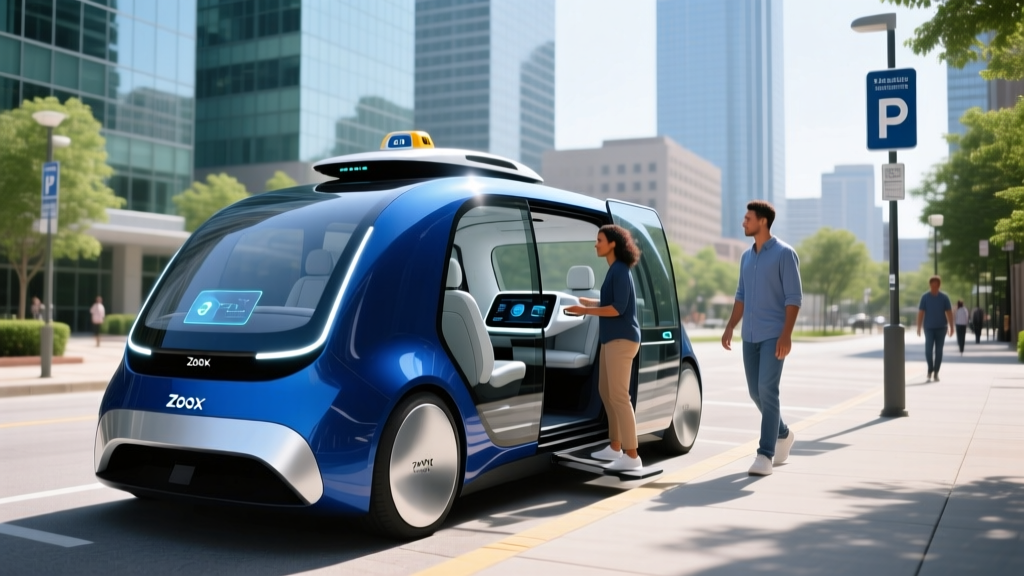
How to use Waymo One: Download the Waymo One app (iOS/Android), create an account, enter your pickup and dropoff within the service area, and confirm the ride. The vehicle arrives without a human driver — you sit in the back, and the ride begins automatically. There's no steering wheel interaction required from you.
Robotaxi Pricing vs. Uber and Lyft
Robotaxi pricing varies by market, time of day, and distance, but Waymo One has generally positioned itself competitively against traditional rideshare — sometimes undercutting Uber/Lyft on standard routes, sometimes matching surge pricing during peak demand.
| Route Example | Waymo One | UberX | Lyft Standard |
|---|---|---|---|
| 5-mile trip, Phoenix (off-peak) | $10–$14 | $11–$16 | $10–$15 |
| 8-mile trip, San Francisco (weekday) | $18–$26 | $20–$30 | $19–$28 |
| 12-mile trip, LA (evening) | $24–$35 | $22–$38 | $21–$36 |
| Airport run (PHX, ~10 mi) | $22–$30 | $25–$40 | $24–$38 |
Prices are approximate ranges based on reported rider data and may vary with demand, time, and promotions. Waymo does not currently apply surge pricing in the same dynamic manner as Uber/Lyft.
Key takeaway: On typical urban routes, Waymo One pricing is broadly comparable to UberX and Lyft Standard — generally within $2–$5 either direction. The absence of a human driver hasn't translated into dramatically cheaper rides yet, as Waymo absorbs the high cost of vehicle hardware, sensor suites, and remote fleet oversight. Expect pricing to remain competitive rather than disruptive for the near term.
Robotaxi Safety Record: What the Data Shows
Safety is the most scrutinized — and most contested — aspect of robotaxi operations. Here's what the publicly available data tells us.
- Autonomous miles driven: Over 40 million fully driverless miles across Phoenix, San Francisco, and Los Angeles combined (Waymo Safety Report)
- Injury-causing crash rate: Waymo reports an 85% reduction in injury-causing crashes compared to human benchmark drivers in the same operating areas
- Police-reported crash rate: 57% lower than human benchmark
- Contact rate: Estimated at roughly 1 human intervention per 25,000–30,000 miles (remote assistance, not physical takeover — vehicle is driverless)
Context: Waymo's comparison benchmark uses NHTSA data for human drivers in similar urban environments. Independent verification of these figures remains limited, as full sensor-log access is not available to third-party researchers.
Cruise's suspension (October 2023): The most significant safety-related event in recent robotaxi history was the California DMV's suspension of Cruise's operating permit after an October 2023 incident in San Francisco where a pedestrian was struck by a human-driven vehicle, thrown into the path of a Cruise robotaxi, and then dragged approximately 20 feet as the vehicle attempted to pull over. The DMV cited Cruise's failure to fully disclose the drag aspect of the incident to regulators. GM subsequently restructured Cruise, and as of 2026, Cruise does not operate a public robotaxi service. This event reshaped regulatory scrutiny across the industry. (NHTSA continues to monitor automated vehicle incidents through its Standing General Order.)
Zoox: Amazon's Zoox has operated its purpose-built bidirectional vehicle in limited testing. As of 2026, Zoox has not published comprehensive driverless safety mileage data comparable to Waymo's disclosures, and its public-facing rides remain restricted to pilot programs.
Technology Stack: How Robotaxis Actually See the Road
The sensor and computing architecture of a Level 4 robotaxi is fundamentally different from a consumer Level 2 system. Here's a breakdown of the major approaches.
- LiDAR: Multiple high-resolution LiDAR units providing 360° 3D point-cloud mapping out to 500+ meters
- Cameras: 29+ cameras covering all directions, including dedicated perception cameras for traffic signals, signage, and lane markings
- Radar: 6 external radar units for velocity detection and adverse-weather redundancy
- Audio detection: External microphones to detect emergency vehicle sirens
- Compute: Custom-designed onboard AI compute platform (not disclosed in detail)
- HD Mapping: Pre-built centimeter-accuracy maps of every operational road, updated continuously
| Technology | Waymo (Level 4) | Tesla FSD Supervised (Level 2) | Zoox (Level 4) |
|---|---|---|---|
| LiDAR | Yes — primary sensor | No | Yes |
| Camera-only vision | No (cameras supplement LiDAR/radar) | Yes — 8 cameras, neural-net based | No (cameras supplement LiDAR/radar) |
| Radar | Yes | Removed in recent hardware revisions | Yes |
| HD pre-mapping | Yes — required | No — generalizes to unmapped roads | Yes — required |
| Geofencing | Yes — strict ODD boundaries | No — operates on most roads | Yes — strict ODD boundaries |
| Driver required | No (within ODD) | Yes — always | No (within ODD) |
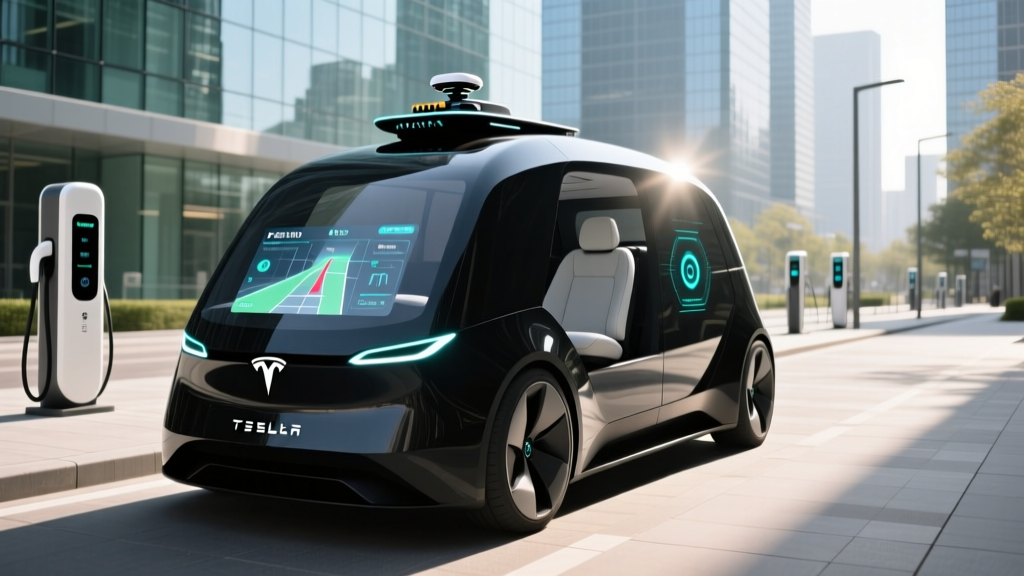
The LiDAR vs. camera debate: Waymo and Zoox rely on LiDAR as a primary depth-sensing modality, providing precise 3D spatial awareness regardless of lighting conditions. Tesla's approach rejects LiDAR entirely, betting that neural-network-driven camera vision — trained on billions of miles of fleet data — can achieve equivalent or superior perception. As of 2026, Tesla FSD Supervised remains a Level 2 system requiring active driver engagement, while LiDAR-equipped Waymo operates at Level 4 without a driver. This doesn't prove one approach is ultimately superior, but it does show which architecture has achieved commercial driverless deployment first.
Regulatory Landscape: Who Decides Where Robotaxis Can Drive
Robotaxi deployment in the United States is governed by a patchwork of state and local regulations — there is no comprehensive federal framework for commercial autonomous vehicle operations.
- California (CPUC + DMV): The California Public Utilities Commission (CPUC) issues permits for commercial passenger-carrying AV services. The DMV issues testing and deployment permits. Both agencies can suspend operations — as demonstrated by the Cruise suspension in 2023. (CPUC AV Programs)
- Arizona: Among the most permissive regulatory environments. No state-level permit required for testing or commercial AV operations beyond standard vehicle registration and insurance. This is why Phoenix became Waymo's first commercial market.
- Texas: State law allows AV operation with a licensed entity. Local municipalities (Austin, Houston) may impose additional operating agreements or zone restrictions.
- Nevada: Has had AV-enabling legislation since 2011. Requires a testing permit and an operational license for commercial service.
- Federal (NHTSA): The National Highway Traffic Safety Administration sets vehicle safety standards (FMVSS) and requires incident reporting through its Standing General Order for ADS-equipped vehicles. NHTSA does not currently approve or certify commercial robotaxi services — that authority rests with states.
The FMVSS exemption question: Purpose-built robotaxis like the Zoox vehicle (no steering wheel, no pedals) require exemptions from certain Federal Motor Vehicle Safety Standards that assume a human driver. NHTSA has granted limited exemptions, but the process remains case-by-case and slow — a bottleneck for manufacturers wanting to deploy vehicles without traditional driver controls at scale.
Current Limitations: What Robotaxis Cannot Do
- Geofenced only: Waymo won't drive outside its mapped zone. If your destination is 200 feet past the geofence boundary, the ride is declined.
- Weather constraints: Heavy rain, fog, snow, and ice degrade sensor performance. Waymo reduces or suspends service during severe weather in Phoenix (monsoon season) and San Francisco (heavy fog events).
- Construction zones: Unmapped lane closures, temporary barriers, and flaggers can cause the vehicle to stop and request remote assistance. Expect delays in active construction areas.
- No highway driving (most markets): Waymo's current commercial service is primarily surface-street. Limited highway segments are included in some markets (e.g., SF airport routes), but long-distance highway trips are not available.
- Pull-over limitations: The vehicle may stop in a travel lane if it encounters an unmapped obstacle or uncertain scenario, potentially impeding traffic. This has been a documented friction point with local emergency services and residents.
- Accessibility gaps: Current Waymo vehicles (Jaguar I-PACE) require passengers to enter a standard SUV. Wheelchair-accessible robotaxi options are extremely limited.
- No trunk access for passengers: In many Waymo vehicles, the trunk is reserved for sensor/compute equipment. You can't always bring large luggage.
- Wait times: Fleet density is still limited. In San Francisco, wait times of 8–15 minutes are common outside peak service zones — longer than typical Uber/Lyft availability.
The Bigger Picture: What These Autonomous Vehicles Updates Mean for Buyers
If you're evaluating whether robotaxi availability affects your next vehicle purchase, here's the practical framework:
- If you live in Phoenix, SF, or LA: Robotaxis are a viable supplemental transportation option for specific trips, not a full replacement for car ownership. Service area boundaries, wait times, and weather limitations mean you still need personal transportation for most daily needs.
- If you live outside current robotaxi metros: Level 4 robotaxi service is not available to you, and announced expansions have historically taken years to materialize. Base your purchase decision on Level 2 driver-assist capabilities, not the promise of future autonomy.
- If you're considering Tesla FSD: Full Self-Driving (Supervised) is Level 2. It requires your constant attention and does not make the car a robotaxi. The $8,000 FSD purchase (or $99/month subscription as of 2026) buys driver-assist convenience, not autonomous capability.
Frequently Asked Questions
Is this truly self-driving or driver-assist?
Waymo One and Zoox (in pilot areas) are Level 4 — truly self-driving within their geofenced operational zones. No human is in the driver's seat. Tesla Autopilot, FSD Supervised, Ford BlueCruise, and GM Super Cruise are all Level 2 driver-assist — the system helps with steering and speed, but you must remain fully engaged and ready to take over at any moment. These are fundamentally different technologies with different legal and safety frameworks.
Where can I use a robotaxi service right now?
As of 2026, Waymo One is the only fully commercial, publicly accessible robotaxi service in the US, operating in Phoenix (metro-wide), San Francisco (city-wide), Los Angeles (select areas), and Austin (early access). Zoox operates limited pilot rides in Las Vegas that are not open to the general public. Cruise does not currently operate any public service.
How much does a robotaxi cost vs. Uber or Lyft?
Waymo One pricing is broadly comparable to UberX and Lyft Standard — typically within $2–$5 on equivalent routes. A 5-mile trip in Phoenix might cost $10–$14 on Waymo vs. $11–$16 on UberX. Robotaxis do not currently offer dramatic cost savings; the economics are driven by market competition rather than lower operating costs, since the sensor hardware, fleet maintenance, and remote-assistance infrastructure remain expensive.
How safe are robotaxis based on real data?
Waymo reports that across 40+ million driverless miles, its vehicles have an 85% lower injury-causing crash rate and 57% lower police-reported crash rate compared to human benchmark drivers in the same areas. However, these figures are self-reported and use Waymo's chosen benchmark methodology. Independent, third-party verification with full sensor-log access remains unavailable. The Cruise suspension in 2023 demonstrated that safety failures — and failures in transparency with regulators — can shut down operations immediately.
What are the current limitations of robotaxi service?
The biggest limitations are geofencing (you can only go where the map allows), weather sensitivity (heavy rain/fog/snow degrades service), construction zone handling (unmapped changes cause stops and delays), limited highway access, and fleet density (wait times can exceed 10+ minutes). Robotaxis are also not wheelchair-accessible in most cases, and trunk space for luggage may be restricted by onboard computing equipment.
Will robotaxis replace car ownership?
Not in any currently served market, and not for the foreseeable future. Even in Phoenix — the most mature robotaxi market — the geofenced service area, weather limitations, and fleet availability mean robotaxis function as a supplemental option, not a primary transportation solution. For suburban and rural residents, intercity travel, or anyone who regularly carries cargo or passengers with special needs, personal vehicle ownership remains necessary.