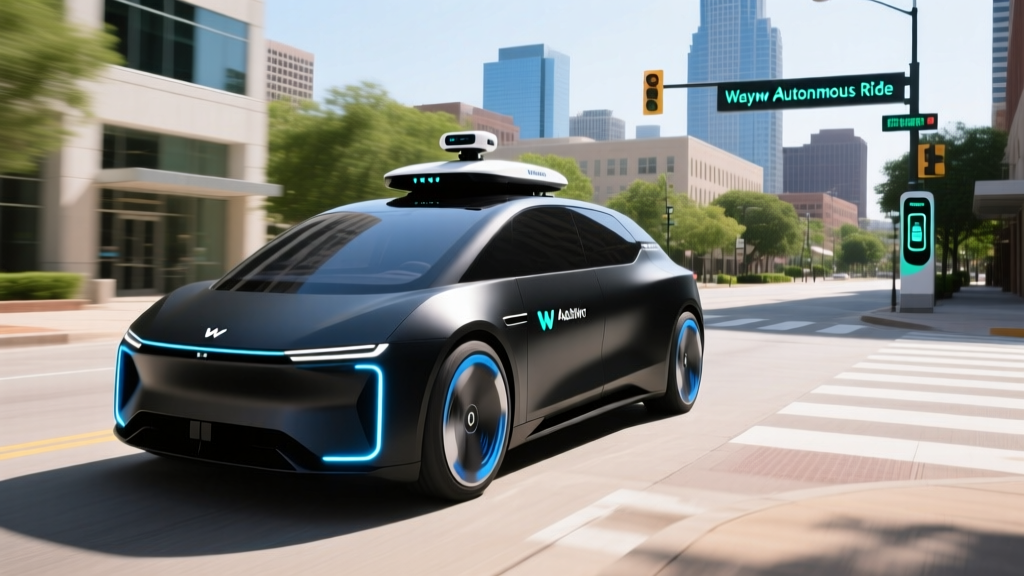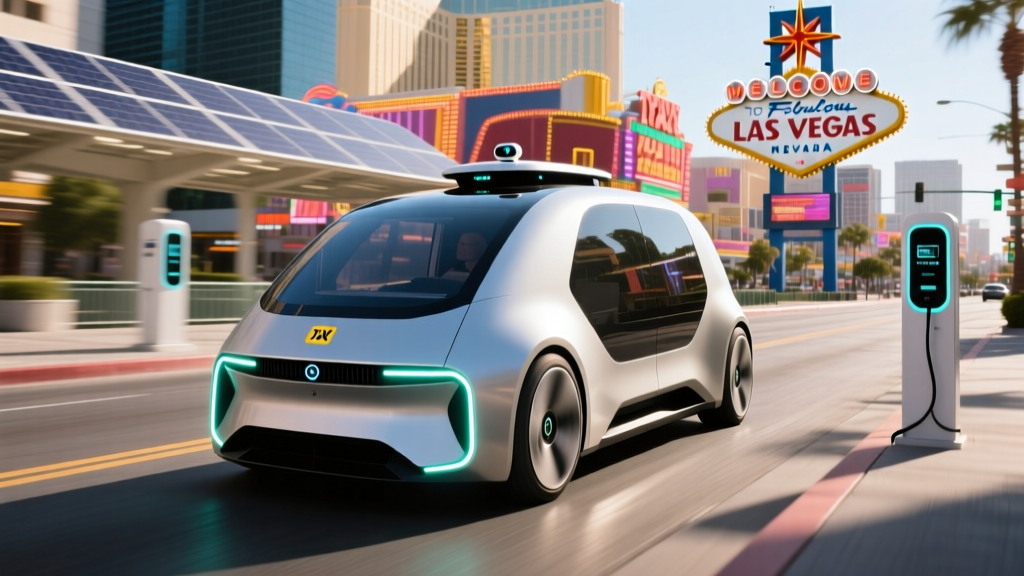
If you have visited the Las Vegas Strip in the past year, you have likely spotted a vehicle with a conspicuous roof rack of sensors gliding through traffic with no one behind the wheel. Autonomous vehicles in Las Vegas are no longer a concept demo — they are a regulated, revenue-generating transport option operating across major corridors. But the landscape is fragmented: different operators, different geofences, different rules. Here is a precise, data-backed guide to what is actually running on Vegas roads right now, what it costs, how safe it is, and where the technology still falls short.
SAE Automation Levels: What "Self-Driving" Actually Means in Vegas
Before comparing services, it is critical to distinguish between the automation levels you will encounter. Consumer vehicles like Teslas running FSD (Supervised) or GM vehicles with Super Cruise are SAE Level 2 — the driver must remain engaged at all times. The robotaxis operating commercially in Las Vegas are SAE Level 4, meaning they perform all driving tasks within a defined operational design domain (ODD) with no human driver required. There is currently no SAE Level 5 (drive-anywhere, any-condition) vehicle in commercial service anywhere in the world.
| Level | Name | Who Drives | Example |
|---|---|---|---|
| Level 2 | Partial Automation | Human (hands-on or eyes-on) | Tesla Autopilot, GM Super Cruise, Ford BlueCruise |
| Level 3 | Conditional Automation | System (human on standby) | Mercedes Drive Pilot (limited markets, low speed) |
| Level 4 | High Automation | System (within geofenced ODD) | Waymo, Zoox, Motional robotaxis |
| Level 5 | Full Automation | System (everywhere, all conditions) | Does not exist commercially |
This distinction matters because it defines liability. In a Level 4 Waymo ride, Waymo is the driver. If something goes wrong, the operator bears responsibility. In a Level 2 Tesla, you are the driver, and the system is an assist feature.
Where Can You Ride Autonomous Vehicles in Las Vegas Right Now?
As of early 2026, three Level 4 robotaxi operators have active or near-active commercial presences in the Las Vegas metropolitan area. Each has a different geofence, fleet size, and service model.
| Operator | Vehicle | Service Area | Hours | Status |
|---|---|---|---|---|
| Waymo | Jaguar I-PACE (5th-gen sensor suite) | Strip corridor, downtown, Convention Center, portions of Summerlin | 24/7 | Live commercial service |
| Zoox | Zoox purpose-built carriage (bidirectional) | Strip corridor (limited geofence, expanding) | Limited hours, expanding | Live (invite/waitlist transitioning to open) |
| Motional | Hyundai Ioniq 5 robotaxi | Strip corridor, select hotel pickup/dropoff | Limited hours | Commercial pilot via Uber/Lyft integration |
Waymo has the broadest geofence and the largest fleet. You can hail a ride from Harry Reid International Airport to most Strip resorts, downtown Fremont Street, and the Las Vegas Convention Center. The geofence covers approximately 80+ square miles of the metro area and continues to expand.
Zoox, Amazon's autonomous vehicle subsidiary, runs its distinctive bidirectional carriage vehicle — a purpose-built pod with no steering wheel or pedals. The Vegas geofence is narrower, concentrated on the Strip core, but the experience is fundamentally different: passengers sit facing each other in a symmetrical cabin.
Motional (the Hyundai/Aptiv joint venture) operates its Ioniq 5-based robotaxi primarily through partnerships. In Vegas, you may be matched with a Motional vehicle when requesting a ride through Uber or Lyft, though availability is not guaranteed and the geofence is more restricted.
How to Hail a Robotaxi and What It Costs vs. Uber
Riding in a driverless taxi in Vegas is straightforward, but each platform works differently.
Booking Process
- Waymo: Download the Waymo One app, set your pickup and dropoff within the geofence, and confirm. Wait times in the Strip corridor typically range from 3–8 minutes during non-peak hours. The app shows the vehicle approaching in real time and unlocks the door when it arrives.
- Zoox: Access has been transitioning from invite-only to broader availability. Check the Zoox app or website for current access status in Las Vegas. Rides are requested similarly to rideshare.
- Motional: Request a ride through the Uber or Lyft app. If a Motional robotaxi is available in your area, you may be matched with one — the app will indicate this. You can also opt out if you prefer a human driver.
Pricing Comparison
| Route (approx.) | Waymo | UberX | Lyft |
|---|---|---|---|
| Airport → Strip resort (~4 mi) | $12–$18 | $14–$22 | $13–$20 |
| Strip north → Strip south (~5 mi) | $10–$16 | $12–$19 | $11–$18 |
| Strip → Convention Center (~2 mi) | $8–$12 | $9–$15 | $9–$14 |
| Strip → Downtown Fremont (~6 mi) | $15–$22 | $16–$25 | $15–$23 |
Robotaxi pricing is generally competitive with UberX and Lyft, and during surge pricing events on rideshare platforms, Waymo can actually be cheaper since it does not use the same dynamic surge multiplier model. However, robotaxi pricing is not static — operators adjust base rates and per-mile charges, and promotional pricing (deeply discounted introductory rides) may not persist. Zoox has historically offered free or heavily subsidized rides during its pilot phases.
For context, a standard Lyft or UberX ride in Las Vegas in early 2026 averages roughly $1.15–$1.60 per mile plus a base fare of $2.50–$3.50, before tip. Robotaxis do not expect tips, which saves $2–$5 per ride.
Safety Record: What the Data Actually Shows
Safety is the most scrutinized aspect of robotaxi operations, and it deserves a data-driven answer rather than anecdotes.
- Waymo has logged over 40 million fully autonomous miles across all markets (Phoenix, San Francisco, Los Angeles, Austin, Las Vegas). Per NHTSA reporting and Waymo's own published safety data, Waymo vehicles are involved in injury-causing crashes at a rate approximately 85% lower than human benchmarks in comparable urban environments.
- Zoox has accumulated several million autonomous miles in testing and pilot operations. Its purpose-built vehicle includes redundant steering, braking, and battery systems. Public incident reports are fewer due to smaller fleet size.
- Motional has operated millions of autonomous miles globally (including extensive Las Vegas testing). Through its Uber/Lyft integration, safety drivers were present during initial deployment phases, with a transition to fully driverless operations in approved zones.
The critical metric is disengagement rate — how often a remote operator or safety system must intervene. Waymo's California DMV disengagement reports (the most transparent public data available) have shown rates below 1 intervention per 10,000+ autonomous miles in recent reporting periods, a significant improvement from earlier years. However, disengagement definitions vary by operator and state, making direct comparisons imprecise.
It is important to contextualize: Las Vegas presents a unique driving environment. The Strip corridor has heavy pedestrian traffic, frequent construction zones, event-driven congestion, and tourists who may behave unpredictably. Robotaxi operators address this through conservative driving policies — vehicles tend to yield more aggressively and follow speed limits strictly, which occasionally frustrates human drivers behind them but reduces collision risk.
For the most current safety and incident data, the NHTSA Standing General Order requires all ADS-equipped vehicle operators to report crashes, and these reports are publicly accessible.
Under the Hood: The Technology Stack
The sensor suites on Vegas robotaxis represent hundreds of thousands of dollars of hardware per vehicle — a stark contrast to the camera-only approach used in consumer vehicles like Tesla's FSD.
Waymo (5th Generation Driver)
Mounted on a Jaguar I-PACE, Waymo's sensor array includes:
- LiDAR: Multiple units providing a 360° point cloud with range exceeding 200 meters. LiDAR operates independently of lighting conditions — critical for the transition from bright desert sun to the neon-lit darkness of the Strip at night.
- Cameras: High-resolution imaging for traffic light state detection, sign reading, lane marking identification, and object classification.
- Radar: Long- and short-range units for velocity detection of other vehicles and redundancy in adverse conditions.
- Audio detection: External microphones to detect sirens from emergency vehicles.
Zoox Carriage Vehicle
Zoox's purpose-built vehicle is designed symmetrically — it can drive equally well in either direction, eliminating the need for three-point turns. Its sensor suite includes:
- LiDAR, cameras, and radar distributed around the vehicle for full 360° coverage with overlapping redundancy.
- Dual redundant systems for steering, braking, computing, and battery — if one system fails, the backup takes over immediately.
- 140° field-of-view sensor pods at each corner of the vehicle, specifically designed to see around obstacles at intersections.
Motional (Hyundai Ioniq 5 Robotaxi)
Motional's platform integrates:
- LiDAR, radar, and camera fusion on a production-vehicle platform.
- Redundant computing and vehicle control systems engineered with Aptiv's automotive-grade architecture.
- Designed for scalability — the Ioniq 5 platform is a production EV (with an EPA-estimated range of 305+ miles in consumer trim), which helps contain per-vehicle cost compared to heavily modified platforms.
Regulatory Landscape: Who Approves Robotaxi Operations in Nevada?
Nevada was the first U.S. state to pass legislation enabling autonomous vehicle testing (AB 511, 2011) and has maintained a permissive but structured regulatory framework since.
- Nevada DMV issues autonomous vehicle testing and deployment permits. Operators must demonstrate safety cases, maintain insurance, and report incidents.
- Nevada Legislature has passed successive bills (including 2017's SB 312) allowing fully driverless commercial deployment without a safety driver present — a critical enabler for Waymo and Zoox to operate without a human in the vehicle.
- Clark County and the City of Las Vegas coordinate on local road access, construction-zone notification, and first-responder protocols for interacting with driverless vehicles.
- NHTSA at the federal level oversees vehicle safety standards and crash reporting via the Standing General Order, but does not directly approve or ban robotaxi services — that authority rests with states.
Nevada's regulatory posture is notably more open than some jurisdictions. California, for example, has seen significant regulatory friction (the CPUC suspended Cruise's permit in late 2023 after a serious incident in San Francisco). Nevada has not imposed similar blanket suspensions, though operators remain subject to ongoing safety reporting requirements.
Current Limitations: Where Robotaxis Cannot (or Will Not) Go
Despite impressive capabilities, Level 4 robotaxis in Las Vegas have hard constraints that riders should understand before planning trips.
- Geofence boundaries: If your destination falls outside the operator's approved ODD, the app will not let you book the ride. Suburban areas beyond Summerlin, Henderson, and North Las Vegas are generally outside current geofences. The route to Red Rock Canyon or Hoover Dam? Not available.
- Weather restrictions: While Las Vegas is dry most of the year, rare heavy rain events (monsoon season, typically July–September) can trigger service reductions or pauses. LiDAR performance degrades in heavy precipitation, and flooded roadways create edge cases the system is not validated for. Operators will notify riders via app if service is suspended.
- Construction zones: The Strip and surrounding areas are perpetually under construction. While robotaxis can navigate many construction configurations using updated HD maps, sudden lane closures or unmarked detours may cause the vehicle to pull over safely and wait for remote assistance — adding time to your trip.
- Pickup/dropoff precision: Robotaxis cannot pull into private driveways, parking garages, or hotel porticos in all cases. You may need to walk a short distance from the vehicle's designated stop to your final destination. Waymo's app shows the exact pickup pin, which may be at the curb rather than the hotel lobby entrance.
- No multi-stop trips: Current robotaxi services are point-A-to-point-B only. You cannot add a stop along the way.
- Passenger capacity: Waymo's I-PACE accommodates up to 3 passengers. Zoox's carriage seats 4. If you have a larger group, you will need multiple vehicles or a conventional rideshare.
- Accessibility: Waymo's Jaguar I-PACE is not wheelchair-accessible. Zoox's carriage has been designed with accessibility features including a ramp, but availability of accessible vehicles may be limited. Check with the operator for current ADA-compliant options.
Is This Truly Self-Driving or Just Driver-Assist?
The robotaxis described above — Waymo, Zoox, and Motional in their driverless configurations — are genuinely self-driving within their operational domains. There is no human driver in the vehicle. No one is holding a steering wheel. The system handles steering, acceleration, braking, lane changes, intersection navigation, and parking without human input.
This is categorically different from Tesla FSD (Supervised), GM Super Cruise, Ford BlueCruise, or any other consumer driver-assist system, all of which are SAE Level 2 and require an attentive human driver at all times. If you see a Tesla navigating Vegas traffic on Autopilot or FSD, that driver is still legally and operationally responsible for the vehicle.
Frequently Asked Questions
Can I ride a robotaxi from the Las Vegas airport?
Yes. Waymo offers service from Harry Reid International Airport (LAS) to destinations within its geofence, including most Strip resorts and downtown. Pickup locations at the airport are designated — follow the app's directions to the correct curbside zone.
Are robotaxis cheaper than Uber or Lyft in Las Vegas?
Generally comparable. Robotaxi fares are typically in the same range as UberX/Lyft for equivalent routes. During rideshare surge pricing, Waymo can be significantly cheaper. Robotaxis also eliminate the expectation of tipping, saving $2–$5 per ride.
How safe are robotaxis compared to human drivers?
Waymo's published data, cross-referenced with NHTSA crash reports, indicates injury-causing crash rates approximately 85% lower than human benchmarks in comparable urban driving. However, robotaxis operate in geofenced, mapped areas and tend to drive more conservatively, which contributes to this advantage. Comprehensive, apples-to-apples safety comparisons across all operators remain limited.
What happens if a robotaxi breaks down or gets confused?
The vehicle is designed to pull over safely and stop. A remote support team monitors the fleet and can provide guidance or dispatch roadside assistance. Passengers can contact support through the app at any time. In practice, most "stuck" situations resolve within a few minutes.
Can I ride a robotaxi to the Grand Canyon or Hoover Dam?
No. Current geofences cover the Las Vegas metro area only. Long-distance highway routes to attractions outside the approved ODD are not available. You will need a rental car or conventional rideshare for those trips.
Do robotaxis operate at night on the Strip?
Waymo operates 24/7 in Las Vegas. The LiDAR-based sensor suite is not dependent on ambient light, so nighttime operation on the neon-lit Strip is within the system's validated capability. Other operators may have restricted hours — check the respective apps.
Is the Las Vegas robotaxi experience different from Phoenix or San Francisco?
The core technology is the same, but the environment differs. Vegas has wider roads, more predictable grid layouts in many areas, and less rain than San Francisco. However, the Strip corridor presents unique challenges: extreme pedestrian density, frequent jaywalking, event-driven traffic spikes, and visual clutter from signage. Operators tune their driving policies per city, so the ride character may feel slightly more cautious in dense Strip traffic compared to suburban Phoenix.