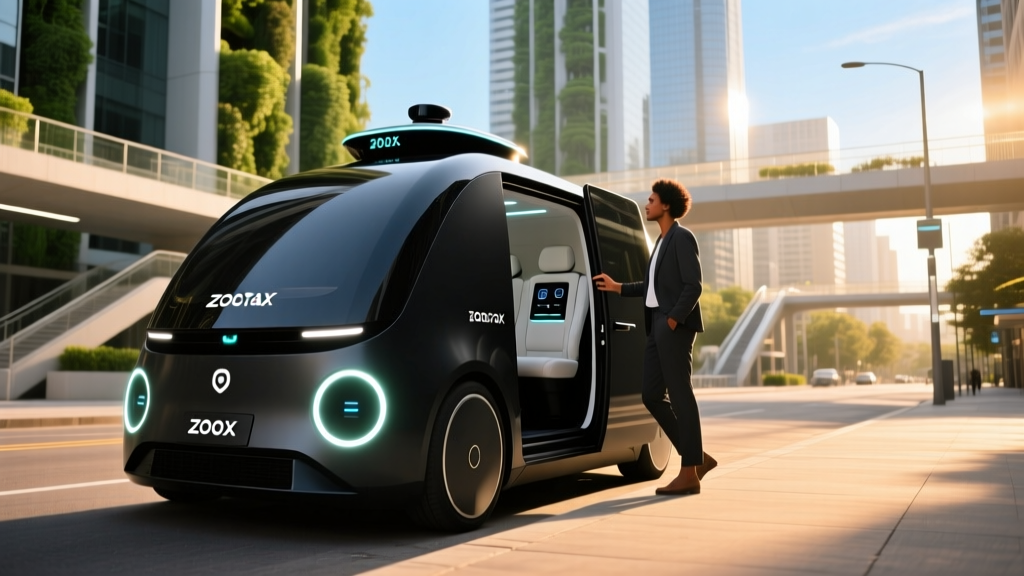
Waymo pulls up to a curb in Phoenix. No driver. No steering wheel. Just a rider tapping a phone and a vehicle that has navigated millions of urban miles alone. Yet in most American cities, that scene remains a demo video, not a daily commute option. The gap between "robotaxis exist" and "robotaxis are everywhere" is defined by one phrase analysts keep circling back to: autonomous vehicle deployment delay and robotaxi economics.
This article breaks down where Level 4 robotaxi services actually operate right now, what the unit economics look like, how safe the data says they are, and why scaling has been slower than the headlines promised five years ago.
What Level 4 Robotaxis Actually Are (and What They Aren't)
Before discussing deployment, the SAE automation level must be exact. Consumer vehicles like Tesla FSD (Supervised), GM Super Cruise, and Ford BlueCruise are SAE Level 2 driver-assist systems. The driver must remain engaged, monitor the road, and be ready to intervene at any moment. Robotaxis like Waymo's 6th-generation Jaguar I-PACE fleet and Zoox's purpose-built carriage operate at SAE Level 4: no human driver inside the vehicle, within a defined operational design domain (ODD).
| Level | Name | Who Drives | Example |
|---|---|---|---|
| 2 | Partial Automation | Human (monitored) | Tesla FSD Supervised, GM Super Cruise |
| 3 | Conditional Automation | System (human fallback) | Mercedes DRIVE PILOT (limited markets, ≤40 mph) |
| 4 | High Automation | System (no human needed in ODD) | Waymo One, Zoox, Baidu Apollo Go |
| 5 | Full Automation | System (anywhere, any condition) | Does not exist commercially |
Level 5 — a car that can drive anywhere a human can, in any weather, on any road — is not a deployed reality anywhere in the world. Every commercial robotaxi today is geofenced Level 4.
Where You Can Actually Hail a Robotaxi Right Now
Announcements about "expansion to 50 cities" make headlines, but the live, rider-accessible footprint is far smaller. Here is the verified operational map as of early 2026:
| Service | City / Region | Hours | Vehicle |
|---|---|---|---|
| Waymo One | Phoenix metro (Chandler, Tempe, Scottsdale, parts of Phoenix) | 24/7 | Jaguar I-PACE (6th-gen sensor suite) |
| Waymo One | San Francisco (most of city) | 24/7 | Jaguar I-PACE |
| Waymo One | Los Angeles (Santa Monica, Beverly Hills, downtown core) | Limited hours | Jaguar I-PACE |
| Waymo One | Austin (pilot, invite/waitlist) | Limited | Jaguar I-PACE |
| Zoox | Las Vegas Strip corridor & parts of Foster City, CA (employee/testing) | Limited | Zoox purpose-built carriage |
| Baidu Apollo Go | Wuhan, Beijing, Chongqing, Shenzhen (China) | Extended hours | RT6 (5th/6th-gen) |
| Cruise | Operations suspended since Oct 2023; limited supervised re-entry testing in Phoenix/Dallas as of 2025 | — | Chevrolet Bolt EV |
The takeaway: if you live outside Phoenix, San Francisco, Los Angeles, or a handful of Chinese metros, you cannot hail a driverless taxi today. That is the deployment gap.
Robotaxi Economics: Why Scaling Has Stalled
The phrase autonomous vehicle deployment delay is, at its core, an economics problem. Robotaxi operators are spending heavily per vehicle before earning anything close to a return.
The Per-Vehicle Cost Stack
A 6th-generation Waymo vehicle carries a sensor and compute suite estimated at $30,000–$50,000 on top of a $40,000+ Jaguar I-PACE base. Add redundant braking, steering, and power systems, remote-assistance infrastructure, HD mapping, and fleet operations, and the fully burdened cost per robotaxi likely exceeds $100,000. That is before insurance, cleaning, charging, and the remote-assistance operators who monitor multiple vehicles simultaneously.
Utilization Is the Make-or-Break Metric
A human-driven Uber operates ~4–6 hours per day on average. A robotaxi can theoretically run 20+ hours, but only if demand exists, the geofence allows it, and the vehicle isn't pulled for sensor calibration, software updates, or cleaning. Industry estimates put current Waymo utilization in Phoenix at roughly 8–12 paid hours per vehicle per day — not yet enough to amortize a six-figure asset at rideshare-like fares.
When Will Unit Economics Turn Positive?
Alphabet has disclosed that Waymo surpassed 10 million paid rides cumulatively by late 2025, but has not published a per-ride profit figure. Analysts at Morgan Stanley and Bernstein have modeled breakeven at roughly 15–20 paid trips per vehicle per day with a sensor suite cost below $20,000 — thresholds Waymo's 7th-gen hardware is approaching but has not publicly confirmed.
Robotaxi Pricing vs. Uber and Lyft
On a like-for-like 5-mile, mid-day trip in Phoenix or San Francisco, Waymo One pricing typically lands within 10–20% of an equivalent UberX fare. Surge pricing dynamics differ: Waymo currently does not surge as aggressively as Uber/Lyft, but wait times can stretch to 15–25 minutes during peak demand because fleet size is still limited (roughly 1,000 vehicles across all US cities combined).
| Service | Base Fare Range | Surge Behavior | Wait Time (avg) |
|---|---|---|---|
| Waymo One | $11–$16 | Moderate; capped | 5–15 min |
| UberX | $12–$18 | High during peak | 3–8 min |
| Lyft | $11–$17 | High during peak | 3–8 min |
| Apollo Go (Wuhan) | ~$3–$6 (heavily subsidized) | Low | 3–10 min |
Baidu's Apollo Go in Wuhan operates with deep subsidies (some rides under 4 RMB, roughly $0.55), a pricing strategy that is not sustainable long-term and has drawn pushback from China's licensed taxi industry.
Safety Record: What the Data Actually Shows
This is where emotion and data diverge sharply. Every robotaxi incident becomes a viral video; every human-driver fatality does not. The relevant question is: per million miles, how do Level 4 robotaxis compare to human baselines?
Waymo (through late 2025, per company-published and NHTSA-reported data):
- Cumulative fully-autonomous miles: >10 million (driverless, across Phoenix, SF, LA)
- Police-reported crashes: low dozens; vast majority rear-endings while Waymo vehicle was stationary or nearly so
- Fatality-involved crashes while in autonomous mode: 0 reported as of early 2026
- Property-damage-only contact rate: approximately 60–70% lower per million miles than human baseline in matched geographies (per Waymo's peer-reviewed insurance-claims study)
Human baseline (US, per NHTSA):
- ~1.35 fatalities per 100 million vehicle miles traveled (2022 final data)
- ~300+ police-reported crashes per 100 million miles (all severities combined)
Cruise (pre-suspension, Oct 2023):
- ~3–4 million driverless miles before a serious pedestrian-dragging incident in San Francisco triggered permit revocation and company-wide suspension. The incident involved a pedestrian thrown into Cruise's path by a human-driven vehicle; Cruise's vehicle braked but could not fully avoid contact, then pulled to the curb with the pedestrian underneath.
The data suggests robotaxis are, on average, safer than human drivers in low-speed urban environments — but the sample size (tens of millions of miles, not billions) means rare edge-case failures still carry outsized reputational and regulatory risk.
Technology Stack: Why It Costs So Much
The sensor and compute architecture of a Level 4 robotaxi is orders of magnitude more complex than a consumer Level 2 system.
Waymo 6th-Generation Suite
- LiDAR: Multiple solid-state and spinning units (Hesai/proprietary), providing centimeter-accurate 3D point clouds out to ~500 meters
- Cameras: 29+ high-dynamic-range cameras covering 360° at varying focal lengths
- Radar: 6 imaging radars for velocity and adverse-weather object detection
- Audio: External microphone array for siren detection
- Compute: Custom Waymo Driver platform with redundant GPUs and safety controllers
- HD Maps: Centimeter-precision pre-mapped routes within the ODD, updated continuously
Tesla's Camera-Only Approach (FSD Supervised — Level 2)
- 8 cameras, no LiDAR, no radar (post-2022)
- Vision-only neural network
- Requires human supervision — not approved for driverless operation
The LiDAR-vs-camera debate is largely settled at Level 4: every deployed driverless robotaxi uses LiDAR. Tesla's vision-only approach has not achieved regulatory approval for driverless operation, and NHTSA investigations into Autopilot/FSD crashes continue.
Regulatory Landscape: Who Approves What
In the United States, robotaxi deployment is governed by a patchwork of state and federal authorities:
- Federal (NHTSA): Sets vehicle safety standards (FMVSS); investigates crashes; can issue recalls. Does not directly approve robotaxi operations.
- State DMVs and PUCs: California's CPUC and DMV issue the permits that allow Waymo and Zoox to charge riders. Arizona takes a permissive self-certification approach. Texas, Nevada, and others have enabling legislation but limited active deployments.
- Local governments: Cities like San Francisco have pushed back on expansion speed, citing blocked bike lanes and emergency-vehicle interactions.
The Cruise suspension of October 2023 demonstrated how quickly a state DMV (California) can revoke operating authority after a single serious incident — a risk that makes every operator cautious about rapid geographic expansion.
Current Limitations: Where Robotaxis Cannot Go
- Weather: Heavy rain, fog, and snow degrade LiDAR and camera performance. Waymo in Phoenix benefits from 300+ clear days/year; expansion to Chicago or Seattle would require fundamentally different sensor performance.
- Geofencing: Vehicles will not operate outside pre-mapped zones. Drive to the edge of the Phoenix service area and the car will refuse the trip or pull over.
- Construction zones: Rapidly changing lane configurations remain an edge case; remote-assistance operators frequently intervene.
- Unprotected left turns: Still a high-intervention maneuver in dense urban traffic; responsible for a disproportionate share of disengagements.
- Emergency vehicles: While improving, robotaxis have been documented blocking fire trucks and ambulances — the exact behavior that triggered San Francisco's political backlash against Cruise.
- Airport and highway trips: Most robotaxi ODDs exclude high-speed limited-access highways and airport terminals, limiting their utility for the highest-value rideshare trips.
- Accessibility: Current Waymo vehicles require riders to enter a standard SUV; wheelchair-accessible robotaxis remain in pilot stages.
The Path Forward: What Changes the Deployment Timeline
Three variables will determine whether robotaxis scale to dozens of cities by 2030 or remain a niche service in sunbelt metros:
- Sensor cost reduction: LiDAR units need to fall below $5,000 each (from an estimated $10,000–$15,000 today) for per-vehicle economics to work at scale.
- Remote-assistance ratio: Today, roughly 1 remote operator monitors 3–5 vehicles. Reaching 1:15 or 1:20 is essential for profitability.
- Regulatory trust: Each high-profile incident (Cruise dragging, Waymo bike-lane blocking) resets the political clock in cities considering approval.
The autonomous vehicle deployment delay narrative is not a story of technical failure — Level 4 robotaxis demonstrably work. It is a story of unit economics that don't yet pencil out at scale, regulatory frameworks that tighten after every incident, and weather/infrastructure constraints that confine service to a handful of favorable cities. For consumers, the honest answer in 2026 is: robotaxis are real, they are safer than the average human driver in their operating domain, and they will probably not be in your city for several more years.
Frequently Asked Questions
Is a Waymo robotaxi truly self-driving?
Yes, within its geofenced service area. Waymo One vehicles operate at SAE Level 4 with no human driver in the vehicle and no remote teleoperation of driving decisions (remote assistants monitor but do not steer). This is fundamentally different from Tesla FSD (Supervised), which is Level 2 and requires a licensed driver behind the wheel at all times.
Where can I hail a robotaxi right now?
In the US: Phoenix metro, most of San Francisco, and parts of Los Angeles via the Waymo One app. Zoox has limited rider access in Las Vegas. Outside the US, Baidu Apollo Go operates commercially in Wuhan, Beijing, and several other Chinese cities. No other US city has open, unrestricted Level 4 robotaxi service as of early 2026.
How much does a robotaxi cost vs. Uber?
Fares are typically within 10–20% of UberX for equivalent trips. Waymo does not currently surge as aggressively, but wait times are longer due to smaller fleet sizes. Tipping is not expected or possible in the app.
How safe are robotaxis compared to human drivers?
Per million miles driven, Waymo's published and NHTSA-reported data shows property-damage crash rates approximately 60–70% lower than human baselines in matched urban geographies, with zero reported fatalities in autonomous mode through early 2026. Sample sizes are still in the tens of millions of miles, not billions, so rare events remain statistically uncertain.
Why has robotaxi rollout been so slow?
Three factors: per-vehicle hardware costs still exceed $100,000, making unit economics difficult at rideshare fares; regulatory permits can be revoked after a single serious incident (as happened to Cruise in 2023); and weather, construction zones, and edge cases limit viable cities to those with favorable conditions and pre-mapped infrastructure.
Can a robotaxi drive me to the airport or on the highway?
Generally no. Most current Level 4 ODDs exclude limited-access highways and airport terminals. Waymo has begun limited airport-curious testing, but commercial airport trips are not broadly available.
Will robotaxis replace Uber and Lyft drivers?
Not in the near term. Robotaxi fleets number in the low thousands nationally; Uber and Lyft operate millions of human drivers. Robotaxis will likely serve dense urban cores first, while suburban and rural rideshare remains human-driven for the foreseeable future.